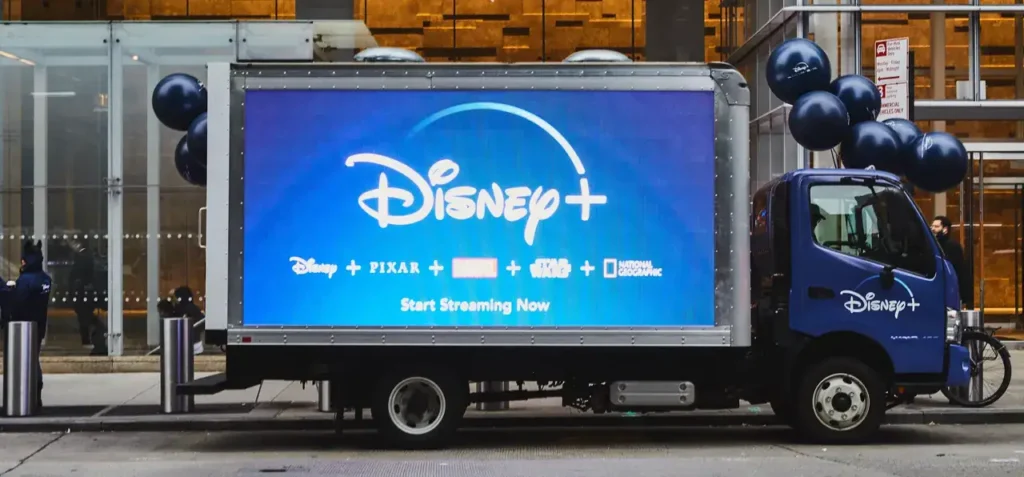
Experiential marketing, campaigns that create direct, physical interactions between brands and audiences, has become the fastest-growing segment of the marketing mix in 2026 precisely because it does what digital advertising has largely stopped doing: it creates genuine memory. We’ve executed experiential activations across 50+ cities, from pop-up installations on Melrose Avenue in Los Angeles to street-level brand moments in the middle of SXSW in Austin. The pattern that separates the campaigns that get talked about from the ones that get forgotten is clear, and it starts with understanding what experiential marketing actually requires to work.
What Experiential Marketing Is and Why It’s Rising
Experiential marketing creates moments where consumers actively participate with a brand rather than passively observe advertising. This includes pop-up installations, product demonstrations, interactive street activations, brand-led events, immersive environments, and any format where the audience’s physical presence and engagement are the core of the campaign.
The format is rising for a structural reason: digital advertising saturation has made passive exposure increasingly inefficient. The average American is exposed to 4,000 to 10,000 ad impressions per day across digital, social, and traditional channels. The effective retention rate from a single passive exposure is essentially statistical noise. An experiential moment that a consumer actively participates in, especially one that generates a positive emotional response, creates brand memory that persists weeks and months longer than any banner impression.
Brands including Nike, Amazon, JetBlue, and Adidas have consistently invested in experiential because the downstream metrics, brand recall, purchase intent, social sharing, reflect a return on investment that passive advertising consistently fails to match at equivalent budgets. According to the Inizio Engage/Emota Experiential Trends Report 2026, consumers who participate in brand experiences are significantly more likely to make a purchase and recommend the brand to others than those who only see traditional advertising.
The Core Formats of Experiential Marketing
Pop-Up Activations
Pop-up installations, temporary branded environments that appear in high-traffic locations for a defined period, are the most common experiential format for brands doing market entry, product launches, and seasonal campaigns. The key variable that separates effective pop-ups from ineffective ones is location specificity. A pop-up on the right corner of the right street in the right neighborhood with the right crew reaches the target audience in an authentically relevant context. A pop-up in a generic retail common area reaches whoever happens to be there.
We’ve run pop-up programs on Abbot Kinney Boulevard in Venice Beach (LA’s densest concentration of culturally influential shoppers), in the South Congress Avenue district in Austin (home base for SXSW’s most engaged brand-aware audience), and on Prince Street in SoHo (New York’s most photographed street-level retail corridor). Each location has specific dynamics, foot traffic volume, audience demographic profile, time-of-day patterns, surface restrictions, that affect how a pop-up is designed and operated.
Brand Activations at Events and Festivals
Events concentrate audiences in ways that open street activations can’t replicate. A music festival draws its entire audience to one geographic location for a defined duration, during which those attendees are in a high-engagement, experience-seeking state of mind. A brand activation within or adjacent to that event environment has access to thousands of highly receptive people in a controlled time window.
We’ve executed brand activations at Coachella approaches along Highway 111, on the pedestrian corridors of Lollapalooza’s Grant Park perimeter in Chicago, and at the South by Southwest venue clusters in Austin’s Red River Cultural District. In each case, the activation is designed around the specific geography and audience behavior of that event, not imported as a generic format from a different context.
Street-Level Brand Moments
Not all experiential marketing requires a built environment. Some of the most effective brand moments happen on public sidewalks with minimal physical infrastructure: a street team creating a genuine interactive experience, a product demonstration in a high-traffic zone, or a brand ambassador program that creates spontaneous moments rather than transactional encounters.
The difference between a street team that works and one that doesn’t is usually the quality of the interaction, specifically, whether the street team is creating value for the passerby or simply delivering a message at them. Effective street-level experiential respects the audience’s time and attention by offering something genuinely worthwhile: a product sample worth having, an experience worth stopping for, or a creative interaction worth talking about.
Immersive Environments
Immersive brand environments, rooms, corridors, and designed spaces where every visual and physical element reflects the brand, have grown substantially as a format in 2026. The social sharing dimension of immersive experiences is particularly valuable: an environment that’s designed to be photographed generates earned social media amplification that can dwarf the direct impression count of the physical space. We’ve seen installations where the direct footfall was 2,000 people and the social impression from shared photos exceeded 500,000.
The design requirement for this format is the inverse of traditional advertising: instead of broadcasting a message, you’re creating an environment that people want to bring themselves into, photograph themselves within, and share. The brand message has to be embedded in something people want to participate in for their own reasons, not just served to them as advertising.
2026 Experiential Marketing Trends
AI-Personalized Activations
Artificial intelligence is increasingly used within experiential environments to create personalized brand interactions. Face recognition software that offers individuals customized product recommendations, interactive displays that adapt content based on audience signals, and AI-driven chatbot experiences embedded in physical installations are all appearing in 2026 brand activations at scale. For brands willing to invest in the technology layer, the personalization potential significantly upgrades the emotional impact and shareability of the activation.
Sustainability as Experience Component
Gen Z’s purchasing power and cultural influence has made sustainability values a practical requirement rather than an optional positioning layer for experiential marketing in 2026. Activations where the physical footprint, materials, waste, energy, is visibly conscious create a different audience response than activations that treat environmental impact as irrelevant. Brands that have integrated sustainability into the activation’s physical design, recyclable or compostable materials, low-energy display systems, community donation components, consistently receive more positive coverage and better social sentiment from the events industry.
Hybrid Content Capture
Every physical experiential activation now has a parallel content production objective. The event generates social content, but increasingly brands are building content production into the activation infrastructure, professional photographers, video capture rigs, real-time edit workflows that push content to social channels while the event is happening. The physical activation becomes the production set; the content is the campaign. For brands with strong social media audiences, the content output from a single well-executed activation can drive weeks of organic engagement.
Micro-Activations and Street Moments
Large-format brand events are increasingly complemented by smaller, more frequent street-level activations in the markets where the brand operates. Rather than one annual mega-event, forward-thinking brands are distributing activation budget across multiple smaller moments throughout the year, keeping brand presence in the physical environment consistently rather than making a single annual impression. AGM’s street-level capability is specifically designed for this model: we can execute a tight, focused street activation in any of our 50+ market footprint cities within short lead times.
What Separates Good Experiential from Bad Experiential
The most common experiential marketing failure we observe is the “activation for the deck” problem, a program designed to look impressive in a post-event presentation rather than to create genuine audience engagement in the real world. The indicators: highly polished aesthetics, minimal actual audience interaction, emphasis on the brand statement over the audience experience, and results that look good in impression counts but generate no social sharing or earned media.
Effective experiential marketing is designed for the audience first, the brand second. The activation’s primary value proposition has to be what’s in it for the person encountering it, not what the brand wants to say to them. When those two things align, when the brand is genuinely offering something the audience values, the interaction generates organic amplification that the most expensive paid media can’t replicate.
Logistics execution is the other separator. The most creative activation concept fails when the physical execution is sloppy, crew who don’t know the brand, setup delays, materials that don’t hold up, locations that don’t have the foot traffic that was assumed. We’ve inherited campaigns mid-execution where the original agency grossly overestimated foot traffic at a chosen location, and the recovery required a same-day location pivot. Ground-truth the assumptions before committing the budget.
How to Plan an Experiential Marketing Campaign
Start With Audience Geography
The audience exists in physical space. Where do they actually go? Not where your target demographic is broadly represented, but where specific high-density concentrations of your core audience spend time in a predictable, accessible pattern. The answer to this question drives every location decision that follows.
Define the Interaction Model
What does the person do when they encounter the activation? What’s in it for them, what genuine value do they receive from stopping and engaging? If the answer is primarily “they get exposed to the brand,” the activation isn’t experiential, it’s just outdoor advertising. Define the audience’s benefit first.
Design for Social Sharing
Every visual element of the activation should be evaluated for social shareability. What angle do people naturally photograph from? What does the experience look like when it’s captured on a phone camera? Is there a visual element distinctive enough to be worth sharing? The answers to these questions are design constraints, not afterthoughts.
Plan Content Capture Separately
Don’t rely on audience phones as your only content capture mechanism. Build content production, photography, video, real-time social posting, into the activation crew and logistics. The content output from a well-executed activation is a campaign asset with months of utility. Treat it accordingly.
Frequently Asked Questions About Experiential Marketing
What’s the difference between experiential marketing and event marketing?
Event marketing typically refers to brand presence within an existing event, sponsorships, booths at conferences, festival activations. Experiential marketing is broader: it includes brand-owned events, street-level interactive moments, pop-ups, and any format where the brand creates an interactive consumer experience rather than simply occupying space within someone else’s event.
What does an experiential marketing campaign cost?
Costs range enormously depending on format, scale, duration, and market. A targeted street-level activation in one city might run from $5,000 to $25,000. A multi-city pop-up installation campaign with built environments and content production could run $100,000 to $500,000+. Contact AGM at americanguerrillamarketing.com/contact for campaign-specific pricing based on your specific objectives and geography.
What’s the best city for an experiential marketing campaign?
It depends entirely on where your target audience concentrates. New York, Los Angeles, Chicago, Austin, and Miami are the most frequently requested markets for experiential launches because of their population size and cultural influence. For specific audience demographics, the best city is often different, campus-focused brands perform better in cities anchored by major universities; outdoor lifestyle brands perform better in markets with active street culture and outdoor recreation.
How do you measure the success of an experiential campaign?
Primary metrics: direct participant count, social impressions (from brand accounts and earned sharing), content output quality and volume, brand recall lift (pre/post survey), and downstream conversion (sales, site visits, email captures during the activation). For event-adjacent programs, attendee traffic to the brand presence as a percentage of total event attendance is a useful benchmark.
Does AGM run experiential marketing campaigns?
Yes. We’ve executed brand activations, pop-up programs, street-level installations, and event marketing campaigns across 50+ cities. Our crew infrastructure, market relationships, and operational experience cover everything from planning and permitting through execution, documentation, and post-campaign reporting. Reach us at americanguerrillamarketing.com/contact.
Budget Ranges and What You Can Expect at Each Level
Experiential marketing spans an enormous budget range, and the format options available at different investment levels are genuinely different rather than just different in scale. Understanding what is achievable at each budget tier prevents both underinvestment (expecting major-event impact from a street-corner handout budget) and overinvestment (building a $200,000 installation to reach an audience that a $15,000 activation would have reached just as effectively).
$5,000 to $15,000: A tight, focused street-level activation in a single city. Street Poster Advertising in a specific neighborhood combined with a street team deployment at one or two target events, or a single-day pop-up installation in a high-pedestrian zone. This budget tier is appropriate for local market brand building, event promotion, and product launches targeting a specific neighborhood demographic. We have run campaigns in this range for restaurant openings in Williamsburg, music event promotions in the Arts District of Los Angeles, and brand introductions at university campus events. The key constraint at this budget is geographic scope, one city, one neighborhood, one focused week of activation.
$20,000 to $75,000: A meaningful multi-format campaign in one or two cities. This range allows for street poster advertising across multiple neighborhoods, a coordinated street team program at multiple events, a mobile LED truck deployment for event amplification, and some digital support for the physical activation. At this level, campaigns begin building genuine brand memory across a full market rather than making a single impression in a specific neighborhood. Most brand campaign activations we execute fall in this range, enough to do the job properly without over-engineering the execution.
$75,000 to $300,000: Multi-city programs with built physical environments, content production, and professional creative direction. At this level, the activation includes designed immersive elements, professional brand ambassador training and management, high-quality content production integrated into the live activation, and post-activation social distribution. This is the budget range for national brand campaigns, tour-support activations, and product launches with multi-market reach objectives.
$300,000 and above: Major event integrations, custom-built immersive brand worlds, long-duration pop-up installations in premium locations, and national tour programs with simultaneous multi-city deployments. At this level, the experiential activation becomes the central campaign component rather than a complement to other channels, it generates its own media coverage, its own social content distribution, and its own brand conversation that digital channels amplify.
Frequently Asked Questions, Experiential Marketing Extended
What is the typical lead time to plan a brand activation?
A simple street-level activation, street poster advertising plus street team, can be planned and executed in 2 to 3 weeks in markets where we have established relationships. A pop-up installation with designed environmental elements requires 6 to 10 weeks from brief to live. A major built brand environment with custom fabrication can require 12 to 20 weeks from concept approval to installation. Build the planning timeline backward from the target activation date and confirm at each stage whether the timeline is feasible for the specific format.
How do I choose the right city for a first-time experiential activation?
Prioritize the city where your core target audience concentrates most densely, where you have the strongest existing brand awareness that the activation can amplify, and where you have the most relevant event or cultural moment to anchor the activation timing. New York, Los Angeles, Chicago, Austin, and Miami are the most commonly requested first-activation markets because of their size, cultural influence, and media coverage. But the right city is where your audience actually is, which for some brands is Nashville, Atlanta, Portland, or Denver rather than the obvious major-market choices.
Frequently Asked Questions
Experiential Marketing in 2026: The Rise of Campaigns That Actually Get Remembered generates better results when placement, timing, creative, and local execution all work together. These questions cover the details brands usually need before launch, during rollout, and while evaluating performance.
Why has experiential marketing become more important recently?
Audiences are harder to impress with passive ads alone, so brands increasingly use live experiences to create stronger memory, interaction, and shareable moments.
What makes an experiential campaign successful?
A successful campaign gives people something worth doing, not just something worth seeing. Clear participation and a strong brand connection matter most.
Is experiential marketing only for large brands?
No. Smaller brands can run focused activations if they keep the concept tight, choose the right audience setting, and build around one measurable goal.
How should a brand choose the right experiential concept?
Start with the audience, the desired action, and the setting. The concept should solve for those three things before it tries to be flashy.
What role does staffing play in experiential campaigns?
Staffing is often the difference between a smooth activation and a confusing one. The people on-site shape how guests move through the experience and how the brand is remembered.
Should experiential campaigns include digital follow-up?
Yes. Landing pages, lead capture, retargeting, and content recaps help the live moment create value after the event ends.
How do you keep an experiential activation from feeling superficial?
Make the interaction useful, surprising, or emotionally relevant. Experiences feel shallow when the brand has no real reason for the activity.
What is a realistic timeline for planning an experiential campaign?
It depends on scale, but even modest activations need time for concepting, logistics, production, staffing, and contingency planning.
How should experiential marketing performance be measured?
Track participation, dwell time, leads, sales impact, content sharing, earned attention, and post-event conversion, not just attendance.
What is the biggest mistake brands make with experiential marketing?
They invest in spectacle without a clear outcome. Attention is useful only when the experience guides people toward the next step.
Related Pages and Articles