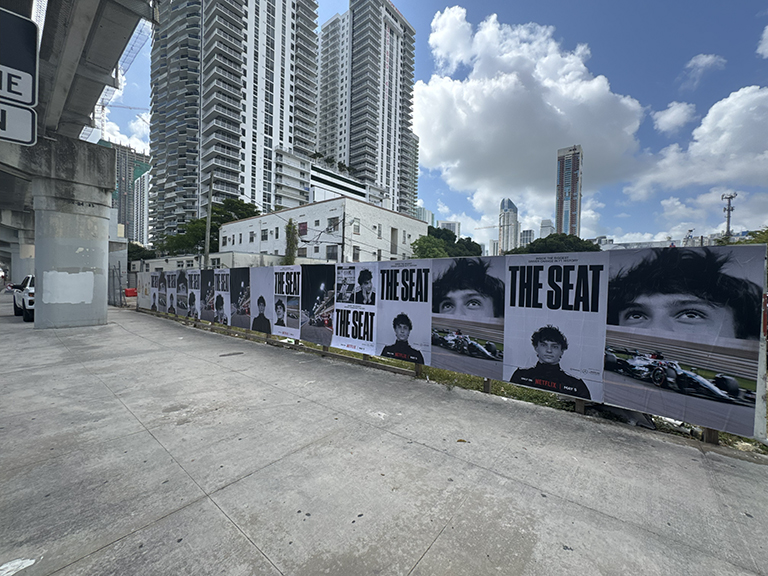
Wheatpaste quality is defined at three execution points: the paste formulation, the paper stock, and the application technique, and a failure at any one of these stages undermines the durability and visual impact of every placement in the campaign.
Wheatpaste campaigns work because they put large-format creative in the physical path of your audience without the intermediary of a screen, an algorithm, or an ad network. The impression is direct: your creative, in your audience’s physical environment, at a scale that demands attention. American Guerrilla Marketing builds wheatpaste programs around the location intelligence, vendor relationships, and field execution expertise that separates campaigns that generate genuine brand recall from campaigns that simply post paper.
What makes wheatpasting worth understanding in depth is the gap between campaigns that generate impressions and campaigns that generate results. The best campaigns are built around audience movement patterns, not just surface availability, they place messages where the right people walk, dwell, and return repeatedly, which drives the frequency that builds real brand memory. The format also benefits from organic amplification: quality street-level work in high-visibility environments gets photographed and shared, multiplying the original media investment without additional spend.
This article covers the tactical and strategic fundamentals of wheatpasting, how campaigns are structured, what execution looks like in practice, how to evaluate format options against objectives and budget, and what distinguishes campaigns that move the needle from campaigns that just spend money. Whether you’re planning a first activation or optimizing an existing street-level program, the information below gives you a grounded framework for making smart decisions and getting measurable outcomes.
Why Quality Wins on the Street
The street rewards intention, not volume by itself. People do not remember poster counts. They remember patterns. They remember seeing the same visual twice on one walk to the train, again outside the venue later that night, and again two days later near the coffee shop where they meet coworkers. That sequence is what creates perceived scale. A campaign feels large when it shows up repeatedly inside the same lived routine.
Quantity without strategy usually breaks that rhythm. Posters go up in too many neighborhoods, on too many low-value surfaces, in too many places where the target audience has no reason to be. The work may technically be “everywhere,” but in practice no one sees enough of it to care. There is no repetition, no narrative, no takeover effect. Just fragments.
Quality over quantity means choosing better opportunities for repeated exposure. That can look like dominating a two-block nightlife strip instead of touching eight disconnected neighborhoods. It can mean owning the approach to a music venue, a festival entry path, a college retail corridor, or a downtown cluster where foot traffic slows and people actually register what is on the wall. The smartest campaigns are rarely the widest. They are the most concentrated around audience behavior.
There is also a brand perception issue. Cleanly chosen, well-installed posters imply confidence. A random flood of placements can read like desperation. Street advertising always carries an energy component, and audiences are surprisingly good at feeling the difference between a campaign that was mapped with purpose and one that was sprayed across a city just to inflate a unit count.
The Real Attention Math Behind Poster Campaigns
The wrong metric in Wheat Paste Posting is posters-per-night. It sounds operationally impressive, but it tells you almost nothing about marketing performance. The better way to think is impressions per poster, per day, among the right people, across a route that naturally repeats. One excellent wall in a high-dwell corridor can outperform twenty weak placements that get a glance and vanish from memory.
Think about a commuter-heavy corridor near a subway exit in Lower Manhattan or a nightlife funnel in Williamsburg. If one poster sits where the same audience passes morning and evening, it earns multiple chances to land. If ten posters sit on low-traffic side streets with poor sightlines, hidden angles, or no real audience fit, the extra print volume is meaningless. The wall is not good just because it exists.
That is why experienced teams ask a different set of planning questions. How long does a viewer have to notice the piece? Are they moving fast or slowing down? Is the placement near a signalized crossing, food line, venue queue, bus stop, or retail pinch point? Is the wall in the natural visual field, or tucked behind parked cars, tree cover, utility clutter, or bad lighting? These details determine whether a poster is media or decoration.
Quality over quantity also improves memory efficiency. Street campaigns thrive on compact repetition. Three high-value exposures in one week to the same person often matter more than one accidental exposure to three different people. Strong placement turns every poster into a multiplier. Weak placement turns every poster into a sunk cost.
What Great Location Intelligence Looks Like
Great placement is not the same as high traffic. It is high-value traffic. There is a difference. Tens of thousands of people can pass a surface and still not meaningfully see it if they are moving too fast, driving instead of walking, or visually overloaded by the environment. Good location intelligence looks for traffic plus tempo, traffic plus context, and traffic plus audience fit.
Tempo matters because speed changes comprehension. A poster along a pedestrian route outside a concert hall, coffee cluster, or transit transfer has more mental availability than one along a generic arterial where people are rushing to get somewhere else. Context matters because culture changes how street work is read. Poster campaigns feel native in some districts and intrusive in others. Audience fit matters because not every busy block has the right people on it.
At AGM, location intelligence usually starts with movement patterns rather than wall inventory. You are mapping loops. Where do students cut through between classes and retail? Where do nightlife audiences spill after doors open and after they close? Where do tech workers and creative workers stack their routines, morning through evening? Where do event attendees queue, wait, and linger before and after the main draw? Those repeatable behaviors are what transform posters from static objects into memory triggers.
Strong locations also share practical traits. They have clear sightlines. They photograph well. They support clean installation. They sit at readable height. They allow a visual rhythm from one placement to the next. They are part of a path, not an isolated wall with no supporting context around it. The best poster campaigns feel like they were discovered by the audience several times in succession, even though that effect was planned from the beginning.
Real-World Corridor Thinking in Major Markets
Deep location intelligence only becomes useful when it gets specific. In New York, a quality-over-quantity poster campaign does not mean “all of Manhattan.” It means understanding the difference between the Lower East Side, Williamsburg, Bushwick, SoHo, and the theater district. Each has its own tempo, audience composition, and visual tolerance. A music release might benefit from concentrated placements near Williamsburg venue routes, record stores, subway exits, and late-night food spillover rather than random citywide distribution. A fashion drop might perform better around SoHo edge corridors where retail walking speed is slower and visual attention is already primed.
In Los Angeles, the logic changes because neighborhoods operate more independently. High-quality Wheat Paste Posting is often less about citywide repetition and more about owning the right micro-market, whether that is Melrose retail foot traffic, Silver Lake coffee-and-nightlife flow, Echo Park event adjacency, or the Arts District’s cultural crossover audience. The poster count can actually be lower than in New York, but the placement logic has to be tighter because mobility patterns are less uniform.
Chicago has its own rhythm. Wicker Park, Logan Square, West Loop spillover, and corridor-specific CTA traffic all shape what a smart takeover looks like. A campaign that concentrates around one creative pocket where nightlife, dining, and repeated walking routes overlap will usually feel louder than a broad city spread. The same principle shows up in Austin around East Austin and Red River, in Miami around Wynwood and nearby nightlife corridors, and in Nashville where venue adjacency and tourism overlap can either sharpen or dilute a campaign depending on which blocks are selected.
The pattern is consistent across markets. Quality placement is local knowledge in action. It means knowing the blocks where the audience lingers, the surfaces where the creative reads cleanly, and the routes where repetition naturally happens. That is why serious poster campaigns are planned like field operations, not print jobs.
Creative Discipline Matters as Much as Placement
Even the best wall cannot save weak creative. Quality over quantity applies to the message too. The street does not reward over-explanation. A strong wheat paste campaign usually works because the creative can be understood fast, remembered easily, and recognized again on the second and third exposure. If the poster is overloaded, overdesigned, or visually muddy, repeated exposure only repeats the confusion.
The best poster creative has hierarchy. One dominant image or typographic statement, one readable focal point, one primary action. That does not mean everything has to be minimal. It means every design choice should serve a speed-of-recognition goal. If the campaign is for an event, release, product drop, or film, the viewer should grasp the basic proposition in seconds and then use repeat exposures to deepen curiosity.
Execution Quality Is a Media Variable
Wheat Paste Posting is not just planning plus design. It is also craft. Sloppy installation can destroy a smart plan fast. Torn corners, trapped bubbles, drifting seams, weak adhesion, bad overlap, inconsistent trim, or hasty placement height all signal that the brand did not care enough to finish strong. Street audiences may not articulate those details, but they absolutely feel them.
That matters because execution quality affects both retention and brand perception. Posters that go up clean stay legible longer, photograph better, and support the idea that the campaign is intentional. Posters that wrinkle, peel, or look rushed reduce the campaign’s credibility immediately. In a format built on repetition, every bad install becomes a repeated liability.
Good field execution means understanding surface condition, adhesive behavior, weather timing, pressure application, overlap rules, and refresh planning. It also means resisting the urge to overextend crews. Teams chasing unit count at all costs often move too quickly, compromising the finish. The output number rises while the true campaign value falls. Quality-focused crews understand that the last 20 percent of care often determines whether the first 80 percent of work actually pays off.
There is a simple truth underneath all of this: the brand is judged by the edges. Street posters are close-range media. People can see the details. If the edges are clean, the alignment is sharp, and the wall feels considered, the message feels premium even when the tactic is deliberately gritty. That tension is part of what makes great poster campaigns powerful. They feel street-smart, but never sloppy.
Campaign Strategy & Market Considerations
Campaign strategy is where quality over quantity becomes operational. The first step is being brutally honest about the real objective. Is the campaign trying to create local cultural presence in one neighborhood? Drive awareness around an event or launch date? Support a larger OOH or digital push with street-level credibility? Generate photo-friendly moments in a known culture district? The objective shapes the footprint, and the footprint should shape the print run, not the other way around.
Market selection is next. In some cities, the right move is one hyper-focused pocket. In others, it is two or three tightly related pockets with similar audience movement. AGM usually treats markets as collections of micro-environments rather than one broad geography. That mindset helps avoid lazy planning. A city is too big to own casually. A corridor is ownable. A nightlife strip is ownable. A subway spillover loop is ownable. A campus edge is ownable. That is where quality wins.
Timing matters just as much as placement. A poster campaign around a record release, retail opening, film launch, conference week, or major event should build toward the days when audience density peaks. Going up too early can waste freshness. Going up too late can miss the moment. Quality planning treats timing as part of the media value, not just an operations note.
Refresh cadence matters too. Some blocks hold creative longer than others. Some markets chew through surfaces faster because of weather, density, or adjacent activity. A high-quality campaign does not assume every install will age the same way. It budgets for selective refresh where the best walls justify the effort. That is another place where quality over quantity shows up: not trying to maintain everything equally, but protecting the surfaces that actually drive the campaign.
Finally, there is the market-fit question. Some neighborhoods can carry heavier saturation without feeling forced. Others respond better to tighter, more selective placement. Understanding that difference is part of respecting the environment. The goal is never to make the campaign feel dumped into a city. The goal is to make it feel like it belongs in the exact conversation happening there right now.
How to Measure Poster Campaign Performance Honestly
Street campaigns should be measured, but they should be measured honestly. Fake precision is worse than no measurement at all. The right goal is directional truth: enough evidence to understand whether the placement strategy, creative, and concentration level are actually doing their job.
The first bucket is direct response. QR codes, short links, promo codes, RSVP pages, and geo-specific landing pages can all connect physical exposure to digital behavior. They will not capture every person affected by the campaign, but they provide clear signals. The second bucket is visible engagement: social posts, organic photography, mentions, tags, creator pickup, and audience comments that reveal the campaign is becoming a reference point. The third bucket is business lift, which can include branded search, local traffic changes, store visitation patterns, or campaign-period performance in the exact neighborhoods where the work ran.
Documentation matters more than many teams realize. Good field photography is not just proof of execution. It also helps compare surfaces, angles, adjacency, and visual dominance after the fact. Over time, that becomes placement intelligence. You learn which types of walls earn better photographs, which corridors produce more secondary sharing, and which density levels create the strongest neighborhood takeover effect.
Quality over quantity is easier to defend when you measure the right things. If ten focused placements create stronger digital response, stronger field photos, and more repeated audience recognition than thirty weak ones, the strategy is not theoretical anymore. It is operationally proven.
Frequently Asked Questions
What is wheat paste posting and how does it work?
Wheat paste posting is a street-level advertising technique that uses water-based adhesive to apply large-format paper posters directly to urban surfaces. American Guerrilla Marketing plans routes based on audience movement patterns, applies materials during off-peak hours, and selects high-visibility surfaces in neighborhoods where target consumers live, work, and gather.
How long do wheat paste posters last on city streets?
Wheat paste poster longevity varies by city, surface, weather, and enforcement. In major metros with active cleaning crews, installations may last 3–10 days. In secondary markets with lower visual competition, posters can remain visible for 2–4 weeks. Professional campaigns plan phased refresh schedules to maintain presence throughout the campaign window.
Is wheat paste posting legal?
Legal status varies by municipality and surface. Most cities prohibit posting on public property without permits, though enforcement varies significantly by neighborhood and market. American Guerrilla Marketing operates legal permitted poster campaigns in addition to managed placements, and works with clients to design programs that balance coverage, compliance, and budget.
How much does a wheat paste posting campaign cost?
Wheat paste campaign costs depend on market size, number of locations, poster dimensions, and campaign duration. Entry-level city campaigns typically start in the low-to-mid thousands for a meaningful footprint. American Guerrilla Marketing builds custom programs scaled to budget, with transparent breakdowns of production, placement, and field execution costs.