Marketing and Advertising Agencies in Chicago: How to Choose the Right Partner for Your Brand
Chicago isn’t one city. It’s 77 neighborhoods packed into 234 square miles, each with its own street culture, demographic profile, and foot traffic patterns. When brands search for marketing and advertising agencies in Chicago, they usually land on a list of full-service shops, digital firms, and PR companies. Those all have their place. But if you want your message to live on the street, you need a team that knows the difference between the Wicker Park poster corridor on Milwaukee Avenue and the Pilsen creative community along 18th Street.
We’ve been running street campaigns in Chicago for over a decade. Our crews know which walls own each corner, which intersections hold a crowd during rush hour, and how to install 200 posters across Logan Square before the block wakes up. We’ve worked with global brands, indie musicians, fitness startups, and entertainment studios. Every campaign taught us something new about this city.
This guide breaks down the Chicago agency environment, the neighborhoods where outdoor campaigns deliver the most, and how our team at American Guerrilla Marketing approaches the Windy City differently than any general advertising shop would. If you’re planning a product launch, an event push, or a brand awareness campaign in Chicago, that’s where you start.
Why Chicago’s Media Market Demands a Street-Level Strategy
Chicago’s advertising market ranks third in the United States by media spending. The Chicago DMA reaches more than 3.5 million households. But those numbers don’t capture what makes Chicago special as a street marketing environment. The real power comes from density and walkability.
The L train runs elevated through the heart of neighborhoods like Wicker Park, Logan Square, and River North, placing thousands of commuters at street level twice a day. Those aren’t passive exposures behind glass. They’re people waiting at intersections, standing on platforms, walking between restaurants and bars, and stopping at storefronts. They see what’s on the walls.
Traditional media buys in Chicago get expensive fast. A Chicago Tribune integrated campaign runs into five figures fast. A prime-time spot on WGN or ABC 7 costs far more than most mid-sized brands can sustain. But a street-level poster campaign along the Milwaukee Avenue corridor from Damen to Western can reach the exact 21-to-34 demographic brands pay premiums to find elsewhere. And it can do it for a fraction of the cost.
We’ve run campaigns in Chicago across virtually every neighborhood. The West Loop’s restaurant and hotel corridors on Randolph Street and Fulton Market attract high-earning professionals and tourists six nights a week. Pilsen’s 18th Street and Blue Island Avenue serve a creative and artistic community that music, fashion, and food brands desperately want. Lincoln Park’s Clark Street and Fullerton Avenue draw entertainment and fitness audiences. Wrigleyville around Clark and Addison runs year-round foot traffic tied to the Cubs schedule.
Chicago also has a strong independent music, arts, and culture scene that amplifies street-level campaigns. A well-placed poster run in Bucktown or Rogers Park gets photographed and shared organically. The street itself becomes a media channel. General digital agencies never think about that. We do.
The city’s neighborhoods have hard edges. Someone who lives in Hyde Park shops, eats, and works near 53rd Street and Lake Park Avenue. They may rarely cross into Logan Square. A campaign that targets “Chicago” without thinking neighborhood by neighborhood is a campaign that misses its audience. That specificity separates street-focused marketing and advertising agencies in Chicago from the firms that think in zip codes and metro radius.
Types of Marketing and Advertising Agencies in Chicago
When you start evaluating marketing and advertising agencies in Chicago, you’ll encounter several distinct categories. Understanding what each type does, and what it can’t do, saves you months of mismatched expectations.
Full-Service Agencies handle strategy, creative, media buying, and reporting under one roof. They’re built for brands that want a single point of contact across television, digital, out-of-home, and print. Large Chicago firms like Leo Burnett built their legacy on this model. These shops work best for brands spending $250,000 or more monthly and needing fully integrated campaigns. For anything smaller or more specialized, they tend to be slow and expensive.
Digital Marketing Agencies focus on paid search, social media, email, programmatic advertising, and SEO. Chicago has hundreds of these firms. They’re excellent for brands that live primarily online. Their weakness is anything physical. They can’t tell you which block in Wicker Park to own, and they don’t have crews in the street.
PR and Communications Firms manage media relations, influencer partnerships, and brand reputation. A strong Chicago PR firm can land you coverage in the Tribune or on NBC5. But press coverage is unpredictable, and a PR push alone rarely drives the street-level buzz that event campaigns need.
Out-of-Home Specialists focus on billboards, transit advertising, bus shelters, and commuter rail displays. major OOH operators, large outdoor media networks, and national OOH operators dominate most of this inventory in Chicago. OOH is a proven awareness driver, but traditional billboard inventory is expensive and rigid. You can’t target a specific block or adjust quickly once you’ve committed.
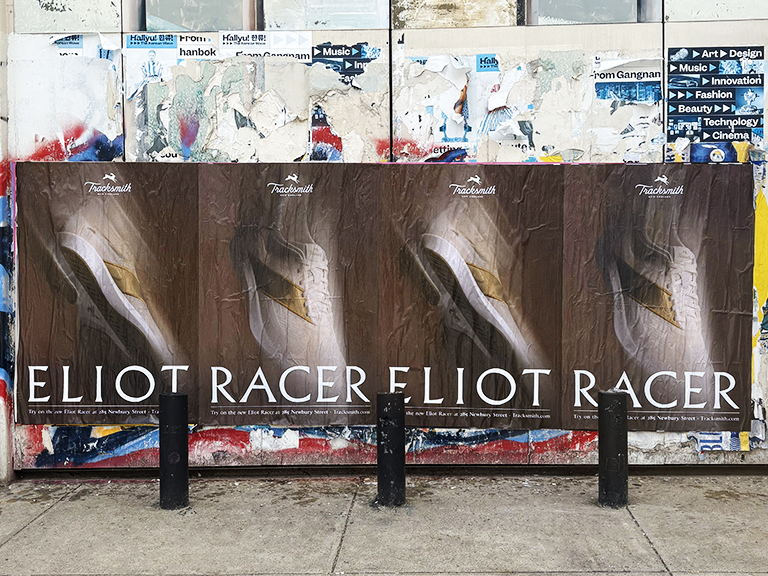
Guerrilla and Street-Level Marketing Agencies live in the gap. We handle poster campaigns, wheatpaste installations, street team activations, LED mobile billboards, and experiential work that puts your brand physically in the spaces where your audience already is. We work fast, we operate at the block level, and we can scale up or pull back based on campaign performance. That flexibility matters when you’re running a launch in a city like Chicago, where conditions change by neighborhood.
At American Guerrilla Marketing, we sit in that last category, with the added capability of full media planning and buying when clients need it. We’re not trying to replace every other agency type. We’re the team you call when you want something to actually show up on the streets of Chicago.
Chicago Neighborhoods Where Our Campaigns Hit Hardest
Every Chicago campaign starts with a conversation about the audience. Who are you trying to reach? Where do they live, eat, work, and spend their weekends? Those answers drive the location strategy. Here’s how we think about the city’s key neighborhoods for street-level campaigns.
Wicker Park and Bucktown
Milwaukee Avenue between Damen and Western is one of the highest-concentration poster corridors in the Midwest. The stretch from the Damen Blue Line stop north through the Wicker Park commercial triangle hits baristas, artists, tech workers, and nightlife crowds all in the same block. Bucktown’s Damen Avenue and North Avenue add reach into a slightly older, higher-income bracket. We’ve run campaigns here for musicians, fashion brands, fitness apps, and restaurants. The returns are consistent.
Logan Square
Logan Square has changed fast over the past decade. Milwaukee Avenue from California to Kedzie now hosts some of the city’s best dining, bars, and independent retail. Palmer Square and the Milwaukee-Kedzie-Logan Boulevard intersection see heavy weekend foot traffic. This neighborhood skews young, creative, and politically engaged. It’s particularly effective for brands in food and beverage, music, fashion, and social impact.
Pilsen
Pilsen runs along 18th Street from Halsted west to Western Avenue, with Blue Island Avenue and Racine Avenue adding secondary corridors. This neighborhood has one of Chicago’s most active arts scenes, anchored by the National Museum of Mexican Art and dozens of independent galleries. Poster campaigns here land well for music acts, events, cultural brands, and any marketer trying to reach a creative and engaged 18-to-35 audience.
River North and West Loop
River North on Ohio Street and Grand Avenue, and the West Loop along Randolph Street and Fulton Market, attract a more upscale professional crowd. Restaurant reservation traffic in the West Loop is some of the densest in the city on Thursday, Friday, and Saturday nights. These neighborhoods work well for luxury brands, hospitality, finance, and B2B campaigns aimed at decision-makers who happen to be walking through one of the country’s best restaurant districts.
Wrigleyville and Lincoln Park
Clark Street from Fullerton to Addison pulls in Cubs fans, college graduates, and sports-adjacent crowds. The Addison Red Line stop and the stadium at Clark and Addison create consistent high-density foot traffic from April through October. Lincoln Park along Clark Street and Sheffield Avenue extends that reach into a more residential, professional demographic year-round.
Hyde Park and South Side Corridors
Hyde Park around 53rd Street and Lake Park Avenue reaches a highly educated audience tied to the University of Chicago. The South Side more broadly, including Bronzeville on King Drive and 43rd Street, offers access to communities that many North Side-focused campaigns miss entirely. We plan for the full city, not only the trendy north corridor.
How We Plan and Execute Chicago Campaigns
Every Chicago campaign starts with a brief. What’s the goal? Who’s the audience? What’s the geography? What’s the timeline? From there, we move into location scouting, design review, production, and installation.
Our Chicago location scouting pulls from a database of permitted placements we’ve built over years of running campaigns in the city. We know which walls are available when. We know the surfaces that hold paper through a Chicago winter and which ones shed posters in the first rain. We know the sight lines from each intersection and which direction traffic flows during peak hours.
Production typically runs one to two weeks depending on quantity and format. We work with print vendors who understand the specifications for street-level installations. Paper weight, ink type, and poster size all affect how a campaign looks in the field. We review proofs before anything goes to press.
Installation in Chicago happens overnight, typically between midnight and 5 AM. Our crews work in teams, moving block by block through the targeted corridor. A 200-piece campaign across three neighborhoods can go up in a single night. Larger campaigns stage across multiple nights to maintain quality and coverage.
After installation, we shoot documentation. You get GPS-tagged photos of every placement, organized by neighborhood and street. That documentation is your proof of performance and your reference for future campaigns.
Ready to Launch Your Campaign?
American Guerrilla Marketing plans, scouts, and executes street-level campaigns across 50+ U.S. markets. GPS-tracked, fully documented, built for brands that want proof of performance.
Chicago Campaign Formats and Pricing at a Glance
Chicago campaigns can run across multiple formats depending on your goals, budget, and timeline. Here’s how the primary options compare.
Chicago Street Campaign Format Comparison
Format
Best For
Typical Size
Duration
Starting Budget
Wheatpaste Posters
Music, events, consumer brands
24″x36″ to 48″x72″
2-4 weeks
$5,000
Snipe Posters
High-density saturation
11″x17″ to 24″x36″
1-2 weeks
$3,500
Street Team + Flyers
Event launches, sampling
Custom
Single day to 1 week
$2,500
LED Mobile Billboard
High-impact awareness
14’x48′ digital display
1 day minimum
$1,500/day
Mural
Long-term brand presence
Custom
6-24 months
$15,000
Multi-Format Chicago Campaign
Full market takeover
Mixed
2-4 weeks
$20,000
These ranges reflect our Chicago-specific experience. Every campaign we scope is custom-built. We’ll tell you exactly what a Chicago campaign costs before you commit to anything.
Measuring Your Chicago Campaign
One of the first questions brands ask is how to measure a street campaign. Digital marketing has conditioned everyone to expect real-time dashboards and click-through rates. Street campaigns work differently, and that’s part of their power. You’re building brand presence in physical space, not competing in an auction for digital attention.
We offer focused location scouting, digital or in-person, to identify the exact locations that are right for your campaign. A market scout runs $3,000 per market and delivers a ranked placement report before you spend on production. Post-campaign, we run brand recall surveys to measure awareness lift in your target markets.
Brand recall surveys are our primary measurement tool. We work with survey partners who deploy targeted questionnaires to residents and frequent visitors in the neighborhoods where your campaign ran. We ask about aided and unaided brand recall, message association, and purchase intent. That data tells you whether the campaign moved the needle with real people, not bots.
We also track documentation coverage. Every placement gets a timestamped, GPS-tagged photo. You see exactly what went up, where it went up, and what it looked like in the field. For clients who need to report back to a board or parent company, this documentation package is essential.
Over multiple campaigns in Chicago, our clients report consistent gains in brand recall within their target neighborhoods. Music and entertainment clients see direct correlation between campaign neighborhoods and ticket and streaming upticks. Consumer brands see spikes in local search interest in the weeks following installation.
What Sets American Guerrilla Marketing Apart in Chicago
When you compare marketing and advertising agencies in Chicago, a few things separate a specialized street marketing firm from a general agency.
First, we know the city physically. Our team has walked these corridors, photographed the walls, and run campaigns in every neighborhood on this list. We don’t plan campaigns from a spreadsheet of available inventory. We scout locations in person, we evaluate sight lines, and we choose placements based on real-world observation, not merely what’s listed as available.
Second, we operate quickly. A full-service agency takes six to twelve weeks to concept, produce, and execute a campaign. We can turn a Chicago poster campaign from brief to installation in two to three weeks. When you’re on a tight product launch timeline or responding to a market moment, that speed matters.
Third, we price honestly. We give you a full campaign proposal with itemized costs before you sign anything. There are no hidden production fees, no markup surprises, and no vague line items. You know what you’re paying for and what you’re getting.
Fourth, we’ve done this with brands across industries. We’ve run Chicago campaigns for music acts playing the Metro and the Riviera Theater. We’ve worked with fashion brands launching at retailers on Michigan Avenue. We’ve done food and beverage activations in the West Loop and Pilsen. That breadth means we understand how different audiences behave and what creative formats resonate in each neighborhood.
Finally, we don’t disappear after the install. We document, report, and stay available throughout the campaign window. If something needs adjustment, we adjust. That’s not something most marketing and advertising agencies in Chicago can offer.
Working With Our Chicago Team
Starting a Chicago campaign with us is straightforward. You tell us your goals, audience, geography, timeline, and budget. We come back with a location strategy, format recommendations, and a detailed proposal. Once approved, we handle production coordination, scheduling, installation, and documentation.
Most of our Chicago clients start with a single-neighborhood campaign to test the format and creative. Then they scale. A brand that starts with a 100-piece Wicker Park run often comes back for a citywide expansion across six neighborhoods and multiple formats. The data from the first campaign informs everything we do next.
Our Chicago team operates year-round. Yes, we work through Chicago winters. Proper paper and paste selection means campaigns hold through cold and wet conditions. We’ve run successful winter campaigns in January. The walls don’t sleep, and neither do we.
If you’re ready to make Chicago notice your brand, give us a call. We’ll tell you what we’d do and what it would cost, no commitment required.
Frequently Asked Questions
What types of marketing and advertising agencies operate in Chicago?
Chicago has a full range of agency types: full-service integrated firms, digital-only agencies, PR and communications shops, out-of-home specialists, and guerrilla or street marketing agencies. The right choice depends on your goals, budget, and the type of audience you want to reach. For street-level presence and physical brand awareness, a specialized guerrilla marketing agency will outperform a general firm every time.
How much does a street marketing campaign in Chicago cost?
Costs vary by format, scale, and duration. A focused single-neighborhood poster campaign starts around $3,500 to $5,000. A multi-neighborhood, multi-format Chicago takeover can run $20,000 to $50,000 or more. We scope every campaign individually and give you a full cost breakdown before you commit. There are no surprises.
Which Chicago neighborhoods see the highest foot traffic for outdoor campaigns?
Wicker Park’s Milwaukee Avenue corridor, Logan Square around Kedzie and Milwaukee, River North’s Ohio and Grand intersection, the West Loop’s Fulton Market and Randolph Street, Pilsen’s 18th Street, Wrigleyville at Clark and Addison, and Lincoln Park along Clark and Fullerton all deliver strong street-level exposure. The right choice depends on your target audience, not only the foot count.
How long does a Chicago poster campaign stay up?
Most street-level poster campaigns in Chicago run two to four weeks. High-traffic commercial corridors see faster turnover as new campaigns compete for the same walls. We factor this into our placement strategy and scheduling. Some clients run rolling campaigns, refreshing placements every two weeks to maintain presence over a longer period.
What’s the best format for music and event promotion in Chicago?
Wheatpaste posters in large formats (24×36 up to 48×72 inches) have historically been the standard for music promotion in Chicago’s independent music corridor. They command attention, they scale to street level, and they’re the format Chicago’s music and arts audiences expect to see. Combined with targeted snipe placement around venues like Metro, Thalia Hall, and Empty Bottle, a poster campaign can drive serious awareness ahead of a show or album drop.
Can you target a specific demographic by neighborhood in Chicago?
Yes. Neighborhood selection is our primary demographic targeting tool. Wicker Park and Bucktown skew young professional and creative class. Pilsen and Bridgeport reach a strong Latino and arts community. Hyde Park attracts an academic and highly educated audience. River North and the Gold Coast reach higher-income consumers. We match your audience profile to the neighborhoods that deliver the right people.
How do you measure whether a Chicago street campaign worked?
We use brand recall surveys deployed to residents and frequent visitors in the campaign neighborhoods. Surveys measure unaided and aided brand recall, message association, and purchase intent. We also provide full GPS-tagged photo documentation of every placement. For digital brands, we track local search volume changes in campaign neighborhoods during and after the campaign window.
What’s the typical lead time to launch a Chicago campaign?
Most campaigns go from signed proposal to installation in two to three weeks. That covers design finalization, print production, location confirmation, and scheduling. Rush timelines of one week are possible for smaller campaigns if your creative is already finalized. We recommend building in at least two weeks to get the most out of the location scouting and production process.
Do you work in Chicago suburbs or just the city?
We work primarily in Chicago proper, but we’ve run campaigns in Evanston, Oak Park, Wicker Park adjacent areas, and other dense suburban neighborhoods with strong foot traffic. If your audience lives or works in a specific suburban market, talk to us about what’s possible. We scout each location individually before committing to placements.
Can you combine street-level campaigns with digital in Chicago?
Absolutely. We work with brands that run poster campaigns alongside social media, paid search, and influencer activations. The street campaign drives physical awareness, the digital components extend reach and retarget. Our media buying team can help coordinate the full plan or simply execute the street component alongside your existing digital agency.
Ready to Put Your Brand on the Streets of Chicago?
American Guerrilla Marketing has been executing street campaigns in Chicago for over a decade. We know this city block by block. We know which walls hold and which ones don’t. We know the neighborhoods your audience calls home, and we know how to get your message in front of them.
Call us or send a message. We’ll tell you what a Chicago campaign looks like, what it costs, and what kind of results to expect. No pitch decks. No runaround. Just a straight conversation with people who’ve done this hundreds of times in this city.