Every late July, Grant Park fills with approximately 100,000 people per day for four days. The crowd is young, from everywhere, and spending days in Chicago with the full intention of experiencing the city as much as the festival itself. They stay in hotels and Airbnbs across the city. They eat in the West Loop, drink in Wicker Park, and wander through the South Loop. They arrive on Lake Shore Drive and leave through the same corridors, moving through Chicago’s streets in a way that makes the city itself the campaign zone for any brand that wants to reach them. See also: Festival Marketing.
At American Guerrilla Marketing, Lollapalooza is one of the highest-impact events on our Chicago campaign calendar. We execute guerrilla marketing campaigns, LED billboard truck runs, festival poster campaigns, and street team deployments in the corridors surrounding Grant Park and across the neighborhoods where the Lollapalooza audience stays, eats, and gathers, without any official festival relationship.
This guide explains how Lollapalooza marketing works from the outside, what tactics generate the strongest results, and how to plan a campaign that reaches one of the most concentrated young adult audiences in the country during the single highest-impact event window in the Chicago summer calendar.
The Lollapalooza Audience: 400,000 People in Four Days
Lollapalooza is not just a festival. It is a four-day event that effectively doubles Chicago’s young adult social scene for an entire weekend. The 400,000 total attendees are not all Chicagoans. A significant percentage travel from out of state, which means they are staying in hotels, exploring the city, and spending four days as fully engaged visitors with time, money, and zero routine obligations distracting their attention from their environment.
The demographic skews 18 to 35, with the 21 to 28 segment particularly well represented. This is a generation of music fans who are also deeply engaged with brands, social media, food, lifestyle, and the full range of consumer categories. They are brand-aware in a way that older audiences often are not, and they respond to brand experiences that feel authentic and connected to the cultural moment they are already in.
For consumer brands targeting this demographic, Lollapalooza is the single highest-concentration opportunity in the Chicago summer. Nothing else brings 400,000 of these people to the same place at the same time. The question is not whether this audience is worth reaching. It is how to reach them where they actually are, not just inside the gates where official sponsors compete for their attention, but in the streets, neighborhoods, and corridors where no official presence is required. See also: Street Team.
Why Outside the Gates Wins
Official Lollapalooza sponsorships are expensive and competitive. Inside the festival, brands compete for attention against an overwhelming stimulus environment of music, stages, food vendors, art installations, and hundreds of other visual inputs. The average attendee is inside the festival for eight to ten hours across multiple days, and their attention capacity for brand marketing in that environment is genuinely limited.
Outside the festival, the math changes. On Lake Shore Drive and the surrounding streets, your LED billboard truck is one of the only things moving. On the sidewalks of Randolph Street, your festival poster campaign is one of the few things people are reading while they walk to the entrance. In the South Loop and West Loop bars and restaurants where attendees gather at night, your brand ambassador is having the first real conversation most of these people have had with a brand all day.
The exterior campaign reaches the same audience the interior campaign does, often at better dwell times and with less competition for attention. And it does so at a fraction of the cost.
Festival Street Teams at Lollapalooza
Festival street teams are the boots-on-the-ground element of our Lollapalooza marketing deployments. Our brand ambassador teams work the corridors around Grant Park, the Randolph Street approach to the festival, and the neighborhoods where attendees gather in the evenings. They distribute samples, hand out collateral, create photo moments, and have real conversations that leave people with something to carry home, whether that is a product, a card, or just a memory of an interaction that stood out.
Street teams at Lollapalooza operate during three key windows: morning setup, when attendees are heading into the festival and energy is high; midday, when some attendees are coming and going from nearby restaurants and the general foot traffic on surrounding streets is peak; and evening post-festival, when attendees are pouring out of the park and into the surrounding neighborhood for the next leg of their night.
The evening window is particularly productive. The post-festival crowd is still in festival mode, still social, and moving in groups into the bars and restaurants of the South Loop and surrounding neighborhoods. A brand ambassador who can match that energy and offer something relevant, whether a sample, a coupon, or a genuinely interesting brand interaction, is catching people at the most socially open point of their day.
Festival Poster Campaigns: Building the Pre-Festival Field
The two weeks before Lollapalooza are when Chicago’s young adult community starts paying peak attention to anything connected to the festival. The city’s music-oriented neighborhoods, Wicker Park, Logan Square, Pilsen, River North, the South Loop, are full of people who are buying outfits, making plans, and tuned in to anything with festival energy.
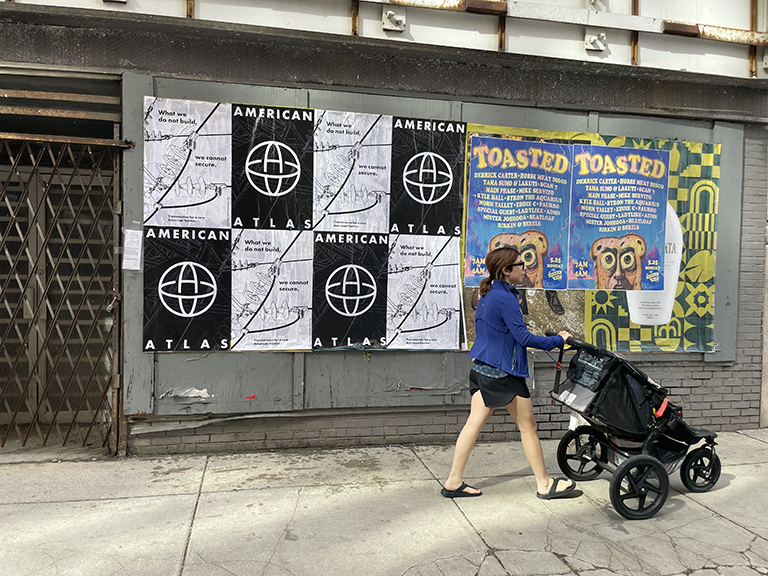
We deploy wheatpaste poster campaigns in these neighborhoods three to four weeks before the festival, creating brand presence in the environments where the Lollapalooza audience spends its everyday life before converging on Grant Park. A brand seen on the wall in Wicker Park on a Tuesday is a familiar name when the same person encounters it on Randolph Street on Saturday.
The festival poster campaign continues through the festival weekend itself, maintaining presence in the neighborhoods that become nightly gathering spots for attendees. Posters that go up on Tuesday are still up on Saturday. The cumulative frequency effect of pre-event and during-event poster presence creates a brand familiarity that a single day-of activation cannot produce.
Sidewalk stencils on the approach routes to Grant Park add a ground-level dimension to the poster campaign. The last few blocks before the festival entrance are among the most brand-receptive moments of the attendee journey, when people are walking in groups, excited, and genuinely taking in their surroundings. A stencil on those blocks is seen by everyone who walks to the festival on foot.
LED Billboard Trucks: The Grant Park Perimeter Play
Our LED billboard trucks run the Grant Park perimeter during the key ingress and egress windows of each festival day. The primary routes are Lake Shore Drive and Columbus Drive heading south into the festival zone, Randolph Street from the west, and the surrounding surface streets that carry foot and vehicle traffic to and from the park.
During a Lollapalooza day, the peak truck deployment windows are early afternoon, when the crowd is building and the surrounding streets are busy with arrivals, and late evening, when 100,000 people are leaving the park simultaneously and the surrounding blocks are at maximum density. These are moments of genuine captive audience: people waiting to cross streets, waiting for rideshares, or simply moving through a compressed physical space where there is nowhere to look except at what is around them.
A well-routed LED truck on a Lollapalooza day can generate 15,000 to 30,000 impressions depending on route and timing. Combined with the festival poster campaign in the surrounding neighborhoods, the total reach of a perimeter campaign built on these two tactics alone is significant for a fraction of the cost of an official sponsorship.
The Chicago Summer Festival Calendar
Lollapalooza is the crown jewel of the Chicago summer festival calendar, but it is not the only opportunity. Chicago hosts a substantial number of music and cultural festivals across the summer, from smaller neighborhood events to Pitchfork and Riot Fest, each of which draws a concentrated audience and creates a campaign window for the right brands.
For brands executing in Chicago, we recommend building a summer festival calendar that spans multiple events rather than concentrating all resources on a single weekend. A brand that runs consistent campaigns across three or four major summer festivals in Chicago builds ambient familiarity with the city’s young adult audience that a single Lollapalooza activation, however well executed, cannot achieve alone.
The combination of Lollapalooza scale with consistent presence at the surrounding events creates the kind of brand saturation in a market that typically requires paid media at much higher cost to produce. Street-level festival marketing, done across a season, is one of the most efficient ways to become a known name in a specific city market.
Planning Your Lollapalooza Campaign
Lollapalooza occurs in late July. The campaign planning timeline should begin no later than May for the best results, and ideally earlier for brands that want to lock in the full range of execution options.
May: Strategy session, campaign brief, budget allocated. Chicago truck inventory and ambassador staffing for this window begins booking early.
June: Campaign plan finalized. Creative for festival poster campaign into production. Ambassador team staffed and briefed. Any applicable Chicago site approval processes initiated. Book by June 15 to secure the dates you need, as this window books faster than any other Chicago event period.
Early July: Pre-festival poster campaign launches in target Chicago neighborhoods. Neighborhoods prioritized based on audience concentration and proximity to festival zone.
Late July, festival week: Full deployment. LED billboard trucks on Grant Park perimeter routes. Street teams working the festival corridors during peak windows. Sidewalk stencils on approach routes. Any interior sponsored elements if applicable.
Post-festival: Campaign documentation and impression reporting. Debrief and recommendations for next year’s campaign, typically the right time to book the following year if you want priority positioning.
What Brands Do Well at Lollapalooza
The Lollapalooza audience demographic makes the festival a natural fit for a wide range of consumer categories. Beverage brands, both alcohol and non-alcohol, are the most active advertisers in the festival perimeter. Fashion and streetwear brands connect naturally to the fashion-forward festival culture. Music-adjacent technology brands, from headphones to streaming services, find a highly receptive audience at a music festival. Food delivery apps, fintech brands targeting young professionals, and DTC lifestyle brands all find the 21 to 28 demographic at its most accessible during festival weekend.
The category fit matters less than the execution approach. A brand that shows up with a genuinely interesting activation, one that adds something to the festival experience rather than simply demanding attention, will generate more recall and positive sentiment than a higher-spending brand that shows up with generic marketing. At Lollapalooza, the crowd is sophisticated and accustomed to brand marketing around music events. What they respond to is creativity, authenticity, and a reason to engage that actually makes sense in the context of where they are.
Chicago-Specific Execution Considerations
Chicago has specific site approval requirements and logistical considerations that affect how Lollapalooza marketing campaigns are executed. The city’s park district controls the immediate perimeter of Grant Park, which affects placement of stationary activations. The street grid around the park, particularly on festival days, is subject to traffic management that affects truck routes and pedestrian flows.
Our team has years of experience executing in Chicago and understands how these factors affect campaign planning and execution. We build Chicago-specific site approval and logistics plans into every campaign, so brands are not surprised by requirements that become apparent only after launch. The site approvals, the routes, the timing windows: all of this is mapped in advance so that execution on the festival days is clean.
Chicago’s weather is also a genuine factor for late July campaigns. Lollapalooza weekend can range from hot and sunny to stormy, and our campaigns are built to accommodate the full weather range. Ambassador teams have wet-weather protocols. Truck routes are adjusted for traffic pattern changes on rain days. Poster placements are selected for durability in varying weather conditions.
Frequently Asked Questions
Can we market at Lollapalooza without an official sponsorship?
Yes. AGM deploys campaigns in the public corridors surrounding Grant Park , Lake Shore Drive, Columbus Drive, Randolph Street, and the surrounding Chicago neighborhoods , without any official festival relationship. Guerrilla marketing and OOH campaigns in the event perimeter are approved, effective, and often deliver stronger brand recall than official sponsor placements.
When should we book Lollapalooza marketing?
Book by June 15 to secure Lollapalooza dates. Inventory around this event window books out faster than any other Chicago event period. Late July is peak demand for LED trucks, ambassador staffing, and print production in the Chicago market.
What street marketing tactics work best around Lollapalooza?
LED billboard trucks running Lake Shore Drive and Grant Park perimeter routes during peak attendance hours, wheatpaste campaigns in the surrounding neighborhoods, festival poster campaigns on the streets leading to the venue, and brand ambassador street teams working Randolph Street and the South Loop all produce strong results.
What neighborhoods should we target for pre-Lollapalooza campaigns?
The South Loop, West Loop, River North, and Wicker Park are the neighborhoods where the Lollapalooza audience is most concentrated in the weeks before the festival. Campaigns in these areas reach the audience at home before they converge on Grant Park.
How large is the Lollapalooza audience?
Lollapalooza draws approximately 100,000 attendees per day across four days in late July, for a total attendance of roughly 400,000. The surrounding Grant Park corridors and Chicago neighborhoods see significantly higher traffic during the festival weekend as attendees move between accommodation, dining, and the venue.
What is the Lollapalooza audience demographic?
Lollapalooza draws a broad range of 18- to 35-year-olds, with a strong representation of the 21-28 segment. The festival is one of the most diverse in terms of genre and audience composition among major American music festivals, drawing fans from across the country and internationally.
Can AGM deploy festival poster campaigns in Chicago around Lollapalooza?
Yes. We deploy wheatpaste poster campaigns on approved surfaces in the neighborhoods surrounding Grant Park and the broader Chicago festival corridor in the weeks before and during the Lollapalooza weekend.