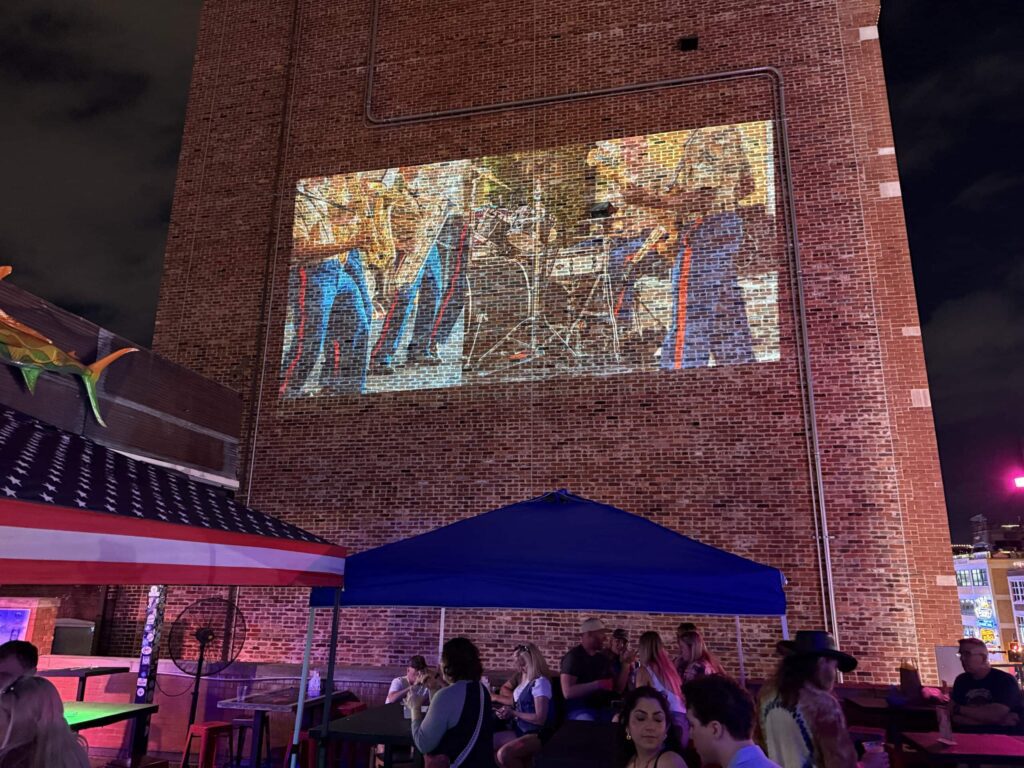
National brands entering Houston face the same challenge: the market doesn’t know them yet, and digital advertising alone doesn’t build the local credibility that drives first-purchase conversions. Guerrilla marketing accelerates that local authority-building by putting your brand visibly into Houston’s commercial environment before competitors stake the same claim. American Guerrilla Marketing specializes in Houston market-entry guerrilla marketing campaigns designed for exactly this objective.
The American Marketing Association recognizes guerrilla marketing as one of the most cost-effective formats for building local brand awareness and driving word-of-mouth amplification.
The case for guerrilla marketing in Houston comes down to audience quality, not just audience size. A digital campaign reaching 100,000 Houston devices might find only 3,000 of those users in your target demographic and in the right purchase mindset. A street-level placement concentrated in Houston’s each major Texas city operates as its own distinct market, campaigns that work in Deep Ellum Dallas look different from those built for Houston’s Midtown or Austin’s East Side reaches a smaller but more relevant audience, people who are physically present, engaged with their environment, and not insulated from commercial messaging by an algorithm. That audience quality gap explains why well-executed physical campaigns consistently generate stronger brand recall per dollar spent than equivalent digital reach.
This is a working document for brands planning guerrilla marketing campaigns in Houston. It covers market selection logic, format options, execution methodology, and ROI benchmarks, all calibrated for Houston’s specific commercial environment. American Guerrilla Marketing uses the same framework internally when building Houston campaign proposals, so the information here reflects how actual campaigns get structured, not how agencies typically describe them in marketing copy.
Why Texas Is Built for Guerrilla Projections
Texas has the density and energy that projection campaigns need, but it also has something just as important: concentrated nighttime movement. In market after market, the best-performing projection zones are places where people already stack up around event venues, restaurant districts, bars, convention halls, live music corridors, arts blocks, and rideshare pickup points. Those micro-moments matter because projections perform best when the audience is moving slowly, pausing, or gathering.
Texas cities also reward campaigns that feel culturally aware. Houston has a massive convention and stadium-driven audience flow. Dallas rewards polished, high-production brand moments near downtown and Victory Park. Austin gives you a younger, highly social crowd that notices visual creativity quickly. San Antonio rewards tourism and event timing. Fort Worth gives brands a different texture altogether, with a growing downtown and Stockyards-adjacent energy that can be especially useful when a campaign wants to feel both regional and premium.
Another advantage is scale. Texas markets are large enough that one projection can become a conversation starter for a broader campaign. A nighttime hit can anchor a multi-format activation that also includes Wheat Paste Poster Campaigns, brand ambassador programs, convention staffing, or bus advertising. When projection is used as the attention spike and other formats carry the message through the rest of the market, the whole system gets stronger.
Most importantly, Texas rewards relevance. A projection that ties itself to what is happening in that city on that night will outperform a generic logo loop almost every time. Event calendars, game schedules, major conventions, neighborhood patterns, and local language cues all shape whether a message lands.
Best Texas Cities and Districts for Projection Advertising
Not every city block is projection-friendly, and not every high-traffic area is useful after dark. The right zones combine visible surfaces, audience density, safe setup logic, and enough pause time for the message to register. Below are the Texas markets where projection campaigns tend to create the strongest field results.
Houston: Convention Scale, Stadium Energy, and Late-Night Spillover
Houston is probably the deepest projection market in Texas because it has multiple audience engines running at once. Downtown Houston, Discovery Green, the George R. Brown Convention Center area, Toyota Center traffic, Minute Maid Park foot flow, and the East Downtown spillover create repeated windows where large groups of people are already moving through visible urban corridors after dark. That matters because you do not have to manufacture attention from scratch. You can intercept it.
The strongest Houston projection moments are usually tied to major event schedules. Trade shows at the George R. Brown Convention Center create predictable exit waves. Games at Toyota Center and Daikin Park create anticipation before the event and looser, more social behavior afterward. Discovery Green and Avenida Houston add a tourism and hospitality layer that expands the audience beyond one single venue crowd. In practice, that lets brands tailor a projection to B2B audiences on one night and a more consumer-facing crowd on another.
Houston also works well for campaigns that need urgency. Countdown creative, directional calls to nearby activations, launch reveals, timed offers, and media-facing brand moments all have room to work here because the environment is large enough to feel important without becoming visually impossible to control. The best Houston projections do not just rely on brightness. They rely on the audience coming out of a specific environment with a specific mindset, whether that is expo fatigue, game-night excitement, or hospitality district looseness.
Areas around Avenida de las Americas, Discovery Green approaches, and the convention district are particularly useful when a campaign needs a clean business audience mix. Areas closer to Midtown or EaDo can be stronger when nightlife behavior and social sharing matter more than professional polish.
Dallas: Premium Surfaces, Big Event Nights, and Strong Brand Theater
Dallas tends to reward brands that want projection to feel sharp, intentional, and premium. Downtown, Victory Park, Deep Ellum, and the AT&T Discovery District each create a different version of attention. Near the Kay Bailey Hutchison Convention Center, you get business traffic and event-driven concentration. Near the American Airlines Center and Victory Park, you get sports, concerts, and nightlife adjacency. In Deep Ellum, you get music-driven foot traffic and more organic visual discovery.
Dallas is especially strong for launches and audience redirection. If a brand wants to drive people from a major gathering point to a nearby pop-up, product reveal, hospitality suite, after-party, or sampling moment, projection can work as the trigger. The visual shows up at exactly the point where people are deciding where to go next. That is a much more useful role than simply replaying brand assets for awareness alone.
The city also supports more polished motion work. Architectural lines around downtown and certain entertainment areas can make mapped content or tightly composed motion graphics feel very clean. Brands in tech, automotive, sportswear, entertainment, or spirits often perform well here because Dallas crowds respond to confident, visually controlled executions that feel worth filming.
Where Dallas campaigns go wrong is trying to force the same creative across very different districts. What works in Victory Park before a major game does not automatically work in Deep Ellum after 10 p.m. One audience is in event mode. The other is in nightlife discovery mode. Smart planning treats those as separate behaviors.
Austin: Social Amplification, Cultural Relevance, and Fast Creative Payoff
Austin is one of the best social-sharing projection markets in the state because the city is already conditioned to notice visual interventions. The mix of live music culture, SXSW-scale event behavior, student density, startup audiences, and tourism means the right projection does not stay physical for long. It turns into phone content fast.
That makes Austin ideal for campaigns with strong visual identity, clever copy, artist collaborations, event tie-ins, or formats that encourage immediate posting. South Congress, downtown event corridors, areas near the Austin Convention Center, and selected edges of nightlife-heavy zones can all perform well depending on the brand and timing. What matters most is that the campaign feels like it belongs in Austin rather than feeling imported from a generic national deck.
Projection work in Austin benefits from shorter, sharper messaging. The city rewards wit, design confidence, and cultural timing more than overexplaining. If a projection can be understood instantly and still feel smart, it has a better chance of traveling through social channels. That is especially true during tech conferences, music events, product launches, or college-adjacent periods when younger audiences are moving in groups and documenting what they see.
Austin is also a good city for integrating projection with other street-level channels. A projection can create the attention spike, while nearby ambassadors, posters, decals, or sampling teams convert that attention into a more measurable next step.
San Antonio: Tourism Flow, River Walk Gravity, and Event-Led Visibility
San Antonio has a different projection logic than Houston or Dallas. It is less about constant downtown intensity and more about exploiting concentrated tourism and event movement. The River Walk area, convention traffic around the Henry B. González Convention Center, and selected arts or performance venues can create unusually strong windows when the timing is right.
This city is useful for brands that want wide demographic reach in one environment. Visitors, locals, hospitality guests, event attendees, and families can overlap in the same district, especially during cultural weekends, conventions, or destination-heavy travel periods. That can make San Antonio a strong fit for consumer brands, entertainment launches, hospitality activations, and campaigns built around broad awareness with a memorable visual hook.
San Antonio projections need clean readability. The market often rewards creative that is bold and emotionally legible from a distance rather than overly layered. Tourism-heavy environments are not ideal for subtle conceptual work if the goal is immediate recall. Strong headline structure, iconic visuals, and one clear action usually work better.
The city can also be useful for event-customized messaging. A campaign timed to a conference, tournament, or local celebration can feel surprisingly dominant if it appears in the right corridor at the right hour, because the audience is already primed to notice what feels current and relevant.
Fort Worth: Underrated for Brands That Want Regional Presence with Less Noise
Fort Worth is easy to overlook if a campaign planner thinks only in terms of Houston, Dallas, Austin, and San Antonio, but that is exactly why it can be valuable. Downtown Fort Worth, Sundance Square-adjacent movement, Dickies Arena event nights, and Stockyards-related audience zones give brands a chance to run projection campaigns in a market that can feel less saturated while still offering strong audience quality.
Fort Worth works particularly well for campaigns that want to feel grounded, local, and high-touch rather than purely flashy. It can also function as a companion market to Dallas when a regional campaign needs wider footprint across North Texas. Instead of treating Fort Worth as an afterthought, strong campaigns treat it as a distinct behavioral market with its own visual language and pacing.
When the objective is memorable presence among eventgoers, hospitality audiences, or regional consumers, Fort Worth can produce better attention quality than a noisier city center. The right projection in the right Fort Worth zone can feel more dominant simply because there is less clutter competing with it.
Creative That Performs on Texas Streets
The best projection creative in Texas is built for distance, speed, ambient light, and human behavior. That sounds obvious, but plenty of campaigns still fail by treating projection like a digital screen instead of a live street format. If the message cannot be understood quickly, if the contrast is weak, or if the animation is too busy to read on the move, brightness alone will not save it.
Good projection creative usually begins with a single command: reduce. One visual idea. One short line. One clear point of action. If the campaign needs more explanation, the projection should trigger the next channel rather than trying to carry the full argument itself. That next channel might be a landing page, a QR-led offer, a nearby activation, a social handle, or a supporting field team.
Texas also rewards contextual creative. A game-night message near a venue should feel different from a convention-night message downtown. A launch in Austin should not read like a corporate expo asset in Houston. City names, event language, timing cues, and hyperlocal references can all improve recall because they prove the brand is paying attention to the audience’s actual moment.
Motion can help, but only when it supports legibility. Projection is not a place to flex every visual effect. It is a place to create a short, memorable interruption that earns attention and then directs it. If motion adds drama without hurting comprehension, it helps. If it complicates the read, it hurts. The field test is simple: can a person understand the core message while walking, turning their head, or filming for two or three seconds? If not, the creative needs tightening.
Campaign Strategy & Market Considerations
Every Texas projection campaign should start with five planning questions. First, what exact audience are you trying to catch: convention attendees, sports fans, nightlife crowds, students, tourists, locals, or media? Second, what movement pattern are you using: pre-event arrival, venue exit, nightlife drift, rideshare wait, or street-corner linger time? Third, what surface actually gives you clean readability? Fourth, what action should the audience take next? Fifth, what other campaign elements are reinforcing the moment before and after the projection?
That framework matters because projection campaigns can look impressive while still underperforming strategically. A wall can be visible but wrong. A crowd can be big but not relevant. A district can be busy but too fast-moving for the message. Real planning is what protects the campaign from those mistakes.
Texas weather and ambient conditions also matter. Heat, humidity, haze, competing light, event signage, and reflective surfaces can all affect visibility. So can the difference between a clean facade and a textured or interrupted wall. A good campaign plan accounts for real viewing conditions rather than assuming any large surface will behave like a perfect screen.
Timing is another major variable. Some of the best Texas projection campaigns are not long. They are precise. One well-timed night around a major event can outperform a weaker multi-night run placed in the wrong zone. In many cases, the question is not, “How long can we run?” It is, “When does this audience care enough to stop?”
Projection also gets stronger when it is paired with street-level follow-through. A projection can create the attention spike, but support tactics can turn that spike into measurable action. That might mean ambassadors handing out product, a QR-led landing page, a nearby branded installation, a poster takeover extending the visual language into the neighborhood, or a media plan that uses paid social to retarget the same geography while the street moment is live.
How to Measure Texas Projection Campaigns
Projection campaigns should not be judged only by how dramatic they look in recap photos. They should be measured against the action they were built to trigger. In Texas, the cleanest measurement setups usually combine direct response tools with field observation and broader lift indicators.
QR scans and custom URLs are the most obvious direct-response tools. If a projection includes a scannable action, that action should route to a city-specific or event-specific page so the response can be attributed more cleanly. Offer codes work well when a campaign drives to retail, hospitality, ticketing, or limited-time redemption. Geo-based traffic lift can help when the objective is moving people into a nearby store, booth, or activation.
Field documentation matters too. Not just glamour shots, but actual documentation of crowd response, dwell patterns, sightline performance, and environmental conditions. The goal is to understand what happened on the street, not just to prove the setup existed. Social listening can add another layer when the campaign is designed to be filmed and shared. In cities like Austin and Dallas especially, organic posting behavior can become part of the value equation.
The most useful recap is not just a photo deck. It is a learning tool. Which district gave better pause time? Which creative version got stronger response? Did the audience actually take the next step? Did the projection work better as awareness or as directional traffic? Those answers are what make the next activation better.
Find American Guerrilla Marketing on Google: View American Guerrilla Marketing’s Google Business Profile for Texas campaign reviews, installation documentation, and service details.