National brands entering Birmingham face the same challenge: the market doesn’t know them yet, and digital advertising alone doesn’t build the local credibility that drives first-purchase conversions. Guerrilla marketing accelerates that local authority-building by putting your brand visibly into Birmingham’s commercial environment before competitors stake the same claim. American Guerrilla Marketing specializes in Birmingham market-entry guerrilla marketing campaigns designed for exactly this objective.
The American Marketing Association recognizes guerrilla marketing as one of the most cost-effective formats for building local brand awareness and driving word-of-mouth amplification.
National brands entering Birmingham face the same challenge: the market doesn’t know them yet, and digital advertising alone doesn’t build the local credibility that drives first-purchase conversions. Guerrilla marketing accelerates that local authority-building by putting your brand visibly into Birmingham’s commercial environment before competitors stake the same claim. American Guerrilla Marketing specializes in Birmingham market-entry guerrilla marketing campaigns designed for exactly this objective.
The American Marketing Association recognizes guerrilla marketing as one of the most cost-effective formats for building local brand awareness and driving word-of-mouth amplification.
The ROI arithmetic for guerrilla marketing in Birmingham improves as campaign duration increases. Short-burst campaigns generate initial brand awareness. Extended campaigns, running four to eight weeks in high-traffic Birmingham locations, build the frequency that converts awareness into preference and preference into purchase intent. American Guerrilla Marketing structures Birmingham campaigns around this frequency-building logic, not just raw impression volume. The brands that get the highest return from street-level advertising in Birmingham are those that stay visible long enough for the frequency effect to fully develop.
Sections below cover Birmingham’s key activation neighborhoods, the guerrilla marketing tactics that generate the strongest audience engagement in this market, American Guerrilla Marketing’s campaign planning and field execution process, a budget and ROI reference table, and a complete FAQ. Use this as both an educational resource and a starting point for campaign planning, our team is available to build a Birmingham-specific proposal from here.
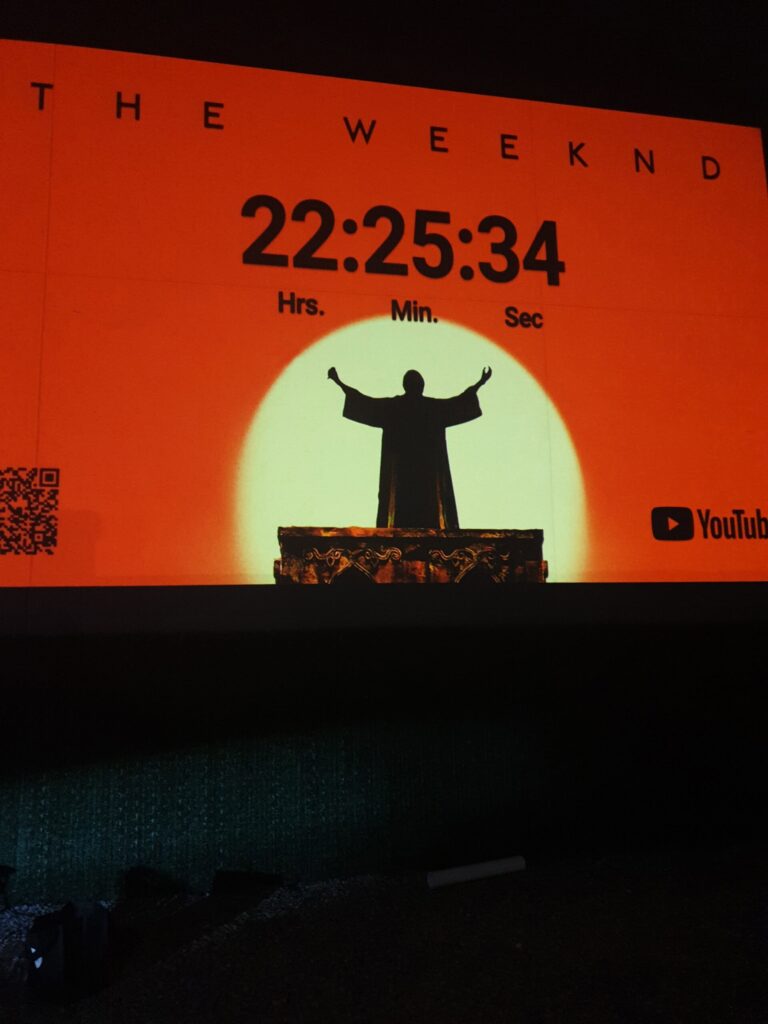
Why Guerrilla Projections Work as an Advertising Format
Guerrilla projection advertising works because it violates the expected visual environment in a way that creates unavoidable attention. People have learned to ignore advertising, the brain has developed sophisticated pattern-recognition filters that divert cognitive resources away from stimuli that have been categorized as advertising. A billboard is advertising. A bus shelter panel is advertising. A projection of brand imagery at scale on the side of a building at night is something else, it’s a visual event that breaks the pattern entirely, triggering genuine attention before the viewer’s advertising-filter has had time to categorize it.
This attention mechanism is why the social media documentation response to guerrilla projections is so spontaneous: people photograph the projection before they decide whether to engage with the brand, because the projection itself is visually remarkable independent of what brand is running it. A 40-foot logo on a downtown building at midnight generates the same immediate “what is that?” response whether it’s an established national brand or a regional launch. The visual novelty is the hook; the brand message is delivered to an audience that is already looking and already engaged.
In markets where projection advertising is less commonly executed, which includes every Alabama city compared to New York, Los Angeles, or Chicago, the novelty premium is higher. A guerrilla projection in Birmingham or Huntsville creates a more distinctive visual event for the local audience than the same projection executed in a city that has seen dozens of similar campaigns. That novelty advantage is a real commercial asset for brands deploying in Alabama, and it amplifies both the immediate impression impact and the social media sharing behavior that extends the campaign’s reach beyond the physical activation window.
Alabama’s Cities as Projection Canvases
Alabama’s four major urban markets, Birmingham, Huntsville, Montgomery, and Mobile, each offer distinct architectural environments, audience profiles, and campaign contexts that shape what kinds of projection campaigns work best in each city. A projection strategy calibrated to Birmingham’s Avondale entertainment district would need significant adjustment for Huntsville’s Bridge Street tech corridor or Mobile’s Mardi Gras festival infrastructure. Understanding each market’s specific character is the strategic foundation of a projection campaign that achieves genuine impact rather than generic visual presence.
Birmingham: Historic Architecture Meets Contemporary Creative Districts
Birmingham is Alabama’s largest city and its most architecturally diverse projection market, a city where historic early-20th-century industrial and civic buildings create dramatic large-scale projection surfaces directly adjacent to contemporary creative districts, restaurants, and entertainment venues that concentrate the young professional and creative-class audience most likely to document and share projection encounters on social media.
Downtown Birmingham’s civic core, centered on Linn Park, the Birmingham Museum of Art, and the historic commercial buildings along 20th Street North, offers some of Alabama’s most visually striking projection surfaces: ornate façades with dimensional detail that gives projected light depth and texture unavailable on plain modern building exteriors. The scale of these buildings and their visibility from major pedestrian corridors makes them natural focal points for citywide visual moments that can be seen from multiple approach angles simultaneously.
The Avondale and Five Points South entertainment districts create different projection opportunities: neighborhood-scale commercial buildings in high-pedestrian-traffic environments where a late-evening projection creates an immediate public moment with the bar and restaurant crowd that’s already activated and social. The Railroad Park development and the surrounding Parkside district represent Birmingham’s newer creative-commercial concentration, with building surfaces and public space infrastructure that accommodate both formal and guerrilla projection deployments.
The Birmingham-Jefferson Convention Complex (BJCC) represents a specialized projection opportunity tied to its event calendar, major concerts, sporting events, and conventions at the BJCC concentrate audience at predictable times that a projection campaign can align with for maximum concentrated impression volume. For brands that want to reach the BJCC event audience in the approach and departure windows, the surrounding commercial facades visible from the main pedestrian corridors offer projection surfaces that create brand encounters in the peak public attention moments surrounding major events.
Huntsville: Alabama’s Tech City and the Rocket City Audience
Huntsville occupies a unique position in Alabama’s marketing space: it’s a mid-sized city with a disproportionately young, educated, tech-forward population driven by the presence of NASA’s Marshall Space Flight Center, Redstone Arsenal, and the growing private aerospace and defense technology ecosystem that has made Huntsville one of the fastest-growing technology employment centers in the country. The demographic profile of the Huntsville audience, college-educated, technology-oriented, social media-active, early-adopter-oriented, is precisely the profile that responds most strongly to the visual novelty and social shareability of guerrilla projection advertising.
Big Spring International Park in downtown Huntsville provides an outstanding projection environment: a publicly accessible outdoor space surrounded by building facades and civic architecture, with a pedestrian-friendly scale that concentrates audience at the projection surface in a way that purely vehicular approach corridors cannot. The park’s central location in downtown Huntsville’s entertainment and commercial district creates sustained evening foot traffic that projection campaigns can reach across the full activation window.
Bridge Street Town Centre, Huntsville’s upscale outdoor retail and entertainment complex, creates a different projection context: a carefully designed commercial environment with facades, space features, and open public spaces that are architecturally suited to projection and where the concentrated evening retail and dining audience represents exactly the premium consumer demographic most brands targeting Huntsville prioritize. The University of Alabama in Huntsville (UAH) campus adds an adjacent student demographic that extends the reach of Bridge Street-adjacent projections into the young adult population that is Huntsville’s most socially active digital amplification community.
Montgomery: The Capital City’s Civic Architecture
Montgomery’s identity as Alabama’s state capital gives it a civic architectural space that most Alabama cities lack: government buildings, historic courthouse and municipal structures, and the civic public spaces surrounding Court Square that create projection surfaces with the scale and visual authority that brand campaigns benefit from association with. Projection on the civic architecture of a state capital creates brand imagery in a context that conveys permanence and significance, a visual association that complements brand messages built around authority, reliability, and institutional trust.
Court Square Fountain and the surrounding historic downtown district have long been the geographic and symbolic heart of Montgomery’s public life. The building facades surrounding Court Square, a mix of early-20th-century commercial architecture and civic structures that predate the civil rights era, create projection canvases with genuine historical resonance that thoughtful brand campaigns can use to create associations between the brand’s message and the significance of the location. The Alabama State Capitol building, visible at the top of Dexter Avenue, represents the most architecturally significant projection surface in the city, a deployment that requires careful consideration of context but that, when executed appropriately, creates imagery with statewide symbolic visibility.
Montgomery’s proximity to the Tuskegee University campus (45 minutes east) and the Selma historical sites creates additional geographic context for brands whose campaigns carry historical or cultural significance that benefits from association with Alabama’s civil rights heritage. For brands with socially conscious messaging aligned with this context, the Montgomery market’s civic architecture offers projection opportunities with cultural depth that no other Alabama market can replicate.
Mobile: Gulf Coast Culture and Mardi Gras Infrastructure
Mobile is Alabama’s Gulf Coast city and home to one of the oldest Mardi Gras celebrations in the United States, predating the better-known New Orleans celebration by more than 20 years. The city’s festival culture, maritime heritage, and outdoor entertainment infrastructure create a projection market with a distinctly festive, celebratory character that aligns naturally with campaign messages built around experience, celebration, and cultural engagement.
Mobile’s Bienville Square, the historic park at the center of downtown Mobile, creates a projection focal point similar to Montgomery’s Court Square: a public gathering space surrounded by historic building facades that provide projection surfaces visible from the square’s pedestrian paths and surrounding commercial corridors. The Royal Street and Dauphin Street entertainment districts in downtown Mobile concentrate evening foot traffic from Mobile’s dining and nightlife audience in an environment where a projection event creates maximum social documentation potential.
Timing projection campaigns in Mobile around Mardi Gras season (January through Mardi Gras Tuesday) creates the most favorable audience conditions available in the market, a period when the city’s streets are actively populated by celebratory crowds, out-of-town visitors, and a general atmosphere of public festivity that makes brand projection feel like a natural part of the season’s visual spectacle rather than an intrusion on a quiet urban environment.
Tuscaloosa and Auburn: University Market Projections
Tuscaloosa (University of Alabama, 38,000+ students) and Auburn (Auburn University, 33,000+ students) represent Alabama’s two major university market projection opportunities, contexts where the concentrated student population, the football game-day culture, and the walkable commercial districts immediately adjacent to campus create consistent projection audience concentrations that campaigns can reliably access throughout the academic year.
University of Alabama home football games at Bryant-Denny Stadium draw over 100,000 fans to Tuscaloosa, creating game-day projection opportunities in the commercial corridors of The Strip on University Boulevard, in Midtown Village, and on the approach facades visible from the fan approach routes, that reach the largest concentrated audience available in Tuscaloosa on any given weekend. The game-day atmosphere of intense communal celebration makes projection encounters feel like part of the shared event rather than advertising intrusions.
Auburn’s Toomer’s Corner, the historic oak tree and corner at the intersection of College Street and Magnolia Avenue that Auburn fans have traditionally rolled with toilet paper after major sports victories, is one of the most culturally charged public spaces in Alabama. Projection campaigns in the Toomer’s Corner vicinity and along the Auburn campus commercial district create brand associations with one of the most beloved traditions in Alabama sports culture.
Executing a Guerrilla Projection Campaign in Alabama
The operational execution of a guerrilla projection campaign in Alabama follows a defined process that starts well before deployment night: location scouting and surface assessment, creative development calibrated to the surface’s specific dimensions and textures, equipment selection and logistics planning, deployment crew coordination, and the documentation and social amplification plan that extends the campaign’s reach beyond the physical activation window.
Equipment and Technical Specifications
Professional guerrilla projection campaigns use high-lumen projectors, typically 20,000 to 30,000 lumens for large-scale building projection, mounted in weather-protected enclosures and positioned at the optimal projection angle and distance for the specific surface target. The projection distance, surface dimensions, surface color and texture, and ambient light conditions all affect the final image brightness and clarity, requiring pre-deployment technical assessment that matches equipment specifications to the specific activation environment.
Alabama’s climate creates specific equipment considerations. Summer humidity and heat, particularly in Birmingham, Montgomery, and Mobile, require cooling management for projection equipment that generates substantial heat at operating power levels. Winter projection campaigns face shorter operational windows due to earlier sunset times, which can be an advantage (darker environment means more visible projections earlier in the evening) or a challenge depending on the target audience’s evening behavior patterns in colder conditions.
Creative Design for Maximum Impact
Projection creative design requires specific technical and aesthetic calibration that differs significantly from standard print or digital advertising design. High contrast is essential, projected light on building surfaces competes with ambient streetlight, surrounding commercial signage, and the building’s own surface color and texture variations. Creative that uses dark backgrounds with high-luminance foreground elements consistently outperforms light-background designs that wash out against the building surface. Bold, simple visual compositions read better at projection scale than detailed, fine-resolution creative designed for screen viewing.
Animation and motion elements in projection creative significantly increase public attention and social documentation rates. A static image generates a photograph; a moving image generates a video, and video content from guerrilla projections generates substantially higher social media engagement rates than still photography of the same activation. Building looping animations, message reveals, and motion graphics into the projection content increases both the immediate public impact and the quality of organic social documentation that extends the campaign’s reach through the activation audience’s own networks.
Content that references the specific location or city creates a localization effect that resonates with local audiences and increases social sharing among viewers who identify with the specific place being activated. A projection in Birmingham that includes recognizable local reference points, or that uses the city’s own skyline or cultural symbols as part of the creative, generates stronger local identification and social sharing behavior than generic national creative deployed in an Alabama market context.
Timing and Event Alignment
Projection campaigns are most effective when deployed in alignment with events that concentrate the target audience in the projection surface’s vicinity during the activation window. For Alabama, the primary event alignment opportunities include University of Alabama and Auburn University home football game weekends (September through November), major concerts and events at the BJCC in Birmingham, Mardi Gras season in Mobile, major cultural events at Montgomery’s Amphitheater, and the various outdoor festivals that fill Alabama’s event calendar throughout the spring and fall months.
The timing within the activation night matters as much as the night itself. Projection visibility is highest in the 8 PM to midnight window in most Alabama markets, after ambient light has faded but before the post-midnight drop in foot traffic. Peak foot traffic windows for each specific location should be assessed during the pre-deployment scouting phase to ensure the activation deploys during the time of maximum audience concentration at the projection surface.
Generating Social Media Amplification From Projections
Guerrilla projections generate social media content because they create genuinely photograph-worthy moments in public spaces. But the organic social amplification potential of a projection campaign can be significantly enhanced through deliberate amplification strategy built into the deployment plan from the start, rather than relying purely on spontaneous bystander documentation.
Documentation by the campaign’s own on-site photography and videography team creates high-quality content assets that the brand can distribute across its own channels during and immediately after the activation. Professional projection photography, shot at the optimal angle, with appropriate exposure for the projection luminance, generates content that looks substantially better than smartphone photography from passerby viewpoints, and that provides the brand with durable visual assets beyond the activation window.
Locating the projection activation to maximize visibility from a maximum number of pedestrian viewpoints, rather than selecting the best building surface independent of its approach visibility, increases the number of spontaneous audience members who encounter the activation and choose to document it. A projection visible from three blocks away generates more spontaneous documentation than one that requires being directly across the street to see clearly. This visibility-optimization principle should be an explicit criterion in the location scouting and selection process.
Campaign Strategy & Market Considerations
Guerrilla projection campaigns in Alabama work best when the activation serves a clear campaign objective that benefits specifically from the format’s unique combination of scale, novelty, and social amplification potential. American Guerrilla Marketing approaches projection campaigns as strategic deployments, not visual stunts, designed to deliver specific brand outcomes: launch awareness, event amplification, category disruption, or cultural moment creation. The projection format is exceptionally well-suited to these objectives; it is less suited to campaigns that require sustained daily reach or detailed message delivery, which other formats serve more effectively.
Alabama’s secondary market status relative to the major coastal projection markets is a campaign advantage rather than a limitation. The format’s novelty in Birmingham, Huntsville, Montgomery, and Mobile creates higher social amplification rates from smaller absolute audience sizes than the same campaign in New York or Los Angeles, where projection advertising has reached a level of saturation that reduces its novelty premium. Brands that use Alabama projection campaigns to build genuine statewide visual events, deploying across multiple cities in a compressed time window to create the sense of a coordinated statewide moment, extract significant brand impact at a cost that major market projection would never allow.
Integration with complementary formats amplifies projection campaign results. Wheat Paste Poster Campaigns in the commercial districts surrounding projection locations create advance visual brand presence before the projection night, so audiences who encounter the projection have already seen the brand in their environment, creating a familiarity that accelerates the projection’s message reception. LED mobile billboard trucks deployed on the approach corridors to projection sites during the activation window extend the spatial reach of the visual event beyond the projection surface’s immediate sight lines.
Measuring Guerrilla Projection Campaign Results in Alabama
Guerrilla projection campaign measurement combines direct impression documentation with social media monitoring and downstream business signal tracking. The primary measurement sources include: professional campaign photography and videography documenting the activation and the public audience response, social media monitoring for content generated by viewers during the activation window using location tags and relevant keyword searches, branded search volume tracking in the projection cities during and after the activation window, and business-side metrics (website traffic from the target geographies, direct inquiries, sales data) in the campaign window versus pre-campaign baseline.
Impression estimates for projection campaigns are calculated from the documented audience presence at the projection location during the activation window, based on pedestrian count data, event attendance figures (where the projection aligns with a specific event), and vehicular traffic data for high-traffic surface targets. These estimates, while less precise than digital impression tracking, are consistent with the methodology used across all outdoor advertising impression measurement and provide the basis for CPM calculations that compare projection efficiency against alternative format investments in the same geography.
Social media reach generated by organic sharing is tracked through social listening tools monitoring content tagged with the location, the brand, and relevant campaign hashtags. The total social impressions generated by viewer-created content during the campaign window, which typically exceeds the in-person impression count by a multiple of 5–15x for well-executed projections, represents the campaign’s earned media value and is a distinct component of the ROI calculation that paid media equivalency models can be applied to.
Frequently Asked Questions
What are guerrilla projections and how do they work in Alabama?
Guerrilla projections use high-powered projectors to display brand imagery, video content, and messaging on buildings, bridges, and other large-scale surfaces in urban environments, typically at night when the projected image is most visible. Alabama cities like Birmingham, Huntsville, Montgomery, and Mobile offer historic buildings and civic structures that serve as dramatic projection canvases. The format creates high-impact visual moments that generate immediate social media documentation and public attention that static advertising formats cannot replicate.
How much does a guerrilla projection cost in Alabama?
Guerrilla projection campaigns in Alabama typically run $6,500–$7,500 per activation for a standard 4-hour deployment including equipment, crew, logistics, and documentation. Multi-night campaigns or programs running across multiple Alabama cities may qualify for package pricing. The format’s per-impression cost is extremely low given the scale of visual impact and organic social media amplification that successful projections generate. Contact AGM for a specific quote for your Alabama market targets and campaign objectives.
What are the best locations for guerrilla projections in Birmingham?
The best Birmingham guerrilla projection locations include the historic building facades in the civic core around Linn Park, the entertainment district buildings in Avondale and Five Points South, the Railroad Park-adjacent commercial architecture, the BJCC vicinity for event-aligned activations, and major commercial buildings visible from 20th Street North. Birmingham’s mix of historic ornate facades and contemporary commercial architecture creates outstanding projection surface variety across the city’s multiple distinct neighborhoods.
How do guerrilla projections generate social media content?
Guerrilla projections generate social media content because large-scale building projections in unexpected locations are inherently photographable and shareable, they create genuine visual surprises that people document and share before they even process what the campaign is about. The novelty premium of projection advertising is higher in Alabama’s secondary markets than in major coastal cities where the format is more common, which amplifies local audience social sharing behavior and extends campaign reach well beyond the in-person activation audience.
Can guerrilla projections be used for events and product launches in Alabama?
Yes, guerrilla projections are particularly effective for product launches, album releases, film premieres, campaign announcements, and other event-driven marketing moments where immediate visual impact and social media conversation are the primary objectives. Aligning projection timing with major Alabama events, BJCC concerts, University of Alabama or Auburn game weekends, Mardi Gras in Mobile, major festivals, concentrates the audience context that maximizes social amplification potential and creates the largest possible in-person impression volume within the activation window.
Conclusion: Guerrilla Projections as Alabama’s Most Dramatic Brand Canvas
Alabama’s cities offer something that many brands overlook when planning projection campaigns: the combination of striking architectural surfaces, audiences that still find the format genuinely novel, and a social media ecosystem that rewards the visual distinctiveness of unexpected brand encounters in unexpected places. The historic buildings of downtown Birmingham, the civic architecture of Montgomery’s capital district, the pedestrian-friendly outdoor venues of Huntsville’s Big Spring Park, and the festival-infrastructure of Mobile’s Mardi Gras districts collectively create a projection advertising space with more genuine creative potential than the brand-saturated building walls of many larger markets.
Guerrilla projections in Alabama don’t just reach the people who happen to walk past a building on a given night, they create the kind of visual events that people talk about, document, and share because the encounter itself is genuinely remarkable. In a media environment where the average consumer receives thousands of advertising impressions per day and remembers almost none of them, the ability to create a moment that actually gets documented and shared is the rarest and most commercially valuable outcome an advertising format can deliver. Guerrilla projections deliver it, and in Alabama’s markets, they deliver it at a scale of novelty and impact that the brand’s investment in a comparable impression count through conventional channels could never replicate.
For brands ready to illuminate Alabama’s urban landscapes and transform building facades into dramatic brand canvases, explore how AGM’s guerrilla projection programs integrate with Wheat Paste Poster Campaigns, LED mobile billboard trucks, and brand ambassador programs into complete Alabama field marketing campaigns that reach the state’s audiences across every dimension of the physical advertising environment.