How Much Does a Billboard Cost in Savannah, GA: A Detailed Guide for 2026
Billboard costs in Savannah, GA range from approximately $800–$1,500 per month for static billboards in secondary locations to $2,500–$6,000 per month for digital billboards on high-traffic corridors like I-95, I-16, and the approaches to the Port of Savannah. The average cost across all billboard inventory in the Savannah market is approximately $1,746/month, according to OOH media industry data, with a CPM of approximately $3.87, making Savannah one of the more cost-effective billboard markets in the Southeast. This guide covers all the variables that determine what you’ll actually pay.
Contact AGM for a current quote on Savannah outdoor placements. General market factors that affect what you’ll pay include location relative to I-16 and I-95 interchange traffic, proximity to the Historic District, and whether the format is digital or vinyl. Markets with strong seasonal tourism like Savannah often have premium pricing windows during peak travel periods (March through June, fall leaf season). Operators in these markets are sometimes open to rate negotiation during January and February, which are softer booking months.
Factors That Determine Billboard Costs in Savannah
Traffic Count (DEC: Daily Effective Circulation)
The single biggest determinant of a billboard’s price is how many cars pass it per day. In Savannah, the Traffic Engineering Division and Georgia DOT provide official traffic count data for major corridors. I-95 through Savannah sees 50,000–90,000+ vehicles per day depending on the interchange, these are the most expensive billboard positions in the market. US-17 (Ogeechee Road) and US-80 (Victory Drive) are mid-range traffic arteries. Secondary commercial streets like Waters Avenue and Abercorn Street (outside the Abercorn/Mall area) command lower rates commensurate with lower traffic counts.
Billboard operators price to traffic, every $1,000 increase in daily traffic typically corresponds to a $100–$300/month increase in static billboard rates in the Savannah market. Understanding the traffic count for a specific location before negotiating is essential intelligence that most advertisers skip.
Billboard Type: Static vs. Digital
Static billboards (printed vinyl face, single advertiser, change every 4–8 weeks) are the lowest-cost format in any market. In Savannah, static boards run $800–$2,500/month depending on location and size. The most common static billboard sizes are bulletins (14’×48′, the large highway format) and posters (10’×22′ or 10’×30′, the standard roadside format).
Digital billboards (electronic LED display, rotating with multiple advertisers, content changeable remotely) command a premium for the flexibility and visibility advantages. Savannah digital billboard rates: $1,200–$6,000/month for a 4-week booking. Digital boards typically rotate 6–8 advertisers on 6–15 second spots in a 60-second loop, your effective share of the display time is 1/6 to 1/8, which is factored into the lower per-advertiser rate.
Location Within Savannah
Savannah’s billboard market divides into five distinct pricing zones:
I-95 Interchange Zone (Exit 94–102): The highest-traffic and highest-cost zone. I-95 is the primary tourism and freight corridor for coastal Georgia and Florida-bound traffic. Billboard rates: $2,000–$5,000/month for bulletins. These positions reach not just Savannah market consumers but also regional through-traffic, valuable for hospitality, fuel, food, and tourism brands reaching travelers.
I-16 Approach to Downtown: The primary gateway from Macon and Atlanta. I-16 terminates at Martin Luther King Jr. Boulevard in downtown Savannah, traffic in this corridor includes business travelers, daily commuters, and visitors oriented toward downtown hotels and attractions. Billboard rates on I-16 eastern approach: $1,500–$3,500/month.
Abercorn Street / Mid-City Commercial: Abercorn Street (US-204) through the southside is Savannah’s primary commercial strip, Home Depot, Walmart, Target, regional grocery anchors, and dozens of strip mall tenants create consistent daily consumer traffic of 30,000–50,000+ vehicles. Billboard rates in this zone: $1,000–$2,500/month.
Downtown Savannah / Historic District: Downtown Savannah near the waterfront, City Market, and the historic squares is a high-pedestrian, low-vehicle-traffic environment where traditional billboards are limited by historic preservation regulations. Alternative outdoor formats, bus stop advertising, bench advertising, and mobile LED trucks, are more practical here than standard billboards.
Port of Savannah / Pooler / Garden City Industrial Zone: Proximity to the Port of Savannah (the third-busiest container port in the US) creates significant truck and commercial vehicle traffic on SR-307, US-17, and the Garden City freight corridors. Specialized out-of-home formats targeting freight and logistics audiences are effective in this zone; standard consumer billboard rates: $800–$1,800/month.
Billboard Size
Standard sizes in the Savannah market and their approximate rate ranges:
Bulletins (14’×48′): The large highway format. $1,500–$5,000/month on primary corridors.
Posters (10’×22′ or 10’×30′): The standard roadside format. $800–$2,000/month.
Junior Posters (5’×11′): Smaller local format. $400–$900/month.
Digital Displays (varies): Rate per share of rotation. $1,200–$6,000/month for full-cycle presence.
Average Cost Range for Billboards in Savannah
Billboard Type
Location
Monthly Cost Range
Estimated DEC
CPM
Static Bulletin
I-95 interchange
$2,500–$5,000
50,000–90,000
$2–$5
Static Bulletin
Abercorn/US-204
$1,200–$2,500
30,000–50,000
$2–$4
Static Poster
Secondary corridors
$800–$1,500
10,000–25,000
$2–$6
Digital Display
I-95/I-16 primary
$2,000–$6,000
50,000–90,000 (shared)
$2–$4
Digital Display
Abercorn commercial
$1,200–$3,000
30,000–50,000 (shared)
$2–$5
Savannah Market Average
All locations
~$1,746
Varies
~$3.87
Billboard Costs in Savannah: Types of Billboards Available
Static Vinyl Billboards
Static billboards use a printed vinyl face applied to a standard structure. They’re your exclusive placement, no rotation with other advertisers. In Savannah, major static billboard operators include Lamar Outdoor (the largest Savannah inventory holder), Outfront Media, and several local operators. Static boards require 3–5 days production lead time for vinyl printing; creative changes incur reprinting costs of $150–$500 per face depending on size.
Digital (Electronic) Billboards
Savannah has a growing digital billboard inventory, particularly on I-95 and Abercorn Street. Digital boards allow rapid creative changes (content uploads remotely, within hours), dayparting (running different creative at different times of day), and weather/trigger-based content. The shared-rotation model means lower rates per advertiser but less total display time than a static exclusive placement. For brands that need creative flexibility or want to promote time-sensitive offers (daily specials, event promotions, weather-triggered messaging), digital boards provide capabilities that static cannot.
Mobile LED Billboard Trucks
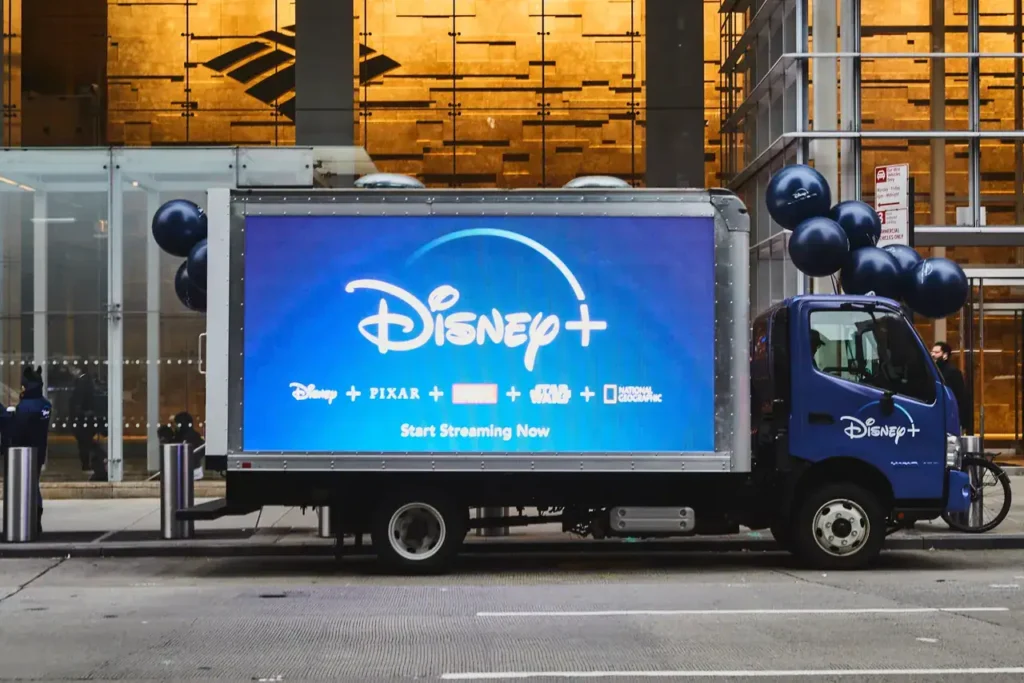
For brands that want the digital display advantages of electronic billboards without the fixed-location constraints, AGM’s LED truck campaigns offer a mobile alternative. An LED truck running Abercorn Street, the Savannah Historic District waterfront, and the I-16 approach corridor generates 80,000–150,000 daily impressions at AGM’s official LED truck rate of $250-$300 per hour with an 8 hour minimum, comparable CPM to fixed billboard positions with the added advantage of targeting specific zones, events, and time-of-day windows. We’ve run LED truck campaigns in Savannah for hospitality, entertainment, retail, and real estate clients.
Hidden Costs and Additional Expenses
Production Costs
Billboard operators charge separately for vinyl production (printing the creative face). In Savannah, production costs for a bulletin (14’×48′) run $250–$600 for the printed vinyl face, depending on print provider and vinyl quality. Poster-size (10’×22′) production: $100–$250. These costs apply every time the creative changes. A 3-month campaign with creative changes at each 4-week period incurs 3 sets of production costs, a meaningful addition to the monthly media rate.
For digital billboards, production is a digital file upload (JPG, MP4, or specified digital format), typically no additional cost from the operator, though creating billboard-ready digital creative requires design work from your agency or designer.
Installation and Lighting
Static billboard structures in Savannah are typically illuminated (required for visibility during evening hours). Illumination costs are usually included in the monthly rate for established operators. For non-illuminated boards, ask explicitly about evening visibility, a non-lit billboard is effectively zero-coverage during the 6pm–8am window, which is a significant fraction of total vehicle exposure time.
Contract Terms and Cancellation
Savannah billboard operators typically offer 4-week, 13-week, and 26-week (6-month) contracts. Longer contracts command lower monthly rates, expect a 10–20% discount on a 6-month commitment vs. a 4-week booking. Cancellation policies vary by operator: most require 30–60 days notice for early termination of longer contracts. Read the cancellation clause before signing anything longer than 13 weeks.
Permit Fees
Georgia DOT requires outdoor advertising permits for billboards in state highway right-of-way. These permits are the operator’s responsibility to maintain, legitimate Savannah billboard operators are permitted and compliant. Verify permit status before signing with any independent or broker-represented operator.
How to Negotiate Billboard Rates in Savannah
Book at the end of the month. Billboard sales reps face monthly booking quotas. A call to a Lamar or Outfront rep in the last week of the month for the following period often yields 10–20% off the rate card for available inventory, because available inventory at month-end costs the operator nothing and charges them nothing.
Commit to longer terms for lower rates. A 26-week commitment typically opens up 15–25% below 4-week rate card pricing. For brands with stable messaging that doesn’t require creative updates, a 6-month commitment on a specific Savannah location is typically the most cost-efficient OOH investment.
Ask about remnant rates. Unsold billboard inventory in any market is available at significant discounts, sometimes 40–60% off rate card. Remnant rates have less predictable location availability but are an excellent value for brands with flexible geographic requirements.
Compare multiple operators. Savannah has both national operators (Lamar, Outfront) and local independent operators. Independent operators sometimes offer more favorable rates on specific locations where they face less competition. Compare specific location availability and rate cards across at least 2–3 operators before committing.
Alternative Outdoor Formats in Savannah Worth Considering
Savannah’s Historic District, one of the most visited urban heritage tourism areas in the United States, is largely protected from traditional billboard placement by preservation regulations. For brands targeting Savannah’s visitor and tourist economy (hotels, restaurants, attractions, food and beverage), alternative formats that are permitted in the Historic District are worth prioritizing:
Bench and bus shelter advertising: Available in Savannah through Chatham Area Transit (CAT). Rates: $200–$600/location/month. High pedestrian-environment visibility in the Historic District and Midtown zones.
Mobile LED trucks: Operate in Historic District zones where fixed billboards can’t. An LED truck running River Street, Bay Street, and the City Market area on a weekend evening reaches tourism and leisure audiences in the highest-footfall zones of the city. AGM’s Savannah LED truck rate: $250-$300 per hour with an 8 hour minimum.
Wheatpaste and street-level formats: In Savannah’s arts district on Broughton Street and in the surrounding commercial zones, guerrilla formats including brand ambassador programs and chalk stencil activations are effective for brands targeting local consumers and young professional demographics.
Frequently Asked Questions
How Much Does a Billboard Cost in Savannah, GA: A Detailed Guide for 2026 generates better results when placement, timing, creative, and local execution all work together in Georgia. These questions cover the details brands usually need before launch, during rollout, and while evaluating performance.
For billboard in Georgia, the strongest campaigns usually come from tight geographic targeting, message discipline, and enough repetition to be remembered. Market conditions, neighborhood flow, event calendars, commuter behavior, and production logistics all change how the tactic performs, so the planning details matter as much as the idea.
What’s the cheapest billboard available in Savannah?
Junior poster formats (5’×11′) on secondary Savannah streets start around $400–$600/month. Standard poster formats on Waters Avenue and Victory Drive start around $800–$1,000/month. The least expensive inventory is typically available from independent local operators rather than Lamar or Outfront. Ask specifically about remnant and available inventory for the best rate-card-below pricing.
How much does a billboard on I-95 in Savannah cost?
I-95 bulletin positions in Savannah (Exit 94 through Exit 102 area) range from $2,500–$5,000/month for static bulletins depending on DEC and position. Digital positions on I-95 in this zone run $2,000–$6,000/month for a rotating share. I-95 is the premium position in the Savannah market because it reaches both local market consumers and significant through-traffic from Florida-bound and Carolinas-bound interstate traffic.
How do I buy a billboard in Savannah?
Contact Lamar Outdoor’s Savannah office (the largest local inventory holder), Outfront Media’s Savannah representatives, or use an OOH media buying platform (AdQuick, Billups, or Alluvit Media) for digital research and booking. For campaigns integrating mobile and guerrilla formats with traditional billboard, contact AGM for a combined campaign design that incorporates the most cost-effective mix for your objective and budget.
Is a billboard or a mobile LED truck better for Savannah advertising?
Static billboards provide sustained, location-specific reach on traffic corridors over their contract period. Mobile LED trucks provide flexible, targeted reach in specific zones (Historic District, event approaches, competitor locations) without long-term commitment. For most campaigns, a combination works best: a static billboard for sustained corridor presence plus an LED truck for event-timed or location-specific intensification of that presence. AGM can design a combined campaign for clients with both objectives.
Do billboard rates vary seasonally in Savannah?
How do I know if this topic is worth turning into a real campaign?
Start with audience location, not creative ideas. If you can name the blocks, venues, campus gates, stations, or event windows where attention is concentrated, the campaign can usually be built into something measurable. If the audience is vague, the spend drifts and results get fuzzy fast.
What usually makes a street campaign feel too small?
The most common issue is spread. Brands buy a handful of placements across too many neighborhoods instead of owning one route. A tighter footprint with stronger repetition beats a scattered footprint almost every time, especially for event promotion, launches, and local service awareness.
Should the message focus on awareness or action?
That depends on the traffic environment. Fast moving traffic calls for a short awareness message with one visual anchor. Slow pedestrian traffic can support a QR code, a stronger offer, and more direct response copy. The format should match the pace of the audience, not the other way around.
How long should a campaign stay up?
For event driven pushes, the best window is often the 7 to 14 days before the date. For evergreen brand building, two to four weeks works better because repetition does the heavy lifting. Weather, removals, and local conditions still matter, so timing should always be part of the plan.
What should be tracked besides impressions?
Use QR scans, coupon redemptions, landing page traffic, geofenced audience lift, survey responses, and direct field photos. Street work is easier to defend when the campaign is built with proof from day one instead of trying to backfill measurement after the fact.