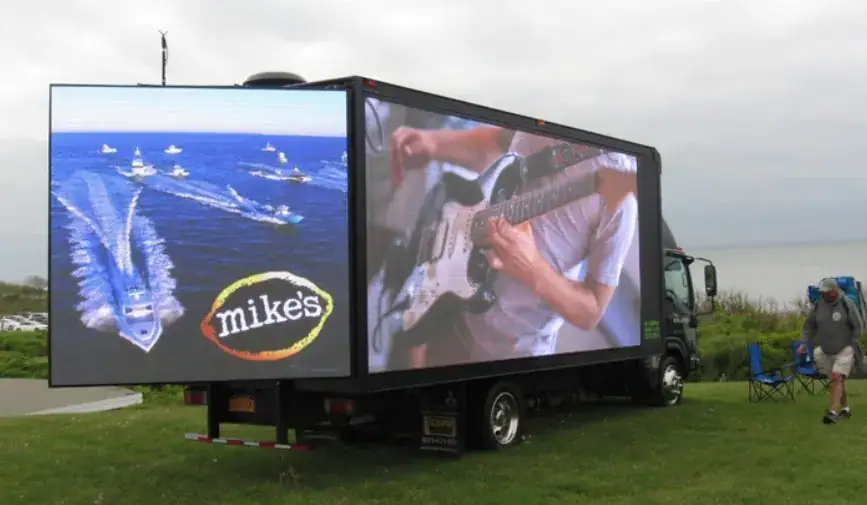
How Mobile Tours Interact with Experiential Marketing
A mobile tour is not a separate marketing discipline from experiential marketing. It is one of experiential marketing’s most powerful formats. Understanding how they connect determines how well you can plan and execute either one.
Mobile tours and experiential marketing are frequently discussed as if they are separate channels. They are not. A mobile tour is a specific execution format within experiential marketing — one that uses a vehicle-based platform to bring the brand experience to consumers across multiple markets. The vehicle is the mechanism of delivery. The experiential design is what creates the consumer brand relationship.
Understanding this relationship matters for planning purposes. Brands that treat their mobile tour as a logistics program rather than an experiential program consistently underperform. They build a great vehicle, route it to good locations, and then fail to create the consumer experience that justifies the investment. Brands that treat their mobile tour as an experiential program first and a logistics program second — designing the consumer experience before designing the vehicle — produce campaigns that deliver real brand outcomes.
A vehicle moving through multiple markets with the brand logo on the exterior is not an experiential program. It is a mobile billboard. The experiential component requires direct consumer interaction: the consumer approaches the vehicle, enters it or engages with it from the outside, interacts with brand representatives, and has a direct encounter with the brand’s product or story.
The vehicle enables this interaction to happen at scale across multiple markets. It carries the brand environment, the product inventory, and the staffing equipment from city to city. But the vehicle is not the experience. The experience is what happens when the consumer and the brand connect within the environment the vehicle creates.
Experiential mobile tours are designed from the consumer experience out: what should the consumer feel and understand after engaging with this vehicle in this city? Then: what does the vehicle interior need to contain to create that experience? Then: what does the exterior design need to communicate to draw the right consumers to the vehicle in the first place? The vehicle design follows from the experience design, not the other way around.
The Mobile Tour as Multi-Market Experiential Strategy
The strategic value of a mobile tour as an experiential format is its ability to create consistent brand experiences across multiple consumer markets without requiring the brand to build separate permanent or temporary installations in each city. The vehicle standardizes the experience. Market-specific elements — staffing, local location selection, permit approach — adapt to each city while the core brand experience remains consistent.
This consistency is valuable for brands running national product launches, brands seeding new markets, and brands building consumer trial at scale. The consumer in Chicago who encounters the same vehicle, the same brand experience quality, and the same product as the consumer in Atlanta is receiving a nationally consistent brand message delivered through local, physical presence. That combination of national consistency and local physical engagement is difficult to replicate through any other format.
Tour Design: Experience First, Vehicle Second
The most common mobile tour planning mistake is selecting the vehicle before designing the experience. A brand decides they want a “sprinter van activation” or a “custom Airstream tour” and then tries to design an experience that fits the vehicle. This is backward. The vehicle should serve the experience. The experience should be designed first.
Experience-first design asks: what consumer action do we need to produce, what environment creates that action most efficiently, and what vehicle format best contains and delivers that environment? A brand that needs to deliver a detailed product consultation to 20 consumers simultaneously needs a different vehicle than a brand that needs to deliver a 30-second product sample to 500 consumers per day.
The single most useful question for mobile tour experience design: if you removed the brand logo from the vehicle entirely and kept everything else the same, would consumers still want to stop and engage? If yes, the experience has genuine intrinsic value. If no — if the only reason someone would stop is brand recognition — the experience design needs work. Strong experiential programs earn consumer attention through the experience itself.
How the Vehicle Platform Extends Experiential Reach
The vehicle extends experiential reach in two specific ways: geographic reach and content reach.
Geographic reach is the obvious one: the vehicle goes to multiple markets, putting the brand experience in front of consumers in cities where a fixed installation would be cost-prohibitive. A custom-built activation environment that costs $60,000 to produce delivers that environment to 15 markets over an 8-week tour. The cost per market is significantly lower than building equivalent activations from scratch in each city.
Content reach is the less obvious but equally important one. A well-designed, visually striking mobile tour vehicle generates photo documentation from every activation location. That documentation becomes social content, media pitches, and brand case study material. The vehicle’s physical presence creates content opportunities that extend the campaign’s audience far beyond the consumers who interact with it in person.
Market Selection for Mobile Tours
Market selection for a mobile tour is a strategic exercise that balances consumer concentration, existing brand presence, distribution availability, and logistical feasibility. The right market sequence is not simply the largest cities on the tour map. It is the cities where the target consumer is concentrated and where the brand has the highest opportunity for meaningful trial and conversion.
For consumer goods brands, distribution presence matters significantly. An activation that generates strong trial in a market where the product is not available for purchase creates awareness but lacks a conversion mechanism. Tour markets should be sequenced to prioritize cities with retail availability of the product, or with planned distribution launch timing that aligns with the tour activation window.
Location Strategy Within Markets
Within each market, location selection determines the quality and volume of consumer interactions. The mobile tour format enables a different location strategy than a fixed installation — the vehicle can rotate through multiple locations within a market over multiple activation days, reaching consumers in different neighborhoods, different daily routines, and different consumption contexts.
A four-day activation in Chicago might rotate through the Loop at lunch on Day 1 (business district, working professional demographic), Wicker Park on Day 2 (evening, younger creative demographic), Navy Pier on Day 3 (tourist and family demographic), and Wrigleyville on Day 4 (sports-adjacent, young adult demographic). Each location reaches a somewhat different consumer segment. The full four-day rotation produces a broader and more demographically diverse consumer engagement than a single fixed location over the same period.
Mobile Tour and Experiential: The Documentation Connection
Mobile tours produce more consistent documentation than fixed activations because the vehicle itself is a constant visual element in every photo. The brand environment, the exterior wrap, the activation setup around the vehicle — these are the same across every market. Documentation from a well-run mobile tour has a visual coherence across markets that makes it more useful as campaign content than documentation from activations with variable physical environments.
This documentation consistency enables a compelling narrative arc in post-campaign reporting: the same vehicle in New York City’s SoHo, then Chicago’s River North, then Austin’s South Congress, then Los Angeles’s Silver Lake. The tour story is visually compelling. It communicates national reach through a format that is inherently geographic and physical.
The single variable that most determines whether an experiential marketing campaign delivers its intended outcomes is execution quality. Not the creative concept. Not the production budget. Not the marketing strategy. Execution quality — the quality of what actually happens in the field when the campaign is running — is what determines whether the investment generates the consumer relationships it was intended to create.
This matters because execution quality is also the variable that is most frequently underestimated during campaign planning. Brands spend months developing the creative concept and weeks reviewing the production specifications. They often spend days reviewing the staffing plan and hours briefing the brand ambassadors. The imbalance in planning effort does not match the imbalance in outcome impact.
A strong creative concept executed poorly produces poor results. A modest creative concept executed excellently produces strong results. The brands that consistently generate strong outcomes from their experiential programs are the ones that invest in execution quality as deliberately as they invest in creative quality — selecting high-quality staff, ensuring genuine product knowledge training, managing the field execution directly rather than trusting that everything will work without oversight, and capturing documentation systematically.
Building an Internal Capability vs. Working with an Agency
Brands that run frequent, large experiential programs face a recurring choice: invest in building internal experiential marketing capability or continue working with external agencies. Both approaches have legitimate merits, and the right choice depends on program frequency, budget scale, and the degree to which experiential marketing is a sustained strategic priority rather than an occasional channel investment.
Internal capability investment makes sense for brands that run programs in the same markets repeatedly, with the same consumer profiles, at consistent program scales. An internal experiential team builds the local market relationships, permit knowledge, and staffing networks that take an external agency time to establish in each new program. Over time, internal teams often develop execution quality advantages in their core markets that exceed what external agencies can reliably provide.
External agency partnerships make sense for brands that run programs in new markets, at irregular intervals, or with program requirements that exceed the internal team’s capability. An external agency with deep experience in a specific market, format type, or consumer category provides the specialized knowledge and established relationships that the internal team would need significant time to develop independently. The best brand marketing programs often combine internal strategic ownership with external execution capability in specific markets or for specific program types.
Documentation as a Business Asset
The photo and video documentation from experiential campaigns is a legitimate business asset that most brands undervalue. A well-documented activation campaign produces hundreds of usable images and video clips that serve as brand content across social channels, website, sales presentations, investor communications, and media outreach for months or years after the campaign runs.
The cost of producing equivalent creative content through a traditional photo shoot — with models, location fees, art direction, and post-production — would be a significant independent budget item. The documentation from a well-run activation campaign produces that content as a byproduct of executing the campaign properly, at no additional cost beyond the dedicated photographer whose day rate is a small fraction of the total program budget.
Brands that plan their documentation requirements explicitly — defining what shots need to be captured, what environments should be photographed, what consumer interaction moments are most valuable — produce documentation libraries that serve the brand consistently for extended periods. Brands that treat documentation as an afterthought produce thin, inconsistent photo sets that are quickly exhausted and require new production to supplement.
Seasonal Planning for Experiential Programs
Experiential marketing programs are affected by seasonality in ways that digital marketing channels are not. Outdoor activations are weather-dependent. Consumer behavior patterns shift across seasons. Events that anchor activation planning occur at fixed points in the annual calendar. Planning experiential programs with seasonal considerations built into the strategy — rather than as an afterthought when weather or consumer patterns create problems — produces more consistent consumer engagement quality throughout the year.
Q1 (January through March) in Northern markets is the most challenging period for outdoor activation. Cold weather reduces consumer willingness to stop and engage at street-level activations. Indoor venues — retail environments, fitness studios, corporate events — are more productive for brands that need to activate in Northern markets during winter months. Q2 and Q3 are the peak outdoor activation seasons in most US markets. Q4 brings holiday retail activation opportunities and the end-of-year event season.
Understanding the seasonal activation calendar for specific markets allows brands to plan programs that take advantage of the periods when outdoor consumer engagement is most productive and shift to alternative formats during periods when outdoor conditions are less favorable. This kind of proactive seasonal planning produces better consumer reach across the full annual program than simply activating whenever the brief is ready regardless of the season.
Budget Allocation and Program Investment Decisions
Effective experiential marketing investment requires understanding the real cost drivers in any given program and allocating budget against them in proportion to their impact on outcomes. The most common budget allocation mistakes are: over-investing in fabrication quality relative to staffing quality (a beautiful activation staffed poorly produces worse results than a simpler activation staffed brilliantly), under-investing in documentation relative to total program cost (documentation produces assets that serve the brand long after the activation ends), and under-investing in permit and location quality (saving money on permits by accepting poor locations destroys the consumer reach the program was designed to generate).
A useful framework for experiential program budget allocation is the 30-30-20-10-10 rule: approximately 30% of the production budget on fabrication and physical build, 30% on staffing (brand ambassadors, tour manager, production management), 20% on logistics and permits, 10% on documentation, and 10% held as contingency for operational surprises. This allocation can shift based on specific program requirements — a vehicle tour program allocates more to logistics; a festival activation may allocate more to fabrication — but the framework helps prevent the common over-investment in build at the expense of other critical program elements.
Brand Activation as Part of the Broader Marketing Mix
Experiential marketing works best when it is designed as part of a broader marketing strategy rather than as a standalone channel. The consumer who encounters a brand at a street activation and then sees the brand’s advertising reinforcement in the following days has a deeper and more durable brand impression than the consumer who encountered the brand only once through one channel.
Coordination between the experiential activation and the brand’s digital, retail, and advertising programs creates a surround-sound effect that amplifies the impact of each individual touchpoint. The activation generates awareness and trial. Digital advertising reinforces the brand identity and drives the consumer toward purchase. Retail promotions capture the consumer at the point of purchase decision. Each channel does what it does best, and the consumer’s process from awareness to preference to purchase is supported at every stage.
Brands that treat experiential as a standalone budget item rather than an integrated component of a coordinated marketing strategy consistently underperform brands that design experiential within a broader consumer process framework. The activation does not need to do all of the marketing work. It needs to do the specific work that physical consumer engagement does best — create direct brand encounter and product trial — while the other channels handle the work they do best.
Measuring Long-Term Brand Value from Experiential Programs
The immediate, measurable outputs of an experiential program — consumer interaction counts, product units sampled, social content generated — capture only a portion of the program’s actual value. The long-term brand value created by a well-executed experiential program extends beyond any single metric into the consumer brand relationships that influence purchasing behavior over months and years.
Tracking brand health metrics — unaided awareness, brand favorability, purchase intent — in the markets where experiential programs run against control markets where they have not run provides the most direct evidence of long-term brand value generation. This type of research requires investment and planning beyond the activation itself, but it produces the evidence that marketing leadership needs to evaluate experiential as a long-term brand investment rather than a short-term engagement tactic.
Brands that have run sustained experiential programs over multiple years in the same markets and tracked brand health metrics over time consistently observe measurable brand equity improvements that correlate with experiential investment levels. This correlation does not always rise to clear causation in the research design, but the directional evidence across multiple brands and categories is consistent: sustained, well-executed experiential presence in a market builds brand equity that outlasts any individual activation by a significant margin.
Working With the Right Agency Partner for Your Program
The decision to work with an experiential marketing agency is a decision about operational capability, not just creative capability. The best agency partners are the ones who have genuinely done the work you are asking them to do — who have operated in the specific markets you need to reach, who have managed the specific format you are planning, and who can demonstrate that capability through real program examples and credible client references rather than well-produced case study videos.
The process of selecting the right agency partner requires active due diligence: asking specific operational questions, reviewing actual post-campaign reports rather than highlight reels, speaking directly with clients who ran comparable programs, and verifying the agency’s claimed market-specific relationships by asking for names and descriptions of specific permit contacts, staffing companies, and venue partnerships. Agencies with genuine operational depth answer these questions specifically. Agencies that rely primarily on creative quality to win business often cannot.
The return on a strong agency partnership compounds over time. An agency that learns your brand, your standards, and your consumer profile through one program executes the next one more efficiently and with higher quality. The relationship investment — briefing the agency thoroughly, providing honest feedback after each campaign, treating them as a strategic partner rather than a vendor executing a spec — produces better programs over time. The brands that generate the strongest long-term results from experiential marketing are almost always the ones with sustained agency relationships built on mutual investment and honest communication.
The brands that consistently succeed with experiential marketing over time share one characteristic: they treat it as a serious, measurable discipline with clear objectives, rigorous execution standards, and honest post-campaign evaluation. They invest in getting the work right rather than getting it done. That orientation — toward quality and honesty about what the program achieved — is the foundation of the long-term experiential capability that produces compounding returns on marketing investment across multiple campaigns and years.
Execution quality, consumer centricity, and honest measurement are the three pillars of sustainable experiential marketing success. Agencies and brands that operate on all three consistently produce programs that justify the investment and generate the consumer relationships that make the investment worth repeating.
Frequently Asked Questions
What is the relationship between a mobile tour and experiential marketing?
A mobile tour is a specific format within experiential marketing. It uses a vehicle — typically a custom-built truck, van, or trailer — as the activation platform, and deploys it across multiple markets over a defined period. The vehicle carries the brand experience from city to city.
How do mobile tours extend experiential campaign reach?
Mobile tours extend reach by bringing the brand experience to consumers in multiple markets without requiring the brand to build separate fixed activations in each city. The consistent vehicle platform reduces per-market setup costs while maintaining brand experience quality.
What activation formats work best as part of a mobile tour?
Product sampling, demonstration, service experiences, and branded retail all work well within mobile tour vehicles. The vehicle format is most effective when the in-vehicle experience is genuinely different from what the consumer could encounter at a standard retail or event touchpoint.
How long should a mobile tour run?
Most effective mobile tours run 4 to 12 weeks. Shorter than 4 weeks often does not generate sufficient consumer reach to justify the build and launch investment. Longer than 12 weeks requires strong tour management infrastructure and vehicle maintenance protocols to sustain execution quality.