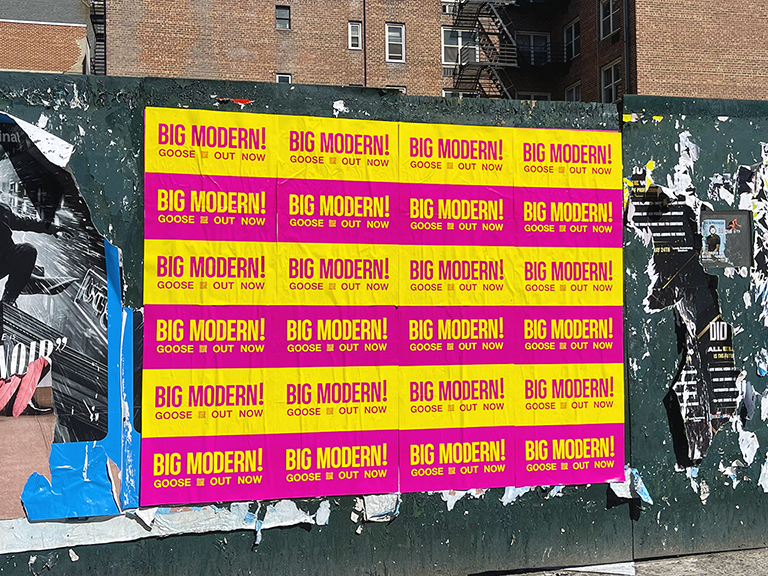
“Poster size” is a phrase that sounds like it refers to one specific dimension. It does not. It refers to a family of sizes that share certain characteristics. In the U.S. market, “poster size” typically means anything from 11×17 inches at the small end to 36×48 inches at the large end of standard production. The sweet spot that most people call “poster size” is either 18×24 or 24×36 inches.
We plan and execute poster campaigns across the United States. We deal with these numbers every week. When a client asks us “how big is poster size?” we always follow up with context questions: Where are you placing them? Who is seeing them and from how far away? What is your print budget? Those answers determine which size is right.
This guide walks through what “poster size” actually means, which formats are most common, and how to decide which size is right for your specific campaign or project.
A poster is a printed, visual communication piece designed to be displayed in a public or semi-public space. What distinguishes a poster from a flyer is size and intent. A flyer is handheld, personal, and disposable. A poster is displayed on a surface, meant to be seen by multiple people, and carries enough visual real estate to communicate at a distance.
That distinction sets the minimum: anything smaller than about 11×17 inches stops functioning like a poster and starts functioning like a flyer. And it sets the maximum for standard production: anything wider than about 48 inches moves out of standard poster territory and into banner or mural territory.
Within that range, here are the sizes that define “poster size” in the U.S. market:
Poster Category
Size (inches)
Visibility Range
Small poster
11 x 17
5 to 8 feet
Standard poster
18 x 24
10 to 15 feet
Large poster
24 x 36
15 to 25 feet
Extra large poster
27 x 40 or 36 x 48
25 to 40 feet
The visibility range reflects the effective reading distance for a well-designed poster with appropriately sized headlines. Poor design can cut that range in half. Great design can extend it slightly, but physics ultimately determines how far text can be read at a given size.
The Most Common Poster Sizes Used in Campaigns
11 x 17 Inches: The Small Poster
This is the minimum viable poster format. It prints on tabloid-size paper, which most commercial printers handle. It fits on campus bulletin boards, inside restrooms, on telephone poles, and in any tight space where a larger format would not work. The downside: it is easy to miss in a busy visual environment. Body text has to be kept minimal and headlines must be large and bold to read from any meaningful distance. This format works for hyper-local, high-density distribution where you are placing dozens or hundreds of pieces in a small area.
18 x 24 Inches: The Standard Poster
This is what most people mean when they say “poster size.” It is the default format at most print shops, the size that most standard frames fit, and the format used for the majority of event, concert, and venue poster campaigns. At 18×24, you have enough surface area for strong visual design and a clear headline. It reads from 10 to 15 feet away when headlines are properly sized. This format is affordable enough to print in quantities of 50 to 200 without a massive budget. For most campaigns, this is the starting point.
24 x 36 Inches: The Large Poster
This is the large standard. At two feet by three feet, it commands attention. It is the size we use for outdoor street-level campaigns where smaller formats would get lost in the visual environment. It reads from 15 to 25 feet. It fills a standard commercial window cleanly. It works on construction fencing, on the sides of loading dock doors, and on the flat surfaces of building facades in neighborhoods where that kind of placement is common. The 24×36 costs about 50 to 100 percent more per unit than the 18×24 but delivers a meaningfully larger visual footprint.
27 x 40 Inches: The Movie One-Sheet
This format was running by the film industry and remains the standard for theatrical one-sheet movie posters. It is less common in general marketing campaigns, but some brands use it for its cinema associations. Theater lobbies, entertainment venue hallways, and transit advertising cases are built to accommodate this exact size. Frame manufacturers produce standard frames for 27×40 as well.
36 x 48 Inches: Wide Format
At three feet by four feet, this is the large end of what most people call “poster size.” It requires wide-format printing equipment and is typically produced on photo paper, vinyl, or fabric rather than standard poster stock. This size shows up in trade show displays, large venue lobbies, and outdoor campaigns where maximum visual impact is the priority.
Our Field Recommendation
When a client asks us to recommend a poster size without knowing their specific context, we almost always say 24×36. It is the most versatile large format. It works outdoors and indoors. It reads from a meaningful distance. It is affordable to print in moderate quantities. And it is available at virtually every large-format print shop in the country without custom production. If the campaign is primarily indoor and budget is tight, we say 18×24.
How Poster Size Affects Design
The size of a poster is more than a logistics question. It directly shapes how you design the piece.
Typography at Scale
Design software shows posters on a screen at a tiny fraction of their actual size. A headline that looks bold on screen at 18×24 might look small in real life on a 24×36 output. Always design with the intended viewing distance in mind, not how it looks at screen resolution. Use large, bold fonts. Keep supporting copy brief. Let the visual do the heavy lifting.
Image Resolution Requirements
Every poster size requires adequate image resolution. A photo that looks fine on a 4×6 print will look pixelated at 24×36. Always source the highest-resolution images available. Design files should be set up at the actual output size in either vector format or high-resolution raster (150 to 300 DPI at the final size).
Color and Contrast
Outdoor posters need high contrast to remain readable in varying light conditions. A light gray headline on a white background might look elegant on a design screen but disappear on a sunlit wall. Use black, white, and high-saturation colors for street-level posters. Reserve subtle color work for indoor close-range applications.
Poster Size in Different Print Software
Design software uses different default poster sizes. Here is a quick guide:
Software
Default Poster Preset
Adjustments Needed
Adobe Illustrator
Custom (no default poster preset)
Set artboard to exact size + bleed
Adobe InDesign
US letter by default
Create new doc at 18×24 or 24×36
Canva
18 x 24 inches (poster preset)
Change to 24×36 or other as needed
Photoshop
Custom (no default poster preset)
New document at final size + 150-300 DPI
Google Slides
Widescreen 16:9 (not poster format)
Change page size to match poster dimensions
In Canva, the poster preset is set to 18×24 inches by default, which is why many people treat that as “the” poster size. Canva’s preset is a reasonable default for indoor events and general use. For outdoor campaigns or larger formats, always override the default and set your specific dimensions.
The Bleed Rule
For any professional poster print, add at least 0.125 inches of bleed on all four sides. Bleed is the extra print area outside your intended finish dimensions that gets cut off during trimming. Without bleed, you risk thin white borders or color cut-offs on the finished poster. Set it up before you start designing, not after.
Poster Size by Industry
Different industries have standardized on different preferred poster sizes:
Music and Concerts: 18×24 standard, 24×36 for headliners and large events
Film and Entertainment: 27×40 one-sheet as the primary standard
Retail and Consumer: 22×28 for floor stands, 24×36 for window posters
Academic and Educational: 11×17 for bulletin boards, 24×36 for presentations
Trade Shows: 24×36 for tabletop panels, 36×48 for full-height displays
Political Campaigns: 18×24 for indoor, 24×36 for outdoor and high-traffic placements
How Big Is Poster Size in Different Print Technologies?
The final printed poster size is what matters. But the path from design file to printed poster involves a print technology with its own characteristics that affect the output. Here is how the major print technologies handle standard poster sizes.
Wide-format inkjet (most common for poster production)
Wide-format inkjet printers use roll stock in standard widths: 24 inches, 36 inches, 42 inches, and 60 inches. An 18×24 poster prints from a 24-inch roll with the 18-inch dimension across the roll and the 24-inch dimension cut from the roll length. A 24×36 prints from a 36-inch roll. This is the technology used by print shops, FedEx Office, Staples, and online poster vendors. Quality ranges from excellent (professional photo quality) to adequate (text-heavy designs for street distribution).
Digital offset for shorter runs
Digital offset printing is increasingly used for poster runs of 50 to 500 copies where high color accuracy matters. The sheet size limits vary by press, but most digital offset systems handle sheets up to 18×24 or sometimes 24×36 comfortably. For campaigns requiring precise Pantone color matching, digital offset on calibrated presses is the right technology.
Screen printing for specialty applications
Screen printing produces posters on thick paper or cardstock with a distinctive tactile quality that sets them apart from inkjet prints. Screen printed gig posters, limited edition art prints, and promotional posters use this method. The standard screen printing format for gig posters is 18×24 on 100 lb uncoated stock. Screen printing is labor-intensive and suited to runs of 50 to 500 at the sweet spot of economy. For general advertising campaigns, inkjet is more practical. For premium limited-edition poster programs, screen printing adds distinctive quality that commands attention.
UV flatbed printing for rigid substrates
UV flatbed printers print directly on rigid materials: foam core, aluminum, PVC board, and corrugated plastic (Coroplast). This technology is used for trade show displays, mounted retail signs, and any application requiring a rigid printed substrate. Standard poster sizes apply equally to flatbed printing, but the maximum print size depends on the specific flatbed printer’s bed size. Most commercial flatbeds handle 4×8 foot sheets or smaller, which covers all standard poster sizes comfortably.
How Big Is Poster Size Relative to Other Common Format Sizes?
Comparing poster sizes to formats people use every day helps calibrate expectations.
A standard 18×24 poster is 3.4 times the area of a standard letter sheet (8.5×11)
A 24×36 poster is 9.3 times the area of a standard letter sheet
A 24×36 poster is roughly the size of a standard door divided into thirds (standard door is 32×80)
An 11×17 poster is 2.2 times the area of a letter sheet
A 27×40 movie poster is 11.2 times the area of a letter sheet
A 36×48 trade show poster is 22.5 times the area of a letter sheet
These comparisons make it easier to visualize poster sizes in physical space before committing to a print run. A 24×36 is not as big as a door but it is significantly bigger than most people expect when they first see the dimensions written on a spec sheet.
How big is a standard poster size?
The standard poster size in the United States is 18 inches by 24 inches. For larger or outdoor applications, 24 inches by 36 inches is the other primary standard. Both are widely produced by print shops across the country.
What is the smallest size that counts as a poster?
Generally, 11×17 inches is considered the minimum poster size. Anything smaller starts to function as a flyer rather than a poster. The 11×17 size is appropriate for bulletin boards and tight indoor spaces but lacks the visual presence of larger formats in open environments.
What size poster is used for events?
Most events use 18×24 for standard indoor posters. Larger events or outdoor placements typically step up to 24×36. Film festivals, music festivals, and major brand activations sometimes use 27×40 or 36×48 for the highest-profile placements.
Is Canva’s poster preset the right size?
Canva defaults to 18×24 inches for its poster preset, which is the standard U.S. poster size. For larger formats like 24×36, you need to change the document size manually. Always verify your canvas size before designing to avoid having to resize later.
How do I know which poster size to choose?
Start with your placement location and viewing distance. For tight indoor spaces under 15 feet, use 18×24. For outdoor or large indoor environments where viewing distance exceeds 15 feet, use 24×36. Let the physical context drive your size choice.
What is the difference between a poster and a flyer?
Size and intent. A flyer is designed to be handed out individually and is typically 8.5×11 inches or smaller. A poster is designed to be displayed on a surface and is typically 11×17 inches or larger. Posters communicate to multiple people from a distance. Flyers communicate to one person at a time up close.
Can I print a poster at any size I want?
Yes, but custom sizes cost more than standard sizes. Print shops stock media in standard widths and cut to standard dimensions. Custom cuts add setup costs. If you need a non-standard size, always check with your printer for availability and pricing before committing to the design.
How big is poster size compared to a TV screen?
A 50-inch television screen is approximately 44 inches wide by 25 inches tall in 16:9 ratio. A 24×36 poster in portrait orientation is significantly taller than a 50-inch TV is tall, but narrower in width. A 36×24 environment poster is similar in width to a 40-inch TV and taller. Thinking about poster size in terms of familiar screen sizes helps calibrate expectations for how much space the physical poster occupies in its environment.
What poster size is appropriate for a real estate listing?
Real estate listing posters for open house and for-sale promotions typically use 18×24 for yard signs and window displays and 11×17 for just-listed flyers distributed to neighbors. In high-end markets like New York’s Upper East Side or LA’s Bel Air, luxury real estate promotions sometimes use 24×36 for construction site displays and building lobbies when promoting new developments. New development marketing budgets often support larger-format printed materials at premium locations near the development site.
How big should a poster be for a food truck or food stand?
Food trucks and food stands typically use menu boards at 18×24 or 24×36, mounted at eye level or above the service window. A 24×36 menu board read from 6 to 10 feet of viewing distance requires 1.5 to 2-inch minimum letter height for menu items to be readable. Promotional signage on the side panels of a food truck typically runs at the largest format that fits the panel width. Many food trucks use full side-panel graphics that go well beyond standard poster sizes into custom vehicle wrap territory.
What is the resolution needed for a standard poster?
For an 18×24 poster at 150 DPI (appropriate for most uses), you need a file that is 2,700 by 3,600 pixels. At 300 DPI, you need 5,400 by 7,200 pixels. For a 24×36 at 150 DPI, you need 3,600 by 5,400 pixels.
Frequently Asked Questions
How big is a standard poster size?
The standard poster size in the United States is 18 inches by 24 inches. For larger or outdoor applications, 24 inches by 36 inches is the other primary standard. Both are widely produced by print shops across the country.
What is the smallest size that counts as a poster?
Generally, 11×17 inches is considered the minimum poster size. Anything smaller starts to function as a flyer rather than a poster. The 11×17 size is appropriate for bulletin boards and tight indoor spaces but lacks the visual presence of larger formats in open environments.
What size poster is used for events?
Most events use 18×24 for standard indoor posters. Larger events or outdoor placements typically step up to 24×36. Film festivals, music festivals, and major brand activations sometimes use 27×40 or 36×48 for the highest-profile placements.
Is Canva’s poster preset the right size?
Canva defaults to 18×24 inches for its poster preset, which is the standard U.S. poster size. For larger formats like 24×36, you need to change the document size manually. Always verify your canvas size before designing to avoid having to resize later.
How do I know which poster size to choose?
Start with your placement location and viewing distance. For tight indoor spaces under 15 feet, use 18×24. For outdoor or large indoor environments where viewing distance exceeds 15 feet, use 24×36. Let the physical context drive your size choice.
What is the difference between a poster and a flyer?
Size and intent. A flyer is designed to be handed out individually and is typically 8.5×11 inches or smaller. A poster is designed to be displayed on a surface and is typically 11×17 inches or larger. Posters communicate to multiple people from a distance. Flyers communicate to one person at a time up close.
Can I print a poster at any size I want?
Yes, but custom sizes cost more than standard sizes. Print shops stock media in standard widths and cut to standard dimensions. Custom cuts add setup costs. If you need a non-standard size, always check with your printer for availability and pricing before committing to the design.