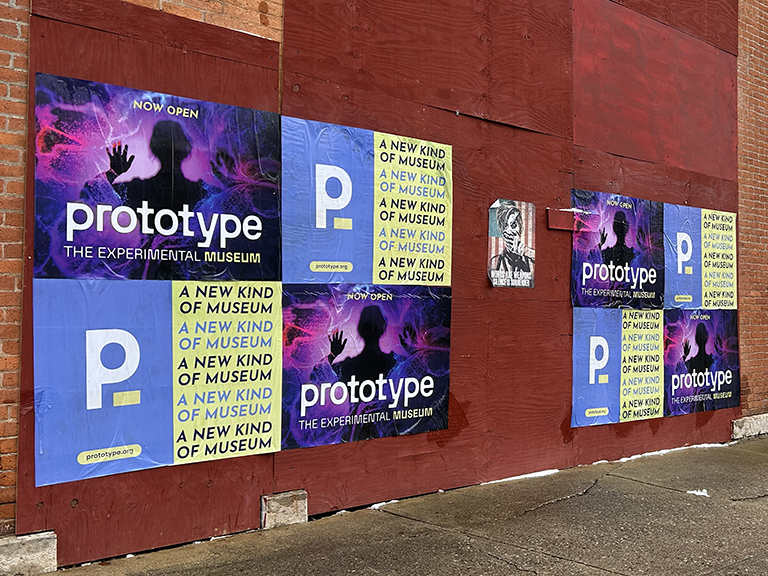
An 11 x 14 inch poster is exactly that: 11 inches wide by 14 inches tall. That puts it in the category of a small poster, slightly larger than a standard letter-size sheet (8.5 x 11) but substantially smaller than the most common street poster size (24 x 36). It is a niche size that works well in specific situations and falls short in others.
We work with poster campaigns every day. We field questions about sizing constantly. The 11 x 14 comes up often because it is a common photo print size that photographers and artists use, and because it is sold widely at frame stores. People wonder whether it works for marketing. The answer depends heavily on where and how you plan to use it.
For comparison, a standard letter sheet is 8.5 x 11 inches. An 11 x 14 gives you about 80% more area than letter size. A standard large poster at 24 x 36 gives you about 5.6 times more area than an 11 x 14. That scale difference matters enormously for visibility in real-world placements.
Where 11 x 14 Posters Work
The 11 x 14 is not a street marketing size. Do not put an 11 x 14 on a construction wall in a busy neighborhood and expect results. It will be invisible. At pedestrian distances of 15 feet or more, an 11 x 14 is barely registerable as a poster, let alone readable.
Where 11 x 14 does work:
Gallery and Art Displays
Galleries use 11 x 14 frequently because it is a classic photo and print size. Frames are widely available. The size works for wall groupings and for presenting detailed artwork that benefits from closer inspection. An 11 x 14 on a gallery wall is not competing with 30 other posters. It is being examined by someone standing 2 to 3 feet away. At that distance, it is an entirely appropriate size.
Restaurant and Bar Walls
Bars and restaurants often display promotional materials at 11 x 14. Specials boards, event announcements, artist features. The viewing distance is short because customers are seated or standing close. The size fits naturally on most interior walls without overwhelming the decor.
Counter and Window Displays
At a point-of-sale counter, 11 x 14 is a reasonable presence. A customer standing at the register sees it from 2 to 4 feet away. The content is readable. For product features, event dates, or brand messaging at POS, this size delivers.
Photo Gifts and Personal Use
Outside of commercial marketing, 11 x 14 is one of the most popular sizes for photo prints. Portraits, landscapes, event photography. It is large enough to matter as a display piece but small enough to fit most interior spaces comfortably.
11 x 14 in Context
Place an 11 x 14 poster next to a standard piece of copy paper (8.5 x 11) and you will see it is modestly larger. Place it next to a 24 x 36 and you will understand why it does not work for street marketing. Size is relative. Always compare your format to what surrounds it in the intended environment.
How 11 x 14 Compares to Other Poster Sizes
Understanding 11 x 14 means understanding the size spectrum it sits within:
Size
Dimensions
Area (sq in)
How Much Larger Than 11×14
Standard Paper
8.5 x 11 in
93.5 sq in
11×14 is 65% larger
11 x 14
11 x 14 in
154 sq in
Baseline
11 x 17
11 x 17 in
187 sq in
11×17 is 21% larger
18 x 24
18 x 24 in
432 sq in
18×24 is 2.8x larger
24 x 36
24 x 36 in
864 sq in
24×36 is 5.6x larger
The 11 x 17 is the more common “small poster” format used in marketing contexts. It is only slightly larger than 11 x 14 but is produced on standard tabloid paper, making it more economical to print. If you are choosing between the two for a marketing application, 11 x 17 is usually the better choice due to its wider availability and lower cost per print.
Designing for 11 x 14
The 11 x 14 has an aspect ratio close to 4:5. This is a tall, slightly narrow rectangle. It suits vertical compositions. Portrait photography, single-subject designs, and text-forward layouts all work well at this ratio.
Because the size is smaller, design complexity needs to be managed carefully. You have less room to spread out. A design that works at 18 x 24 may feel cramped or cluttered at 11 x 14. Simplify. Lead with one strong image or one strong headline. Do not try to fit everything you could fit on a larger poster into this smaller space.
Typography at 11 x 14 needs to account for closer viewing distances. At a 3-foot viewing distance, body copy at 10-point size is readable. But you still want your headline large enough to read from across the room (6 to 8 feet). That means headline type of at least 36 to 48 points.
Print Setup for 11 x 14
Set up your file at 11 x 14 inches with 0.125-inch bleed on all sides. That means the actual file size is 11.25 x 14.25 inches. Print at 300 DPI for close-up viewing. Use CMYK color mode. Keep all critical content at least 0.25 inches inside the trim line.
11 x 14 vs. 11 x 17: Which Should You Choose?
If you are choosing between 11 x 14 and 11 x 17 for a marketing application, here is our honest take: 11 x 17 almost always wins.
The 11 x 17 is standard tabloid size. Nearly every print shop handles it as a routine job. It is faster to produce, often cheaper per unit, and gives you three additional inches of height to work with. More room for your design. More visual presence on the wall.
The 11 x 14, on the other hand, is primarily a photo print size. It is not a natural marketing format. You will pay more per print at most shops because it is a custom cut rather than a standard paper size. The extra cost is rarely justified by the marginal size difference.
Choose 11 x 14 when: you are working in a framed display context and your frame size is 11 x 14, or when your design content specifically suits the 4:5 aspect ratio and you want a premium photo print look. For general marketing and promotion, go with 11 x 17.
Framing an 11 x 14 Poster
One practical advantage of the 11 x 14 size is that it matches a common photo frame standard. Frames in 11 x 14 are sold at every major retailer. This makes 11 x 14 a convenient choice for framed displays in retail locations, office environments, and home use.
If you are giving printed materials to retail partners to display in their stores, 11 x 14 framed pieces look more permanent and professional than a taped-up poster. The framed format signals longevity and brand investment.
Matted frames for 11 x 14 prints can use an outer frame size of 14 x 18 or 16 x 20, which are also common frame sizes. The mat creates a border that elevates the presentation. For premium retail or gallery applications, consider the framed and matted option.
Is 11 x 14 Right for Street Campaigns?
We get asked this directly sometimes. The answer is no. Not for street campaigns where pedestrian or vehicular visibility is the goal. An 11 x 14 poster on a construction wall in downtown Manhattan is invisible. It will not be read. It will not generate exposures. It is too small for the noise level of an urban environment.
For street and outdoor marketing, the minimum effective size is 18 x 24. Ideally, 24 x 36. If your budget cannot support those sizes, you are better off spending your money differently, perhaps on digital out-of-home or targeted distribution, rather than trying to make a small poster do a large poster’s job.
The 11 x 14 has a place in marketing. That place is close-range, controlled environments. Indoors. Near the viewer. Where quality of impression matters more than size of impression. Know your environment, then choose your format.
Paper Stock and Finish Options for 11×14 Photo and Art Prints
Paper selection is where fine art and photo printing separates itself from commodity printing. An 11 x 14 print on the wrong paper stock looks flat. The same image on the right paper is a display-worthy object. Understanding the options makes the difference.
For photography, the most common options are glossy, semi-gloss (luster or pearl), and matte. Glossy produces the most saturated colors and is the default for consumer photo printing. It shows fingerprints easily and creates glare in framed settings. Luster or pearl finishes offer similar color saturation with reduced glare, making them the preferred choice for most professional portrait and event photographers. Matte finishes produce a softer look with no glare, which suits certain photographic styles and pairs well with natural wood or dark frames.
For fine art printing, cotton rag and baryta papers are the standards. Cotton rag papers (also called museum or archival papers) have a textured surface that complements painterly and illustrative work. They are acid-free and designed to last for decades without yellowing. Baryta paper is a fiber-based photographic paper with a finish that resembles traditional darkroom prints, which makes it a favorite among photographers who value a classic look. Both options come at a premium over standard photo papers, but for art prints intended to sell, the quality difference is immediately visible to buyers.
For framed prints: if your 11 x 14 print will be displayed behind glass, the glazing matters as much as the paper. Standard glass produces glare. Anti-reflective or museum glass reduces glare and color distortion. UV-protective glazing slows color fading significantly. For art prints you intend to sell or display long-term, archival paper paired with UV-protective glazing is the standard of care in the photography and fine art world.
How to Price and Sell 11×14 Prints as an Artist or Photographer
The 11 x 14 is a natural entry point for photographers and artists building a print sales program. It is large enough to be a meaningful purchase but affordable enough that the price point stays accessible. A realistic price range for an 11 x 14 fine art or photography print is $40 to $150 for open editions, and $75 to $300 for limited editions, depending on the artist’s market positioning and the print quality.
When pricing editions, factor in print cost, framing if you offer framed options, packaging, and your time for handling and shipping. At a specialty lab cost of $20 to $30 per print, a retail price of $75 to $100 provides a workable margin for an open edition. For limited editions with a stated run of 50 or fewer, pricing can support a higher margin because scarcity adds genuine perceived value.
Online platforms that support fine art print sales (such as Etsy, Society6, or a personal Shopify site) regularly see strong demand for 11 x 14 prints specifically because buyers know they can find frames for this size at any major retailer. That framing accessibility reduces friction in the purchase decision. A buyer who loves your print does not have to search for a specialty frame. They can pick one up at any home goods store that same week.
At art fairs and markets, 11 x 14 prints displayed on a grid or wire display at eye level consistently draw buyers looking for gifts or personal decor. Price your prints clearly and include a note on the paper stock, edition size, and whether the print is signed. These details matter to collectors and demonstrate that you are treating your work as a serious art product rather than a commodity print.
11×14 for Photography and Art Prints
The 11 x 14 format has a long history in photography and fine art printing. It is one of the foundational sizes in the photo lab world, offered as a standard option by nearly every professional and consumer print service. Photographers use it as a step-up from the 8 x 10 when they want more visual impact without committing to the larger footprint of a 16 x 20.
For portrait photographers, the 11 x 14 is a popular product size in client delivery packages. It is large enough to make a meaningful display piece for a living room or hallway wall, but small enough that most clients can find a place for it without rearranging furniture. It sits in the middle ground between a standard snapshot print and a statement piece, which is exactly what makes it an easy sell.
Fine art and giclée printing at 11 x 14 allows artists to sell affordable editions of their work. Edition sizes of 50 to 100 prints at 11 x 14 are standard practice for artists who sell at galleries, art fairs, and online shops. The cost per print is manageable and the price point for buyers stays accessible. At this size, the art carries visual weight while remaining practical to ship and frame.
Print shops and photo labs consistently stock 11 x 14 as a standard option because demand is stable. Fine art papers, archival pigment inks, and giclée-quality printing are all available at this size from specialty labs. For photographers and artists who care about longevity, an 11 x 14 print on archival paper with UV-protective coating will hold its colors for decades when handled and stored properly.
Home decor rounds out the picture. In interior design, the 11 x 14 fits naturally into gallery wall arrangements alongside 8 x 10 and 16 x 20 prints. It is versatile, widely framed, and scaled for the room sizes most people actually live in.
Is an 11×14 print a good size to sell at art fairs?
It is one of the most popular sizes at art fairs precisely because of its price accessibility and framing convenience. Buyers can take an 11 x 14 print home and frame it that afternoon at any retail store. For artists, it allows a price point that moves volume without being so low it devalues the work. Displaying 11 x 14 prints alongside 8 x 10 and 16 x 20 options gives buyers a tiered choice, which consistently increases average transaction size at a well-organized booth.
Frequently Asked Questions
Is 11×14 a standard size for photography and fine art prints?
Yes. The 11 x 14 is one of the most widely supported sizes in the photo and fine art printing world. Nearly every professional photo lab and fine art print shop lists it as a standard offering. It sits in the sweet spot between the 8 x 10 and the 16 x 20 for photographers and artists selling prints. For portrait photography, environment prints, and limited edition art, it is one of the go-to sizes
What is the aspect ratio of an 11×14 poster?
The aspect ratio of 11 x 14 is 11:14, which reduces to approximately 0.786:1, close to a 4:5 ratio. This is a vertical rectangle that suits portrait-oriented designs.
What type of frame works best for displaying an 11×14 art print?
For fine art and photography, a matted presentation elevates the piece significantly. Use a 14 x 18 or 16 x 20 outer frame with an archival, acid-free mat cut to an 11 x 14 opening. For gallery shows, simple black or white frames with a 2 to 3 inch mat border are the standard. For home display, the frame style can match the interior, but always use UV-protective glazing if the print will receive a
What DPI should I use for an 11×14 poster?
Print at 300 DPI for an 11 x 14 poster. This gives you sharp results at close viewing distances of 2 to 4 feet.
How does 11×14 compare to 11×17?
An 11 x 17 poster has 33 more square inches of area than an 11 x 14. The 11 x 17 is the standard small marketing poster size. It costs less to print because it matches standard tabloid paper. For marketing use, 11 x 17 is almost always the better choice.
Can I use 11×14 for retail displays?
Yes. For interior retail displays at close viewing distances, 11 x 14 works well. It is especially effective in a framed or matted presentation, which looks more permanent and professional than a taped-up print.
What is the maximum font size visible on an 11×14 from 10 feet away?
A headline font of 72 points or larger is visible from 10 feet on an 11 x 14 poster. Body copy at 10 feet is difficult to read on this size. Design with the understanding that 11 x 14 is a close-range format.