The question sounds simple enough. How big is a regular poster? But spend any time in the print industry and you quickly realize “regular” depends on context. A regular poster in a music venue is different from a regular poster in a movie theater. A regular poster for a trade show booth is nothing like a regular poster on a college campus bulletin board.
We work with posters every day. We plan campaigns for clients in New York, Los Angeles, Austin, Chicago, Miami, and dozens of other markets. We print, place, and track posters across all types of surfaces and environments. So when someone asks us how big a regular poster is, we give them a real answer based on real-world use.
The short answer: a regular poster is most commonly 18 inches wide by 24 inches tall. That is the format you see at concerts, in venue windows, on bulletin boards, and in retail spaces. It is the size that most print shops treat as standard. It is the size that most people picture when they say “poster.”
But there is a lot more to it than that single measurement. Let us walk through the full picture.
When most people say “regular poster,” they mean the 18×24 or 24×36. Both formats are widely printed, widely distributed, and recognized as the go-to sizes across industries. The 18×24 wins on affordability and versatility indoors. The 24×36 wins on impact and visibility outdoors.
Regular Posters in the Music and Events World
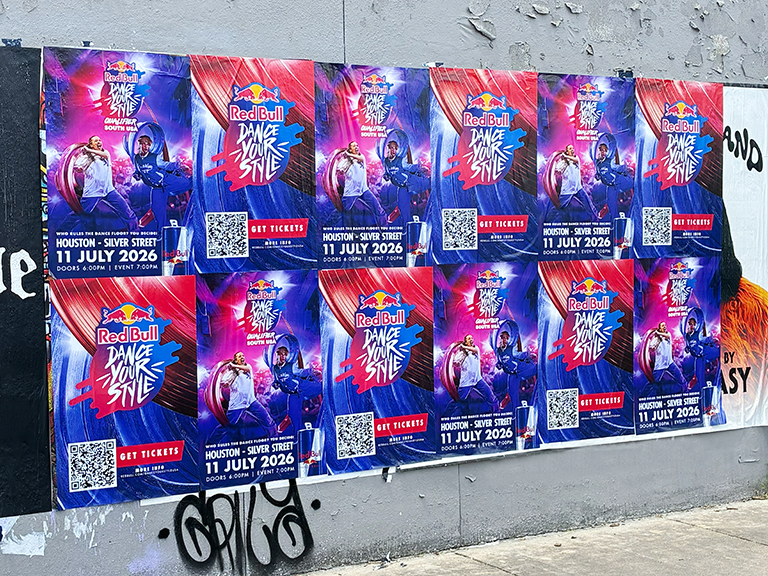
The music and events industry has been using 18×24 posters for decades. Walk through the East Village in New York. Check the windows of venues on Haight Street in San Francisco. Look at the bulletin boards outside venues in Wicker Park, Chicago or Five Points in Denver. You will find 18×24 posters almost everywhere.
This size hit a sweet spot that the music industry never stopped using. It is large enough to be noticed from across the street. It is small enough to fit in a venue window without blocking sightlines. It is affordable enough to print 100 or 200 copies for a local campaign without breaking a small band’s budget.
For bigger events and touring acts, 24×36 is common. Large festivals often go even bigger. But the weeknight gig at a local bar? That is still a regular 18×24 poster world.
The 18×24 Rule of Thumb
If you are printing for a local event or campaign and you are not sure what size to use, start with 18×24 inches. It is the most widely accepted “regular” poster size across industries. Print shops stock it. Frames are built for it. Venues expect it.
Regular Poster Sizes in Retail and Advertising
Retail stores use posters slightly differently than event promoters. In retail, the regular poster size often depends on where it is displayed. Here is how it breaks down:
Window Displays
Window posters in retail are typically 18×24 for smaller windows and 24×36 for larger glass panels. Chains like boutique clothing stores, coffee shops, and independent restaurants use both sizes. The key is covering enough of the window to be readable from the sidewalk while leaving enough transparency for the space to feel open.
Point-of-Purchase Displays
Inside stores, counter cards are usually 8×10 or 5×7. Floor stands and display fixtures are sized for 22×28 or 24×36 inserts. These are trade-standard sizes that fixture manufacturers build around.
Retail Signage
Promotional signs inside stores often follow a 24×36 format for aisle signage and 18×24 for smaller departmental promotions. Sale posters, seasonal promotions, and brand campaigns typically use these two formats interchangeably.
How Far Away Will People Read Your Poster?
Viewing distance is one of the most important factors in choosing a regular poster size. The bigger the poster, the farther away it reads. Here is a practical guide:
Viewing Distance
Recommended Size
Minimum Headline Font Size
Under 5 feet (up close)
11 x 17 in
24 pt
5 to 10 feet
18 x 24 in
36 pt
10 to 20 feet
24 x 36 in
72 pt
20 to 50 feet
36 x 48 in or larger
120 pt or larger
This table matters more than most designers realize. A regular 18×24 poster with 12-point body text fails on a busy street corner where people are reading from 15 feet away. Design for the distance, not for how the file looks on your screen.
What Makes a Poster “Regular” in Different Contexts
The word “regular” is doing a lot of work in this question. Let us break it down by context:
College Campuses
On campuses, regular poster size is typically 11×17 for bulletin boards and 18×24 for more prominent placements like dorm lobbies, student unions, and dining halls. Campuses often have specific posting policies that define acceptable sizes.
Concert and Music Venues
Regular here means 18×24. Some venues post smaller 11×17 bills for multiple upcoming shows. Headlining acts get a focused 18×24. Special events sometimes warrant a 24×36.
Outdoor Urban Environments
In dense urban areas, regular means 24×36 or larger. The visual competition is intense. Smaller formats get lost. Think about the density of imagery on a block in the Mission in San Francisco or in Bushwick, Brooklyn. You need size to compete.
Trade Shows and Exhibitions
Regular poster size in trade show settings is often 24×36 for table top displays and 36×48 for full booth backdrops. These are the sizes that display hardware manufacturers build their systems around.
Know Your Surface Before You Print
The most common mistake in poster campaigns is choosing a size before scouting locations. Walk your target area. Measure the surfaces you plan to use. A poster that fits perfectly on its surface always outperforms one that is awkwardly large or too small for the space.
Printing a Regular Poster: What to Expect
If you walk into a print shop and ask for a regular poster, here is what you will typically get:
Size: 18×24 or 24×36 depending on the shop’s default
Paper: 80 to 100 lb gloss or matte text
Finish: Gloss, matte, or satin coating
Turnaround: 1 to 3 business days for standard orders
Quantity: Minimum orders typically start at 25 to 50 pieces
Costs vary by region and vendor. A regular 18×24 poster printed in quantity at a major online print shop runs roughly $1.50 to $3.00 per piece. A 24×36 runs $3.00 to $6.00 per piece in similar quantities. Local print shops may charge more but offer faster turnaround and more personalized service.
Orientation: Portrait vs. environment
When people say “regular poster,” they almost always mean portrait orientation. That is taller than it is wide. The standard 18×24 in portrait mode is the industry default.
environment orientation is less common for traditional posters but used in specific contexts. Banner-style displays, horizontal window graphics, and wide-format trade show applications often use environment. For outdoor campaigns using full-sheet or double-sheet formats, environment can work well for horizontal surfaces like fencing or garage doors.
Portrait orientation dominates because it mirrors the human form and how we read vertical spaces. It also fits the standard surfaces where posters appear: doors, windows, walls, and columns are all taller than they are wide.
How big is a regular poster?
The most common regular poster size is 18 inches by 24 inches. For outdoor campaigns and high-visibility placements, 24 inches by 36 inches is also widely considered a regular or standard size. Both formats are stocked by most print shops.
Is 18×24 the same as a standard poster?
Yes. In the U.S., 18×24 is one of the two most common standard poster sizes. The other is 24×36. Print shops, frame manufacturers, and display fixture companies all build their offerings around these two formats.
What size poster do music venues use?
Most music venues use 18×24 for standard show posters. Larger events or headlining shows may use 24×36. Very small clubs or venues with tight bulletin board space may use 11×17.
What is the regular size for a poster at a trade show?
Trade show posters typically run 24×36 or 36×48. Display fixture systems are built around these dimensions. Tabletop displays use 24×36, while full-height booth displays often use 36×48 or custom banner dimensions.
Can I print a regular poster at home?
Standard home printers max out at 8.5×11 or occasionally 13×19 with a wide-format inkjet. For true 18×24 or 24×36 posters, you need a commercial or large-format printer. Most office supply stores and local print shops can produce these sizes.
How much does a regular poster cost to print?
An 18×24 poster typically costs $1.50 to $3.00 per piece in quantities of 50 or more at a commercial print shop. A 24×36 costs roughly $3.00 to $6.00 each. Prices vary by stock, finish, and vendor.
What resolution do I need for a regular 18×24 poster?
Design at 150 to 300 DPI at the final print size. For close viewing (under 5 feet), use 300 DPI. For typical indoor viewing distances of 5 to 15 feet, 150 DPI produces excellent results.
Is environment orientation a regular poster format?
Portrait orientation (taller than wide) is the standard for regular posters. environment is used in specific applications like banners, horizontal window displays, and trade show backdrops, but it is not the default format for most poster campaigns.
Does poster size affect how visible it is on the street?
Absolutely. Larger posters read from greater distances. For busy pedestrian streets, 24×36 or larger is recommended. For indoor spaces where people walk past at close range, 18×24 works perfectly. Always design for the viewing distance of your actual placement.
Frequently Asked Questions
How big is a regular poster?
The most common regular poster size is 18 inches by 24 inches. For outdoor campaigns and high-visibility placements, 24 inches by 36 inches is also widely considered a regular or standard size. Both formats are stocked by most print shops.
Is 18×24 the same as a standard poster?
Yes. In the U.S., 18×24 is one of the two most common standard poster sizes. The other is 24×36. Print shops, frame manufacturers, and display fixture companies all build their offerings around these two formats.
What size poster do music venues use?
Most music venues use 18×24 for standard show posters. Larger events or headlining shows may use 24×36. Very small clubs or venues with tight bulletin board space may use 11×17.
What is the regular size for a poster at a trade show?
Trade show posters typically run 24×36 or 36×48. Display fixture systems are built around these dimensions. Tabletop displays use 24×36, while full-height booth displays often use 36×48 or custom banner dimensions.
Can I print a regular poster at home?
Standard home printers max out at 8.5×11 or occasionally 13×19 with a wide-format inkjet. For true 18×24 or 24×36 posters, you need a commercial or large-format printer. Most office supply stores and local print shops can produce these sizes.
How much does a regular poster cost to print?
An 18×24 poster typically costs $1.50 to $3.00 per piece in quantities of 50 or more at a commercial print shop. A 24×36 costs roughly $3.00 to $6.00 each. Prices vary by stock, finish, and vendor.
What resolution do I need for a regular 18×24 poster?
Design at 150 to 300 DPI at the final print size. For close viewing (under 5 feet), use 300 DPI. For typical indoor viewing distances of 5 to 15 feet, 150 DPI produces excellent results.