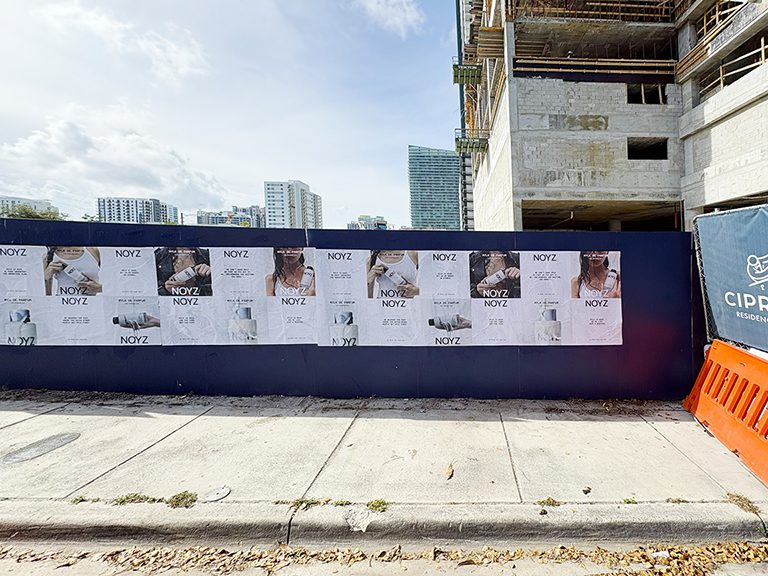
Most people picture a poster as a tall, narrow vertical rectangle — a movie poster hanging in a theater lobby, a concert poster on a bar wall, a street poster pasted to a brick wall in Williamsburg. Portrait orientation is the default because most promotional contexts — movie promotion, event advertising, street campaigns — work best with the tall, vertical format that matches the proportions of a human figure. But there is an entire parallel world of horizontal, landscape-format posters that serve different applications with different proportions and different design requirements.
At American Guerrilla Marketing, based in Brooklyn, we work with the full range of poster formats in our wheatpaste campaign and outdoor advertising work. Landscape formats come up specifically when clients need to fill horizontal wall space, when transit advertising contexts require it, when conference and exhibition poster specifications call for it, or when the creative concept is inherently horizontal — a wide panoramic image, a multi-panel narrative layout, or a format that reads left to right across a visual sequence. This guide covers every standard landscape poster size with practical context for when each format is the right choice.
Note on orientation terminology: “landscape” means the poster is wider than it is tall (horizontal orientation). “Portrait” means the poster is taller than it is wide (vertical orientation). When a poster size is described as “landscape,” the first dimension listed is the width and the second is the height — so a 36×24 landscape poster is 36 inches wide and 24 inches tall.
Why Choose Landscape Orientation for a Poster?
Before reviewing specific landscape formats, it helps to understand when landscape orientation makes the right choice for a poster application.
Available Wall Space is Horizontal
The most practical reason to use a landscape poster is that the available display surface is horizontal. Long walls in office hallways, horizontal hoarding panels, the wide-but-low walls between ground floor windows and ceiling, and the sides of low structures all have horizontal proportions that a landscape poster fills more effectively than a portrait one. Forcing a portrait poster into a horizontal space either leaves large areas of empty wall or creates awkward visual composition. A landscape poster designed for the space fills it naturally.
Content Is Inherently Horizontal
Some content types are naturally horizontal: panoramic photography, timelines that read left to right, multi-column data layouts, wide-aspect ratio scenes, and group photography where multiple people need to appear at a reasonable size. For academic conference posters that need to display multiple data panels in sequence, the horizontal format allows a natural reading flow that portrait orientation fights against. For landscape photography or scenic imagery used as the main visual, landscape orientation preserves the image’s proportions without cropping or awkward scaling.
Transit and Outdoor Contexts Require It
Many transit advertising formats are inherently landscape: bus interior car cards, horizontal platform posters, the wide-format panels on train station walls, and digital out-of-home screens that use 16:9 ratios are all horizontal formats. A brand that is running a transit advertising campaign needs landscape-specific designs for these placements — portrait designs scaled to fill horizontal formats inevitably have large areas of wasted space or require awkward composition compromises.
The Standard Landscape Poster Sizes
Here is a comprehensive overview of standard landscape poster formats, organized by size.
17×11 Inches (Tabloid/Ledger Landscape)
The smallest practical landscape poster format is 17×11 inches, the horizontal version of the standard tabloid sheet. This format is common for informational posters in office environments, small promotional materials, and handout-scale announcements that need to communicate horizontal content. At this size, landscape orientation provides minimal advantage over portrait except for specific content types that genuinely need wider-than-tall proportions. Print cost is identical to the portrait 11×17 since the same paper stock is used.
24×18 Inches
The 24×18 inch landscape format is the horizontal version of the standard 18×24 event poster. This format is appropriate for venue display in horizontal wall spaces, retail window display where the window is wider than it is tall, and any promotional context where the 18×24 format size is right but portrait orientation does not fit the content or display space. At 24 inches wide and 18 inches tall, this format fills a horizontal display space effectively while remaining manageable in size for handling and display.
36×24 Inches: The Most Common Landscape Poster Size
The 36×24 inch format is the landscape equivalent of the standard 24×36 poster and the most commonly used landscape poster size across advertising and promotional contexts. At 3 feet wide and 2 feet tall, it fills a horizontal wall space with the same authority that a 24×36 fills a vertical wall space. This format is used for outdoor campaign placements on horizontal walls, retail and event display where horizontal orientation better fits the content, and street-level advertising in environments with wide horizontal wall sections.
For wheatpaste campaigns, 36×24 is the landscape format AGM uses when horizontal wall space is the primary available surface. It requires the same two-person installation as a portrait 24×36 and has identical print production costs since it uses the same amount of material. The design approach differs significantly — horizontal formats need to anchor the composition from left to right rather than top to bottom, which changes how typography and imagery are positioned relative to each other.
48×36 Inches: The Large Landscape Format
The 48×36 inch format is the standard for large landscape posters in academic and professional conference settings. At 4 feet wide and 3 feet tall, it provides substantial surface area for detailed data presentation, multi-panel layouts, and complex visual content that needs to be read from a standing position at arm’s length. This is the format most scientific conferences specify when they allow landscape orientation — it gives researchers equivalent surface area to the standard 36×48 portrait conference poster while allowing the horizontal reading flow that multi-panel research presentations benefit from.
The 48×36 is also used in retail and exhibition environments where a large horizontal statement is needed. A row of 48×36 landscape prints mounted side by side on a gallery or retail wall creates a panoramic visual sequence that is not possible with portrait formats. The format requires careful design because at 48 inches wide, the eye needs visual anchors at both the left and right edges to read the composition comfortably across the full width.
48×24 Inches: The Long Horizontal
The 48×24 inch format has an extreme 2:1 aspect ratio — twice as wide as it is tall. This format is used for specific architectural contexts where the available wall section is very wide relative to its height: the frieze band between windows and ceiling in commercial spaces, the full-width panel above a retail display case, or horizontal hoarding sections. The extreme horizontal proportion creates strong visual impact in these specific contexts but is challenging to design effectively — the wide format requires the design to lead the eye from one end to the other without losing coherence in the middle.
72×36 Inches: Banner Scale Landscape
At 6 feet wide and 3 feet tall, the 72×36 format crosses into banner territory. This format is used for long horizontal walls, stage backdrops, trade show display, and any context where a large-scale horizontal statement is needed. The 72×36 requires ladder or scaffold access for installation on walls above head height and requires production on wide-format printing equipment that most on-demand print shops have but some smaller providers do not.
Landscape Formats in Transit Advertising
Transit advertising is one of the primary contexts for landscape poster formats because transit environments — station platforms, bus interiors, train car walls — frequently have horizontal proportions that portrait formats do not fill efficiently.
Bus Interior Car Cards
Bus interior car cards are horizontal advertising panels installed above the windows on the interior sides of buses. Standard US bus car card sizes include 11×28 inches, 11×17 inches, and 11×21 inches — all landscape orientation. These small horizontal panels are visible to seated passengers throughout the duration of the bus journey, providing extended dwell time that most outdoor advertising formats do not achieve. Car card advertising requires designs that communicate effectively at a relatively small landscape format from close reading distance.
Platform and Station Posters
Platform advertising in transit stations often uses horizontal panels because platform walls run the length of the platform — typically much wider than tall. Standard platform advertising formats include 27×40 portrait panels installed in rows and larger horizontal formats that span multiple panel widths. Station domination campaigns that wrap an entire station frequently use both portrait and landscape panels depending on the specific architectural features of each installation point.
Digital OOH Screens
Digital out-of-home screens are almost universally landscape orientation, using 16:9 or similar ratios. The standard digital OOH screen ratio of 16:9 corresponds to a physical size like 96×54 inches or 80×45 inches. Campaigns running on digital OOH need landscape-format designs at 16:9 ratio that are specifically distinct from the brand’s print poster designs, which may be portrait oriented. Our team coordinates digital OOH creative alongside physical poster campaign work to ensure format-appropriate design across both.
Landscape Poster Design: Key Principles
Designing for landscape orientation requires a different compositional approach than portrait poster design. Here are the key principles that make landscape posters work effectively.
Lead with the Widest Element
In a portrait poster, the headline and key visual naturally stack vertically in a reading flow that mirrors book pages. In a landscape poster, the natural reading flow is horizontal — the eye enters from the left and moves right. Design the most important element (the headline or key visual) to be encountered first in this left-to-right reading sequence, with supporting information to the right or below it.
Use the Width for Visual Storytelling
The width of a landscape poster is an opportunity to tell a visual story in sequence. A panoramic image can establish context on the left and focus detail on the right. A multi-phase process or timeline can flow naturally from left to right. A before-and-after comparison can place the two states side by side with clear visual separation. Portrait posters cannot take advantage of this horizontal narrative opportunity.
Avoid Wasted Horizontal Real Estate
The most common design failure in landscape posters is centering content in the middle of the poster and leaving large empty margins at the left and right edges. The full width of the poster should be engaged with meaningful visual content. If the composition does not naturally fill the width, consider whether portrait orientation might actually be the better choice for that specific content.
Typography Adapts Differently in Landscape
Typography in landscape posters needs to be sized relative to the poster’s height, not its width. The headline font size should be large enough to read comfortably from the expected viewing distance based on the poster’s height (2 feet, 3 feet, etc.), regardless of the additional width. A common error is setting type at a size that reads the design as if the poster is portrait oriented — the type ends up too small because it was scaled to the narrower portrait dimension rather than the actual format.
Landscape Formats in Outdoor Advertising Campaigns
Outdoor advertising has historically defaulted to portrait formats for most street-level applications, but landscape formats have important applications in specific outdoor contexts.
Horizontal hoarding panels — the wide, low boards on construction sites and temporary fencing — are natural landscape poster locations. A 48×24 or 72×36 landscape format fills these panels efficiently. When our team scouts locations for wheatpaste campaigns, we note the orientation of available wall space and recommend landscape formats for horizontal surfaces rather than forcing portrait posters into spaces where they will not sit comfortably.
Bus shelter advertising uses a specific landscape format: the 40×60 bus shelter panel is technically portrait, but many bus shelter networks also include smaller horizontal panels. The standard horizontal bus shelter panel is typically 24×18 or similar small landscape format. These formats capture waiting passengers’ attention at close reading distance during the extended dwell time of transit waiting.
LED billboard trucks use landscape-format screens because the truck-mounted display is wider than it is tall. The typical LED truck display is approximately 10 to 12 feet wide and 5 to 6 feet tall — a roughly 2:1 landscape ratio. Campaigns designed for LED truck display need landscape-format creative specifically designed for these proportions. Our team works with clients to develop LED truck creative alongside other campaign formats to ensure visual consistency across portrait and landscape applications.
Conference Landscape Posters: Academic and Professional Standards
Academic and professional conferences that specify landscape poster orientation typically require 48×36 inches (4 feet wide by 3 feet tall) as the standard format. This is large enough to display multiple research panels in a readable size from the standard conference poster viewing distance of 3 to 5 feet, while being manageable enough to transport and mount without specialized equipment.
Some conferences also allow 36×24 as a smaller landscape option. At 36 inches wide and 24 inches tall, this format is appropriate for presentations with less content or for display environments where space is limited. The reduced size means smaller text and images, which requires careful design to maintain readability at viewing distance.
Conference poster printing is typically done on fabric, matte paper, or photo paper, depending on the venue’s display system. Fabric posters are preferred for conference presentations because they roll or fold for transport without cracking and mount to most display systems without requiring frames or rigid backing. Most conference organizers specify the file format and resolution for poster submission — 300 DPI PDF or high-resolution TIFF is the standard for most conference poster printing contexts.
Frequently Asked Questions
What is the most common landscape poster size?
The most common landscape poster size is 36×24 inches (width x height), which is the horizontal version of the standard 24×36 vertical poster. This format is widely used for conference posters, event banners, street-level advertising in horizontal wall spaces, and any application where horizontal orientation better fits the display space or content layout.
What is the standard landscape size for a conference poster?
Academic and professional conference posters in landscape orientation are most commonly 48×36 inches or 36×24 inches. The 48×36 format is particularly common for scientific conference posters that need to display multiple data panels and methodology sections side by side. Some conference organizers specify 36×48 (portrait) but many allow landscape as an equivalent alternative.
What landscape poster formats are used in transit advertising?
Transit advertising commonly uses landscape-oriented formats including bus interior car cards (11×17 or 11×28 in landscape), bus exterior horizontal panels, platform posters in horizontal format, and digital screen ratios that are inherently landscape oriented (16:9 for most digital OOH screens). Station domination campaigns often use landscape panels on platform walls because the wall runs horizontally.
Can I use a landscape poster for outdoor wheatpaste campaigns?
Yes. Landscape posters work well for outdoor wheatpaste campaigns when the available wall space is wider than it is tall. AGM has executed landscape-format poster campaigns on horizontal wall surfaces in multiple markets. The key constraint is having available surfaces with the right proportions — most urban walls are taller than wide, which is why portrait orientation is more commonly used for street campaigns, but horizontal walls are a productive landscape posting opportunity when they exist.
What aspect ratios are standard for landscape posters?
Standard landscape poster aspect ratios include 3:2 (like 36×24 or 48×32), 4:3 (like 48×36 or 32×24), 2:1 (like 48×24 or 72×36), and 16:9 (like 48×27 for screen-equivalent digital output). The 4:3 ratio is the most common for academic and conference posters. The 3:2 ratio closely matches photographic proportions and is common in editorial and exhibition contexts.
Are landscape posters harder to read than portrait posters?
Not inherently. Readability depends on design quality and content layout more than orientation. Landscape posters are more effective than portrait for content that reads naturally left to right in sections, for panoramic photography, and for timelines or process flows that benefit from horizontal reading order. Portrait orientation has an advantage for single-image promotional posters because it matches the proportions of the human body and face.
What is a good landscape poster size for a retail store window?
For more on this, explore our experiential marketing.
For more on this, explore our street team activations.
For retail window display in landscape orientation, 24×18 inches is appropriate for smaller windows and 36×24 is standard for typical shop windows. Very wide windows may use 48×24 or 48×36 to fill the horizontal space effectively. The key is matching the poster width to the window width while maintaining a proportional height that does not look visually cramped in the window context.