How Big Is a Normal Poster? Size Guide by Use Case
A normal poster is 18×24 inches for indoor and window placements. For street-level outdoor campaigns, normal is 24×36 inches. Here’s how to know which size is right for your situation.
When someone asks how big a normal poster is, they’re usually trying to figure out what size to print. The answer depends on context. A normal poster for a venue window is a different size than a normal poster for a building wall. A normal poster for a college dorm room is different from a normal poster for a street campaign.
We place posters professionally. Our crews work across New York, Los Angeles, Chicago, Miami, and Atlanta on a daily basis. We know what “normal” looks like in different contexts because we see it and work with it constantly. Here’s the honest breakdown.
The “normal” poster size for most advertising purposes is either 18×24 or 24×36 inches. These two sizes handle the majority of use cases. If you’re unsure which one applies to your situation, read through the sections below to find the closest match.
How Big Is a Normal Street-Level Poster?
On the street, in any major US city, the normal poster size is 24×36 inches. Two feet wide, three feet tall.
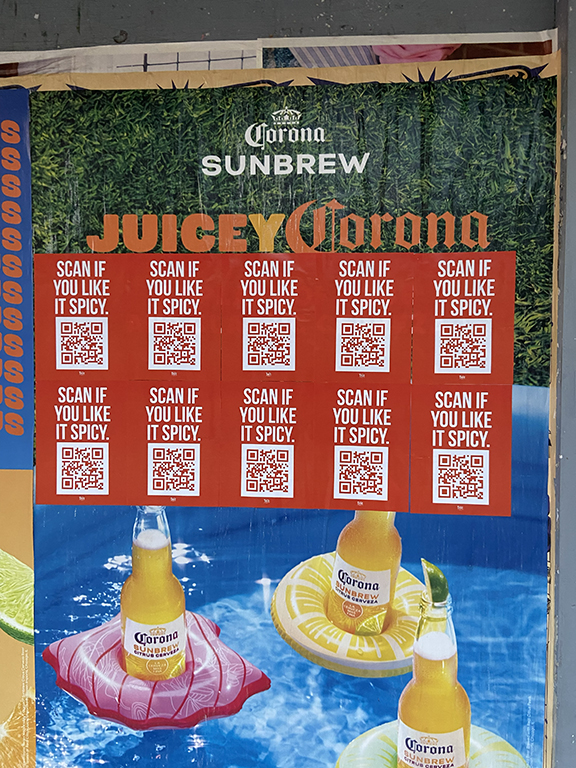
This is what you see pasted on the hoarding boards in Lower Manhattan around a construction site. On the plywood over a vacant storefront in Logan Square in Chicago. On the side of a building in Boyle Heights in Los Angeles. This is the format that street-level advertising campaigns use because it’s visible from across the street, affordable to produce in volume, and the size that printers and install crews have built their workflows around.
A 24×36 is big enough to see from 30 to 40 feet in a typical city block environment. With high-contrast design and large headline text, it can be read while walking at a normal pace from the opposite sidewalk. This visibility is what makes it the default normal size for street work.
In terms of physical scale: a 24×36 poster is about the size of a large mirror or a substantial wall calendar. Lay it flat on a table and it takes up a significant portion of the table surface. It’s bigger than most people realize when they first order one. When it’s up on a building wall, it commands attention.
Physical reference: A 24×36 poster is 2 feet wide and 3 feet tall. That’s roughly the height of a kitchen counter from the floor. Put two 24×36 posters side by side and they’re as wide as a standard doorway. This is why this size works at street level: it’s big enough to see.
How Big Is a Normal Indoor Poster?
For indoor use in venues, retail stores, and event spaces, the normal poster size is 18×24 inches. One and a half feet wide, two feet tall.
This size is everywhere in the interior advertising world. The back wall of a bar on Bourbon Street in New Orleans. A window at a boutique on Bleecker Street in the West Village. A display in a music store on Music Row in Nashville. An 18×24 is the size that fits in standard snap frames, slides into standard display hardware, and reads clearly from across a room.
At 18×24, the poster is visible from 15 to 20 feet under normal lighting conditions. In a venue with low lighting, that distance shrinks. High-contrast design compensates for challenging viewing conditions. The size is comfortable for one person to carry, store, and install without assistance.
How Big Is a Normal Decorative Poster?
For home decoration and room display, the most common normal sizes are 18×24 and 24×36 inches. Both are widely available from online art print vendors and sold in retail stores. Standard poster frames at IKEA, Target, and home goods stores come in these two sizes.
The 24×36 is typically considered the “large” decorative poster size. It’s a significant statement on a wall, particularly in smaller rooms. The 18×24 is a medium size that works well in collections of multiple framed pieces.
Smaller decorative sizes like 11×17 and 12×18 are also common for art prints and collector posters. These are normal for tabletop display, smaller walls, or tight gallery-style arrangements. They’re not the size most people picture when they say “poster” but they’re a legitimate part of the decorative poster market.
How Big Is a Normal Movie Poster?
A normal movie poster, called a “one-sheet,” is 27×40 inches. This is the size of the poster you see in theater lobby display cases next to the ticket counter. The display hardware in US cinemas is built around this size.
The 27×40 is wider and taller than a standard 24×36. It’s 7.5 square feet of print area. This extra size gives movie posters their imposing quality in a theater lobby. The full-bleed imagery, the large title treatment, and the credit block all have room to breathe at this format.
For anyone doing entertainment marketing outside of actual cinema lobbies, the 27×40 creates strong cinematic associations. Some brands use this size deliberately in non-cinema contexts to evoke that entertainment quality. It’s a format choice that carries meaning.
Normal Poster Size by Measurement System
For viewers in different parts of the world, here’s what a “normal” US poster looks like in multiple measurement systems:
US Standard Size
Inches
Centimeters
Millimeters
Small normal
11 x 17 in
27.9 x 43.2 cm
279 x 432 mm
Indoor normal
18 x 24 in
45.7 x 61.0 cm
457 x 610 mm
Outdoor/street normal
24 x 36 in
61.0 x 91.4 cm
610 x 914 mm
Entertainment normal
27 x 40 in
68.6 x 101.6 cm
686 x 1016 mm
What Makes a Poster Feel “Normal”?
The “normal” size for any category of poster is the size that most posters in that category are. It’s the size that display hardware is built around. It’s the size that the industry orders, stores, and installs most often.
For a first-time client asking this question, the answer we give is usually: tell us where the poster is going and we’ll tell you what size is normal for that context. The location determines the normal size. The location determines the viewing distance. The viewing distance determines the minimum size for effective communication.
If you have no context at all and just need “a poster,” go with 24×36. It’s the most widely recognized and produced poster size in US advertising. It works in more contexts than any other single size. It’s what print shops have the most experience with and what clients are most familiar with as a reference point.
If you’re starting from zero: Order 24×36 for outdoor locations. Order 18×24 for indoor or window locations. Get both if you need coverage in multiple venue types. These two sizes cover 80% of what a normal poster campaign requires.
How Does Normal Poster Size Affect Cost?
Knowing the normal size helps you budget accurately. Here’s a rough cost guide for normal poster sizes in commercial quantities:
11×17: $0.50 to $1.50 per unit at 100+ quantity
18×24: $1.50 to $4.00 per unit at 100+ quantity
24×36: $3.00 to $8.00 per unit at 100+ quantity
27×40: $5.00 to $12.00 per unit at 100+ quantity
Prices vary by print shop, paper stock, finish, and quantity. Get multiple quotes for any significant print run. The difference between vendors on a 200-unit 24×36 order can be $300 or more.
For campaigns where budget is the primary constraint, the 18×24 gives you the best balance of cost and visual impact. For campaigns where impact is the primary goal, 24×36 is worth the price difference for outdoor locations.
See our poster advertising services for more on how we plan and price campaigns across all normal poster sizes.
FAQ: How Big Is a Normal Poster?
How Normal Poster Sizes Work Across Campaign Geographies
The normal poster size question also has a geographic dimension. Different U.S. markets have different physical posting environments that affect which size is normal for effective communication.
Dense Urban Environments (NYC, Chicago Loop, Downtown LA)
In the densest urban environments, 24×36 is the minimum normal for outdoor street work. The visual competition is intense. Construction barriers, storefronts, and competing poster campaigns create a high-noise visual environment where anything smaller than 24×36 struggles to register. On blocks like Broadway in SoHo, an 18×24 reads as a whisper. A 24×36 reads as a statement.
Walkable Neighborhood Districts (Williamsburg, Silver Lake, Wicker Park)
In walkable neighborhood districts with dense foot traffic and shorter viewing distances, both 18×24 and 24×36 are genuinely normal and both work effectively. The choice depends on the specific placement surface. Storefront windows typically accommodate 18×24. Exterior walls and construction barriers accommodate 24×36 in single or tiled multi-piece configurations.
Campus Environments
On college campuses, 11×17 is the normal size for bulletin board posting and the most common format for student organization and event promotion. The 18×24 is used for more prominent placements in student unions, dining halls, and lobby display cases. The 24×36 appears primarily for major event campaigns where the university or a large brand is funding the campaign.
Suburban and Smaller Markets
In suburban markets and smaller cities, the visual competition is lower and viewing distances can be longer due to wider streets and lower pedestrian density. The normal size for effective outdoor communication in these markets can actually step up to 24×36 or larger because the average pedestrian is farther from the poster surface and needs more scale to register the message from the sidewalk or from a car window.
Normal Poster Size and the Campaign Design Process
Knowing the normal size before you start designing is essential. Designing first and then sizing later produces the wrong result because every design decision is affected by the scale at which it will be viewed.
Start your design document at the exact final print size. If your poster is 24×36 inches, open your document at 24×36. Set the resolution at 150 DPI for outdoor viewing or 300 DPI for close indoor viewing. Set color mode to CMYK. Add bleed marks at 0.125 inches. Set up a safe zone guide at 0.25 inches from the trim edge.
Then design. When you design at the actual size, you see the poster at the scale it will be viewed. Type that looks fine on a 4-inch screen view but is actually 8pt type will look obviously wrong when you zoom to 100 percent at the 24×36 actual size. That early visibility of the problem saves a failed print run.
Paper Stock for Normal Poster Sizes
Once you know the size, the next question is the paper. Different contexts call for different paper stocks, and the stock affects cost, print quality, and durability.
For 18×24 indoor posters: 80 lb gloss text is the default. It produces vibrant color, holds up well indoors, and costs around $1.50 to $2.50 per unit in 100-piece quantities. Matte finish is also widely used for a less shiny look.
For 24×36 outdoor posters: 100 lb text with UV coating extends the life of a paper poster in outdoor conditions from a few days to two to three weeks, depending on weather. UV coating adds $0.25 to $0.75 per unit and is worth the cost for any outdoor placement expected to be up for more than a week.
For long-duration outdoor use: vinyl or polypropylene instead of paper. These materials handle rain, humidity, and sun without deteriorating. They cost more per unit but last significantly longer. For campaigns where the same piece needs to be up for a month or more, the cost per effective day of the vinyl or polypropylene piece is lower than using paper.
Never substitute office cardstock for proper poster stock on a commercial campaign. Office cardstock is for desktop printing at small sizes. Professional large-format printing requires proper large-format media. The quality difference is immediately visible and the durability difference is dramatic.
Frequently Asked Questions
How big is a normal poster in inches?
A normal poster is 18×24 inches for indoor use and 24×36 inches for outdoor and street-level advertising. For decorative home use, both sizes are common. For entertainment and cinema, 27×40 is normal.
How big is a normal poster in centimeters?
The 18×24 inch normal indoor poster is 45.7 x 61 centimeters. The 24×36 inch normal outdoor poster is 61 x 91.4 centimeters. The movie one-sheet (27×40) is 68.6 x 101.6 centimeters.
Is 24×36 a normal poster size?
Yes. The 24×36 inch poster is one of the most normal sizes in US advertising. It’s the standard for street-level campaign work and is widely produced by print shops across the country. It’s also a common size for decorative posters and art prints.
Is 18×24 a normal poster size?
Yes. The 18×24 inch poster is normal for indoor advertising, venue displays, retail windows, and event promotion. It’s the most common size for venue-level concert and event posters. It fits standard display hardware in most retail environments.
What is a normal poster size for a bedroom wall?
For bedroom wall decoration, 24×36 is the most popular normal size. It makes a strong visual statement without overwhelming most bedroom walls. The 18×24 is also popular for smaller walls or for arrangements of multiple posters. Some people prefer the 12×18 or 11×17 for smaller spaces or corner walls.
What is the normal poster size for events?
For event advertising, the normal size is 18×24 for indoor placements (venue windows, inside the venue, lobby displays) and 24×36 for outdoor placements (building surfaces, storefronts, street-level locations in the surrounding area).
How big is a normal poster compared to a person?
A 24×36 inch poster reaches from roughly a person’s knees to their shoulders when placed vertically. It’s about half of a person’s height. An 18×24 poster reaches from about mid-thigh to shoulder height. These are rough references for visualizing the size in real space.