
November 19, 2026
How a Digital Mobile Billboard Actually Gets Installed and
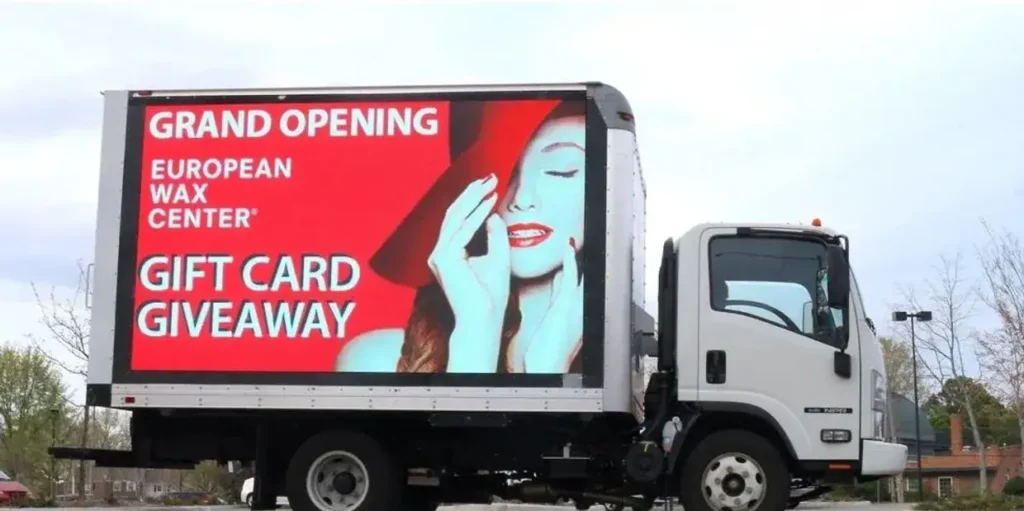
Most people who call us about a digital mobile billboard think they are buying a picture on a screen. They are not. They are buying a vehicle, a driver, a power system, a content pipeline and a route, and every one of those five things can fail independently on the night of the run.
I have spent enough mornings in a truck yard at 4am watching a screen refuse to wake up to know where the weak points are. So this is the install and deployment walkthrough I wish buyers got before they signed anything, written from the operator side rather than the sales side.
The short version: the screen is the easy part. The build underneath it, the content load, and the route programming are where campaigns are won or quietly lost.
A buyer problem sits under all of this. You approve creative, you get a confirmation email, the truck runs, and then you get a map. You have no way to tell whether the screen was actually bright, actually on, actually in the right block, or actually pointed at anyone. Install quality is what decides that, and nobody shows it to you.
So let me show it to you.
What a digital mobile billboard physically is
A digital mobile billboard is a box truck or purpose built chassis carrying one, two or three LED panels mounted to a steel subframe, powered by an onboard generator or a battery bank, driven by a media player that holds your creative and plays it on a loop while the vehicle moves a defined route.
Three sided is the configuration most buyers imagine: driver side, passenger side, rear. In practice the two side panels carry almost all of the value. The rear panel earns its keep in stop and go traffic and at signal queues, and almost nowhere else, because at speed nobody behind you is reading anything.
Panel pitch matters more than panel size. Pitch is the distance between LED pixels. A tighter pitch looks sharp close up and costs more to build. A wider pitch looks fine from across a four lane road and turns to mush if your audience is standing on a sidewalk six feet away. Choosing pitch is really choosing viewing distance, and viewing distance is really choosing route.
That is the first thing I tell clients. Do not pick a truck. Pick a viewing distance, then pick the truck that matches it.
The pre run build: what happens before the truck ever moves
A proper install starts a day or more ahead of the first run, in a yard, with nobody watching.
Mechanical check. Panels get inspected for dead modules. On a used panel you will find them. A dead module is a small black rectangle that reads as a defect to every person who looks at the screen, and a cluster of them reads as a broken company. Any panel going out on a client campaign gets a full white frame test and a full red, green and blue frame test, because a module can pass white and still have a dead colour channel.
Power check. The generator gets fuelled, run under load, and listened to. Generators that start fine cold can sag under a full panel draw on a hot afternoon, and a sagging supply makes the screen flicker in a way cameras pick up even when eyes do not. If a campaign is going to produce video assets for the client, flicker is a real deliverable killer.
Mount check. Every bolt on the subframe gets a wrench on it. Panels live on a vehicle that hits potholes. Vibration loosens hardware. This is not a glamorous step and it is the one that prevents the worst possible outcome on a city street.
Media player load. Creative goes onto the player locally, not streamed, with a cached fallback. Any operator who depends entirely on a cellular connection to serve your creative will eventually show your brand a black screen in a parking structure or a dense downtown canyon.
Playback test. We run the full loop end to end, at night, outdoors, at the brightness setting the campaign will actually use. Creative that looks great on a laptop can be unreadable at 40 percent brightness on a damp street.
Crew for this stage is usually two people and takes a few hours for a single truck, longer if panels need module swaps.
Creative specs, and why most files arrive wrong
The single most common delay we see is creative. Not route, not permissions, not weather. Creative.
LED panels are not phone screens. They are low resolution relative to their physical size, they are very bright, and they are viewed for roughly two to five seconds by someone who is driving, walking or waiting at a light. Files that ignore that arrive looking like a press ad shrunk down.
What actually works on a moving screen:
– One idea. Not three. One.
– Type that survives at a glance. If you have to lean in, it is too small.
– High contrast between type and background. Mid grey on mid blue disappears outdoors.
– Logo placement away from panel edges, because the outer rows of pixels are the first thing a bystander sees clipped at an angle.
– Motion that is slow and simple. Fast cuts smear on a wide pitch panel.
– No small body copy. No phone numbers in eight point type. No QR codes on a moving vehicle, which I will come back to.
What we need from a client is a native resolution file matching the panel's actual pixel dimensions, plus a flattened static version as a fallback. We supply exact pixel dimensions per truck because they differ between builds. Anyone who tells you there is one universal size for mobile screens has not loaded many of them.
Turnaround matters too. Creative needs to be on the player and eyeballed on the actual panel before the first run, not uploaded remotely an hour before launch. We ask for files in hand with enough runway to test and, if needed, send notes back.
Route programming: the part that actually decides performance
The install gets the screen working. The route decides whether anyone sees it.
Route building for us starts with three questions. Who is the audience, where do they physically stand or sit, and at what hour are they there. Everything else follows.
A route is not a loop around downtown. A good route is a sequence of dwell opportunities. Dwell is the whole game on a mobile screen. A truck moving at 45 miles an hour past a highway shoulder delivers almost nothing. A truck sitting in a signal queue on a six lane arterial with pedestrians on both sidewalks delivers a lot.
Places we look for:
– Signalised intersections with long cycle times
– Arterials that reliably congest at a known hour
– Event ingress and egress corridors, which are predictable to the minute once you know the venue
– Transit nodes and station approaches where people stand facing the street
– Campus edges at class change
– Entertainment and nightlife strips in the evening window
Named examples from markets we work in: a truck on Sunset Boulevard through West Hollywood in the early evening is a dwell route. A truck on Michigan Avenue in Chicago at lunch is a dwell route. A truck crawling Market Street in San Francisco or circling the blocks around Downtown Austin on Sixth Street on a weekend night is a dwell route. A truck doing laps of an interstate beltway is a mileage invoice.
We also plan for dead segments. Every route has stretches where the truck is simply repositioning. Those should be deliberate, short, and timed to the gaps between the segments that matter, not treated as impressions.
Dayparting is the other half. The same street is three different media properties at 8am, 1pm and 10pm. A business to business campaign targeting an office corridor wants the morning and evening commute edges. A nightlife or entertainment campaign wants the hours when the sidewalks fill. Running one undifferentiated route from 10am to 6pm because it is a tidy eight hour block is how budgets get spent on empty pavement.
Permissions, ordinances and the grey area around mobile screens
This is where I have to be careful and honest at the same time.
Vehicles carrying advertising are regulated unevenly across the United States. Some municipalities have ordinances addressing mobile advertising vehicles, some address illuminated signage, some address idling, some address commercial vehicle parking, and some address none of it directly. Enforcement varies between cities, between precincts, and sometimes between shifts. Treat anyone who tells you a mobile screen is flatly legal everywhere, or flatly illegal anywhere, as someone who has not run one.
It is a grey area, and the grey has a shape you can work with.
How we reduce risk in practice:
– We check the local ordinance character for each market before we build a route, and we build around the restrictions we find rather than testing them.
– We keep the truck moving. A moving vehicle in traffic is a very different proposition from a vehicle parked and idling with a lit screen, and parking a lit truck is where most operators get a conversation with an officer.
– Where a campaign genuinely needs a stationary position, we seek permission from the private property owner of the lot and we get that in writing. A private lot with the owner's consent is a stronger footing than a public curb.
– We respect brightness. Screens have a night setting for a reason. A panel running daytime brightness at 11pm in a residential adjacent block is both bad neighbouring and the fastest way to generate a complaint.
– We document the run. Timestamped photos, GPS log, driver notes.
Removal is not a factor here the way it is with pasted media, which is one honest advantage of the format. When the truck leaves, nothing stays behind. No surface to restore, no crew returning to take anything down.
None of the above is legal advice. If a campaign has real regulatory exposure, the client's counsel should look at the market before we build the route, and we will plan around whatever they tell us.
Weather, light and the things that physically defeat a screen
Panels are weather rated and they still have bad days.
Rain. Light rain is fine and actually helps, because wet asphalt reflects the panel and the screen reads larger than it is. Heavy rain reduces sightlines and empties sidewalks, which costs you the pedestrian half of the audience.
Heat. Sustained high heat is the real enemy. Panels and generators both shed efficiency, and a truck sitting in direct afternoon sun in Phoenix or Las Vegas in midsummer is working against physics. We shift those markets toward evening windows in the hot months.
Cold. Cold is kinder to the electronics than heat. Cold is harder on the generator starting and on the driver. Winter runs in Chicago, Minneapolis or Boston need fuel and warm up time built into the schedule.
Sun angle. A screen facing directly into low sun at the wrong hour washes out from the viewer's side. This is purely geometric and purely predictable, and it is why route direction, not just route path, gets planned. Running the same loop clockwise and counterclockwise are two different campaigns at golden hour.
Daylight generally. A mobile screen at noon in open sun is competing with the brightest light source available. It works, it just works less hard than the same screen at dusk. If a client only has one day, I will push them toward the hours either side of sunset.
What goes wrong, and what we talk clients out of
I would rather lose a booking than run a campaign I know will underdeliver. Here is the list of things we push back on most often.
QR codes on a moving truck. Someone is driving. Someone else is walking at four miles an hour past a vehicle doing fifteen. The scan window is tiny and the scan rate reflects that. If the client needs a measurable response, we argue for a short memorable URL or a vanity term, and we argue for pairing the truck with a ground presence that can actually hand something to a person.
Too much copy. Clients arrive with a headline, a subhead, three bullets, a logo, a URL and a social handle. We cut it to a headline and a logo, and sometimes we cut the headline too. The panel is a glance medium.
One truck, whole metro. A single truck cannot cover a large market. It can cover a corridor or a district properly, or it can thinly cross a metro and cover nothing. We will always recommend narrowing the geography before adding hours.
Highway hours. Buyers like highway miles because the vehicle count is enormous. The dwell is terrible and the angle is bad. We would rather run fewer hours on congested surface streets.
A single day around a big event. Event day itself is often the worst value, because the area is saturated, access is restricted, and traffic is managed. The day before and the ingress windows usually deliver more.
Screen only when the goal is interaction. If the brief says sampling, sign ups, trial or conversation, a screen alone is the wrong tool. That brings me to the obvious pairing.
Pairing a truck with people on the ground
The best use of a digital mobile billboard I have seen is as the anchor for a Street Teams & Experiential activation rather than as a solo buy.
The truck does the job a screen does well. It is visible from a distance, it holds a position in the visual field, it gives the activation a landmark, and it photographs well for the client's own channels. Then a small brand ambassador team works the sidewalk within sight of it, talking to people, handing out whatever the campaign is handing out, and converting attention the screen created into an actual interaction.
Two to four ambassadors plus one truck in a dense entertainment district outperforms the same spend on truck hours alone every time I have compared them. The screen creates recognition at thirty feet. The person closes at three feet. Pairing them means the money spent on attention does not evaporate at the kerb.
It also solves the measurement problem. Hand counts, sample counts and sign up counts are real numbers. Screen impressions are modelled estimates.
What to demand in writing before you book
Since nobody else seems to write this down, here is the list I would hand a buyer.
– Exact pixel dimensions and pitch per panel, per truck
– Which panels are active, and whether the rear panel is included
– The actual route, as a map, with named streets and segment times
– Daypart windows, not just a total hour count
– Brightness policy for day and night
– GPS logging and whether you receive the raw log or a summary
– Timestamped photo documentation per run
– Proof of play, meaning a record of what played, when, and for how long
– Weather and mechanical contingency terms, and what happens to lost hours
– Who is in the vehicle, and whether any ground crew is included
Proof of play is the one buyers skip and the one I would never skip. A GPS map proves a vehicle moved. It does not prove your creative was on the screen. Ask for both.
How a typical deployment day actually runs
For a single truck in one market, the day looks roughly like this.
Driver and a second crew member arrive at the yard before the window opens. Generator start, panel power up, full loop playback check, brightness set for the first daypart, fuel topped, mounting hardware spot checked. That is usually under an hour when the pre run build was done properly, and a very long morning when it was not.
The truck repositions to the start of the first segment. Repositioning is unpaid attention time and we schedule it honestly rather than counting it.
The route runs in segments with the driver logging deviations. Traffic incidents, closures, events and construction all rewrite a route in real time, and a driver who just follows the original plan into a closed street is wasting the client's window.
Brightness steps down as light falls. Creative may rotate by daypart if the campaign has day and night variants, which I recommend whenever the budget allows a second file.
End of window, the truck returns, the log is pulled, photos are assembled, and the client gets documentation rather than a reassurance.
Frequently asked questions
What is the difference between a digital mobile billboard and a static truck?
A static truck carries printed vinyl, so it shows one fixed message for the whole run. A digital mobile billboard carries LED panels, so it can rotate several creatives, run motion, change by daypart and update mid campaign. Static holds up better in extreme weather and never has a screen failure. Digital wins on flexibility and on night time presence.
How many trucks does one market need?
That depends on how much geography you are trying to hold at once. One truck covers one corridor or district properly during a daypart. Covering several districts in the same hours means several trucks. I would rather run one truck well in the right corridor than spread one truck thinly across a whole metro and call it coverage.
Can several brands share one truck’s rotation?
Some operators sell shared rotations. I would question it. Sharing means your creative is on screen for a fraction of each loop, and you have limited visibility into what else is running beside you. If you accept a shared rotation, demand the exact loop length, your share of it, and proof of play showing what actually ran.
How long should each creative stay on screen?
Long enough for a glance to complete. For a mostly static frame, several seconds is usually right. Loops that flip too fast lose people mid read, and loops that linger too long waste a signal cycle. We test the loop on the actual panel before launch rather than guessing from a laptop.
What proof should I ask for after the run?
GPS logging for route, timestamped photography for presence and condition, and proof of play for content. Those three together tell you where the truck went, that the screen was lit and clean, and that your file was the one playing. Any one of the three on its own leaves a gap a buyer cannot close later.
Does weather cancel a run?
Rarely outright. Light rain is workable and sometimes helps visibility off wet asphalt. Severe weather, high wind or unsafe road conditions will move a window. What matters is that the contract says what happens to lost hours, whether they are rescheduled or credited, and who makes the call.
Request a campaign quote
If you are weighing a digital mobile billboard for a specific market, the useful conversation is not about trucks. It is about which corridor, which hours, and what you need a person to do after they see it.
Tell us the market, the window and the goal, and we will come back with a route we can defend street by street, the documentation you will receive, and an honest read on whether a screen alone is the right tool or whether you should put people on the sidewalk beside it. Request a campaign quote and we will start with the route, not the hardware.

Ready to Run Your Campaign?
Call us or email us. We’ll tell you exactly what we can do in your market and what it costs.
Related Services
Explore similar advertising solutions offered by American Guerrilla Marketing.
American Guerrilla Marketing — Los Angeles
Street-level campaigns in Los Angeles and nationwide. Wheatpasting, LED trucks, street teams, and more.
(646) 776-2770
Related Articles
-
Mobile Billboard Advertising Rates: What Drives Scope
November 20, 2026
-
LED Trucks & Mobile Billboards in Virginia Beach
November 20, 2026
-
Planning LED Trucks & Mobile Billboards in Sacramento
November 20, 2026
-
LED Truck Billboard: How It Actually Works
November 20, 2026
-
Electronic billboard companies: How It Actually Works
November 20, 2026