History of Wheat Pasting | American Guerrilla Marketing
Wheat pasting has been used to communicate with city populations for centuries. The format survived every wave of new media because it does something no digital platform has ever replicated: it puts a message in physical space where real people live and move.
Wheat pasting is one of the oldest mass communication methods that still functions in essentially the same way it always has. The core mechanic, paste and paper applied to an urban surface, has not fundamentally changed since the 18th century when theatrical promoters and political agitators first discovered that walls covered in printed broadsheets could reach the entire population of a city block. Every other communication technology from the printing press through television to the internet has been a departure from physical reality. Wheat pasting has always been exactly the opposite: an insistence on physical presence in the physical world.
Understanding the history of wheat pasting matters for brands and marketers today because the history explains the cultural authority that the format carries. When your brand appears on city walls through a paste-up poster campaign, it enters a tradition of communication that stretches back through music history, political history, and art history. That tradition is part of what makes the format feel authentic in a way that digital advertising rarely does.
This guide traces the history of wheat pasting from its origins through the 20th century’s music and political movements to its current use as a professional marketing channel. We also cover how the format has evolved technically and strategically, and what the modern version of a professional wheat pasting campaign looks like when executed correctly.
Pasting printed materials to public surfaces as a communication method predates the term “wheat pasting” by several centuries. In 18th-century Europe, broadsides and handbills, single-sheet printed texts and illustrations, were commonly posted on building walls, fences, and public announcement boards to communicate news, promote theatrical performances, and broadcast political messages. The adhesive methods varied, but flour-based paste was among the most accessible and effective options available to the people doing this work.
Historians of early modern Europe have documented poster placements in cities including Paris, London, Amsterdam, and Vienna throughout the 1700s. The practice was associated with a range of activities, from official municipal announcements to underground political communication to theatrical promotion. What tied all of these applications together was a shared understanding that the wall was a communication channel available to anyone with paper, paste, and a message worth sharing.
French Political Traditions
France developed one of the earliest sophisticated poster communication cultures in the Western world. The affichage tradition, placing printed announcements and images on Parisian walls, was well underway by the early 19th century and reached its most culturally significant expression during the significant and post-significant periods. Political movements used paste-up broadsheets to reach urban populations who could not be reached through publications requiring literacy or purchasing power. The wall was a universal medium.
The French government recognized the power of this communication channel early enough to attempt to regulate it. Laws governing the placement of printed materials on public surfaces have French precedent going back to the early 1800s. The fact that governments felt compelled to regulate this form of communication is itself evidence of how effectively it worked. When a medium is powerful enough to require government control, it has proven its capacity to reach and influence people.
The Belle Epoque Poster Revolution
The late 19th century produced what historians of graphic design often describe as the first golden age of the poster. Artists like Jules Cheret and Henri de Toulouse-Lautrec in France, Alphonse Mucha in Paris, and their contemporaries across Europe created large-format color-lithographed posters that covered city walls with images of unprecedented visual quality. These posters promoted cabarets, theatrical performances, exhibitions, and consumer products.
The walls of Paris, Brussels, Vienna, and London became galleries of popular art accessible to everyone walking past them. The poster format proved that visual communication at street level could be both artistically ambitious and commercially effective at the same time. The cultural prestige attached to poster art in this period has never entirely gone away. The contemporary association of wheat pasting with cultural authenticity traces part of its lineage to this tradition of serious visual craft applied to street-level communication.
Wheat Pasting in American Music and Cultural History
In America, the wheat pasting tradition developed most powerfully through the entertainment industry. By the late 19th century, theatrical touring companies, circus operations, and vaudeville promoters had developed sophisticated poster campaigns as their primary promotional tool. The practice of covering small-town America with theatrical posters before a touring company’s arrival was so prevalent that it became part of the cultural environment. Entire teams of bill posters traveled ahead of touring shows, blanketing towns with promotional material days before the performance.
The Music Poster Era
By the mid-20th century, music promotion had become the dominant driver of poster culture in American cities. Jazz clubs in Harlem posted notices of upcoming performances. R&B shows in Chicago’s South Side club district promoted their bills with hand-drawn or letterpress-printed posters on building exteriors and utility poles throughout the neighborhood. In the 1950s and 1960s, as rock and roll emerged and the music industry grew rapidly, the concert poster became a central cultural artifact.
The San Francisco psychedelic poster scene of the mid-1960s produced some of the most celebrated graphic design in American cultural history. Bands like the Grateful Dead and Jefferson Airplane were promoted through large-format poster campaigns that covered the Haight-Ashbury neighborhood and surrounding areas. These posters, designed by artists including Wes Wilson, Victor Moscoso, and Rick Griffin, are now collected museum artifacts. They were, at the time, wheat pasted to building walls and telephone poles throughout the city. The fact that they were ephemeral objects made to be pasted up and eventually replaced did not prevent them from becoming enduring cultural artifacts.
Punk and the DIY Poster Aesthetic
The punk movement of the 1970s transformed poster culture in a different direction. Where psychedelic posters were artistically ambitious and carefully produced, punk poster aesthetics were deliberately rough. Photocopied flyers, hand-lettered announcements, and cut-and-paste xerographic designs covered the walls of punk neighborhoods in London, New York, and Los Angeles. The medium was the message: anyone with access to a photocopier and a few dollars could produce and distribute their own poster campaign.
This DIY accessibility is one of the reasons wheat pasting has such enduring cultural credibility in music and underground culture communities. The format has always been available to people without institutional resources. Its street-level presence does not require the purchase of media inventory or the approval of an advertising platform. You make it and you put it up. That simplicity carries meaning that is inseparable from the format’s cultural history.
Hip-Hop, Rave Culture, and the Poster’s Second Wave
The 1980s and 1990s brought two additional cultural movements that cemented wheat pasting as a central tool of grassroots music promotion. Hip-hop culture in New York City used street posters extensively to promote mixtapes, club nights, and emerging artists. The walls of the Bronx, Harlem, and Brooklyn were covered in paste-up announcements for events and releases that had no mainstream media coverage and no marketing budget. The poster was the only promotional channel available, and the hip-hop community used it with extraordinary creative energy.
Rave culture developed a parallel poster tradition across American and European cities. Parties were promoted through mysterious, often cryptic poster campaigns that gave just enough information to attract the right audience without advertising the event openly. This approach, born from the underground ethos of early rave culture, created a poster aesthetic that was simultaneously promotional and exclusive. The people who knew how to read the code on the poster were exactly the people the promoter wanted to reach. This kind of targeted cultural signaling through street poster design influenced how brands think about poster campaigns to this day.
AGM Field Note: The connection between hip-hop and rave poster culture and today’s brand campaigns is direct and intentional. When we design poster campaigns for music clients in New York and Los Angeles, we are drawing on a tradition of street poster promotion that built some of the most influential music cultures of the 20th century. The neighborhoods, the walls, and in many cases the specific blocks are the same.
Political and Activist Wheat Pasting
Political and activist movements have used paste-up poster campaigns throughout modern history as a tool for reaching populations that mainstream media channels cannot or will not reach. The Civil Rights movement in the United States used poster campaigns to promote marches, rallies, and voter registration drives in specific neighborhoods and communities. Anti-war movements in the 1960s and 1970s covered campuses and urban neighborhoods with poster art. Environmental movements in the 1970s and 1980s used poster campaigns as a standard outreach tool in cities across the country.
Why political movements choose wheat pasting: the format requires no media ownership, no platform gatekeeping, and no advertising budget proportional to reach. A movement with access to a print shop and a committed volunteer crew can saturate a neighborhood with its message in a single night. The physical permanence of the placement means the message persists beyond the initial effort in a way that a social media post does not. The wall does not delete your poster. The algorithm does not reduce its reach. It stays up until it is covered or until it weathers away.
Street Art’s Relationship to Wheat Pasting
Contemporary street art culture has a complicated relationship with the wheat pasting tradition. Artists like Shepard Fairey, whose OBEY Giant campaign began in the early 1990s as a series of paste-up stickers and posters, turned wheat pasting into a globally recognized art practice. Fairey’s Andre the Giant imagery appeared on city walls across the United States and eventually spread internationally. The campaign, which began as a conceptual art project investigating phenomenology of perception, grew into one of the most documented street art practices of the 20th century.
Other street artists including Banksy, Swoon, and JR have used paste-up paper as a primary medium for creating large-scale public artworks that engage with the urban environment in direct and often politically charged ways. JR’s large-format photographic paste-ups have covered building facades in Rio de Janeiro, Nairobi, Paris, and dozens of other cities. Swoon’s intricate paper cutout paste-up works have appeared on building facades in New York and internationally. These artists have contributed significantly to the cultural elevation of the paste-up format as a serious art medium alongside its continued function as a commercial communication tool.
The connection between this art tradition and the commercial wheat pasting campaigns run by marketing agencies today is real. Both practices occupy the same physical territory and use the same core materials. The cultural weight that street art has accumulated in the contemporary moment is part of the context that commercial wheat pasting campaigns benefit from. A brand poster that appears on the same wall as street art by a respected artist participates in that visual culture in a way that a billboard in a commercial zone simply cannot achieve.
The Global Spread of Wheatpaste Culture
Wheat pasting developed independently in multiple cultural traditions before the global spread of urban culture connected these traditions in the late 20th century. The practice of adhering paper to surfaces using starch-based adhesives has Chinese and East Asian precedents that predate Western use by centuries. Paper itself was a Chinese invention, and the use of paste-applied paper in architectural and decorative contexts in East Asia created a long tradition of adhesive paper work that is the technical ancestor of the wheatpaste poster.
In Latin America, political poster traditions developed in parallel with European and North American practices. The muralist tradition of Mexican art, which used large-scale visual communication to reach populations across class and literacy lines, created a visual culture that was closely connected to paste-up poster work. Brazilian street art culture, which became globally influential in the 2000s through artists connected to the Sao Paulo and Rio de Janeiro scenes, integrated paste-up paper into a broader practice that included spray paint and stencil work.
In Europe, paste-up poster culture in France, Germany, Italy, and the United Kingdom developed strong national traditions connected to labor movements, student activism, and independent music scenes. The Paris student uprisings of May 1968 produced some of the most influential poster art in the history of the medium. Workshops at the Ecole des Beaux-Arts produced thousands of hand-printed posters that were pasted throughout Paris during the uprising. These posters are now studied in art history courses as examples of design in service of political mobilization.
Today, wheat pasting as a marketing format is practiced in every major city on every inhabited continent. The globalization of street culture, driven by hip-hop, skateboarding, fashion, and contemporary art, has spread not only the aesthetic of street poster work but the specific technical practices that produce it. A professional paste-up campaign in Tokyo uses the same basic techniques as one in New York or Berlin.
The Evolution of Wheat Pasting as a Professional Marketing Tool
The professional use of wheat pasting as a paid marketing service developed in parallel with the growth of guerrilla marketing as a discipline in the 1980s and 1990s. Jay Conrad Levinson’s 1984 book “Guerrilla Marketing” articulated a philosophy of unconventional, low-cost marketing tactics that has become the conceptual framework for street-level advertising agencies. As brands in music, fashion, and entertainment began to recognize the cultural value of street-level poster presence, demand grew for professional services that could execute these campaigns at scale.
From DIY to Professional Service
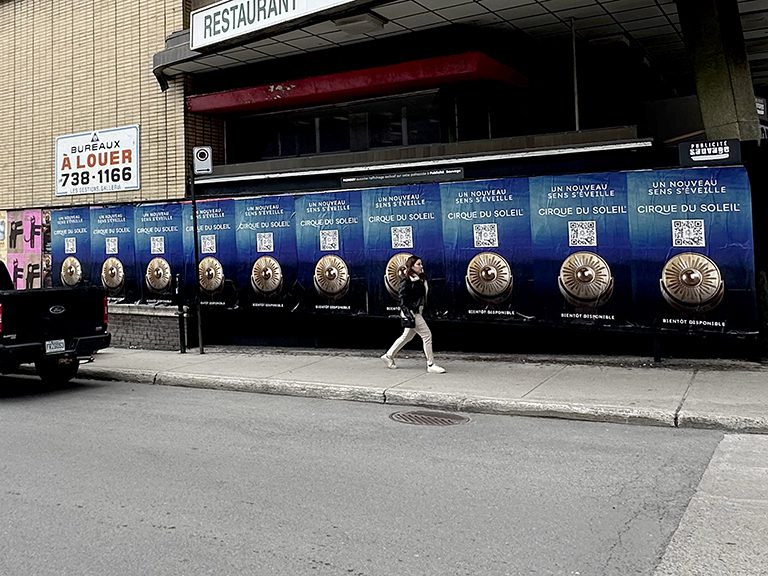
The transition from DIY flyering to professional campaign management brought new standards for location quality, installation technique, print production, and campaign accountability. Professional wheat pasting agencies developed the infrastructure for running campaigns at scale: crews with specialized installation training, relationships with property owners and location contacts in high-traffic neighborhoods, print vendor relationships that ensure outdoor-grade paper and ink quality, and documentation processes that provide clients with verifiable evidence of campaign delivery.
The documentation component became increasingly important as brands integrated wheat pasting campaigns into larger marketing strategies that required accountability to internal decision-makers. A street marketing crew that could provide photo reports showing every poster in its installed location gave their clients the evidence they needed to justify physical marketing spend. Campaign documentation, photo reports with placement addresses and neighborhood context, became a standard professional deliverable.
The Digital Era and Physical Marketing’s Renewed Relevance
The rise of digital advertising in the late 1990s and 2000s created a period of relative neglect for physical advertising formats. Marketing budgets shifted heavily toward digital channels where performance was measurable and targeting was granular. Street poster campaigns were deprioritized by brands that could see click-through rates and conversion data from their digital spend.
The pendulum has swung back. Digital advertising saturation, ad blocker adoption, and the growing resistance of culturally engaged urban consumers to digital advertising formats have created renewed appreciation for physical advertising channels that reach people in the real world. Brands that understand the compounding effect of physical and digital presence working together are among the most effective marketers of the current era. The brands showing up on city walls in Williamsburg, the Arts District, and Wicker Park are not running wheat pasting because they cannot afford digital. They are running it because they understand that physical presence accomplishes something digital spend alone cannot buy.
Era
Primary Use
Key Cultural Context
18th-19th Century
Political and theatrical promotion
Pre-mass media, walls = mass reach
Late 19th Century
Commercial and entertainment
Belle Epoque poster art movement
Early 20th Century
Music and entertainment
Theater, vaudeville, early jazz
1960s-70s
Music, politics, counterculture
Psychedelic era, punk, civil rights
1980s-90s
Hip-hop, rave culture, street art
Hip-hop, rave culture, Fairey/OBEY
2000s-present
Brands, events, cultural campaigns
Physical-digital integration era
Modern Wheat Pasting: What Has Changed and What Has Not
The core mechanic of wheat pasting is unchanged: paste and paper applied to a wall surface. But the professional execution of wheat pasting campaigns today is significantly more sophisticated than the historical practice in several ways that matter for brands and campaign managers making decisions about this format.
Print Technology
Modern large-format digital printing has dramatically improved the visual quality and format flexibility of wheat pasting campaigns. Colors are more accurate and consistent from one print to the next. Formats can be custom-sized to specific walls without the constraints of traditional lithographic plate production. Print runs can be produced in much shorter lead times than traditional methods allowed, enabling campaign timelines that would have been impossible in previous decades. The result is that contemporary wheat pasting campaigns can achieve visual quality that historical practitioners could not have imagined.
Adhesive Technology
Commercial-grade adhesive compounds have replaced traditional flour-and-water paste for most professional campaigns. Modern adhesives have more consistent bonding properties, better performance in variable humidity and temperature conditions, and faster drying times that allow installation crews to work more efficiently. The quality and longevity of professional wheat paste placements today exceeds what the original flour-paste method could achieve. A properly installed poster with commercial adhesive in Los Angeles’s dry climate can remain in good condition for four to six weeks without weather-related degradation.
Location Intelligence
Professional wheat pasting agencies have developed sophisticated location intelligence from years of field work. Knowing which specific walls in which specific neighborhoods produce the best results for which types of campaigns is accumulated field knowledge that cannot be replicated from a database or a map. This location intelligence is one of the core value additions that professional campaign management brings to what would otherwise be a DIY practice. Our crews know the difference between a wall with 2,000 daily pedestrians and one with 200, and they know which blocks in which cities carry the right audience for each campaign type.
Campaign Documentation and Reporting
Modern wheat pasting campaigns include documentation that was not possible or practical in the early days of professional street marketing. Every placement is photographed immediately after installation. Campaigns generate geo-tagged placement maps and photo reports that show the client exactly where their brand appeared, in what context, and in what visual condition. These reports serve multiple purposes: they confirm campaign completion, they provide internal documentation for brand teams, and they create a visual record that can be used in campaign retrospectives and case studies. The accountability that documentation provides has made wheat pasting a defensible line item in marketing budgets that previously only funded trackable digital channels.
Frequently Asked Questions About the History of Wheat Pasting
Continuing the Tradition: AGM’s Approach to Wheat Pasting Today
At American Guerrilla Marketing, we are aware of the tradition we work within every time we run a wheat pasting campaign. The walls of Williamsburg, the Arts District, Wicker Park, and Wynwood have hosted generations of poster communication. The tradition carries cultural authority that we work to honor and amplify for every client whose campaign we put on those walls.
We run campaigns for brands that understand what it means to appear at street level in a culturally significant way. We bring the technical precision and professional execution that the contemporary version of this format demands, combined with the field knowledge and cultural literacy that the tradition requires. Every placement gets photographed and documented. Every campaign generates geo-tagged placement maps and photo reports that show exactly where the brand appeared. That combination of cultural awareness and professional accountability is what makes our campaigns effective in a medium where authenticity is not optional. It is everything.
If you want to put your brand on the walls of the cities where your audience lives, in a format with hundreds of years of cultural authority behind it, call us or send us a brief. We will build a campaign that honors the tradition and delivers results for your brand in the present.
Written by the team at American Guerrilla Marketing. AGM runs wheat pasting campaigns in New York City, Los Angeles, Chicago, Miami, and major markets nationwide.
Frequently Asked Questions
When did wheat pasting originate?
Paste-up poster placement on public surfaces dates to at least the 18th century in European cities. The practice of using flour-based paste to affix printed materials to walls was well underway in Paris and London by the early 1800s. The specific use of wheat paste as an adhesive has roots in Chinese paper-hanging traditions that predate European practices by centuries.
Why is it called wheat pasting?
The name comes from the traditional adhesive used to affix posters to walls: a paste made by cooking wheat flour in water until it thickens into a sticky compound. This paste was the most accessible and effective adhesive available for large-scale paper affixing throughout most of the format’s history. Modern campaigns typically use commercial adhesive compounds rather than actual wheat paste, but the name has remained.
How did music promotion shape the history of wheat pasting?
Music promotion was one of the primary drivers of wheat pasting culture throughout the 20th century. Jazz, R&B, rock and roll, psychedelic rock, punk, hip-hop, and rave culture all developed distinctive poster aesthetics that were disseminated through paste-up campaigns on city walls. The San Francisco psychedelic poster scene of the 1960s and the punk zine and flyer culture of the 1970s are two of the most culturally significant chapters in this history. Hip-hop and rave culture extended the tradition through the 1980s and 1990s with poster campaigns that promoted events and artists with no mainstream media coverage.
How did street art influence commercial wheat pasting?
Street art practices, particularly the paste-up work associated with artists like Shepard Fairey, Swoon, and JR, elevated the cultural prestige of the paste-up format in the contemporary era. When commercially savvy brands began using wheat pasting campaigns in culturally active neighborhoods, they benefited from the cultural credibility that street art had accumulated for the format. The connection is more than historical; it is actively present in how consumers perceive paste-up posters when they encounter them in urban environments.
Why did wheat pasting remain relevant in the digital era?
Physical advertising survives in the digital era because it reaches people in the physical world in a way that digital advertising cannot replicate. Digital advertising saturation has created resistance among exactly the culturally engaged urban consumers who are most responsive to street-level physical marketing. Wheat pasting offers brands a way to reach these consumers through a format that carries authentic street-level credibility rather than the algorithmically manufactured feel of most digital advertising.
Who are the most famous practitioners of wheat pasting as an art form?
Shepard Fairey’s OBEY Giant campaign is one of the most documented paste-up art practices in modern history. The French artist JR has used massive paste-up paper installations on buildings and public surfaces worldwide to create portraits of communities at monumental scale. Swoon has created intricate paper cutout paste-up works on building facades in New York and internationally. These artists have contributed significantly to the cultural elevation of the paste-up format as a serious art medium alongside its continued function as a commercial communication tool.
How has print technology changed wheat pasting campaigns?
Large-format digital printing has transformed the visual possibilities of wheat pasting campaigns. Colors are more accurate, formats are more flexible, and turnaround times are dramatically shorter than historical lithographic production. A contemporary wheat pasting campaign can achieve visual quality and production speed that practitioners of even 30 years ago would have found extraordinary. This print technology improvement has made the format more accessible to brands across a wider range of campaign types and budgets.
Does the historical tradition of wheat pasting affect how consumers perceive it today?
Absolutely. The association of paste-up posters with authentic cultural expression, political movements, music scenes, and street art gives contemporary wheat pasting campaigns a cultural resonance that most advertising formats simply do not carry. A brand that appears on city walls through a wheat pasting campaign participates in a communication tradition that urban consumers understand and respect in ways they do not extend to most commercial advertising. That cultural context is a real strategic asset, and it is not available from any other advertising format at any price.