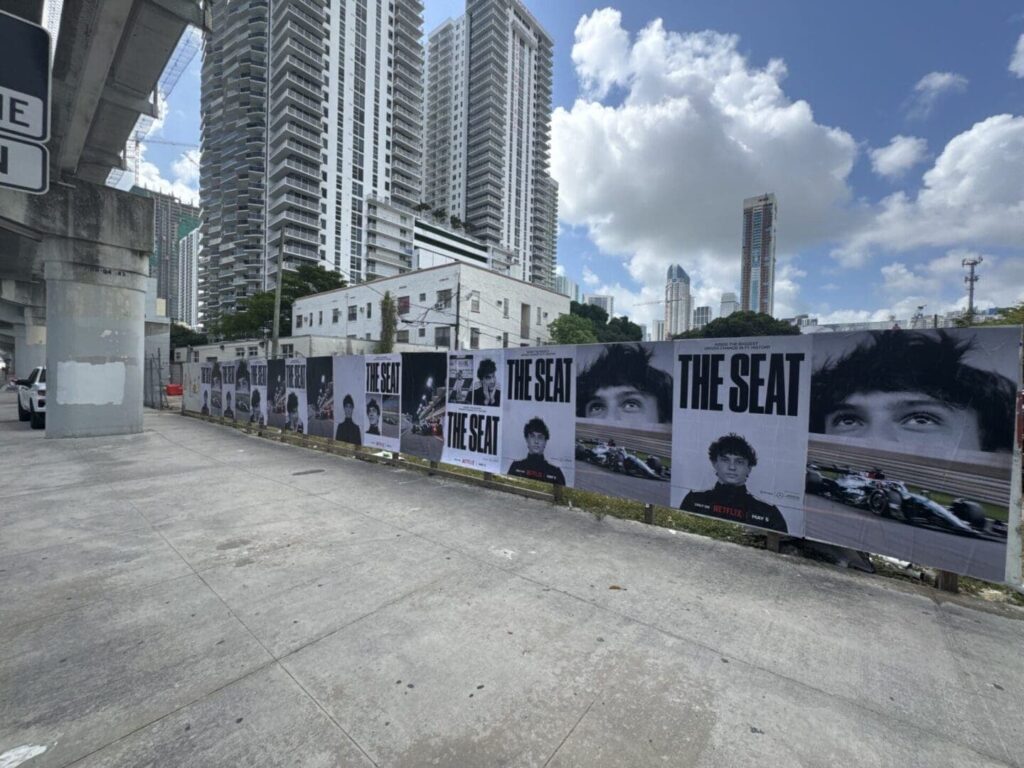
Guerrilla marketing at UCLA means activating on and around one of the nation’s largest, most brand-receptive university campuses, 45,000 students in Westwood, Los Angeles, embedded in one of the world’s highest-density entertainment and tech markets. AGM has run campus campaigns across 50+ universities in North America, and UCLA presents a specific set of opportunities that no other Southern California campus matches. Here’s the complete operational guide for executing a UCLA guerrilla marketing campaign.
Measuring a UCLA Guerrilla Marketing Campaign
Street-level campaigns work best when measurement is built in before the first poster goes up. For UCLA campaigns, QR code tracking is the most direct method. Use a unique QR code for each placement zone, so you know whether Westwood Boulevard outperformed Gayley Avenue, or whether the Bruin Plaza area pulled more scans than off-campus housing.
Beyond QR tracking, monitor branded search volume for your product in the Los Angeles metro during and after the campaign. A well-executed UCLA activation with solid creative and strategic placement should generate a measurable search lift within the first 10 days. If there’s no lift, the issue is usually creative, not distribution. The campaign reached people; the message didn’t move them.
Ambassador campaigns at events like Bruin Day or Orientation Week should also track direct conversions: downloads, sign-ups, or product trials initiated on-site. Assign each ambassador a unique referral link or promo code. This data tells you not just how many interactions happened, but how many converted, and which ambassadors were most effective.
Brands that run UCLA campaigns annually and measure consistently year over year see the clearest return on investment. The first campaign builds awareness. The second builds familiarity. By the third, you have a campus audience that treats the brand as a known quantity rather than an interruption. That compound effect doesn’t show up in a single-campaign spreadsheet, but it shows up in retention and repeat purchase rates among the post-grad audience that was first reached on campus.
How to Run a Guerrilla Marketing Campaign at UCLA: A Step-by-Step Approach
UCLA campaigns require a clear operational sequence. Showing up without a plan means wasted placements, missed timing, and poor coverage in zones where student density actually matters.
Step 1: Identify your target demographic within the UCLA student body
UCLA has 45,000+ students but they’re not one homogeneous group. First-year students congregate around the Hill (on-campus residential area). Graduate students in STEM cluster around Boelter Hall and the engineering quad. Business students frequent Anderson School. Knowing which segment you’re reaching shapes everything from zone selection to message.
Step 2: Select your primary activation format
For broad brand awareness across Westwood, street poster advertising on private walls along Westwood Boulevard and Gayley Avenue gives the widest reach. For on-campus engagement, sidewalk chalk stencils are the most direct format. For targeted handoff to specific students, ambassador programs outside Ackerman Union during peak hours (11 AM to 2 PM on weekdays) work well. Choose one primary format. Don’t spread budget across everything.
Step 3: Confirm placement permissions
UCLA’s campus itself requires university approval for any commercial marketing activity. Off-campus in Westwood Village, wall placements require private property owner permission. AGM has established relationships with wall owners throughout the Westwood corridor. Independent operators who skip this step get their campaigns pulled within hours. See our guide to guerrilla marketing permits for context on the national legal framework.
Step 4: Time your campaign to student activity cycles
UCLA’s academic calendar creates distinct windows. Orientation week in September is high-volume for brand introduction. Week 5 and Week 10 of each quarter see increased student movement. Finals week is low-engagement. The highest-value periods: first two weeks of each quarter when students are establishing habits and open to new brands. Summer sessions are lower volume but less competitive.
Step 5: Measure and document from day one
Field photography, QR code tracking, and any promo code redemptions tied specifically to the UCLA activation give you clean attribution data. Run a pre-campaign baseline if possible, then measure any lift during and after. Campaigns that build measurement in from the start generate data you can actually use for the next activation.
Why UCLA Is One of the Highest-Value University Marketing Targets
UCLA’s student body spans undergraduate, graduate, law, medical, and professional programs across a 419-acre campus in Westwood Village. The demographic is exceptionally diverse, economically, ethnically, and academically, with a shared orientation toward entertainment, tech, health, and social impact that reflects the broader Los Angeles culture.
Westwood Village immediately south of campus functions as UCLA’s commercial neighborhood. Gayley Avenue, Weyburn Avenue, and Westwood Boulevard between Wilshire and Le Conte house the coffee shops, restaurants, bars, and retail stores where UCLA students spend most of their off-campus time. This is a walkable, dense, easily activated commercial zone with far less advertising saturation than comparable zones in Hollywood or Santa Monica.
UCLA students are also among the most socially connected of any university population, entertainment industry ambitions and LA social culture combine to create exceptionally high social media amplification potential per campaign impression.
UCLA Campus Activation Zones
Westwood Village
Westwood Village on Westwood Boulevard between Wilshire and Weyburn is the highest-priority activation zone for any UCLA-targeted campaign. The village’s pedestrian concentration peaks during the 11am–8pm daily window, with lunch and dinner rushes creating especially high engagement windows. Brand ambassador positions on Broxton Avenue (the pedestrian-heavy heart of the village), chalk stencil activations at the Westwood Boulevard/Weyburn intersection, and wheatpaste on approved commercial walls throughout the village generate direct UCLA student contact in a natural shopping and dining context.
We’ve fielded ambassador teams on Broxton Avenue generating 700–1,200 genuine student interactions per 5-hour shift. That level of direct consumer contact is simply not achievable through digital campaigns targeting the 90024 zip code.
Gayley Avenue / Off-Campus Housing Corridor
The Gayley Avenue, Levering Avenue, and Landfair Avenue corridors west and north of Westwood Village house tens of thousands of UCLA students in off-campus apartments and student housing. Door hanger distribution in this zone, building by building, with property management consent for common area placements, achieves near-total coverage of the UCLA off-campus residential footprint. A 6,000-piece door hanger campaign covering the Gayley/Levering/Landfair zone runs $800–$1,800 with AGM’s LA-area crew.
Bruin Plaza and On-Campus
Bruin Plaza, the outdoor space in front of Ackerman Union at the base of the main Janss Steps, is UCLA’s primary student gathering space and the location where student organizations set up tables during the academic week. External brand activations at Bruin Plaza require Student Affairs authorization from UCLA’s Dean of Students Office. AGM initiates this process during campaign planning phase, targeting the 3–4 week approval window. Authorized tabling at Bruin Plaza during the 11am–3pm weekday peak generates 400–900 direct student contacts per ambassador per shift.
Ackerman Union and Surrounding Buildings
The residential halls on the Hill (Hedrick Summit, De Neve, Rieber Hall) house a large portion of UCLA’s undergraduate population. Flyer distribution in the public areas of these residential zones (lobbies, bulletin boards, common areas with Housing authorization) reaches the densest on-campus student population. UCLA Housing requires advance permission for any promotional material distribution, AGM handles this coordination.
Pauley Pavilion / Athletic Event Zone
UCLA Bruins basketball at Pauley Pavilion is one of the most storied athletic environments in college sports. Bruin football at the Rose Bowl in Pasadena draws 50,000–90,000 fans per game. Brand ambassador deployments on Charles E. Young Drive approaching Pauley on game days, and on the Rose Bowl approach along Arroyo Boulevard and Rosemont Avenue on football game days, reach alumni and students in intense community identity moments. Rose Bowl game day ambassador teams of 6–10 can generate 3,000–6,000+ direct consumer contacts per event.
Campaign Formats for UCLA: What AGM Deploys
Wheatpaste Poster Campaigns
Off-campus wheatpaste in Westwood Village and the adjacent Brentwood corridor is the highest-reach format for maintaining persistent brand presence around UCLA. Approved wall placements on Westwood Boulevard, Wilshire Boulevard (the major east-west artery bounding the south campus), and in the Westwood commercial alleys east of the village generate estimated 40,000–70,000 weekly vehicle and pedestrian exposures in the primary UCLA consumer zone.
On-campus postering at UCLA is regulated through Dean of Students and requires authorization. Unauthorized campus posting is removed within 24–48 hours by UCLA Facilities. We don’t deploy on campus without authorization, the removal cost and reputational risk aren’t worth it.
Sidewalk Chalk Stencils
Chalk stencil activations on the public sidewalks of Gayley Avenue, Westwood Boulevard near the village, and Wilshire Boulevard approaching the campus entrance point reach UCLA students in high-foot-traffic contexts without requiring any university authorization. Stencil campaigns across 15–20 Westwood/Gayley locations run $1,000–$2,500.
Brand Ambassadors
AGM’s LA-area ambassador roster includes UCLA alumni and current students who know the campus culture from the inside. For UCLA campaigns, this is a significant performance differentiator, an ambassador who works through Westwood authentically, knows the CoHo coffee routine, and can speak credibly about brand value to their own peer group outperforms an outside ambassador 2–3x on genuine engagement metrics.
LED Billboard Trucks, Westwood/Wilshire Route
An LED truck running the Westwood Boulevard/Wilshire Boulevard corridor, from the 405 freeway east to Beverly Hills, with specific concentration passes through Westwood Village, generates 60,000–100,000 daily impressions in the UCLA catchment including the Brentwood, Bel-Air, and Century City adjacent demographics that overlap with the UCLA consumer zone. Daily rate in the Los Angeles market: $1,400–$2,800.
UCLA Campaign Pricing
| Format |
Scale |
Price Range |
Best Application |
| Wheatpaste (Westwood/Off-Campus) |
20–40 locations |
Contact AGM |
Brand awareness, event launch |
| Chalk Stencils |
10–20 locations |
Contact AGM |
Gayley Ave, Westwood Blvd |
| Brand Ambassadors |
3–8 person team |
Contact AGM |
Bruin Plaza, Westwood Village, game days |
| Door Hanger Distribution |
4,000–8,000 pieces |
Contact AGM |
Gayley/Levering/Landfair off-campus housing |
| LED Billboard Truck (LA) |
Full-day Westwood route |
Contact AGM |
Westwood Blvd, Wilshire corridor |
What Bad Operators Get Wrong at UCLA
The most common UCLA campus marketing failure is unauthorized on-campus postering. UCLA’s Facilities team removes unauthorized materials consistently, and we’ve seen brands waste $2,000–$5,000 in print and installation costs on materials removed before a single student saw them. Authorization first, always.
The second failure is treating Westwood Village as equivalent to a generic LA commercial zone. Westwood has its own micro-culture driven by the student population, brands that show up with creative designed for West Hollywood or Silver Lake frequently miss the UCLA student’s specific sensibility. Campaigns that reference campus life, UCLA culture, or Los Angeles student experiences specifically consistently outperform generic LA creative.
The third failure is underestimating ambassador quality requirements. UCLA students are sharp, aspirational, and quick to dismiss inauthenticity. Ambassador programs with poorly briefed teams, low energy, or scripted openers get ignored or actively rejected. AGM’s LA ambassador training process is specific to the campus culture, not a generic field marketing script.
Frequently Asked Questions
Guerrilla Marketing at UCLA: The Complete Campus Activation Guide generates better results when placement, timing, creative, and local execution all work together in California. These questions cover the details brands usually need before launch, during rollout, and while evaluating performance.
For ar in California, the strongest campaigns usually come from tight geographic targeting, message discipline, and enough repetition to be remembered. Market conditions, neighborhood flow, event calendars, commuter behavior, and production logistics all change how the tactic performs, so the planning details matter as much as the idea.
What’s the on-campus authorization process at UCLA?
External brands need authorization from UCLA’s Dean of Students Office for on-campus commercial activity, tabling, sampling, ambassador programs, and poster placement. The process typically takes 2–4 weeks. AGM manages this process entirely. We recommend initiating the authorization request at least 4 weeks before the intended deployment date.
Is the Rose Bowl a good activation location for UCLA campaigns?
Extremely good for the right brand. Rose Bowl game days draw 50,000–90,000 fans including UCLA students, alumni, and LA fans in a high-engagement, community-pride environment. The approach zones on Arroyo and Rosemont are public space, no Rose Bowl venue authorization required for ambassador activations outside the stadium perimeter. AGM has deployed at Rose Bowl game days for entertainment, food and beverage, and consumer tech brands.
Can I reach UCLA students and USC students in the same campaign?
Yes, AGM designs combined UCLA/USC campaigns for brands that want to reach the full Southern California student market. The two campuses are geographically distinct (Westwood vs. University Park) but the student demographics overlap significantly. A combined campaign typically runs $18,000–$40,000 for dual-campus coverage with coordinated creative and sequenced deployment.
What brands perform best in UCLA guerrilla campaigns?
Entertainment and streaming platforms, fintech and banking apps, food delivery, career platforms, health and wellness brands, fashion with a sustainability angle, and consumer tech products consistently perform above average. Entertainment industry brands have particular cultural resonance at UCLA’s School of Theater, Film, and Television community.
How do you measure UCLA campaign results?
How do I know if this topic is worth turning into a real campaign?
Start with audience location, not creative ideas. If you can name the blocks, venues, campus gates, stations, or event windows where attention is concentrated, the campaign can usually be built into something measurable. If the audience is vague, the spend drifts and results get fuzzy fast.
What usually makes a street campaign feel too small?
The most common issue is spread. Brands buy a handful of placements across too many neighborhoods instead of owning one route. A tighter footprint with stronger repetition beats a scattered footprint almost every time, especially for event promotion, launches, and local service awareness.
Should the message focus on awareness or action?
That depends on the traffic environment. Fast moving traffic calls for a short awareness message with one visual anchor. Slow pedestrian traffic can support a QR code, a stronger offer, and more direct response copy. The format should match the pace of the audience, not the other way around.
How long should a campaign stay up?
For event driven pushes, the best window is often the 7 to 14 days before the date. For evergreen brand building, two to four weeks works better because repetition does the heavy lifting. Weather, removals, and local conditions still matter, so timing should always be part of the plan.
What should be tracked besides impressions?
Use QR scans, coupon redemptions, landing page traffic, geofenced audience lift, survey responses, and direct field photos. Street work is easier to defend when the campaign is built with proof from day one instead of trying to backfill measurement after the fact.
Related Pages and Articles