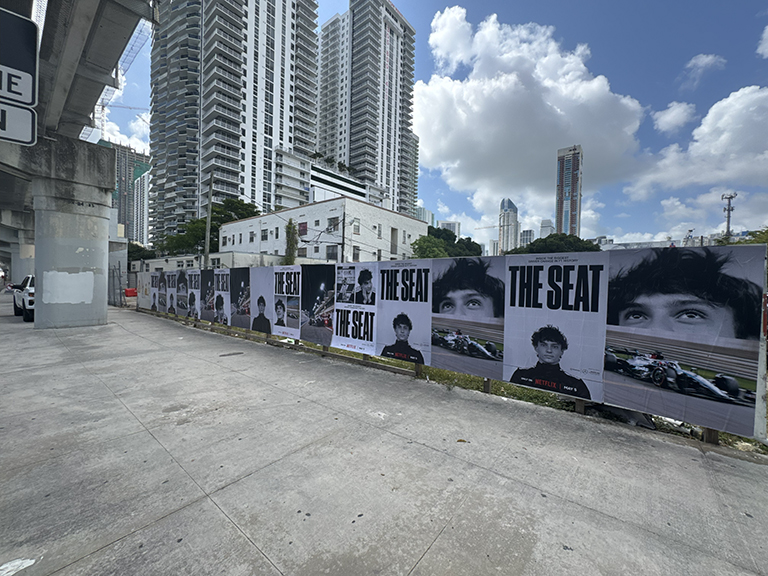
The most consistent pattern AGM sees across 500+ campaigns: small businesses that commit to sustained guerrilla marketing over 90 days outperform small businesses that run a single campaign and stop. Growth through guerrilla marketing is cumulative, each campaign cycle builds brand recognition that makes the next campaign more effective. This guide covers the specific low-cost tactics that drive small business growth, the benefits that compound over time, and the strategic framework that separates growing businesses from ones that stay stuck at the same revenue level year after year.
AGM’s Approach to Effective Small Business Marketing
When AGM works with a small business on guerrilla marketing, the first conversation is always about audience concentration. Where does your target customer physically spend time between 8am and 8pm? Not a demographic description, a physical address. Which transit station? Which market? Which street corner? Which gym parking lot? The more precisely you can identify where your audience is in the physical world, the more efficiently you can reach them through street-level tactics.
The second conversation is about a single primary objective. Brand awareness, trial generation, and referral driving are three completely different campaign designs. A campaign that tries to accomplish all three typically achieves none of them at a level that matters. Small business growth campaigns work best with one clear metric: new customers acquired, app downloads, email signups, or in-store redemptions. Pick one and build the entire campaign around it.
The third conversation is about consistency. A one-time campaign creates a spike. A quarterly campaign rhythm creates a trend. The businesses AGM has watched grow most reliably from guerrilla marketing are the ones that budget for 4 campaigns per year, not 1 big campaign and 3 months of hoping it keeps working.
Campaign Formats That Drive Small Business Growth
Wheatpaste Campaigns: Sustained Awareness at Scale
For small businesses building brand recognition in a specific neighborhood or commercial zone, a quarterly wheatpaste cycle is one of the most cost-effective awareness-building strategies available. A 20-location campaign runs 4–6 weeks of visibility. A quarterly cadence means the market never completely loses visual brand contact. Over 12 months, 4 quarterly wheatpaste campaigns in the same geographic zone create a brand familiarity level that normally requires 3–5x higher investment in traditional OOH advertising.
The growth-driving mechanism: brand familiarity reduces friction at the moment of purchase decision. A consumer who has seen your poster 8 times in their neighborhood is significantly more likely to choose your brand when they’re actively in-market than a consumer who has never encountered your physical presence. This is how local guerrilla marketing drives measurable revenue growth, not through direct response, but through friction reduction in the consideration phase.
Quarterly wheatpaste program for small businesses: AGM’s published wheatpaste pricing is tied to exact poster counts. Contact AGM for pricing on a quarterly program built around your route and schedule.
Street Team Programs: Direct Customer Acquisition
Street team programs are the highest-ROI format for direct customer acquisition at low cost. A single trained ambassador at a high-footfall location with a compelling offer (first month free, 20% off first purchase, free trial) and a hard deadline generates immediate conversion. The mechanism is identical to a digital acquisition ad, an offer + urgency + action, but delivered at CPEs of $0.50–$3.00 vs. digital acquisition CPAs of $15–$60 for comparable quality customers.
For small businesses specifically, the quality advantage of street team acquisition matters as much as the cost advantage. A consumer who engages with a real human ambassador, hears the brand story, and accepts an offer has a significantly higher lifetime value than a consumer acquired through a cold digital ad. Ambassador-acquired customers in B2C campaigns typically show 25–40% higher first-year revenue than digitally acquired customers at equivalent acquisition cost, based on campaigns AGM has tracked with client revenue data.
Street team cost for small businesses: AGM’s official street team pricing is $389.99 for one standard team member on a 6 hour shift or $589.99 for one premium team member on a 6 hour shift. Contact AGM for multi-day or custom scope pricing.
Local Event Marketing: Community Integration
Small businesses that integrate into their local community’s event calendar build brand equity that advertising alone cannot buy. Sponsoring a community event with visible presence, branded tent, brand ambassador team, product sampling, establishes the business as part of the community fabric rather than just a commercial entity in it. This association is worth far more than its direct conversion value in long-term customer loyalty and word-of-mouth referral generation.
Community event participation costs for small businesses: $500–$2,500 for a sponsored presence at most local farmers markets, street festivals, and community events, including signage, staff, and product cost. The ROI is both measurable (direct conversions at the event) and immeasurable (long-term community brand positioning).
Door Hanger and Flyer Campaigns: Hyper-Local Direct Response
For service businesses, HVAC, landscaping, cleaning, home improvement, food delivery, door hanger and residential flyer distribution in the immediate vicinity of an existing customer cluster is one of the most cost-effective growth tools available. Adding 5 new customers within a 3-block radius of an existing customer reduces service cost per customer through route density while building the kind of visible neighborhood presence that generates ongoing referrals.
A 1,000-piece door hanger campaign in a targeted residential cluster should be custom quoted. Contact AGM for pricing. For service businesses with average customer values of $500–$5,000/year, acquiring 3–5 new customers from a single distribution justifies the investment completely. Industry-average door hanger response rates run 1–5%; targeted distributions in customer-adjacent neighborhoods typically perform at the higher end of that range.
Benefits of Guerrilla Marketing for Small Business Growth
Competitive Presence Without Competitive Spend
The single most important benefit of guerrilla marketing for small businesses is the ability to achieve brand visibility in a market where larger competitors are spending 10–50x more on conventional advertising. A wheatpaste campaign in the right neighborhood at the right moment creates brand impressions that consumers cannot easily attribute to budget level, a well-designed poster is indistinguishable from a well-funded one at street level. This is the fundamental guerrilla advantage: creativity and placement strategy substitute for raw media spending.
Hyperlocal Targeting
Guerrilla marketing is the only advertising format that can be targeted to a specific block, street, or building. For small businesses whose customers come primarily from a 1–2 mile radius, this hyperlocal targeting capability is more valuable than the national demographic targeting that digital ad platforms offer. You don’t need to reach everyone, you need to reach the people on your block, in your neighborhood, in your specific zip code. Guerrilla marketing is built for exactly that.
Cumulative Brand Recognition
Exposure frequency drives brand preference. A consumer who sees your brand 7 times in their neighborhood environment is far more likely to choose your business when they’re in-market than someone who saw one digital ad and didn’t click. Guerrilla marketing campaigns with a sustained quarterly cadence build this frequency systematically, creating brand recall that persists between active campaign periods.
Earned Media and Social Amplification
Well-executed guerrilla activations, distinctive murals, creative chalk stencils, compelling ambassador interactions, generate organic social media content from consumers who encounter them. This earned media extends campaign reach far beyond the physical footprint at zero incremental cost. AGM has run $5,000 street-level campaigns that generated $40,000–$80,000 in estimated social media reach from organic consumer posts.
The 90-Day Small Business Growth Framework
Month 1, Build Awareness: Wheatpaste campaign (20 locations, target neighborhood) + Chalk stencil activation (approach paths to storefront). Budget: Contact AGM for pricing. Goal: establish visual brand presence in the market, create familiarity with the existing customer base.
Month 2, Drive Trial: Brand ambassador program (1 weekend, local market) with a time-bound trial offer + Flyer distribution (1,000 pieces in target residential zone). Budget: Contact AGM for pricing. Goal: convert brand-aware consumers into first-time customers.
Month 3, Build Loyalty and Referral: Community event participation (sponsored presence at neighborhood event) + Door hanger campaign targeting known customer addresses for referral offer. Budget: Contact AGM for pricing. Goal: convert first-time customers into repeat customers and referral sources.
Total 90 day budget: Contact AGM for pricing. Expected outcome (based on AGM’s tracked small business campaigns): 15–40% increase in new customer acquisition compared to pre-campaign baseline, measurable through QR code scans, promo code redemptions, and customer acquisition tracking.
Measuring Campaign Results
AGM builds measurement mechanisms into every small business campaign before the first poster goes up. The minimum measurement infrastructure for a guerrilla campaign: a unique QR code for each format (free to create, tracks clicks in real time), a unique promo code for ambassador teams (tracks redemptions in your POS or booking system), and a manual customer count for 2 weeks before the campaign starts (your baseline comparison).
With these three tools, you know which format drove website traffic (QR scans), which drove transactions (promo codes), and whether total customer volume changed (before/after count). That’s sufficient measurement clarity to evaluate campaign ROI and make informed decisions about the next quarter’s budget allocation.
Frequently Asked Questions
Guerrilla Marketing Strategies for Small Business Growth: Effective Low-Cost Tactics and Benefits generates better results when placement, timing, creative, and local execution all work together. These questions cover the details brands usually need before launch, during rollout, and while evaluating performance.
For bus, the strongest campaigns usually come from tight geographic targeting, message discipline, and enough repetition to be remembered. Market conditions, neighborhood flow, event calendars, commuter behavior, and production logistics all change how the tactic performs, so the planning details matter as much as the idea.
How long before guerrilla marketing drives measurable business growth?
Direct response tactics (ambassador programs, flyer distribution with hard offers) show measurable results within 1–2 weeks of deployment. Awareness-building tactics (wheatpaste, stencils) typically show traffic lift in weeks 3–6 as cumulative exposure builds familiarity. Sustained quarterly campaigns show compound growth effects over 6–12 months that are significantly greater than the sum of individual campaign impacts.
What industries see the best results from guerrilla marketing?
Food and beverage (restaurants, cafés, food products), fitness and wellness, entertainment and events, retail boutiques, healthcare and dental, financial services for consumers, real estate, education and tutoring, and any service business with a defined local customer radius all consistently show strong guerrilla campaign results. Products requiring complex explanation or high-consideration purchases need supplementary digital content to support the brand encounter that guerrilla creates.
Can a small business handle guerrilla marketing in-house?
Chalk stencils and flyer distribution can be executed in-house at lower cost with the owner’s time as the primary investment. Wheatpaste campaigns require surface preparation knowledge, adhesive application technique, and property permission coordination, DIY is possible but execution quality gaps typically cost more in wasted materials than the labor savings justify. Ambassador programs require staff training, shift management, and accountability systems, in-house execution is viable but often underperforms professionally managed teams on conversion metrics.
Is guerrilla marketing or digital advertising better for a small business?
How do I know if this topic is worth turning into a real campaign?
Start with audience location, not creative ideas. If you can name the blocks, venues, campus gates, stations, or event windows where attention is concentrated, the campaign can usually be built into something measurable. If the audience is vague, the spend drifts and results get fuzzy fast.
What usually makes a street campaign feel too small?
The most common issue is spread. Brands buy a handful of placements across too many neighborhoods instead of owning one route. A tighter footprint with stronger repetition beats a scattered footprint almost every time, especially for event promotion, launches, and local service awareness.
Should the message focus on awareness or action?
That depends on the traffic environment. Fast moving traffic calls for a short awareness message with one visual anchor. Slow pedestrian traffic can support a QR code, a stronger offer, and more direct response copy. The format should match the pace of the audience, not the other way around.
How long should a campaign stay up?
For event driven pushes, the best window is often the 7 to 14 days before the date. For evergreen brand building, two to four weeks works better because repetition does the heavy lifting. Weather, removals, and local conditions still matter, so timing should always be part of the plan.
What should be tracked besides impressions?
Use QR scans, coupon redemptions, landing page traffic, geofenced audience lift, survey responses, and direct field photos. Street work is easier to defend when the campaign is built with proof from day one instead of trying to backfill measurement after the fact.
Does creative matter more than placement?
Both matter, but placement usually wins the argument. A decent design in the right corridor will outperform a beautiful design placed where the right people never see it. Street media is a placement game first and a design game second.
Related Pages and Articles
A 90-Day Guerrilla Marketing Growth Plan for Small Businesses
Growth through street-level marketing is cumulative. One campaign creates a spike. A quarterly campaign rhythm creates a trend. Here is how to structure 90 days of guerrilla marketing to generate compounding results rather than isolated bursts.
Days 1 to 10: Research and Map
Before spending anything on production, spend the first ten days mapping where your target customer physically concentrates in your market. Walk the neighborhood at the times your customer would be there. Identify the three to five locations with the highest concentration of your audience. Confirm these are locations where outdoor media is visible and permitted. Check what your competitors are doing in those locations. This is your baseline. It costs nothing except time and it determines whether your budget will be effective.
Days 11 to 20: Launch the First Campaign
Start with one tactic in the zone with the highest audience concentration. A wheatpaste campaign across five to eight locations in a two-block radius, or a brand ambassador team for two days at your highest-foot-traffic location, or a sidewalk stencil run at three transit-adjacent intersections. Keep it tight. Keep it measurable. Make sure tracking is in place before the first poster goes up or the first ambassador takes the street.
Days 21 to 45: Run, Document, and Track
Let the campaign run for 14 to 25 days. Track your chosen metric daily. Document every installation photographically. Note any organic social activity from the campaign. Note any increase in walk-in traffic, call volume, web traffic, or app activity. This data does not have to be statistically perfect to be useful. It just has to show you whether the tactic generated any measurable response.
Days 46 to 60: Evaluate and Adjust
Review what the first campaign produced. Did the QR code get scanned? Did the promo code get used? Did foot traffic increase? Did social mentions appear from the campaign zone? Use this data to make two decisions: should you repeat this tactic in the same zone, and should you expand to a second zone. Most small businesses find that their first campaign teaches them something about their audience’s geography that they did not know before. The second campaign is always better because of it.
Days 61 to 90: Second Campaign with Refined Targeting
Launch the second campaign with what you learned from the first. If Zone A outperformed Zone B, double down on Zone A. If the QR code converted at 8% and the promo code converted at 2%, drop the promo code. If ambassador teams generated 10x the conversions of posters per dollar spent, shift more of the budget into people and less into print. By day 90, you will have two complete campaign cycles of performance data and a clear picture of which tactics and which locations are actually moving your business metrics.
Low-Cost Tactics With the Best Return for Small Businesses
AGM’s tracked data across 500+ campaigns shows that the following formats consistently deliver the best results per dollar for small businesses with limited budgets.
Wheatpaste poster campaigns at $800 to $2,500 for a 10-to-15-location run generate the lowest cost per impression of any street format. Door hanger distribution at $0.25 to $0.50 per unit installed delivers the most direct household reach. Sidewalk chalk stencils at $400 to $1,200 for a 6-to-10-location run produce high impression counts in pedestrian-heavy environments at very low cost. Brand ambassador days at $600 to $1,200 per ambassador per day generate the highest per-interaction conversion rates but require the most preparation to execute well. For exact pricing, contact AGM directly. These ranges are starting points and vary by market, campaign complexity, and duration.
Learn more about guerrilla marketing strategy for small businesses, and see guerrilla marketing examples from brands that have grown through consistent physical presence.