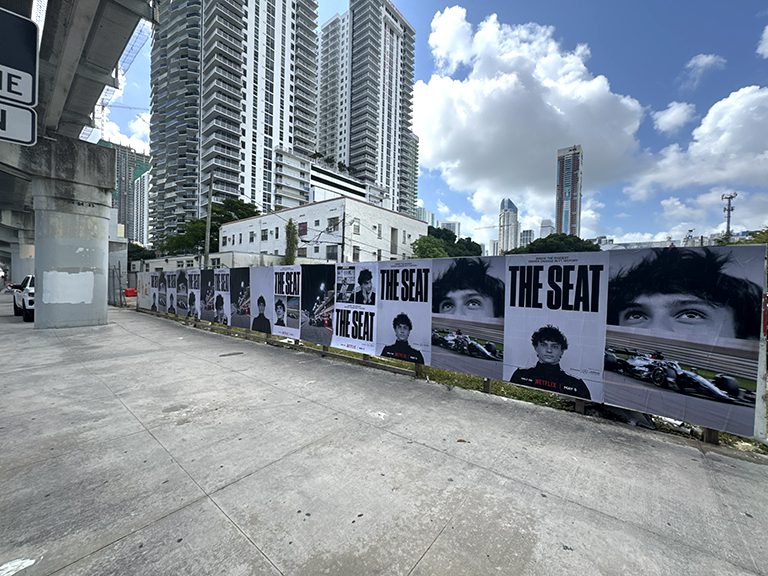
Finding the right guerrilla marketing company can change what your brand is capable of in the real world. The difference between a company with genuine street experience and one that just uses the term shows up directly in campaign results.
Finding the right guerrilla marketing company can change what your brand is capable of. Not every agency that calls itself a guerrilla marketing company has actually executed street-level campaigns at scale, in multiple cities, across multiple seasons and weather conditions, with documented proof of what went up and what it reached. The difference between a company with real street experience and one that simply uses the term is significant, and it shows up directly in campaign results.
American Guerrilla Marketing has been executing street-level campaigns across North America for over a decade. We know which neighborhoods respond to postering and which respond better to stencils. We know the difference between a campaign that generates organic social photography and one that generates genuine community conversation. We know how to connect physical presence to digital amplification and how to measure results that matter to the businesses we work with. This guide covers what a genuine guerrilla marketing company does, what to look for when choosing one, and what the best campaigns look like in practice.
What Does a Guerrilla Marketing Company Actually Do?
A guerrilla marketing company plans and executes unconventional marketing campaigns that create brand presence outside of conventional advertising channels. Instead of buying space in traditional media, guerrilla marketing companies put brands directly into the physical environments where their target audiences live, work, and move.
The tactics vary widely. Postering campaigns blanket city surfaces with bold brand imagery. Stencil programs create street-level visual presence that persists long after a conventional ad would have been forgotten. Sampling and experiential activations put products directly in the hands of target consumers. Street teams create person-to-person brand moments that digital advertising cannot replicate. Each of these tactics has specific operational requirements that a real company can execute, and that a company without real street experience cannot.
A guerrilla marketing company handles all of the logistics that make these tactics work: design review and creative calibration to street-scale specs, print production and material selection appropriate to the deployment market, crew deployment and management, location scouting and confirmation, documentation throughout the campaign, and post-campaign measurement. The client defines the objective. The company handles the execution at quality.
What Separates Good Guerrilla Marketing Companies from Great Ones
Capability
Good Company
Great Company
Street crew experience
Manages crews in one or two primary markets
Active crews in 50+ markets with local knowledge
Campaign documentation
Provides photos after execution
Geotagged real-time documentation with daylight follow-up
Creative review
Executes client-provided designs
Reviews and adjusts creative against street-scale performance specs
Strategy depth
Executes requested tactics
Recommends format and location based on campaign objectives
Digital integration
Runs physical campaigns independently
Coordinates physical campaigns with digital for reinforcing impact
Measurement
Reports impression estimates and placements
Runs brand recall surveys and connects activity to business outcomes
The Services a Full-Service Guerrilla Marketing Company Offers
A genuine full-service guerrilla marketing company offers a comprehensive range of street-level tactics and the strategic expertise to combine them effectively. Here is what that service portfolio looks like in practice.
Postering and Wheat Paste Campaigns
Large-format poster campaigns create visual impact at street level. We design poster campaigns that stand out on the surfaces where they are placed, photograph well for social sharing, and create the density of presence that turns a single encounter into a brand experience. We manage the full process from print production specification through crew deployment and proof-of-posting documentation. For campaigns where the client provides creative, we review all files against street-scale production specs before approving production.
Stencil and Pavement Programs
Stencil campaigns create durable street-level brand marks that persist long after a paper poster has been removed or covered. We design stencil imagery that is visually distinct, brand-appropriate, and optimized for the surfaces where it will be applied. Stencil programs using water-based, non-toxic materials are particularly effective for building brand familiarity in specific neighborhoods over extended campaign periods because the marks accumulate presence without requiring ongoing installation labor.
Sampling and Product Demonstrations
Getting products directly into the hands of target consumers is the highest-conversion street marketing tactic available. We manage sampling programs from logistics through crew deployment to consumer feedback collection. For CPG brands, fitness products, personal care, and food and beverage brands, sampling is often the cornerstone of a street-level campaign because direct trial converts to purchase at rates that impression-based formats cannot approach.
Street Team Deployment
Brand ambassadors who interact directly with consumers at events, in neighborhoods, and at retail locations. Street teams create person-to-person brand moments that are inherently more memorable than passive advertising exposure. We recruit locally in every market, train specifically to the brand’s story and product, and manage deployment through a real-time communication protocol that allows us to adapt team positioning and approach based on how foot traffic and audience response develop during the activation window.
Experiential Activations
Brand experiences that create shareable moments and direct consumer contact. Pop-ups, interactive installations, and event activations that put the brand in a context where consumers engage with it actively rather than observing it passively. The best experiential activations are designed to be genuine experiences that happen to be brand-sponsored, not brand promotions disguised as experiences. That distinction is immediately apparent to the audience and determines whether the activation generates goodwill or friction.
Ambient Advertising
Using unconventional surfaces, environments, and contexts to place brand messages in a way that creates genuine surprise. The best ambient advertising makes people encounter a brand in a space and context where they were not expecting to encounter advertising at all. The moment of recognition, when they realize the interesting thing they noticed is actually a brand message, creates a distinctly different cognitive experience from conventional advertising. That distinction is what produces the elevated recall rates that ambient campaigns deliver compared to standard outdoor formats.
AGM Field Note: The best guerrilla marketing companies know when to use which tactic and when to push back on a client’s format preference if the audience and objective call for something different. A company that sells you the same solution regardless of your specific situation is not a strategic partner. It is a vendor. We start with your objective and your audience, and we work backwards to format selection from there.
Why American Guerrilla Marketing
We built this company on a belief that physical presence creates brand relationships that digital advertising cannot replicate. That belief has been confirmed by every campaign we have run over the past decade.
Our team knows the streets. We have crews in New York, Los Angeles, Chicago, Miami, Dallas, Houston, Atlanta, Seattle, Denver, and dozens of other markets. When we say we can execute a national campaign, we mean we have people on the ground in the cities we are working in, not that we are managing remote vendors from a conference room in a single city and hoping for the best.
We are also genuinely creative. We do more than execute campaigns that clients describe to us. We develop campaign concepts that match the client’s objectives and the specific cultural context of each market. A campaign that works in Williamsburg is not the same campaign that works in Wicker Park or Silver Lake. We design for the specific neighborhood, the specific audience, and the specific moment, not for a generic urban consumer that does not actually exist.
And we measure what matters. Not just exposures and placements, but brand recall in the target neighborhoods, geographic digital signals that correlate with the campaign window, and whenever possible, retail velocity or direct business outcome data. We want to know whether the campaign accomplished something real, and we build the measurement approach before the campaign starts rather than asking what data is available after it ends.
Industries That Benefit Most From Guerrilla Marketing Companies
Guerrilla marketing works across industries, but some categories see disproportionately strong results from street-level campaigns.
Consumer packaged goods brands use guerrilla marketing to drive trial and local brand familiarity that supports retail velocity. Street-level campaigns near key distribution points accelerate the brand recognition that converts casual shelf encounters into habitual purchases. The combination of poster presence and sampling at the same location creates dual touchpoints that produce brand memories faster than either tactic alone.
Entertainment and media brands, including film studios, music labels, streaming platforms, and live event promoters, use street-level visual presence to create the cultural buzz that entertainment marketing depends on. The density and energy of a well-executed poster campaign creates the sense that something is happening right now that the audience should be aware of. That sense of cultural urgency is what drives the pre-release and pre-event awareness that converts interest into attendance and viewership.
Fashion and streetwear brands need street credibility that conventional advertising cannot provide. A brand that shows up on the right walls in the right neighborhoods, particularly in Williamsburg, Fairfax, Wicker Park, and comparable cultural zones in other cities, communicates cultural belonging in a way that a magazine ad or digital campaign simply cannot. The physical presence on the street is the credential.
Technology and app brands launching in specific markets use guerrilla marketing to create the offline social proof that makes online conversation feel more organic. When a tech brand appears on walls in the neighborhoods where its target users live and congregate, the physical presence creates a sense of real-world scale and seriousness that purely digital marketing never generates.
Health and wellness brands reach their target consumer through gym-adjacent sampling, postering in fitness corridors, and activation at wellness events. The target demographic for health brands is highly concentrated in specific neighborhood types and daily movement patterns that guerrilla marketing can target with far greater precision than most digital platforms.
Hospitality and restaurants opening in new neighborhoods benefit enormously from neighborhood-level postering and sampling campaigns that introduce the brand to the people who live and work within walking distance. These neighbors become the first regulars and the first word-of-mouth advocates, and reaching them before the opening rather than after puts the brand in a much stronger position for day-one performance.
Guerrilla Marketing Company Pricing: A Realistic Framework
Pricing for guerrilla marketing services varies significantly based on the scope of the campaign, the markets involved, the tactics deployed, and the timeline. Here is a realistic framework for planning purposes.
Single-market campaigns: Poster campaigns start at $4,500 for 100 standard posters (24×36) for a two-week run. Campaign cost depends on volume, format, and market. Contact AGM for a custom quote.
Multi-market campaigns: Campaigns running simultaneously in two to four markets typically run $25,000 to $80,000 depending on the depth of execution in each market and the formats involved. The incremental cost per additional market is lower than the first-market cost because strategic and production work is shared across markets.
Experiential and multi-format campaigns: Campaigns that combine street presence with street teams, pop-up installations, or projection events typically run $40,000 and above depending on the scope and the specific markets involved. These campaigns produce the strongest results because the multiple format touchpoints create a more complete brand experience, but they require more lead time and production investment than single-format campaigns.
Sustained programs: Brands that run guerrilla campaigns on a sustained, quarterly cadence in specific markets typically negotiate program pricing that reduces per-campaign cost while building the cumulative neighborhood presence that creates lasting brand familiarity.
AGM Field Note: We have run street campaigns in blizzards, summer heat waves, and city-wide event shutdowns. We have navigated unexpected surface conditions, crew shortages, and last-minute creative changes at 11 PM before a 4 AM installation start. The ability to execute under real-world conditions without losing quality or accountability is what separates a guerrilla marketing company with genuine operational depth from one with a polished pitch deck and an execution track record that has never been truly tested. Ask about the hardest thing that has gone wrong in a campaign and how they handled it. The answer tells you more than any case study they will volunteer.
Choosing a Guerrilla Marketing Company: Key Questions to Ask
Before committing a campaign budget to any guerrilla marketing company, ask these questions and evaluate the quality and specificity of the answers.
“Show me campaigns you have executed in cities outside of your home market.” Many guerrilla marketing companies are strong in their home city and significantly weaker elsewhere. If you need multi-market or national execution, you need to see documented evidence of actual execution capability in multiple markets, not a claim that they have partner networks everywhere.
“Who are the actual people who will be on the street?” Some agencies manage remote contractor networks without rigorous vetting or training. Others have running, trained crews in specific markets with established quality standards and accountability protocols. The quality of the street-level execution depends entirely on the quality of the people doing it. Ask how the agency recruits, trains, and manages its field crews.
“How do you document campaign execution?” Geotagged photography at installation time is the baseline for professional guerrilla marketing documentation. Ask to see a sample proof-of-posting report from an actual campaign. If the agency cannot show you what their documentation looks like, you have no way to verify after the fact that the campaign ran as planned.
“What has gone wrong in campaigns you have managed and how did you handle it?” Every campaign faces unexpected challenges. The answer to this question tells you more about a company’s competence and operational integrity than any case study they have prepared to show you. A company with real execution depth has specific, honest stories about problems encountered and solved. A company without real execution depth deflects the question or gives a generic answer about quality control processes.
“How do you measure the impact of street marketing campaigns?” A sophisticated guerrilla marketing company has a measurement approach that goes beyond counting placements. Ask specifically how they connect physical campaign activity to brand awareness changes and business outcomes. The right answer involves a methodology. The wrong answer involves impression estimates used as a proxy for actual impact.
What the First Campaign Conversation Should Cover
The first conversation with a guerrilla marketing company should establish the fundamental strategic framework for the campaign before any tactical decisions are made. The quality of that initial conversation tells you a great deal about whether the company is approaching the engagement as a strategic partner or as a vendor executing a predetermined menu of services.
The right conversation starts with the objective and works backwards to tactics. What does the brand need to accomplish in this specific market in this specific window? What does success look like in measurable terms? Who is the specific target audience and where do they physically concentrate in the target geography? What is the creative territory, and what constraints or non-negotiables come from brand guidelines? What is the timeline and what events or launch moments is the campaign designed to support?
Only after those questions are answered should the conversation move to format selection, location strategy, and production specifications. A guerrilla marketing company that jumps to format recommendations before it understands the objective and audience is either pattern-matching to its most familiar campaign type or trying to sell you what it has most available. Neither approach produces the most effective campaign for your specific situation.
Managing Expectations: What Guerrilla Marketing Companies Can and Cannot Do
Guerrilla marketing is a powerful tool. It is not magic. Understanding what a guerrilla marketing company can and cannot deliver helps brands set realistic expectations and build campaigns with achievable success criteria.
A guerrilla marketing company can create genuine brand awareness in the specific geographies where it places campaigns, measured through recall surveys in the target neighborhoods. It can generate organic social content that extends campaign reach beyond the physical footprint. It can put the brand in front of the right audience in the right cultural context with the right creative at the right moment. When these elements align, the impact is real and measurable.
What a guerrilla marketing company cannot do is guarantee commercial outcomes that depend on factors outside the campaign’s control. Brand recall does not automatically convert to purchase behavior if the product is not available at retail, if the price is wrong for the market, or if the product experience does not match the brand promise. Street presence can create the awareness that drives consumers to a retail location. What happens when they get there is a product and retail strategy question, not a campaign execution question.
The brands that get the most from guerrilla marketing companies are the ones that treat street campaigns as one element of a coordinated brand-building strategy rather than a standalone solution to a sales challenge. When the street campaign is supported by appropriate retail presence, digital follow-through, and a product experience that delivers on the brand promise, the campaign’s awareness investment converts to commercial outcomes at a rate that justifies the investment. When it is not, the awareness the campaign creates goes uncaptured.
Building a Long-Term Relationship with a Guerrilla Marketing Company
The brands that generate the best long-term results from guerrilla marketing typically have ongoing relationships with their agency rather than campaign-by-campaign vendor relationships. There are specific operational and strategic advantages that compound over the course of a sustained relationship.
Location intelligence improves over time. After running multiple campaigns in the same markets, an agency knows which specific surfaces in which specific locations have generated the strongest social content and recall outcomes for a specific brand’s creative style and target audience. That knowledge cannot be built in a single campaign. It is the product of observation, measurement, and iteration across multiple campaign waves. Brands that commit to sustained relationships benefit from this accumulated intelligence in ways that brands running one-off campaigns never can.
Creative calibration improves over time. After working with a brand across multiple campaigns, an agency understands the brand’s creative language at street scale in a way that makes early-stage creative review faster and more precise. The back-and-forth on creative adjustments that is normal in the first campaign relationship typically reduces significantly by the third or fourth campaign because the agency has learned what works for the specific brand in the specific markets and can apply that knowledge from the start of the brief process.
Operational efficiency improves over time. Running campaigns in the same markets repeatedly builds standing crew familiarity with the brand’s execution standards, location confirmation relationships that make surface access faster, and production vendor relationships that allow tighter turnaround on print production without compromising quality. These efficiencies reduce per-campaign cost and increase per-campaign quality simultaneously, which is the combination that makes sustained programs progressively better investments than one-off campaigns.
The Neighborhoods That Define Street Marketing Success
The best guerrilla marketing companies know their geography at the neighborhood level, not just the city level. The difference between a placement on the right block and a placement on the wrong block is often the difference between a campaign that generates organic social sharing and one that generates nothing. This precision of geographic knowledge is what separates companies that have been on the street from companies that have been on the phone trying to manage street campaigns from a distance.
In New York, the right blocks are specific and well-documented for anyone who has run campaigns in the city. The construction hoarding on the south side of North 7th Street in Williamsburg between Bedford and Berry sees more creative industry foot traffic per square foot than almost any other surface in the borough. The wall facing the pedestrian traffic at the corner of Spring and Mulberry in SoHo generates more secondary social photography than the same wall facing away from pedestrian flow. These are details that live in operational memory, not in data reports, and they are the product of years of running campaigns in specific locations across changing seasons and campaign types.
In Los Angeles, the right blocks concentrate in Fairfax between Melrose and Beverly, on the Arts District corridors between Mateo and Traction, and along the Sunset Boulevard commercial strip in Silver Lake from Silverlake Boulevard to Alvarado. In Chicago, the concentration is on Milwaukee Avenue between North Avenue and Damen. In Miami, it is on NW 2nd Avenue through Wynwood. These are the addresses where a guerrilla marketing company with real operational depth has run campaigns, has documentation of what those campaigns generated, and has the crew relationships to execute new campaigns at the quality level that experience produces.
Frequently Asked Questions
What is a guerrilla marketing company?
A guerrilla marketing company plans and executes unconventional, street-level advertising campaigns that create brand presence through physical engagement with a target audience rather than through conventional media channels. Services include poster and wheat paste campaigns, stencil programs, street team activations, sampling, pop-up installations, ambient advertising, murals, and building projections.
How do I know if a guerrilla marketing company is legitimate?
Ask for specific location knowledge in your target markets, ask to see actual proof-of-posting documentation from past campaigns, ask how they measure brand recall, and ask about their crew management structure. Legitimate companies answer these questions with immediate specificity. Companies without real operational depth give vague or evasive answers to one or more of these questions.
What budget is needed for a guerrilla marketing campaign?
Poster campaigns start at $4,500 for 100 standard posters (24×36). Multi-market and multi-format campaigns scale based on format mix, city count, and scope. We build campaigns to maximize impact within the available budget rather than scaling down a generic package.
How does a guerrilla marketing company measure results?
The best measurement approach combines brand recall surveys in the target neighborhoods, social media monitoring for organic content generated by the campaign, geographic digital signals including brand search volume and direct site traffic from the target market, and for campaigns with direct response elements, QR code scans or short URL visits. We establish baselines before campaigns launch and compare against them during and after the campaign window.
What industries benefit most from guerrilla marketing companies?
Consumer packaged goods, entertainment and media, fashion and streetwear, technology and apps, health and wellness, hospitality and restaurants, and real estate all see strong results from guerrilla marketing campaigns. The format works best for brands with a specific audience that concentrates in identifiable geographies and a genuine story to tell on the street.
How long does it take to execute a guerrilla marketing campaign?
Standard poster campaigns require three to four weeks from brief to installation. More complex campaigns with fabrication, custom installations, or projection elements require six to eight weeks. Multi-city campaigns with simultaneous execution require eight to twelve weeks for the complete scope. We provide timeline assessments at the start of the brief process.
What cities does American Guerrilla Marketing operate in?
Our primary markets are New York City, Los Angeles, Chicago, Miami, Austin, Houston, and Atlanta. We also operate in Boston, Philadelphia, Seattle, San Francisco, Denver, Nashville, Portland, and New Orleans, plus additional markets through our vetted partner network. Contact us at (646) 776-2770 to confirm active crew availability in any specific market.
Does a guerrilla marketing company handle creative development?
We provide creative strategy and review all client-submitted creative against street-scale performance requirements before production is approved. We also offer full creative development for clients who want our strategic and design input on the campaign concept. The most important creative review step is evaluating the design at actual street scale, which most design agencies do not do because they are not physically present on the street where the work will run.
Can guerrilla marketing work alongside a digital campaign?
Yes, and the combination is typically stronger than either channel alone. Physical street presence creates the real-world brand recognition that makes digital ads more effective when the audience encounters them. Digital campaigns can target by geography to reach people in the same neighborhoods where street campaigns are running, creating reinforcing dual-exposure exposures. The two channels are designed to amplify each other, and we build integrated campaigns that account for both deliberately.