
July 26, 2026
The Guerrilla Marketing Campaign Checklist: From Brief to Installation to Post-Campaign Wrap
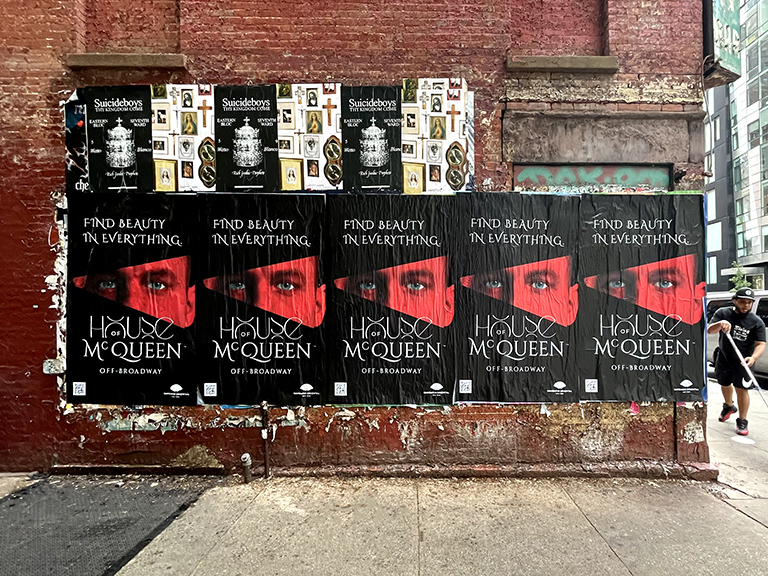
Street-level campaigns fail for one of two reasons: poor planning or poor execution. The good news is both are preventable. The guerrilla marketing campaign checklist below reflects how our team approaches every job, from a single-market wheat paste run to a 20-city multi-format blitz. Follow it from the top and you’ll launch cleaner, document better, and have something concrete to show clients when it’s over.
This is not a theoretical framework. Our team at American Guerrilla Marketing has deployed campaigns across 50+ U.S. markets for entertainment companies, consumer brands, tech startups, nonprofits, and political campaigns. Every item on this checklist exists because we’ve seen what happens when it’s skipped.
Whether you’re running this yourself or briefing an agency, treat this as your operational backbone, not a starting suggestion.
Phase 1: Brief Development and Objective Setting
The brief is the foundation. Everything downstream, format selection, market choice, surface targeting, crew count, documentation protocol, flows from how clearly you define the objective up front.
Define a Behavioral Objective, Not a Vibe
“Create buzz” is not an objective. “Drive 500 app downloads from 18-to-34-year-olds in Williamsburg and Bushwick during the two-week launch window” is an objective. The more specific you are about what you want people to do after encountering the campaign, the more precisely you can design a campaign to achieve it.
Profile the Audience at Street Level
Demographics alone are not enough for street-level work. You need a behavioral profile: where does this person commute, eat, shop, and spend weekend time? What neighborhoods concentrate them? What time of day are they on foot? This profile drives surface targeting decisions more reliably than census data.
Set a Hard Budget and Timeline
Campaigns built around “what can we get for X?” with vague timelines produce vague results. Lock in your number and your go-live date before any format discussion begins. Agencies need these constraints to build realistic campaign architectures.
Identify Success Metrics Before Launch
Decide before you deploy how you will measure this campaign. Impression count? Social mentions? Coupon redemptions? QR scan volume? URL traffic lift? Establish baseline numbers before launch so post-campaign data means something.
Phase 2: Format Selection
Format should follow audience and objective, not the other way around. The most common mistake we see is brands choosing formats based on what they find visually exciting rather than what reaches their specific audience most efficiently.
Match Format to Audience Movement Patterns
Our wheatpasting and poster campaigns dominate in creative-district corridors where foot traffic is dense and the visual environment rewards bold creative. LED billboard trucks work for event-adjacent campaigns and market saturation plays where mobile reach matters. Sidewalk stencils are precision tools for high-footfall locations where you want every pedestrian to step on your message. Street teams and brand ambassadors add the human element for sampling, conversion, and relationship-building moments.
Consider Format Mix for Multi-Week Campaigns
A campaign running three to four weeks rarely needs to run a single format the entire time. Opening with wheat paste posters, activating brand ambassadors mid-campaign, and closing with a stencil push in high-traffic corridors creates campaign texture that holds attention across the window rather than fatiguing the audience on a single visual.
Audit Creative Specs by Format Early
Every format has production constraints. Wheat paste posters run on specific paper weights. Sidewalk stencils require artwork designed for ground-level readability at walking pace. Street teams need branded gear that survives weather and multiple days of activation. Brief your designer on format specs before creative goes into production, not after.
Phase 3: Market and Site Selection
Market selection is where most campaigns either win or lose before a single poster goes up. The right surface in the wrong neighborhood reaches the wrong people. The right neighborhood with mediocre surfaces misses the saturation threshold that makes campaigns memorable.
Select Markets Based on Audience Concentration
Start with markets where your target audience is most densely concentrated. For national brands, this often means a two-to-four market test before scaling. For local brands, this means identifying which neighborhoods within the city have the highest concentration of your target consumer.
Surface Scouting: What Our Team Evaluates
When our team scouts a market, we evaluate legal surface availability, foot traffic volume and pattern by time of day, visual competition from other brands, proximity to high-value locations (venues, transit, retail), and surface condition and preparation requirements. This field knowledge is what separates professional campaign execution from dropped-in-blind approaches.
Identify Anchor Locations in Each Market
Every market has two or three locations that deliver outsized impression value. For NYC campaigns, intersections in SoHo, Williamsburg, and the Meatpacking District are anchor sites. Building your placement map around confirmed anchor sites, then filling to volume targets, produces better results than spreading placements evenly across a market.
Phase 4: Permits, Approvals, and Compliance
Compliance is operational, not optional. Our guerrilla marketing services are built around legal execution. This is not negotiable for professional campaigns.
Identify Permit Requirements by Format and Market
Requirements vary dramatically by format, market, and surface type. Sidewalk stencils with chalk-based materials are broadly compliant in most U.S. cities. Wheat paste requires surface-owner permission or designated legal posting surfaces. Street team distribution on public sidewalks is generally legal but some business improvement districts have specific rules. Research requirements before committing to campaign architecture.
Secure Surface Owner Permission for Wheat Paste
Our team works with property owners and building managers across our core markets to secure permission for wheat paste installations. This process takes time and is why 2-to-4 weeks of lead time is the minimum for new market campaigns. Permission also provides protection if enforcement agencies contact surface owners.
Brief Crew on Compliance Before Every Activation
Every crew member operating in the field should know what they are and are not authorized to do at each site. Written site-by-site briefing documents reduce compliance risk significantly. This applies to wheat paste crews, street teams, and stencil crews alike.
Phase 5: Production Management
Production problems are the hidden campaign killer. Posters that arrive with color shift. Stencils that crack under rolling. Brand ambassador kits missing key items. Build production review into your checklist before crew mobilizes.
Establish Production Lead Times by Format
Wheat paste posters on standard paper stock require five to seven business days of print production. Oversized prints, specialty substrates, or high-volume orders extend that timeline. Branded street team gear often needs seven to ten days. Brief your production team on these timelines the moment creative is approved, not the day before install.
Quality Check Before Materials Leave the Facility
Every print run should be spot-checked before it ships to market. Color accuracy, ink adhesion, paper flatness, and quantity verification are all checklist items for print quality review. One problem lot of 200 posters discovered at the production facility costs less to fix than one discovered in market on install night.
Pack Materials for Field Conditions
Print materials going into field conditions need moisture protection, especially in humid markets or during wet-weather campaign windows. Crew supply kits should be inventoried before departure. Missing paste buckets or tools discovered at 2 a.m. during an overnight install are the kind of problem that costs double to solve.
Phase 6: Crew Briefing and Coordination
The crew brief is where strategy becomes execution. A crew that understands the campaign objective, the surface map, the documentation requirements, and the compliance constraints will outperform a crew simply handed a list of addresses.
Distribute Site-by-Site Installation Maps
Every crew member should have a clear installation map showing which surfaces they’re hitting, in what order, with location photos for reference. This eliminates on-street confusion and ensures consistent placement quality across the crew.
Set Documentation Standards at the Brief
Explain exactly what documentation is expected before crews deploy. Photo framing, required landmarks in shot, close-up and wide-angle requirements, GPS confirmation, and time stamp requirements should all be spelled out. Crews producing inconsistent documentation are a post-campaign problem that cannot be retroactively fixed.
Assign Clear Crew Leads for Each Market
Multi-market campaigns need a designated crew lead in each market who has direct communication with the campaign manager. Field problems that need real-time decisions require a decision-maker, not a communication loop back to the office.
Phase 7: Installation and Activation
Installation is where planning meets reality. Professional crews adapt to field conditions while holding to the brief. Amateur crews improvise in ways that create problems for reporting.
Optimal Install Windows by Format
Wheat paste campaigns typically install overnight (midnight to 5 a.m.) for access to surfaces and reduced pedestrian interference. Street team activations launch during peak foot traffic windows for the target demographic, often noon to 6 p.m. on weekdays or midmorning to early afternoon on weekends. Stencil crews can often work daytime in corridors with sufficient surface access. Schedule installations to the optimal window for each format.
Real-Time Field Communication Protocol
Campaigns running across multiple markets simultaneously need a real-time communication channel between market crews and the campaign manager. Issues need to surface immediately so they can be addressed before they compound. We use a standardized field reporting protocol that gives us visibility into all markets during active installation windows.
Document Conditions and Exceptions in Real Time
When a crew encounters a surface that has been altered, claimed, or is unavailable, that exception needs to be documented immediately and a replacement location identified and approved before the crew moves on. Allowing crews to independently substitute surfaces without documentation creates reporting gaps.
Phase 8: Photo Documentation Standards
Documentation is the deliverable. In street-level marketing, the installation photo report is how you prove the campaign happened, how you measure it, and how you build the client relationship for the next campaign.
GPS-Tagged Installation Photos
Every installation photo should have GPS metadata intact. This proves location and enables the client to verify placement geography independently. Our team captures GPS-tagged photos at every installation and includes location coordinates in the final report.
Wide-Angle Context Plus Close-Up Creative
Documentation packages should include both wide-angle photos showing the placement in context (the street corner, the foot traffic environment, the surrounding visual landscape) and close-up photos showing creative quality and legibility. Wide-angle photos demonstrate location value; close-up photos demonstrate execution quality.
Timestamp and Market Tagging
Every photo should be time-stamped and tagged to a specific market and surface location in the final report. This enables clients to cross-reference documentation against their own timeline records and provides the level of organization expected in professional campaign documentation.
Phase 9: Campaign Monitoring and Maintenance
Active campaign monitoring catches poster degradation, unauthorized removal, or surface changes before they affect the overall impression count. For multi-week campaigns, this phase is operationally significant.
Schedule Check Visits for Campaigns Running More Than One Week
Wheat paste posters in high-traffic corridors typically hold well in dry conditions for two to four weeks. In markets with humidity, frequent rain, or aggressive competitive posting, degradation may occur faster. For campaigns with duration commitments, build mid-campaign check visits into the project plan and budget.
Track Social Amplification in Real Time
Compelling street-level installations generate organic social media documentation from pedestrians. Monitor branded hashtags and location tags during active campaign windows. This organic amplification data is valuable for post-campaign reporting and often demonstrates reach well beyond the direct impression footprint.
Phase 10: Post-Campaign Reporting and Wrap
The post-campaign report closes the campaign loop and sets up the next campaign conversation. Professional reporting is what separates agencies that clients return to from agencies that get used once.
Consolidate All Documentation by Market
Post-campaign reports should organize documentation by market, format, and date. Clients with campaigns across multiple cities need market-level reporting that lets them evaluate performance by geography, not just in aggregate.
Deliver Impression Estimates with Methodology
Impression estimates for street-level campaigns are based on foot traffic data for specific corridors, average exposure duration per passing pedestrian, and surface count and quality. Provide the methodology alongside the estimate so clients understand what they’re evaluating. Unsupported impression numbers damage credibility; methodologically documented estimates build it.
Compare Outcomes Against Pre-Campaign Success Metrics
Return to the success metrics established at the brief stage and evaluate campaign performance against each one. This is the accountability step that justifies the investment and drives the conversation about what to do differently or at greater scale in the next campaign.
Document Lessons Learned for Future Campaigns
Every campaign produces operational intelligence: surfaces that overperformed or underperformed, neighborhoods that produced stronger social amplification, crew workflows that increased efficiency. Document these observations in the post-campaign notes so the next campaign starts smarter than the last one.
Frequently Asked Questions
What goes on a guerrilla marketing campaign checklist?
A complete checklist covers brief finalization, format selection, market selection and site scouting, permit or landowner approval, print production, crew briefing, installation, photo documentation, client reporting, and post-campaign analysis. Missing any phase creates gaps that surface as problems during execution. Our team runs the same checklist on every campaign regardless of scale.
How far in advance should I plan a guerrilla marketing campaign?
Most street-level campaigns need 2 to 4 weeks of lead time from brief approval to launch. Complex multi-city or multi-format campaigns, Art Basel windows, or campaigns tied to major events often require 6 to 8 weeks. Rush campaigns are possible in some markets but increase cost and reduce surface quality. Planning ahead gives our team time to scout properly and secure the best surfaces.
What documentation should a guerrilla marketing campaign produce?
Professional campaigns produce GPS-tagged installation photos, timestamped crew logs, market-level impression estimates, and a post-campaign summary report. This documentation proves delivery, enables social amplification, and gives brands the evidence needed to justify continued investment in street-level formats. We deliver full documentation packages within 48 to 72 hours of campaign wrap.
What is the most common mistake in guerrilla marketing planning?
Vague objectives. Campaigns designed around “create buzz” or “raise awareness” without specific behavioral targets are impossible to execute with precision or measure afterward. Every campaign brief should define who the audience is, what specific action the campaign should drive, and what metric will indicate success. We push back on vague briefs because vague briefs produce vague results.
How much does a guerrilla marketing campaign cost?
Entry-level single-format campaigns in one market typically start around $3,500 to $7,500. Multi-format or multi-market campaigns run $10,000 to $50,000 or more depending on format mix, market count, duration, and crew requirements. American Guerrilla Marketing provides campaign quotes based on specific brief parameters with no obligation to commit.
Can guerrilla marketing campaigns run in multiple cities simultaneously?
Yes. American Guerrilla Marketing operates in 50+ U.S. markets and coordinates multi-city campaigns through a centralized project management system. All markets launch on coordinated timelines, documentation is consolidated, and reporting covers all markets in a single post-campaign package. Multi-city campaigns often deliver better cost efficiency per market than single-market runs.
How do I get a quote for a guerrilla marketing campaign?
Contact American Guerrilla Marketing through the contact form at americanguerrillamarketing.com/contact-us/ or download the capabilities deck to review format options before reaching out. Our team builds custom campaign quotes based on target markets, format selection, volume, and timeline. Most quotes are delivered within one to two business days.

Ready to Run Your Campaign?
Call us or email us. We’ll tell you exactly what we can do in your market and what it costs.
Related Services
Explore similar advertising solutions offered by American Guerrilla Marketing.
American Guerrilla Marketing — Los Angeles
Street-level campaigns in Los Angeles and nationwide. Wheatpasting, LED trucks, street teams, and more.
(646) 776-2770
Related Articles
-
Street Poster Advertising Ottawa: A Complete Campaign Guide
September 17, 2026
-
Activation Marketing: How Brands Win at Street Level
September 13, 2026
-
Experiential Marketing Firms Chicago | American Guerrilla Marketing
September 12, 2026
-
Pop Up Experiential
September 12, 2026
-
Mobile Pop Up
September 12, 2026