Guerilla Advertising Ideas That Actually Work in the Real World
Most guerilla advertising ideas sound good in a meeting and die in the field. Here are the ones that actually work, why they work, and how to build them for your brand.
We have been turning guerilla advertising ideas into actual campaigns for years. We have seen concepts that looked brilliant on a creative brief land flat on the street because a key field variable was wrong. We have also seen relatively simple ideas produce extraordinary results because the execution was precise and the location was perfect for the audience.
That field experience shapes how we think about guerilla advertising ideas. We do not evaluate concepts based on how clever they sound in a conference room. We evaluate them based on whether they will create the intended audience response in the specific environment where they will be deployed. That is the only standard that matters.
This guide covers the guerilla advertising ideas that have proven themselves in the field, how to develop a concept that will translate from idea to execution without losing its impact, and the most common conceptual mistakes that turn good ideas into expensive failures.
The Framework for a Good Guerilla Advertising Idea
Before we look at specific guerilla advertising ideas, it is worth establishing the framework that determines whether an idea has any chance of working. All successful guerilla advertising concepts share four characteristics. An idea that is missing any one of them is unlikely to deliver results regardless of how interesting it seems.
Environmental specificity. The idea must be designed for a specific environment, not for a generic public space. A guerilla ad that could work anywhere typically does not work anywhere with particular strength. The best guerilla advertising ideas use something specific about the location to create their impact. They turn a particular corner, a particular building facade, a particular pedestrian pattern, or a particular ambient condition into a creative element. That specificity is what makes the encounter feel like a discovery rather than a generic ad dropped into a space.
Audience alignment. The idea must be conceived for a specific audience, not for a general consumer. What would surprise and delight a 24-year-old sneaker enthusiast in Brooklyn is different from what would surprise and delight a 35-year-old professional in River North. The concept must be calibrated for the cultural frame and visual expectations of the specific people who will encounter it.
Executable quality. The idea must be executable at the quality level required to produce the intended response. A concept that requires perfectly executed fabrication and lands with mediocre physical quality will generate the wrong kind of social sharing. Every guerilla advertising idea has a minimum quality threshold. Know what yours is before you commit to production.
Brand clarity. The idea must make the brand immediately and clearly identifiable without requiring explanation. If the guerilla element is disconnected from the brand in a way that requires context to understand, the content that spreads will generate interest in the stunt without generating interest in the brand. That is a waste of every dollar spent on the campaign.
Guerilla Advertising Ideas That Work: Category by Category
Large-Scale Unexpected Installations
One of the most reliably effective guerilla advertising ideas is the placement of a large, unexpected physical object or structure in a public space where the target audience will encounter it. The scale creates immediate impact. The unexpectedness drives documentation. The location determines the audience quality.
We have executed this concept as oversized product replicas placed at the entrance to an event venue, as branded sculptures installed on plaza spaces, and as custom fabricated objects that created a visual interruption in an otherwise predictable pedestrian environment. The key in each case was that the scale and the placement were calibrated to create a genuine moment of surprise for the specific audience passing through that specific space.
Building Projections
Evening building projections are one of the highest-impact guerilla advertising ideas for campaigns focused on social amplification. A large-scale, high-quality projection on a building in a nightlife or arts district creates a visual spectacle that people document and share because it is inherently photogenic and contextually unusual.
The idea works best when the projected creative uses the specific architecture of the building as a design element rather than treating the wall as a generic projection surface. A projection that interacts with the windows, cornices, and geometric features of the facade creates a much stronger visual than one that simply tiles the brand image across the full surface. That interaction with the specific environment is what makes the content genuinely interesting rather than just large.
Ambient Transformations
Ambient transformation ideas take existing elements of the street environment and transform them into brand moments. This can mean applying branded graphics to utility infrastructure that people already interact with, creating an unexpected visual connection between the brand and something in the built environment, or using weather, lighting, or other ambient conditions as a creative element.
The best ambient transformation ideas feel as if the city itself is participating in the campaign. That quality of environmental integration creates a much stronger audience response than a standard ad placed in a conventional slot because it triggers a different kind of attention: the curiosity response of encountering something that does not quite belong in the expected context.
Brand ambassador programs become guerilla advertising ideas when they are built around a specific concept rather than deployed as standard sampling or flyering. An ambassador team at a transit entrance that delivers a consistent, surprising interaction creates a qualitatively different impression than one that simply hands out samples and moves on.
The concept that makes an ambassador program into a guerilla advertising idea is usually a theatrical element: a specific costume, a specific interaction script, a specific physical element that the ambassador uses to create a memorable encounter. The theatrical element is what makes people stop and photograph the interaction rather than accepting a sample and walking away.
Guerilla Advertising Idea
Best Audience Context
Budget Range
Social Potential
Oversized installation
Event audiences, cultural neighborhoods
$20,000-$80,000
Very High
Building projection
Nightlife, arts districts
$25,000-$60,000
Very High
Ambient transformation
Pedestrian corridors
$10,000-$40,000
High
Conceptual ambassador program
Transit hubs, event venues
$8,000-$25,000
Medium-High
Pavement stencil campaign
Event foot traffic
$3,000-$12,000
Medium
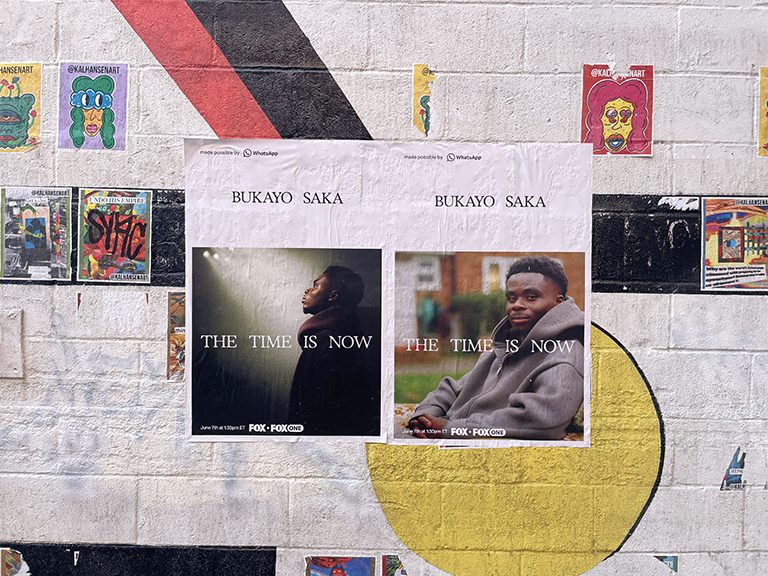
Street-level poster takeover
Shopping and cultural corridors
$8,000-$30,000
Medium-High
How to Develop a Guerilla Advertising Idea for Your Brand
The most common mistake in guerilla advertising concept development is starting from the format rather than from the audience and the environment. We hear briefs that start with “we want to do a projection” or “we want a flash mob” before any conversation about who the audience is, where they are, and what would genuinely surprise them in that environment. Those briefs produce generic executions of generic ideas, and generic is the antithesis of what guerilla advertising is supposed to deliver.
Our concept development process starts with a series of questions about the specific audience and their specific environment:
Where is this audience physically present in meaningful concentrations?
What are they doing when they are in that space?
What is the visual and cultural context they are operating in?
What would be genuinely unexpected in that specific context?
What emotional response do we want to create?
How do we ensure the brand is clearly identifiable in the content that spreads?
The answers to those questions generate a set of constraints that are actually the creative brief for the guerilla advertising idea. Working within those constraints produces concepts that are specific, executable, and aligned with the actual audience experience in the field. Working outside them produces concepts that look interesting on a creative brief but miss in the field.
The idea filter we use: Before any guerilla advertising concept gets to planning stage, we ask one question about it: Would someone who had no idea this was a brand campaign stop and take a photograph of it? If the honest answer is no, the concept needs more development. The photograph question forces specificity because it cannot be answered with reference to the brief. It can only be answered with reference to what will actually happen in the field.
Guerilla Advertising Ideas for Specific Brand Categories
Music and Entertainment
Music and entertainment brands have the widest range of effective guerilla advertising idea options because the audience is already accustomed to encountering brand content in public spaces as a form of cultural expression. Large-format poster campaigns in music district neighborhoods, projection campaigns on venue facades during concert periods, and ambassador programs at transit stations near concert halls all deliver strong results for entertainment clients. The creative bar is high because the audience is sophisticated, but the potential for viral spread is correspondingly high when the concept lands.
Fashion and Streetwear
Fashion and streetwear brands operate in an audience segment that treats street-level brand encounters as part of their cultural identity. The right guerilla advertising idea for a fashion brand activates that identity rather than simply delivering an advertising message. Installations in the specific shopping corridors where the target audience already spends time, creative that uses the neighborhood’s aesthetic vocabulary rather than imposing a foreign visual language, and concepts that connect the brand to the cultural community of the specific location all outperform generic fashion advertising in this context.
Food and Beverage
Food and beverage brands benefit from guerilla advertising ideas that create product trial as well as awareness. Sampling programs integrated into a guerilla concept, interactive installations that deliver a product experience, and ambassador programs at locations where the audience is already in a food and beverage mindset all generate both immediate trial and ongoing awareness. The combination of a surprising visual concept and a product experience is more powerful than either element alone.
Consumer Technology
Consumer technology brands have used guerilla advertising ideas to establish cultural credibility in ways that conventional advertising cannot achieve. Installations that demonstrate the product’s capabilities in the environment rather than describing them in an ad, ambassador programs that create hands-on product experiences, and projection campaigns that turn a public building into a product demonstration surface all create a connection between the brand and the audience’s physical world that digital advertising cannot replicate.
Remember the execution gap: The most important thing to understand about guerilla advertising ideas is that there is always a gap between the concept and the execution. That gap is where campaigns succeed or fail. The concept sets the ambition. The execution determines whether the ambition is realized. We spend as much time planning the execution as we do developing the concept, because the execution is what the audience actually experiences.
Generating Guerilla Advertising Ideas That Are Actually Executable
There is a practical problem with guerilla advertising idea generation: the gap between a concept that sounds exciting in a briefing room and a concept that can be executed at the required quality level within the available budget and timeline. We see this gap destroy campaigns regularly. The concept was great. The execution was impossible. The timeline was unrealistic. The locations the concept required were unavailable. The production materials could not be fabricated at the required quality level for the available budget.
Avoiding that gap requires generating ideas against a concrete set of constraints from the start: this market, this audience, this budget, this timeline, these available surfaces and locations. Ideas generated against those constraints are executable ideas. Ideas generated without those constraints are concept exercises that may or may not translate to the real campaign environment.
Our process for guerilla advertising idea generation starts with the constraints, not with the open-ended creative brief. Before we ideate, we establish: where will the campaign run and what is the physical environment like? Who specifically is the target audience and what do they already respond to in that environment? What is the production budget available for materials and installation? What is the timeline from brief to execution? What are the surfaces, locations, and conditions available in the target market? With those parameters defined, the ideas we generate are executable, not aspirational.
Testing Ideas Against the Five-Second Rule
Every guerilla advertising idea we develop gets tested against what we call the five-second rule: can a person moving through the physical environment at normal pedestrian pace understand the core message of this concept in five seconds? If the answer is yes, the concept is ready for location and format development. If the answer is no, the concept needs simplification before it proceeds.
The five-second rule is not about dumbing down ideas. It is about recognizing the attentional reality of the physical environment. A pedestrian moving through a busy city block has competing visual and auditory demands at every moment. The window available for a brand message to register is genuinely brief. Concepts designed to communicate in that brief window outperform concepts that require more time and context to understand, because those concepts simply do not get the time and context they need from a moving audience.
AGM Field Note: We tested a concept for a streaming platform launch that required reading three lines of text to understand the joke. In a briefing room, it killed. On the street in Williamsburg, where we previewed it with a field team before committing to full production, half the passersby read only the first line and kept walking. The concept was revised to communicate in a single image and headline. The revised version generated 30% more social documentation per installation location than the original concept would have, because people could understand and share it in the time they actually spent in front of it.
When Guerilla Advertising Ideas Go Wrong
We have seen enough campaign failures to understand the patterns. The most common causes of guerilla advertising concept failure are:
Concept complexity that cannot be communicated at field scale. An idea that requires explanation to appreciate does not work in the five seconds of attention a pedestrian in motion can give to a street-level ad. If the concept cannot be understood in five seconds without context, it needs simplification.
Execution quality below the minimum threshold. A guerilla advertising concept that is executed with lower-quality fabrication, printing, or staging than the concept requires produces an impression that is actively harmful to the brand. Poor execution signals poor brand quality to the audience. The standard for execution quality is set by what will create the intended audience response, not by what the budget conveniently allows.
Location mismatch. A concept developed for one audience context deployed in a different one. This happens when logistics convenience overrides audience precision in the planning process. The result is a campaign that nobody relevant sees, or sees in the wrong context, or does not respond to because the environment does not match the concept’s design assumptions.
Missing documentation. A guerilla advertising idea that is executed without adequate documentation loses most of its potential value. The organic social content from the audience is valuable but unpredictable. Professional documentation from a focused team captures the campaign from the optimal angles and at the optimal quality level to serve the brand’s own channels. Missing this step means the campaign’s impact is limited to the direct foot traffic at the activation site.
Frequently Asked Questions About Guerilla Advertising Ideas
Frequently Asked Questions
What are guerilla advertising ideas?
Guerilla advertising ideas are creative concepts for non-traditional, often unexpected advertising campaigns that place brand messages in public spaces in surprising or unconventional ways. The best guerilla advertising ideas are specific to the audience, the environment, and the campaign goal rather than generic creative templates.
What are some proven guerilla advertising ideas?
Proven guerilla advertising ideas include unexpected large-scale installations in pedestrian areas, building projections in entertainment districts, coordinated brand ambassador takeovers at transit hubs, stencil campaigns on pavement at event venues, sampling programs at cultural events, and ambient transformations of public furniture or architecture to create brand moments.
How do I come up with a guerilla advertising idea?
Start with the audience and the environment, not with the creative concept. Ask where your target audience physically is and what they are doing when they are there. Then ask what would be genuinely surprising and worth sharing in that specific context. The best guerilla advertising ideas emerge from deep knowledge of the audience’s environment and behavior.
What makes a guerilla advertising idea successful?
Successful guerilla advertising ideas combine genuine surprise in the specific environment, immediate visual clarity, clear brand attribution, and an emotional response that motivates the audience to document and share. The idea must be executable in the field at the quality level required to generate the intended response.
What guerilla advertising ideas work for small budgets?
Small-budget guerilla advertising ideas include stencil campaigns on sidewalks near event venues, coordinated poster placements in a single high-traffic neighborhood, brand ambassador programs at specific transit points, and creative ambient uses of existing street furniture or architecture. The format does not require large budgets. It requires creative precision.
How do guerilla advertising ideas differ from standard outdoor ads?
Standard outdoor advertising uses defined, paid media placements in conventional formats. Guerilla advertising ideas use unconventional formats, unexpected locations, or surprising concepts to create encounters that feel like discoveries rather than advertisements. The audience’s experience is different: guerilla advertising is noticed differently, processed differently, and remembered differently.
Which industries use guerilla advertising ideas most effectively?
Music and entertainment, fashion and streetwear, food and beverage, consumer technology, film and streaming, and fitness and wellness brands consistently produce the most effective guerilla advertising campaigns. These industries have audiences that are physically mobile, culturally engaged, and active on social platforms where street-level content spreads most effectively.
Can AGM help develop guerilla advertising ideas for my brand?
Yes. Concept development is a core part of what we do. We do not offer a menu of pre-packaged guerilla ideas. We build concepts from your audience, your brand identity, and your campaign geography. Call us at (646) 776-2770 or email [email protected] to start the conversation.