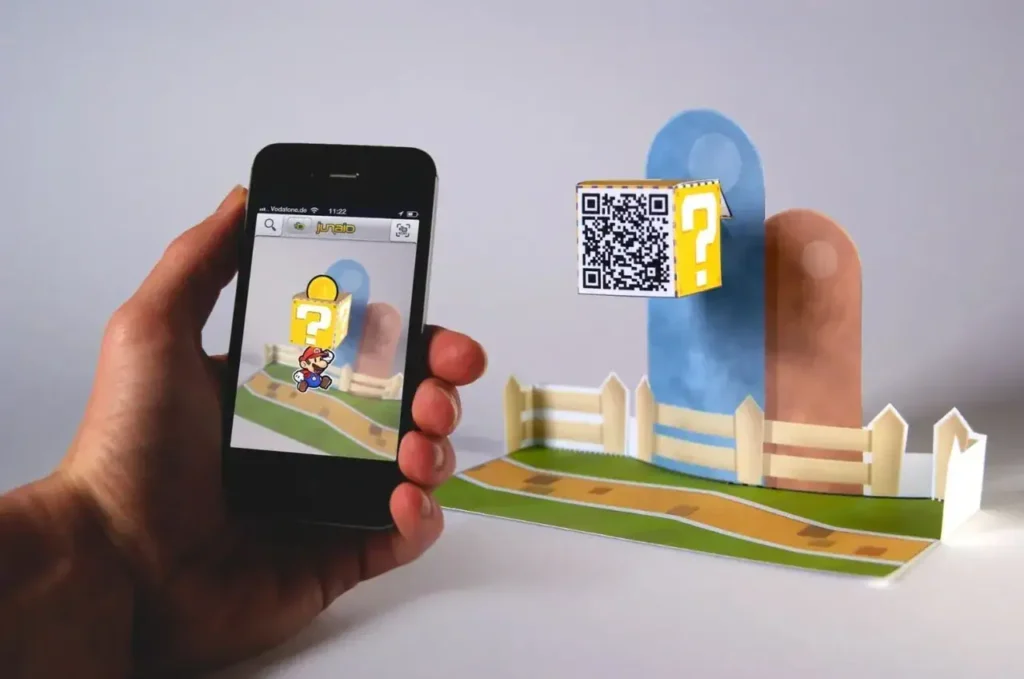
Every marketing format has a fundamental friction problem. Advertising asks consumers to receive a message they did not request, about a product they may not have been thinking about, at a moment that may not be convenient. The consumer has every reason to ignore it and no particular reason to engage. The advertising industry has spent decades trying to reduce this friction through targeting precision, creative quality, and media placement strategy. None of it eliminates the fundamental imbalance: brands want attention, consumers did not ask to give it.
Augmented reality games for marketing flip this equation. When the AR experience is compelling enough, consumers seek it out. They initiate the brand interaction themselves, invest time and attention voluntarily, and share the experience with their networks because they want to, not because the brand asked them to. The friction does not just decrease, it reverses.
This guide covers how AR game marketing works, what elements make an AR campaign worth a consumer’s voluntary attention, how to measure results, and how AR gaming integrates with physical campaign strategies.
The Power of Gamification in Marketing
Gamification is the application of game design elements to non-game contexts. Points, progress indicators, achievements, rewards, leaderboards, and challenges all borrow from the psychological mechanics that make games compelling and apply them to contexts where engagement would otherwise require persuasion rather than intrinsic motivation.
The psychology is well-established. Games create engagement because they offer a defined challenge with a clear path to mastery, immediate feedback on performance, and rewards that vary enough to maintain interest. These elements activate dopaminergic reward systems in ways that passive content consumption does not. When a brand creates an experience that activates these systems, the consumer’s relationship with the brand is fundamentally different than one formed through an advertisement.
Augmented reality amplifies gamification by anchoring the game experience in the real world. The consumer’s actual physical environment becomes the play space. Real-world locations become significant. Other consumers in the same physical space become part of the social context. The line between real and digital blurs, creating experiences that are more memorable and more shareable than purely digital ones.
Types of AR Game Experiences for Marketing
Social Platform Filters and Lenses
The most accessible and widely used category. Branded AR filters on Snapchat, Instagram, and TikTok allow consumers to interact with brand elements through gameplay mechanics: catching virtual objects, completing challenges, responding to prompts, or transforming their appearance. When consumers share filter content, the brand reaches their entire network at zero incremental cost per impression.
The reach potential for a successful filter is significant. A well-designed filter that is genuinely entertaining generates organic sharing at scale, with the brand embedded in every shared piece of content. The challenge is creating a filter that is entertaining enough to generate voluntary sharing rather than one-time curiosity.
Location-Based AR Games
Location-based AR games use the consumer’s physical location as a game mechanic. Pokemon GO demonstrated the commercial potential at scale: players were incentivized to visit specific real-world locations to interact with digital elements, and brands could sponsor locations to appear prominently in the game. The model drives physical foot traffic through digital incentives.
Brands can create proprietary location-based experiences that reward consumers for visiting specific locations, completing real-world scavenger hunts, or discovering brand elements placed in the physical environment. These campaigns create a natural connection between street-level marketing and digital engagement.
Our experiential marketing campaigns integrate location-triggered AR elements to extend the physical activation’s reach and engagement duration. A consumer who interacts with a street-level installation and then unlocks an AR experience continues engaging with the brand long after leaving the physical activation site.
Event AR Games
Events create concentrated audiences in high-engagement states. AR game activations at festivals, trade shows, brand events, and retail locations create interactive moments that stand out in a stimulation-rich environment. The best event AR games are designed for immediate shareability: the consumer does something visually striking, captures it, and shares it within minutes of the experience.
In-Store AR Experiences
Retail AR games create interactive shopping experiences that increase time in store and strengthen product associations. Trying on virtual products, exploring product features through interactive AR layers, and participating in branded game challenges while shopping all extend the consumer’s engagement with the brand in the purchase environment.
Implementing AR Games in Marketing Campaigns
Setting Clear Objectives
AR game campaigns can serve multiple objectives: awareness, engagement, social sharing, foot traffic generation, and conversion. The most effective campaigns define one primary objective and design the AR experience around achieving it. A game designed to maximize sharing looks different from one designed to drive in-store visits. Define the objective first and let it drive the design.
Designing for Immediate Comprehension
An AR game that requires instructions is already losing. The experience must be immediately intuitive. Consumers should understand what to do within 5 seconds of opening the experience. Anything that requires tutorial content before becoming engaging will see high abandonment rates before that content is consumed.
The Shareability Test
Before investing in development, ask: would I voluntarily share the output of this experience with people I know? If the experience does not create a visual or social payoff that feels worth sharing, it will not generate the earned media that makes AR campaigns cost-effective relative to their development investment.
Platform Selection
The platform determines the audience, the development approach, and the distribution mechanism. Snapchat reaches younger demographics and has deep AR filter infrastructure. Instagram has a broader demographic range and integration with commerce features. Web-based AR requires no app download but depends on camera access permissions. Native app AR creates the richest experience but requires consumers to download an app, which is a significant participation barrier for short-term campaigns.
Measuring AR Game Marketing ROI
AR game campaigns generate distinct measurement categories that require different tracking approaches:
Engagement Metrics
How many consumers launched the experience? What percentage completed the primary interaction? How long did they engage? How many sessions did repeat users have? These metrics measure the quality of the experience itself.
Sharing and Earned Media
How much user-generated content was created using branded AR elements? How many unique accounts shared that content? What was the total estimated reach of shared content? These metrics measure the earned media value generated by the campaign.
Downstream Business Metrics
How did website traffic, promo code redemptions, store visits, or sales change during the campaign window compared to baseline? Attribution requires either a campaign-specific conversion mechanism (unique URL, promo code) or comparison against matched control periods.
AR Games and Physical Campaign Integration
The most effective AR game campaigns are anchored to physical brand presence. A poster campaign that triggers an AR experience when the consumer points their phone at the poster turns passive outdoor advertising into an interactive engagement. The poster becomes a gateway, and the brand interaction happens at the intersection of physical and digital.
Sidewalk stencils with AR triggers create interactive street art experiences that reward curious consumers with branded digital content. The stencil generates foot traffic attention. The AR layer generates time and engagement that the stencil alone cannot produce.
For brands running multi-channel campaigns, AR game elements at physical activation sites create content that ambassadors can direct consumers toward, extending the value of every human brand interaction beyond the immediate conversation.
Common Mistakes in AR Game Marketing
Prioritizing Technology Over Experience
AR game campaigns that lead with the technology, promoting the “augmented reality experience” rather than the compelling thing consumers will actually do and feel, consistently underperform. Consumers are not motivated by the technology. They are motivated by the experience. Market the experience.
Forcing Brand Integration
An AR game that interrupts the gameplay with brand messaging or forces brand exposure as the price of participation creates negative associations rather than positive ones. The brand should be woven naturally into the experience, not bolted on as an advertising insertion.
Ignoring the Participation Barrier
Every step between consumer and experience is a dropout risk. Each permission request, app download, account creation, or tutorial reduces the percentage of interested consumers who actually engage. Design the experience to minimize these barriers without sacrificing the experience quality that makes it worth engaging with.
Frequently Asked Questions About AR Games for Marketing
What are augmented reality games for marketing?
AR games for marketing are interactive brand experiences that use augmented reality technology to engage consumers through gameplay mechanics. Unlike passive advertising, AR games invite consumers to participate actively, creating stronger brand memory formation and generating social sharing that extends campaign reach organically.
Why do AR games work better than traditional advertising?
AR games create active participation rather than passive reception. Consumers who interact with a brand through play form stronger memories and more positive associations. The gamification layer creates intrinsic motivation to engage repeatedly, building brand relationships through multiple voluntary interactions.
What brands have successfully used AR games in marketing?
Pokemon GO demonstrated the commercial power of location-based AR at scale. Brands including Nike, Pepsi, and IKEA have run successful AR marketing campaigns. Hundreds of consumer brands use AR filter games on Instagram and Snapchat to drive engagement and user-generated content at relatively accessible production costs.
How do you measure the ROI of AR game marketing campaigns?
Key metrics include engagement rate, session duration, repeat engagement rate, social sharing volume, user-generated content volume, and downstream conversion metrics like website visits, promo code redemptions, and sales during the campaign window compared to baseline periods.
Can AR games be used in physical experiential marketing campaigns?
Yes. AR games are particularly effective as components of physical activations where they give consumers a reason to stop, engage, and share at a brand activation site. Physical locations become triggers for digital experiences, creating a bridge between street-level marketing and digital engagement.
How much does it cost to develop an AR marketing game?
Simple branded filters on Snapchat or Instagram can be created for $5,000 to $25,000. Custom web-based AR experiences with location triggers typically run $25,000 to $100,000+. Native app-based AR games for major campaigns can cost $100,000 to $500,000 or more depending on complexity and platform requirements.
What makes an AR marketing game successful?
Successful AR marketing games are immediately intuitive, require no instructions to start, create a visually compelling experience worth sharing, offer a clear reward for engagement, and integrate the brand naturally rather than forcing it in as an advertising interruption. The shareability of the output is the single most important design criterion.
Frequently Asked Questions
What is from pixels to profits augmented reality games for marketing?
American Guerrilla Marketing provides from pixels to profits augmented reality games for marketing services across 50+ U.S. markets. Every campaign is planned, scouted, executed, and GPS-documented by our field teams. We work with regional brands and Fortune 500 companies on campaigns that require real street-level execution and documented proof of performance.
How does AGM approach for marketing?
Our process starts with a market consultation to understand your goals, target audience, and budget. We then scout locations, handle any required permissions or permits, coordinate production and installation with our local crews, and provide a full GPS-tagged photo report after the campaign runs.
What markets does American Guerrilla Marketing cover for for marketing?
We operate in 50+ U.S. markets including New York, Los Angeles, Chicago, Miami, Houston, Atlanta, Seattle, Denver, Boston, and dozens of secondary markets. Contact us to confirm availability and pricing for your specific market.
How much does a for marketing campaign cost?
Campaign pricing depends on market, format, quantity, and duration. We work with budgets ranging from targeted single-market runs to national rollouts across multiple cities. Use our RFP Builder or contact us directly for a custom quote based on your specific campaign requirements.
How do I get started with for marketing through AGM?
The fastest way to get started is to submit your campaign details through our RFP Builder at americanguerrillamarketing.com, or contact us directly at [email protected] or (646) 776-2770. Our team typically responds within one business day with availability and initial pricing.