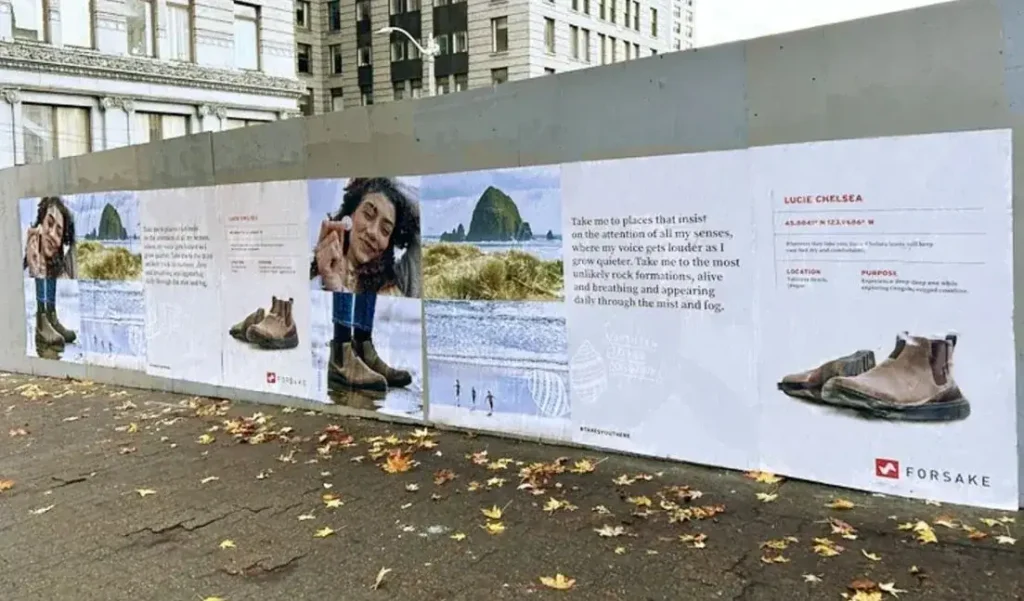
Wheat pasting is the oldest trick in street-level advertising, and in 2026 it is having a full-scale commercial revival, not as nostalgia but as a serious performance channel for brands that need density, credibility, and physical presence in urban markets. American Guerrilla Marketing has executed wheat paste campaigns since 2016 across SoHo, Williamsburg, the Lower East Side, Los Angeles, Chicago, Austin, Nashville, Denver, and more than 40 other U.S. markets. Our clients include Netflix, EA Sports, and Disney, not because they lack digital advertising budgets but because street-level physical media earns a category of attention that no digital channel can replicate. This guide covers every step: the chemistry, the tools, the surfaces, the paste recipes, the placement strategy, the overnight deployment process, the documentation, and the pricing.
What Is Wheat Pasting and Why Do Brands Use It in 2026?
Wheat pasting, also called street poster advertising, is the practice of adhering large-format paper posters to walls, plywood construction barriers, and porous urban surfaces using a flour-and-water adhesive. When applied correctly, the paste penetrates the surface material and bonds so firmly that a properly installed poster can survive 30 to 60 days of exposure before degrading. The technique originated with political activists in the 19th century and was commercialized as a street advertising format by record labels and film studios in the 1970s and 1980s.
Brands choose wheat pasting in 2026 for three reasons digital channels cannot match. First, physical presence: a 40×60-inch poster on the corner wall of Bedford Avenue and North 7th Street in Williamsburg is inescapable for every pedestrian passing that corner. It exists in the physical world without a skip button. Second, neighborhood authenticity: wheat paste in the right market carries street credibility that a programmatic ad buy cannot manufacture. Third, social amplification: distinctive poster campaigns in culturally resonant neighborhoods get photographed and shared organically. We track client campaigns where a single high-visibility poster location generated hundreds of social media posts from passersby without any paid amplification.
The Chemistry of Wheat Paste: Why It Sticks and How Long It Lasts
Wheat paste is a starch-based adhesive made from flour and water. The mechanism of adhesion is penetration: the liquid paste soaks into porous surface material, brick, raw wood, rough concrete, gypsum board, and as the water evaporates, the starch molecules form a film that mechanically bonds the paper to the surface. This is fundamentally different from pressure-sensitive adhesives, which bond to surfaces rather than into them. The penetration bond is what makes wheat paste durable in outdoor conditions that would defeat most surface-applied glues.
Surface porosity determines longevity. Rough brick in Bushwick accepts paste deeply and holds posters for 45 to 60 days in dry conditions. Smooth sealed concrete barely accepts paste at all and produces posters that peel within days. Plywood construction barriers, the dominant surface in most urban markets, fall in the middle: good adhesion (the wood grain accepts paste readily), moderate longevity (10 to 30 days depending on weather and competing paste activity), and excellent foot-traffic visibility since they’re typically located at street level in active construction corridors.
Temperature affects adhesion significantly. Below 35°F, paste cannot penetrate frozen surfaces. AGM does not recommend wheat paste campaigns in northern markets between mid-December and mid-February without a modified adhesive formula incorporating wallpaper paste to improve cold-weather performance. Summer heat and direct sunlight cause paper to curl at edges; heavier paper stock (100# uncoated text weight is our standard) and a thorough top coat mitigate this substantially.
Materials Needed for a Professional Wheat Paste Campaign
Running 100 posters in a single neighborhood, AGM’s standard campaign size, requires the following materials:
Posters: Printed on 100# uncoated text weight stock. Avoid coated or glossy papers, they resist paste adhesion. Standard sizes: 24×36 inch (one-sheet standard), 40×60 inch (premium), or custom dimensions based on wall inventory in the target market. For a 100-poster campaign, plan for 110 prints to account for installation issues and test placements.
Paste: Approximately 4 to 5 gallons of mixed paste per 100 posters at 24×36. Scale up proportionally for larger formats. Paste can be batch-produced in a kitchen and transported in sealed plastic buckets. For multi-day campaigns, produce paste fresh each night, stored paste can ferment and lose viscosity.
Application tools: 4-inch wide-bristle paintbrushes (two per crew member working simultaneously), short-nap paint rollers for large flat surfaces, and a squeegee for smoothing after placement. Bring extra brushes, paste hardens bristles within 30 minutes if brushes sit unused.
Documentation tools: A smartphone with GPS enabled and location services on for each photo. Every placement needs a geo-tagged photo taken during daylight the morning after installation. AGM delivers a full placement report with GPS coordinates and photographs to every client within 48 hours of campaign completion.
Crew gear: Dark clothing (paste stains are permanent on fabric), disposable gloves, headlamps for overnight work, and water for brush rinsing. A cargo van handles 100 rolled poster tubes plus paste buckets comfortably.
The AGM Paste Recipe: Field-Tested Since 2016
This is the recipe AGM crews use in the field. It produces a paste with the right viscosity, working time, and adhesion strength for standard street poster work on brick and plywood surfaces.
Add 6 cups of cold water to a medium saucepan. Slowly whisk in 2 cups of all-purpose flour, breaking up any lumps before heating. Place over medium heat and stir continuously, do not stop stirring at any point during the heating process. The mixture will begin to thicken noticeably at around 8 to 10 minutes. Continue heating until the paste is thick enough to coat a spoon without immediately running off. Remove from heat, cover, and allow to cool to room temperature before field use.
Hot paste causes two problems: it soaks through thin poster paper and causes tearing during application, and it can warp posters in humid weather before the adhesive sets. Room-temperature paste gives you more working time and handles better in variable weather conditions. For a 100-poster campaign, produce a double batch (4 cups flour, 12 cups water) the afternoon before a night crew deployment.
Pre-made alternatives exist. Roman Adhesives Gel, Metylan, and heavy-duty wallpaper paste are all workable substitutes for difficult surfaces. For extremely rough or high-weathering surfaces, we mix homemade wheat paste with an equal part of commercial wallpaper paste for improved penetration and weather resistance.
Surface Preparation: The Step Most Amateur Operators Skip
Surface preparation takes less than 60 seconds per wall but dramatically affects how long a poster stays up. AGM crews follow a three-step prep on every placement.
First, check the surface type. Rough porous surfaces (raw brick, unfinished plywood, rough concrete) are ready to paste. Smooth or sealed surfaces (painted concrete, sealed brick, polished stone) will not hold paste, move on and find a different surface rather than waste paste and paper on a wall that will peel in 48 hours.
Second, remove loose debris. Sweep or knock off any loose paint, dust, dirt, or previous poster debris. You don’t need a clean surface, you need a stable one. A wall covered in old poster fragments is fine as long as those fragments are firmly adhered to the surface. Loose material under your fresh poster will cause it to separate along with the debris.
Third, dampen extremely dry surfaces in hot, low-humidity conditions. A spray bottle with water applied to the wall surface 10 seconds before pasting improves adhesion in dry climates (Los Angeles in summer, Dallas in August). In humid markets (Miami, New Orleans, Houston), this step is unnecessary and counterproductive.
The Step-by-Step Application Process
AGM uses a five-step application sequence on every placement, refined across 500+ campaigns since 2016:
Step 1, Base coat. Apply a thin but complete layer of paste to the wall surface using a wide brush or roller. Work quickly. The base coat doesn’t need to soak, 10 seconds of coverage is sufficient. This step is the most commonly skipped by amateur operators and the most important for longevity. Posters applied without a base coat to the wall surface have significantly higher peel rates in the first 72 hours.
Step 2, Position the poster. Two-person application is standard for anything larger than 24×36. One person holds the poster at the top center, the second guides the bottom. Press the poster flat from center outward to avoid air pockets. For single-person application on standard 24×36, roll the poster loosely and position the top edge first, pressing downward as you unroll.
Step 3, Top coat application. Immediately apply a second coat of paste directly over the face of the poster. Work from center to edges using outward brush strokes. Push air bubbles and wrinkles toward the edges as you work. The poster should appear slightly translucent when fully coated, this is correct. Do not skip the top coat. Posters without a top coat peel significantly faster.
Step 4, Edge seal. On windy or exposed locations, run a final brush stroke around all four edges of the poster, pressing the paste into the edge-to-wall seam. This edge seal prevents wind uplift, which is the most common cause of premature corner peeling in exposed locations.
Step 5, Document. Every placement gets a photo. For overnight campaigns, AGM crews mark wall locations on a pin map and document each placement with GPS-tagged photos the following morning in daylight. Photos capture the full poster in context with the surrounding street environment, not just a close-up of the surface. Clients receive these photos in a placement report, with GPS coordinates, within 48 hours.
Location Strategy: How AGM Chooses Walls
Location selection is where campaigns succeed or fail, and it is the capability that separates operators with real market experience from brokers and newcomers.
In New York City, the highest-performing wheat paste surfaces are: plywood construction barriers on the primary commercial corridors of Williamsburg (Bedford Avenue from North 7th to Metropolitan), SoHo (Spring Street from Broadway to West Broadway, Mercer Street corridor), the Lower East Side (Orchard Street, Ludlow Street, Essex Street), and Bushwick (Wyckoff Avenue, Jefferson Avenue near the Myrtle-Broadway station). These walls achieve 10,000 to 40,000 daily pedestrian impressions and hold posters for two to four weeks before significant competitor layering or weathering.
In Los Angeles, the primary surfaces are: the concrete and brick walls along Fairfax Avenue between Melrose and Beverly (10,000+ daily impressions), the construction barriers along Sunset Boulevard in Silver Lake and Echo Park, the alleys and street faces of the Arts District on Mateo Street and 6th Street, and the walls along Abbot Kinney Boulevard in Venice. Each neighborhood carries distinct audience demographics, Fairfax for streetwear and music, Silver Lake for indie creative, Arts District for design and tech.
In Chicago, we work primarily in Wicker Park (Milwaukee Avenue from Division to North), Logan Square (Milwaukee and Kedzie corridor), and Pilsen (18th Street from Halsted to Ashland). These neighborhoods have dense pedestrian-scale commercial streets and active creative communities with high social media sharing behavior.
Three factors guide every location decision: foot traffic density (we use Placer.ai data to estimate daily impressions per wall location), audience-to-campaign match (the neighborhood demographic must align with the campaign’s target), and wall competition (we assess how frequently competitors paste over existing content, high-turnover walls in the LES require more frequent re-coverage than lower-competition walls in secondary neighborhoods).
Campaign Timing: Why Overnight Deployment Matters
Every AGM wheat paste campaign deploys overnight, between 2 and 5 AM. This is not aesthetics, it is operational necessity. Overnight deployment avoids pedestrian foot traffic that would require crew to pause work, avoids daytime building management and property owner observation that can interrupt placement, and makes sure posters are fully bonded and dry before the morning foot traffic generates the first impression wave.
A poster applied at 2 AM and photographed at 9 AM has a seven-hour bonding window in which the paste fully sets. By the morning commute, it looks like it has always been there, part of the wall. A poster applied at 11 AM is still visibly damp at noon and draws attention to the installation process rather than the creative. The overnight window also allows us to work systematically through a 100-poster placement plan in a single night, covering multiple neighborhood zones without time pressure.
How to Measure Wheat Paste Campaign Performance
The most common objection to wheat paste campaigns from digital-native marketers is measurability. The objection is rooted in a comparison to digital click-through rates that misunderstands how physical media works. Here is how AGM measures campaign performance.
Impression estimates: Using Placer.ai pedestrian foot traffic data for each wall location, we calculate daily impression estimates per placement. A corner plywood barrier on Bedford Avenue and North 7th Street in Williamsburg reaches approximately 15,000 pedestrians per day. At 14 days of visibility, that single placement generates 210,000 impressions. A 100-placement campaign across SoHo and Williamsburg, weighted across high and medium traffic walls, produces a typical estimated range of 8 to 14 million impressions over a 3-week window.
Geo-tagged placement documentation: The placement report delivered to every AGM client includes the GPS coordinates and a photograph of every poster. Clients can verify every placement independently by visiting the locations shown in the report.
Organic social monitoring: We monitor hashtags, location tags, and brand mentions for all client campaigns during the active window. High-quality placements in Williamsburg, Silver Lake, Wicker Park, and similar neighborhoods consistently generate organic social posts from passersby. On strong campaigns, we deliver a social amplification report alongside the placement report.
QR code and URL tracking: Including a unique URL or QR code in poster creative enables direct digital attribution from physical placements. QR code scan rates on wheat paste campaigns in our experience average 0.3 to 0.8% of estimated impressions, lower than digital display CTR but from a qualitatively higher-attention context.
Wheat Paste Campaign Pricing at AGM
All pricing below is inclusive of print coordination support, crew management, overnight deployment, geo-tagged documentation, and the placement report delivered within 48 hours.
Single neighborhood, 100 posters (24×36 standard): $4,500
Single neighborhood, 100 posters (40×60 premium): $6,500
Two neighborhoods, 200 posters (24×36): $8,500
Three neighborhoods or multi-zone, 300 posters: $12,000–$14,000
Multi-city (NYC + LA + Chicago simultaneously): $22,000–$35,000
Print production (client-supplied artwork, we coordinate print): add $200–$600 for 100 standard posters. Artwork adaptation from existing brand files: add $300–$600. Artwork creation from a brief: add $800–$2,000 depending on complexity. Rush campaigns (48-hour deployment from print-ready artwork): available for existing clients, quoted on request.
Legal Considerations for Wheat Paste Campaigns
Legal parameters for wheat pasting vary by city and by surface type. In New York City, wheat pasting on private property with owner authorization is legal. AGM works with a network of wall owners and property managers in every market where we operate. When clients book a campaign through AGM, they are booking permitted placements, not unsanctioned overnight graffiti operations. This distinction matters for brands with legal compliance requirements.
In Los Angeles, Chicago, Austin, and most other markets we serve, the same principle applies: private surfaces with owner permission are legal; city-owned infrastructure and public property are not. AGM handles the property authorization component of every campaign. We do not take on campaigns that cannot be executed within the legal parameters of the target market.
Some clients ask about the distinction between permitted street poster advertising and truly guerrilla (unpermitted) posting. We run both types for appropriate clients with appropriate creative. Contact us to discuss the options for your specific campaign objectives and market.
Frequently Asked Questions About Wheat Paste Campaigns
How long does a wheat paste poster last outdoors?
On optimal surfaces (rough brick, raw plywood) in dry conditions, 30 to 60 days. On moderate surfaces in mixed conditions, 10 to 20 days. In high-competition paste markets like New York’s Lower East Side or Los Angeles’s Fairfax district, where multiple operators paste over the same surfaces daily, expect 3 to 7 days of clean top-layer visibility before competitor layers arrive. AGM accounts for this in campaign planning by deploying in both high-competition and secondary-competition zones.
What poster sizes work best for wheat paste campaigns?
24×36 inch (standard one-sheet) for most wall types and budgets. 40×60 inch for high-traffic corners and walls with sufficient clear space. Custom sizes from 18×24 up to 4×8 feet for specific large-wall opportunities. We scout wall dimensions during location planning and recommend sizes based on available inventory. Odd sizes carry print premiums but can produce distinctly strong visual impact when the wall inventory supports them.
Can I wheat paste on any surface?
No. Optimal surfaces: rough brick, raw plywood, rough concrete, unpainted cinder block. Poor surfaces: sealed or painted concrete, smooth metal, glass, polished stone, vinyl siding. We reject surface locations during the scout phase if they don’t meet adhesion standards. A poster on a poor surface is a waste of print and crew time.
How many posters should a first campaign include?
100 is AGM’s minimum and recommended starting point. Fewer than 100 placements in a single neighborhood creates insufficient density for the neighborhood saturation effect that makes wheat paste campaigns memorable. A campaign that covers every block of a target neighborhood creates the impression of ubiquity, the audience sees your brand repeatedly, on multiple surfaces, across their daily movement patterns. 50 posters scattered across a large area produces a much weaker effect per dollar.
What’s the turnaround time from booking to first poster on wall?
For existing clients with print-ready artwork: 48 to 72 hours. For new clients with artwork in hand: 5 to 7 business days (includes placement planning, print coordination, and crew scheduling). For campaigns requiring artwork creation: 10 to 14 business days. Rush timelines available at a premium for clients with urgent campaign windows.
Do you provide photos of every poster placement?
Yes. Every AGM campaign includes a geo-tagged placement report with a photograph of every poster location, GPS coordinates for each placement, and a summary of neighborhood coverage. Reports are delivered within 48 hours of campaign completion. We do not deliver summary impression estimates without individual placement documentation, every placement is verified.
Can wheat paste campaigns be combined with other formats?
Yes, and we recommend it. Wheat paste combined with street team distribution in the same neighborhood on the same day produces a two-channel coverage that neither format achieves alone. Adding mobile LED billboard truck routing through the same neighborhood on campaign launch day creates a three-format street presence that completely saturates the target area. We build multi-format proposals for clients who want maximum neighborhood impact.
What markets do you operate in?
All major and mid-sized U.S. markets. Primary markets with deepest infrastructure: New York City (all five boroughs), Los Angeles, Chicago, Austin, Miami, Nashville, Denver, San Francisco, Seattle, Atlanta, Boston, Philadelphia, Dallas, Houston, New Orleans, Portland, and Minneapolis. We have active crew relationships in 50+ total markets. Contact americanguerrillamarketing.com/contact with your target city for specific availability and placement inventory.
Frequently Asked Questions
The Art of Wheat Pasting Posters: A Complete Step-by-Step Campaign Guide generates better results when placement, timing, creative, and local execution all work together. These questions cover the details brands usually need before launch, during rollout, and while evaluating performance.
What is the easiest wheat paste recipe for posters?
A simple flour and water mix is the usual starting point. The goal is a smooth adhesive that spreads evenly without clumps, so mixing slowly and cooking it to the right thickness matters.
How much paste do you need for a poster run?
Bring more than you think, especially for large format posters or textured walls. Running short mid route slows the crew down and can lead to sloppy adhesion on the last placements.
What is the best order for hanging wheatpaste posters?
Apply paste to the surface, place the poster, smooth it flat, then add a top coat to seal it down. Working in a repeatable order keeps the crew faster and reduces wrinkles.
How do you keep posters aligned during installation?
Mark the height, use a visual guide, and have one person set the top edge before smoothing the rest. Consistent placement makes a campaign look sharper when multiple posters are grouped together.
When is the best time to wheatpaste posters?
Teams often work when foot traffic is lighter and surfaces are less crowded. The best timing also depends on weather, cleanup schedules, and when you want the campaign visible.
What poster size works best for wheatpasting?
Large enough to stand out, but still manageable for the surface and crew speed. Common sizes work well because they are easier to print, transport, and place consistently across a route.
How do you stop wheatpaste posters from peeling?
Use enough paste, press the edges firmly, and avoid dirty or wet surfaces. Peeling usually starts at corners when the wall prep or top coat is inconsistent.
Should you pre scout a wheatpaste route?
Yes. Pre scouting helps you estimate poster count, crew timing, legal constraints, lighting conditions, and the mix of surfaces available before the team is out in the field.
What makes a wheatpaste poster design effective?
It needs a strong image, very few words, and clear branding. Street posters have to communicate in seconds, so simplicity and contrast matter more than added detail.
How do you measure a wheatpaste poster campaign?
Use route photos, before and after counts, branded search lift, QR scans, promo codes, or spikes in local traffic. Good field documentation makes the campaign easier to evaluate later.
Related Pages and Articles