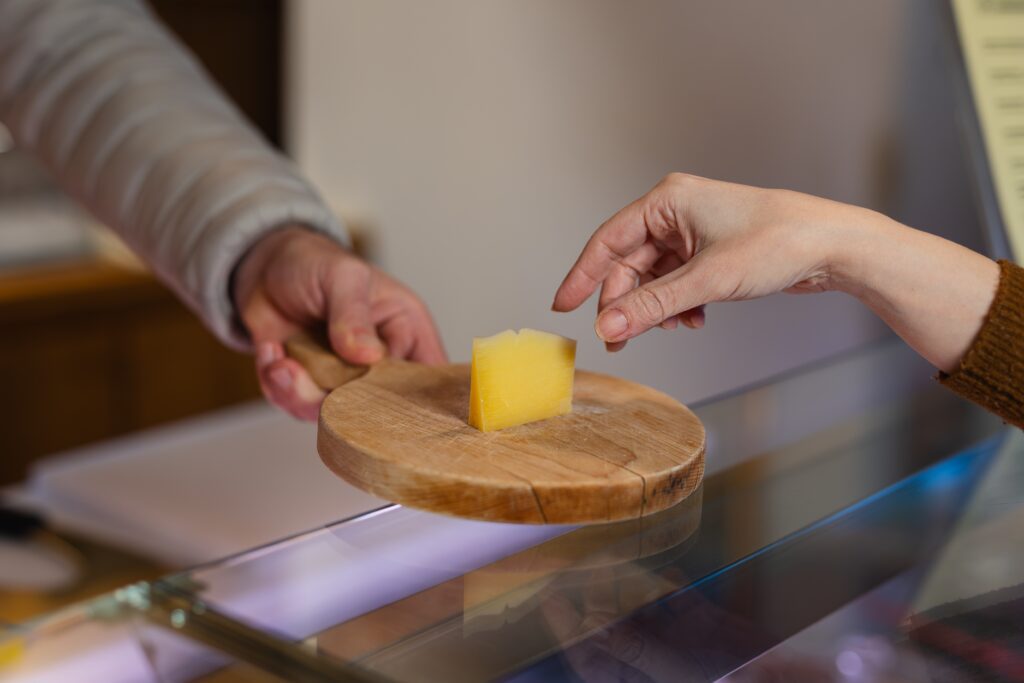
Product sampling remains the most effective trial-driving format in food and beverage marketing — and the most logistically demanding to execute well. Getting a consumer to try your product is the single most powerful conversion mechanism in the category because nothing creates purchase intent like the experience of actually enjoying a product. No ad, no influencer post, no pricing strategy comes close to the conversion power of putting the product in someone’s hands at the right moment in the right place.
The challenge is the “right moment in the right place” part. Sampling 50 people at your company’s own event is not a sampling campaign. Reaching 5,000 people in the right markets at the right time — with the right logistical infrastructure to maintain product quality, staff performance, and brand consistency throughout the activation — is a different undertaking entirely. Our team has executed food and beverage sampling programs for beverage startups, established CPG brands, and restaurant chains across markets, and the operational discipline behind high-volume street sampling is what determines whether a campaign generates real trial data or just burns product on random pedestrians.
This guide covers the full field operations picture for food and beverage sampling campaigns: location strategy, permitting requirements, cold chain management, staffing ratios, sample design, conversion tracking, and how to structure multi-market programs that generate meaningful commercial outcomes.
Location Strategy: Where Sampling Campaigns Succeed
The most important decision in food and beverage sampling campaign planning is not the sample design or the ambassador scripting — it is the location. The right location delivers a concentrated, high-intent audience for the specific product category. The wrong location delivers high foot traffic but low conversion because the audience is not in a mindset relevant to the product.
Transit Hub Sampling
Major transit hubs — subway station exits, commuter rail concourses, ferry terminals — deliver the highest raw volume of foot traffic of any sampling location in urban markets. Morning commute windows (7:00am to 9:30am) are particularly strong for coffee, breakfast food, and energy drink sampling because consumers are actively in a consumption mindset for those categories. Transit hub sampling requires a city permit in most major markets and coordination with transit authority management for placement on public property. The volume-to-cost ratio at transit hubs is among the best available for high-volume sampling campaigns.
Grocery and Specialty Food Retail Adjacencies
Sampling outside grocery stores and specialty food retailers (Whole Foods, Trader Joe’s, Sprouts, natural food co-ops) places the brand directly adjacent to the purchase decision in the highest-intent retail environment for food discovery. Consumers approaching a grocery store for a shopping trip are in explicit consideration mode for food and beverage products. A positive sample experience immediately before entering the store can directly translate into a purchase within minutes. Retail adjacency sampling typically requires property management permission or a retail partnership arrangement with the store itself.
Fitness and Gym Adjacencies for Functional Products
For protein products, performance nutrition, hydration, and functional beverages, gym-adjacent sampling at peak fitness hours creates the contextual alignment that drives the highest conversion rates in these categories. A consumer who has just finished a workout and is offered a protein shake sample experiences the product in the exact context of use — post-workout recovery — which is the most powerful trial environment for performance nutrition brands. Our team structures gym-adjacent sampling as part of broader brand ambassador programs that combine product handoff with brand conversation.
Farmer’s Markets and Specialty Food Events
Farmer’s markets attract the highest-indexing food discovery audience available: consumers who are actively interested in finding new food and beverage products, willing to engage with brands directly, and who have above-average disposable income for premium food purchases. Our team deploys sampling teams at farmer’s markets in key markets as part of ongoing sampling programs for food and beverage brands targeting this discovery-minded consumer segment. The engagement rate and conversion rate at farmer’s markets consistently rank among the highest of any location type for food brands.
Permitting Requirements for Food and Beverage Sampling
Sampling food and beverage products on public property in major U.S. cities requires permits. The specific requirements vary by city and by product type, but brands that skip the permitting process run real risk of being shut down mid-activation and losing all of the investment in the day’s campaign logistics. Our team handles permitting as a standard component of every sampling campaign — not an optional add-on.
Temporary Food Handler Permits
Most major U.S. cities require a temporary food handler permit for sampling food or beverage products on public property. These permits are issued by the local health department and require the applicant to demonstrate that the sampling operation meets food safety standards for handling, temperature control, and sanitation. Permit applications typically need to be filed 2 to 4 weeks before the activation date. In New York, the Department of Health and Mental Hygiene issues temporary food service establishment permits. In Los Angeles, the Los Angeles County Department of Public Health oversees temporary food permits. In Chicago, the Chicago Department of Public Health manages this.
Street Vending and Sidewalk Use Permits
Some cities require a separate street vending or sidewalk use permit for any commercial activity on public sidewalks, regardless of whether money is exchanged. New York City, for example, has specific regulations around commercial use of public sidewalk space. Our team researches and secures all applicable permits for each market before the campaign launches to prevent any operational disruption on activation day.
Private Property Sampling Agreements
For sampling inside or immediately adjacent to retail stores, gyms, transit station concourses, or other private properties, a property management agreement or retail partnership arrangement replaces the public permitting requirement. Our team negotiates these arrangements as part of campaign setup, including any revenue-sharing, product purchase, or brand partnership terms the property management may require in exchange for access.
Cold Chain Management for Street Sampling
Any food or beverage product that requires refrigeration or temperature control introduces cold chain logistics into the sampling campaign. Failure to maintain cold chain creates both safety risks and brand experience failures — a warm protein shake or a melted ice cream sample is worse than no sample at all. Our field operations standards for cold chain management are built around preventing both outcomes.
Equipment Standards
Refrigerated samples are transported in temperature-controlled vehicles from the staging warehouse to the field location and transferred into commercial-grade insulated coolers with continuous temperature monitoring. Each cooler is equipped with a digital thermometer visible to the field supervisor and checked every 30 minutes throughout the activation. Temperature logs are maintained throughout the day and provided to clients as part of post-campaign documentation.
Rotation and Disposal Protocols
Product that exceeds safe temperature windows — regardless of time since preparation — is disposed of and replaced from the vehicle supply, not served. Field supervisors are trained to make these calls without management escalation. A rotation schedule built into the campaign plan determines how frequently cooler product is restocked from the vehicle supply and how frequently samples are prepared fresh from bulk ingredients when relevant. No product quality compromise is acceptable for brand reputation reasons, independent of food safety requirements.
Staffing and Performance Standards for Sampling Campaigns
The ambassador team executing a sampling campaign is the brand at the consumer interaction moment. Their energy, knowledge, and judgment determine whether a product trial converts to a genuine brand relationship or disappears into the noise of a random street encounter. Our brand ambassador staffing standards for sampling campaigns reflect this reality.
Ambassador Selection for Food and Beverage Campaigns
Food and beverage sampling ambassadors need to be genuinely enthusiastic about the product category, able to communicate product benefits clearly and conversationally, and equipped to handle questions about ingredients, allergens, and sourcing without hesitation. For premium or specialty food and beverage brands, ambassadors who have genuine personal affinity for the product category — health food, craft beverage, specialty coffee — outperform generalist promotional staff significantly in consumer engagement quality and conversion rate.
Staffing Ratios and Location Coverage
Standard sampling staffing ratios are 1 ambassador per station, with 1 supervisor per 4 to 6 ambassadors. High-volume locations with dense foot traffic use 2 ambassadors per station to maintain throughput without queue buildup. Field supervisors handle logistics resupply, cooler temperature monitoring, and quality checks while ambassadors focus entirely on consumer engagement. This ratio structure allows scale without sacrificing individual interaction quality.
Sample Design and Conversion Architecture
The sample itself — its size, format, and what accompanies it — is the last design decision but one of the most commercially important. A sample that is too small to form a genuine product impression wastes the cost of the interaction. A sample that includes a clear next-step offer dramatically increases the probability that the trial converts to a purchase.
Sample Sizing
The sample must be large enough to deliver the full product experience. For beverages, 2 to 4 ounces is the minimum for a flavor and quality impression. For solid food, a portion that requires at least 3 to 5 seconds of tasting time is needed for sensory impression to form. Bite-size samples that disappear before the consumer registers flavor are a waste of product and budget.
Coupon and QR Code Integration
Every sample should be accompanied by a coupon, QR code, or both that creates a clear path to purchase. A 25% to 40% off coupon for the product’s retail location or e-commerce store converts the trial moment into a measurable commercial action. QR codes linking to a campaign-specific landing page with a first-purchase discount allow digital attribution of sampling-driven conversions. Our team builds this conversion architecture into every sampling campaign brief.
Multi-Market Sampling Campaign Execution
National and regional food and beverage brands typically need sampling programs that operate across multiple markets simultaneously or in rapid sequence. Multi-market programs require centralized logistics planning, consistent ambassador training across markets, and unified reporting that aggregates results at the brand level.
Central Logistics and Market Coordination
Our team manages multi-market sampling campaigns from our base at Industry City in Brooklyn, NY, coordinating product shipment to field locations, local crew management, permitting across markets, and quality control documentation. Clients receive unified daily reporting that combines sample counts, coupon redemptions, QR code scans, and field supervisor notes from all active markets into a single campaign dashboard.
Scaling from Pilot to Full Rollout
Most large-scale sampling programs start with a pilot in 1 to 3 markets to validate location strategy, ambassador scripting, and sample design before full rollout. Our team structures pilots to generate statistically meaningful conversion data within 2 to 3 days of activation, allowing rapid iteration on any element that underperforms before full program investment.
Frequently Asked Questions
How much does a food and beverage product sampling campaign cost?
A single-city, single-day sampling activation with a team of 4 to 6 ambassadors typically runs $2,500 to $6,000 including staffing, logistics, and program management. Multi-day, multi-market campaigns covering 5 to 10 cities run $25,000 to $80,000 depending on product type, sample volume, and logistics complexity.
Do food and beverage sampling campaigns require permits?
Yes. Sampling on public sidewalks in most major U.S. cities requires a temporary food handler permit and, in some cities, a street vending permit. Sampling inside private venues requires property management permission. Our team secures all required permits as part of campaign planning.
How do you handle cold chain for food and beverage sampling in the field?
Cold chain management uses temperature-controlled transport vehicles, commercial-grade insulated coolers with continuous digital temperature monitoring, timed product rotation schedules, and field supervisor temperature logs throughout the activation. No product that exceeds safe temperature windows is served, regardless of time investment.
What are the best locations for food and beverage sampling campaigns?
The highest-conversion locations are transit hubs during morning commute hours, grocery and specialty food retail adjacencies, fitness and gym clusters, farmer’s markets, corporate office corridors, and high-foot-traffic retail districts. Location selection should match the product’s target consumer profile to the specific audience at each site.
What conversion rates should brands expect from sampling campaigns?
Well-executed sampling campaigns generate trial-to-purchase conversion rates of 2% to 8% with a coupon or QR code incentive. Among consumers who try and enjoy the product, purchase intent within 30 days is typically 15% to 35% — substantially higher than any digital advertising format.
How many samples can a street team distribute per day?