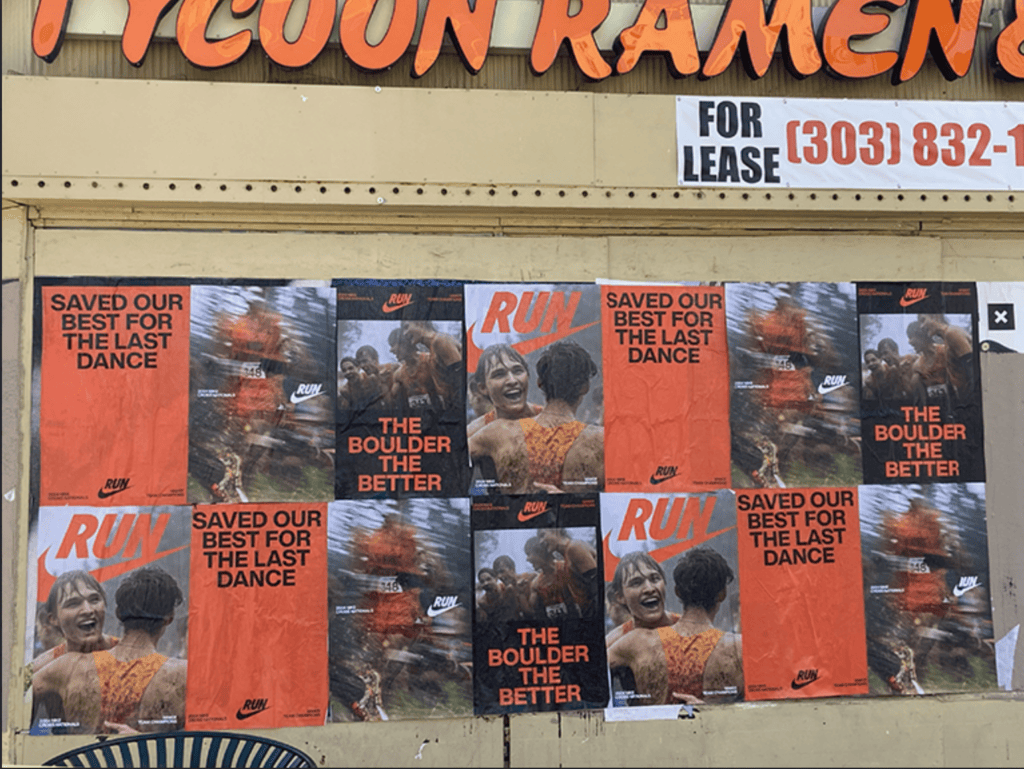
If you are planning a street poster campaign and you have seen the terms “flyposting” and “wheatpasting” used interchangeably, you are not confused — they are the same thing. Both describe the practice of adhering paper posters to surfaces using paste, typically a wheat flour and water mixture. The physical process, the materials, the result: identical.
The difference is linguistic, not technical. Flyposting is the word used in the UK and much of Europe. Wheatpasting is the standard term in the United States and Canada. Understanding why that distinction exists — and which term to use in which context — matters if you are briefing agencies, planning multi-market campaigns, or trying to communicate clearly with vendors in different countries.
This guide covers the full picture: where each term comes from, what cultural weight it carries, how the authorized market operates in both the US and UK, and what buyers need to know when planning a paste-applied poster program through a professional agency.
The Physical Process: Identical in Both Cases
Paste poster advertising works the same way regardless of what you call it. A paste adhesive is applied to a surface. A paper poster is pressed against the surface. The paste bonds the poster to the wall, construction hoarding, or purpose-built posting board. The poster is typically overlapped slightly at the edges to resist peeling. On authorized surfaces, multiple layers may be applied over time, creating the dense visual texture associated with street-poster districts in major cities.
Materials and Adhesive
Traditional wheat paste is made from wheat flour and water, cooked to a smooth consistency. It bonds well to porous surfaces, dries relatively clear, and is water-soluble when fresh but weather-resistant once cured. Modern professional campaigns often use commercial formulations that improve adhesion, durability, and clean removal from licensed surfaces. The choice of adhesive affects poster longevity, ease of removal, and surface compatibility, all of which matter when working with licensed location operators.
Poster Specifications
Professional wheatpaste poster campaigns typically use uncoated or matte paper stock in standard format sizes. Glossy coatings reduce adhesion. Poster dimensions vary by surface type and operator agreement, with common sizes including 24×36 inches, 27×40 inches (one-sheet), and double-sheet or quad formats for high-visibility placements. Print quantity, paper weight, and local surface dimensions should all be confirmed before going to press.
Where “Flyposting” Comes From
The term flyposting has British origins. In UK street culture and advertising law, “fly posting” describes the unauthorized display of promotional material on public or private surfaces without permission. The word “fly” here carries the meaning of doing something quickly and covertly — “by night,” in the shadow economy of urban advertising.
UK Cultural and Legal Context
In the UK, flyposting has traditionally been associated with grassroots promotion — bands, club nights, independent film, political campaigns. The practice was widespread and largely tolerated in certain neighborhoods, creating the dense layered poster aesthetics visible in places like Shoreditch, Camden, and Portobello Road. Over time, local councils have tightened enforcement in most city centers, and legitimate operators have developed licensed posting networks to serve the same marketing demand.
How the Term Shifted to Professional Use
As the UK developed a professional paste poster market, the term “flyposting” migrated from illegal posting to authorized street advertising. Today, UK and Australian marketing agencies use “flyposting campaign” to mean exactly what a US agency means by “wheatpaste campaign” — a planned, documented, licensed program using paste-applied paper posters.
Where “Wheatpasting” Comes From
In the United States, the street art and urban activism communities adopted “wheatpaste” as the standard term in the 1980s and 1990s. Shepard Fairey’s OBEY campaign and similar street art movements popularized the practice among artists and brand marketers, and “wheatpasting” became the language of both the underground scene and its commercial evolution.
US Professional Market Adoption
American street advertising agencies, including American Guerrilla Marketing, use “wheatpasting” as the primary operational term. It appears in campaign briefs, client proposals, vendor agreements, and permit applications. When a US media buyer specifies a “wheatpaste program,” everyone in the production chain understands the format without ambiguity.
Regional Variations Within the US
In some US markets, particularly those with strong music and arts cultures, “poster campaign” or “street poster” is used as a shorthand that encompasses wheatpaste without specifying the adhesive method. In professional agency contexts, “wheatpaste” remains the precise term. For campaign briefings, use it consistently to avoid confusion with digital printing, snap-frame poster displays, or billboard programs.
How the Cultural Associations Differ
Because flyposting in the UK has explicit roots in unauthorized, often illegal activity, it carries an edge that “wheatpasting” does not necessarily have in the US. UK brands sometimes lean into this association deliberately, choosing flyposting aesthetics to signal authenticity, anti-establishment positioning, or street credibility. The gritty, layered look of a genuine paste poster in a London back alley communicates something different than a printed display ad.
US Brand Positioning Through Wheatpaste
In the United States, wheatpaste carries similar cultural weight in certain markets — music, fashion, streetwear, entertainment — but the professional market has largely normalized it as a legitimate advertising channel. Brands use guerrilla marketing services including wheatpaste for both the aesthetic value and the practical benefits: high impression volume, neighborhood-level targeting, and the organic credibility that comes from physical street presence.
Authorized vs. Unauthorized: The Distinction That Actually Matters
The real distinction that matters for buyers is not flyposting vs. wheatpasting — it is authorized vs. unauthorized posting. Unauthorized posting on private property or city-owned surfaces exposes the brand and the agency to fines, legal liability, and reputational risk. Professional agencies like American Guerrilla Marketing operate exclusively on licensed surfaces with property owner agreements and, where required, municipal permits.
Licensed Surface Networks
In both the US and UK, professional operators have developed licensed posting surface networks — construction hoardings, building walls, purpose-built posting boards, and retail locations that accept poster programs. These networks vary by city and are often managed through agreements with construction companies, property managers, and location operators. Working through an established agency gives you access to these networks without the compliance risk of unsanctioned posting.
What Compliance Looks Like in Practice
A compliant wheatpaste campaign starts with location scouting against a list of approved surfaces. Posting crews deploy during permitted hours. GPS-tagged photography documents every placement. At the end of the campaign, surfaces are cleared or allowed to cycle naturally depending on the agreement with the location operator. This is the standard our team applies to every campaign across all 50+ markets where we work.
Regional Usage Guide for Campaign Planning
When briefing an agency or writing a campaign spec, use the term that matches the market you are operating in. For US campaigns, “wheatpaste poster campaign” is the standard. For UK or Australian campaigns, “flyposting campaign” is the expected terminology. For multi-national programs, specifying both terms in the brief eliminates ambiguity across international vendor relationships.
When Both Terms Appear Together
In international campaign briefs or when working with agencies that serve both US and UK markets, you may see both terms used. This is not an error — it is an acknowledgment that different teams and markets use different language for the same service. What matters is that the operational specifications are identical: surface type, poster dimensions, adhesive method, documentation requirements, and compliance standards.
International Campaign Coordination: When Both Terms Matter
Brands running international campaigns that include both US and UK or Australian markets will encounter both terms in vendor communications, brief templates, and surface operator agreements. Here is how to handle the terminology difference without creating confusion or miscommunication in multi-country programs.
Building a Terminology-Neutral Brief
The most effective approach for international campaign briefs is to specify the operational parameters rather than relying on the terminology to carry the meaning. Instead of writing “execute a flyposting campaign in London and a wheatpasting campaign in New York,” write “execute a paste-applied street poster campaign on licensed surfaces in both markets, using local surface operator networks, with GPS photo documentation of all placements.” The operational specification communicates the same information regardless of which term local teams use to describe the format.
Vendor Qualification Across Markets
When qualifying vendors in unfamiliar markets, ask about specific operational elements rather than format names: What licensed surface networks do they operate? What is their documentation standard? How do they handle permit research? What is their crew supervision model? These questions identify operationally capable vendors regardless of whether they call the format flyposting, wheatpasting, paste posting, or something else entirely. The answers reveal whether a vendor has real operational depth or is repackaging a generic posting service with category-appropriate vocabulary.
The Psychology of Street Poster Advertising
One reason both flyposting and wheatpasting have survived the rise of digital advertising is that the format taps into audience psychology in ways that screens cannot replicate. Understanding why street posters work helps buyers make the case for the format internally and design campaigns that maximize its specific psychological advantages.
Physical Permanence and Environmental Integration
A paste poster is part of the physical environment. It is not a sponsored post that disappears when you scroll past it, not a digital banner that loads and vanishes between page views. It exists in three-dimensional space, in the same environment where the audience eats, walks, commutes, and socializes. This physical permanence creates a different type of impression than digital advertising — one that is experienced repeatedly, in context, without the opt-out mechanism that ad blockers and scroll behavior provide against digital formats.
Cultural Credibility in Specific Categories
In categories where street credibility matters — music, fashion, entertainment, streetwear, independent food and beverage — a paste poster on a Williamsburg building or a London hoarding communicates authenticity that no amount of digital spend can manufacture. The physical presence in the neighborhood says: we are real, we exist here, we are part of this culture. Digital advertising in these categories often fails because the audience knows it is purchased. A street poster is harder to dismiss because it requires real operational commitment to execute in the right location.
Multi-Touchpoint Frequency in Daily Routes
A poster on a wall that an audience member walks past twice a day builds frequency organically, without additional media cost. Each pass is an impression. A campaign with 50 well-located placements in a compact neighborhood creates a high-frequency experience for the neighborhood’s daily residents and commuters that would cost far more to replicate through digital targeting of the same individuals. This organic frequency is one of the format’s strongest performance characteristics for awareness campaigns.
Common Questions When Evaluating a Paste Poster Campaign
Buyers evaluating flyposting or wheatpasting for the first time typically have a consistent set of questions about the format’s mechanics and performance. Here are the most common and the straightforward answers.
How Do You Know the Posters Stay Up?
GPS-tagged documentation at deployment provides the baseline record. For campaigns concerned about durability, our team can schedule check-in visits at defined intervals to assess poster condition and replace any placements showing significant wear. The longevity of a paste poster depends on weather, surface porosity, adhesive quality, and foot traffic at the specific location. In dry weather on a textured outdoor surface with good adhesion, a properly applied poster can last six to eight weeks. In high-moisture environments or on smooth surfaces with lower adhesion, lifespan is shorter. We factor these variables into surface selection and material specification.
What Happens to the Posters After the Campaign?
Paste posters on most licensed surfaces are either removed by the campaign crew at campaign end per the surface agreement, or allowed to cycle naturally as new campaign materials are placed over them (the standard practice in busy urban surface markets). Surface agreements specify the removal obligation; our team confirms this requirement with each operator before campaign execution and builds any required removal into the deployment schedule and budget.
Working With Creative Teams: Briefing for the Format
Many brands brief their creative agency on a flyposting or wheatpasting campaign using the same format instructions they would use for a transit shelter or digital out-of-home campaign. The result is creative that is technically correct but not optimized for the unique characteristics of paste-applied poster advertising. Here is what to include in a brief to your creative team to get flyposting-appropriate creative rather than adapted creative.
Start by communicating the viewing context. Street-level paste posters are viewed at close range — typically three to eight feet — by pedestrians moving at three to four miles per hour. The viewing window is longer than a drive-by billboard impression but shorter than a magazine ad consumed in a seated context. Creative that would require ten seconds of focused reading to absorb in a studio review will be partially absorbed in a street context. Brief your creative team on this viewing reality rather than leaving them to assume that the outdoor creative principles that apply to elevated billboards also apply to street-level paste posters.
Communicate the layered urban context. Paste posters exist on surfaces that often carry previous campaign layers, surrounding graffiti, adjacent posters from other campaigns, and the visual noise of the built urban environment. Creative that relies on a clean white background to communicate freshness and quality may look different in the context of a construction hoarding that has been used for several previous campaigns. Brief the creative team on the specific surface context where the creative will be deployed — show them reference photography of the surfaces if possible — so they design for the actual environment rather than an idealized display context.
Surface Condition Assessment: The Detail Most Agencies Skip
One of the most consequential decisions in a flyposting or wheatpasting campaign is surface condition assessment before deployment. A poster applied to a surface in poor condition — dirty, wet, previously painted over with a non-porous coating, or structurally compromised — will peel, bubble, or fall off quickly regardless of how good the adhesive formulation is. This assessment step separates professional campaigns from amateur ones.
Our team’s scouting process includes physical assessment of each confirmed surface before production decisions are finalized. Surface material, existing coating condition, sun exposure (relevant for adhesive curing), and proximity to moisture sources all affect poster longevity. Surfaces that fail assessment are replaced with alternatives before production begins. Clients do not receive documentation of placements on surfaces that were known to be substandard at the time of deployment.
This assessment standard also applies to weather conditions at deployment. Paste application in rain or near-freezing temperatures produces poor adhesion that compromises poster longevity. Our crews monitor weather forecasts and adjust deployment timing when conditions would compromise placement quality. A campaign executed in good conditions with full coverage is always preferable to a campaign executed on schedule in conditions that undermine half the placements.
Planning a Paste Poster Campaign: Practical Checklist
Whether you call it flyposting or wheatpasting, the campaign planning process is the same. Our team at American Guerrilla Marketing handles all of these steps, but understanding them helps you brief better and evaluate proposals more accurately.
Pre-Production Requirements
Define your target geography and audience. Select markets and neighborhoods based on pedestrian traffic data and demographic alignment. Confirm poster dimensions with your agency before going to print — surface sizes vary by market and operator agreement. Choose paper stock based on outdoor durability requirements and the weather conditions typical of your target markets. Establish campaign duration and removal schedule with the location operator.
Production and Deployment
Print and ship materials to field teams on a confirmed timeline with buffer for transit delays. Crews deploy during agreed hours, typically early morning for construction hoarding surfaces or late evening for locations with lower daylight traffic. GPS documentation is captured at each location immediately after placement. A project manager reviews documentation and flags any surface or placement issues before the campaign report is finalized.
Frequently Asked Questions
Is flyposting the same as wheatpasting?
Yes. Both terms describe the same physical process: adhering paper posters to surfaces using wheat flour paste or a similar adhesive. The difference is regional and cultural, not technical.
Where is the term flyposting used?
Flyposting is the dominant term in the United Kingdom, Australia, and much of Western Europe. It carries a street-art and underground culture connotation in those markets.
Where is the term wheatpasting used?
Wheatpasting is the standard term in the United States and Canada. It is used by professional street advertising agencies, brand marketers, and campaign planners across North America.
Is flyposting legal?
Authorized poster campaigns using licensed surfaces are legal. Unsanctioned posting on private or city-owned surfaces without permission is not. Professional agencies like American Guerrilla Marketing operate exclusively on licensed, permitted surfaces.
What adhesive is used in flyposting and wheatpasting?
Historically wheat flour and water paste. Modern professional campaigns often use commercial wheat paste formulations or similar water-soluble adhesives designed for outdoor durability and clean removal.
How much does a wheatpaste poster campaign cost?
Campaign costs vary by market, number of placements, poster size, and duration. Contact American Guerrilla Marketing at (646) 776-2770 for a free campaign quote.