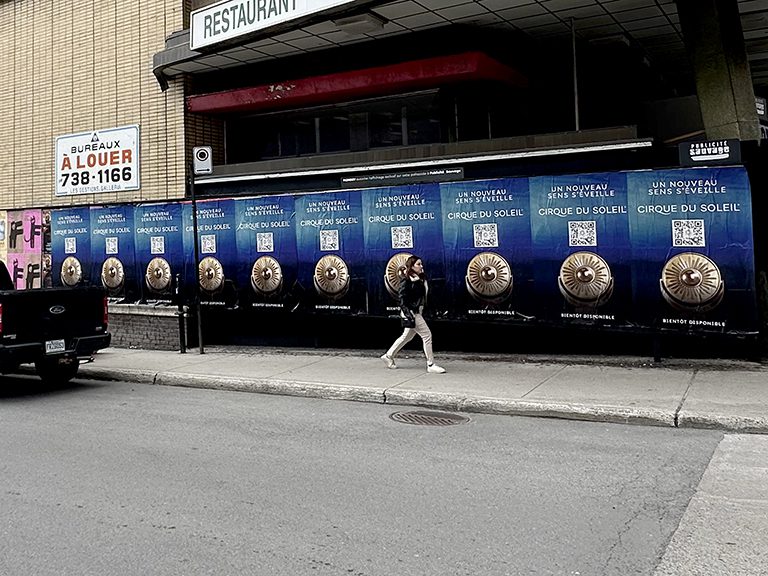
Canadian universities draw brands that want to reach the 18 to 28 year old market in Canada’s three largest cities. The challenge is understanding exactly where campus-adjacent flyposting is viable, what the regulatory environment looks like in each city, and where the highest-density public street surfaces are located just outside campus boundaries. Getting this wrong means posters on restricted surfaces that come down fast. Getting it right means 2 to 4 weeks of visible presence in neighborhoods packed with the target audience.
Our team at American Guerrilla Marketing coordinates university-adjacent wheat paste poster campaigns in Montreal, Toronto, and Vancouver through vetted local partner operators who know the specific zones, surfaces, and municipal regulations in each city. This guide covers the regulatory framework, the best neighborhood zones adjacent to each major Canadian university, and what a professional university-adjacent flyposting program looks like in practice.
This guide focuses on campaigns in the public streets and commercial corridors adjacent to campuses, which operate under municipal bylaw frameworks. On-campus posting is a separate conversation governed by institutional policy, and is not covered here.
Understanding the Campus Buffer Zone
The campus buffer zone is the critical planning concept for university-adjacent flyposting. Canadian universities, like their US counterparts, prohibit commercial poster advertising on campus property. This includes buildings, campus fencing, campus utility infrastructure, and signage. Campus property boundaries are clearly defined and, in most cases, well-known to local operators.
The buffer zone is the ring of public streets, commercial corridors, and mixed-use zones immediately outside the campus boundary where municipal bylaw governs posting rather than university policy. Understanding the exact position of this boundary in each neighborhood is what separates compliant campaigns that stay up for weeks from non-compliant campaigns that are removed within days.
Designated vs. Undesignated Posting Zones
Canadian cities use a mix of designated posting zones (specific surfaces, kiosks, or posting columns where posting is explicitly permitted) and general public surfaces where posting is tolerated under standard affichage sauvage (flyposting) practice. Professional campaigns concentrate on the latter: walls, construction hoarding, concrete surfaces, and utility infrastructure on public rights of way that have established posting histories in each neighborhood.
McGill University: Montreal’s Plateau and Mile End Zones
McGill University sits at the edge of the Plateau-Mont-Royal neighborhood, one of Montreal’s most culturally active and densely populated urban districts. The Plateau and the adjacent Mile End neighborhood are among the strongest flyposting environments in all of Canada. Montreal’s affichage sauvage culture is well-established, and the surface availability in these neighborhoods is extensive.
The Plateau-Mont-Royal: Saint-Laurent and Saint-Denis
The Saint-Laurent Boulevard (the Main) and Saint-Denis Street corridors through the Plateau are the backbone of Montreal’s street poster culture. Construction hoarding around the neighborhood’s ongoing development projects, the walls of commercial buildings, and the established posting infrastructure along these corridors provide strong surface density. The audience here is the Montreal creative and young adult community, including a significant McGill and Concordia student population that spills into the Plateau from the university districts to the south.
Mile End
Mile End, immediately north of the Plateau, is Montreal’s most concentrated creative professional and arts community neighborhood. The Bernard Avenue corridor and the cross streets connecting to Saint-Laurent deliver a design-literate, culturally engaged audience that is receptive to brand campaigns in music, fashion, food, and entertainment. Surface availability in Mile End is strong, particularly along the commercial stretches and on the walls of independent businesses that have established posting histories.
Milton-Parc and the McGill Adjacent Zone
The Milton-Parc neighborhood immediately adjacent to the McGill campus contains a high concentration of student housing and student-serving commercial activity on the public streets just outside campus boundaries. This zone delivers the highest direct student audience concentration of any Montreal deployment environment. Our team deploys in Milton-Parc on the public street surfaces that are clearly within the municipal posting environment rather than on campus infrastructure.
University of Toronto: The Annex and Kensington Market
The University of Toronto’s downtown St. George campus is surrounded by some of Toronto’s most walkable and culturally active neighborhoods. The Annex and Kensington Market are the primary university-adjacent flyposting zones, with strong surface availability and high pedestrian traffic from the combined student, faculty, and young professional community.
The Annex: Bloor and Spadina
The Annex is one of Toronto’s most established academic and arts community neighborhoods. The Bloor Street West corridor from Spadina to Bathurst and the Spadina Avenue commercial strip south of Bloor draw consistent foot traffic from U of T students and faculty, Annex residents, and the broader young professional community. The neighborhood’s established street poster culture and its concentration of independent businesses, music venues, and arts spaces create a receptive environment for campaigns in entertainment, music, food, and lifestyle categories.
Kensington Market
Kensington Market, immediately southwest of the U of T campus, is one of Toronto’s most distinctive pedestrian neighborhoods. The market’s independent food vendors, vintage clothing stores, and community gathering culture create a uniquely engaged, community-rooted audience. The walls along Kensington Avenue, Augusta Avenue, and the surrounding blocks have well-established posting histories. This zone delivers the alternative and counterculture-adjacent Toronto audience that aligns with music, entertainment, and fashion brand campaigns targeting the 18 to 30 demographic.
College Street and Harbord Village
The College Street corridor west of Spadina and the Harbord Street residential blocks connecting to the campus edge deliver the academic and young professional community in a slightly more mature demographic profile than Kensington Market. This zone is effective for campaigns targeting 25 to 40 year olds with graduate-level education and professional incomes. The restaurant and bar cluster along College in this corridor creates strong evening foot traffic windows.
UBC: Kitsilano and the Point Grey Approach
University of British Columbia is located on the Point Grey peninsula, separated from central Vancouver by Pacific Spirit Regional Park. The campus-adjacent street poster environment is therefore not immediately adjacent to the campus in the traditional sense. The most productive university-adjacent flyposting zones for UBC campaigns are Kitsilano and the Dunbar-Southlands commercial corridors, which draw the UBC student population on their way to and from campus via transit and cycling routes.
Kitsilano: Broadway and 4th Avenue
The Broadway and 4th Avenue commercial corridors through Kitsilano are among Vancouver’s most active pedestrian zones. The neighborhood draws a young, active, environmentally conscious audience that overlaps strongly with the UBC student and young alumni community. The combination of fitness studios, organic food retailers, and independent coffee shops creates consistent foot traffic throughout the day. For brands targeting the Pacific Coast millennial consumer, Kitsilano is one of the strongest flyposting environments in Vancouver.
Point Grey Village
The Point Grey Village commercial strip on West 10th Avenue sits at the campus edge and serves as the primary commercial zone for students commuting to and from UBC. The surface availability here is more limited than in Kitsilano, but the audience concentration and proximity to campus make it a useful secondary zone for campaigns where direct campus-adjacent reach is a priority.
Materials Considerations for Canadian Market Flyposting
Canadian flyposting campaigns face climate conditions that require specific materials decisions. Vancouver’s wet winters demand methylcellulose paste and heavier paper stock. Toronto’s freeze-thaw cycling from November through March requires paste formulas that maintain adhesion through temperature transitions. Montreal’s cold winters and wet springs present similar challenges to Northeast US markets.
Our partner operators in each Canadian city use weather-appropriate materials for all seasons. Summer campaigns in all three cities (June through August) can use standard flour paste formulations with top-coat application. Fall and winter campaigns use methylcellulose paste throughout. The detailed materials guidance in our wheat paste poster campaign program overview covers seasonal adjustments for each climate type.
Coordinating US and Canadian University-Adjacent Campaigns
Many brands that run university-adjacent flyposting campaigns in Canadian cities are also running comparable programs in US university markets. Our team coordinates these campaigns through a single client point of contact, ensuring that briefing documents, creative assets, and reporting formats are consistent across the full program. Clients briefing simultaneous campaigns at McGill, U of T, and UBC alongside US university-adjacent programs in New York, Chicago, and Los Angeles can manage the full multi-market program through a single agency relationship.
Canadian campaign coordination adds an international logistics component for print production (clients can use Canadian print vendors to avoid customs complexity, or our team can coordinate cross-border print shipping for brands with established US vendors). Campaign timelines for Canadian programs should add 2 to 3 days to account for print and materials logistics if production is being managed from the US.
Documentation for Canadian University Campaigns
GPS-tagged field photography and activity logs for Canadian campaigns use the same documentation standards as our US programs. Clients receive placement reports with GPS coordinates, timestamps, location context photography, and a neighborhood-by-neighborhood summary of placements completed. Documentation is delivered within 48 hours of campaign completion for standard programs. For multi-city Canadian programs running simultaneously across Montreal, Toronto, and Vancouver, consolidated reporting is delivered within 5 business days of campaign completion.
For brands also running brand ambassador programs or sidewalk stencil campaigns alongside poster programs in Canadian university zones, our team coordinates all format reporting into a single client document. Our guerrilla marketing services capabilities include the full format range for Canadian university-adjacent markets.
Frequently Asked Questions
Can you flypost near Canadian universities?
Yes. The public streets and commercial corridors surrounding major Canadian university campuses operate under municipal bylaws, not university policy. The Plateau and Mile End near McGill, the Annex and Kensington Market near U of T, and Kitsilano near UBC all have established street poster cultures with workable surface availability for professional campaigns.
What is the campus buffer zone and why does it matter for flyposting?
The campus buffer is the zone of public streets and commercial corridors immediately outside campus property where street poster campaigns operate legally under municipal bylaws. Campus property is governed by university policy prohibiting commercial advertising. Understanding where campus property ends and the public posting environment begins is essential for compliant campaign planning.
What are the best zones for flyposting near McGill University?
The Plateau-Mont-Royal (Saint-Laurent and Saint-Denis corridors), Mile End, and the Milton-Parc neighborhood adjacent to campus are the primary zones. These areas reach McGill students and faculty plus the broader Montreal creative community.
What are the best zones for flyposting near University of Toronto?
The Annex (Bloor and Spadina), Kensington Market, and the College Street and Harbord Street corridors are the primary U of T adjacent zones. They reach students, faculty, and the broader Toronto young professional community in high foot traffic environments.
How does flyposting regulation work in Canadian cities?
Canadian municipal flyposting regulations are broadly similar to US regulations. Montreal, Toronto, and Vancouver have designated posting zones and restrictions on heritage buildings. Enforcement varies by neighborhood. Professional campaigns work with local operators who know the compliant surfaces and enforcement patterns in each specific area.
Can AGM execute flyposting campaigns in Canada?
Yes. American Guerrilla Marketing coordinates university-adjacent flyposting in Montreal, Toronto, and Vancouver through vetted local partner operators. Campaign coordination, briefing, and reporting are managed from our Industry City Brooklyn NY operations team. Clients brief once and receive unified reporting across US and Canadian markets.