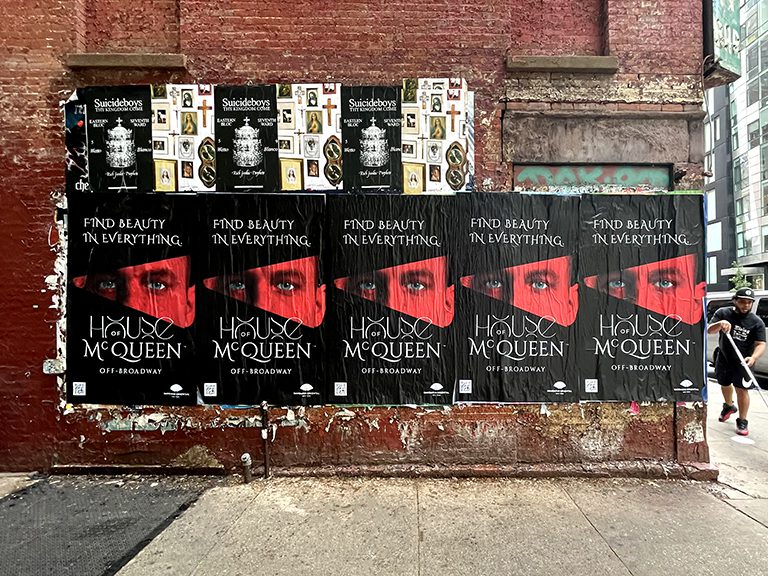
A film’s opening weekend is everything. Whether the release is a studio tentpole, an independent art house title, or a festival film making its theatrical debut, the first few days of box office performance shape a film’s entire trajectory. That performance is driven by one thing above all others: did enough of the right people know the film was coming, and did they care enough to show up? At American Guerrilla Marketing, based in Industry City, Brooklyn, we run the street-level campaigns that create that awareness and urgency in cities across the country. See also: Tour Marketing.
Film studios and distributors spend enormous budgets on television spots, digital campaigns, and trailer placements. Those elements matter. But the audience deciding whether to see your film on Saturday night is not making that decision from an ad. They are making it from what they see walking around their city, what their friends talked about, what felt culturally present and alive. Street-level campaigns create that presence. Our guerrilla marketing work makes a film feel like it belongs to the city where it is opening.
Why Street-Level Campaigns Matter for Film Releases
Movie marketing has become increasingly digital, and that creates an opportunity for brands willing to show up physically. In major urban markets , New York, Los Angeles, Chicago, San Francisco, Miami , a bold presence on the street signals cultural weight. When a film’s imagery is on the walls, when brand ambassadors are talking about it in bars and coffee shops, when an LED truck is cycling through the entertainment district the night before opening, the film feels like a moment. See also: Festival Marketing.
Independent and art house releases benefit particularly from street-level campaigns because they often have smaller digital budgets competing in a crowded streaming and wide-release landscape. A wheatpaste campaign in the right neighborhoods near the right theaters can drive meaningful foot traffic at a cost well below what the same reach would require digitally.
For wide releases, street marketing layers on top of the national campaign to create local urgency in specific markets. A national ad tells someone a film exists. A poster on the wall three blocks from the theater they go to every weekend tells them it is opening now, here, and everyone around them is noticing.
Wheatpasting for Film Release Campaigns
Film key art , designed for theaters and billboards , translates perfectly to the wheatpasted poster format. Large-format placement of a film’s poster imagery in high-visibility locations around theaters, entertainment districts, and culturally relevant neighborhoods creates the kind of street presence that builds anticipation.
We work with the film’s marketing team or distributor to identify the right neighborhoods for placement in each market. For a genre film with a young audience, that might mean the areas around multiplexes in transit-connected urban zones. For an art house release, it means the blocks around independent theaters in arts-dense neighborhoods. For a prestige drama, it means hotel corridors near multiplex clusters and cultural institutions.
Timing is critical. Posters go up two to three weeks before opening to allow for multiple impression cycles. A commuter who passes a poster every day for two weeks before a film opens is far more likely to see it opening weekend than one who saw a single digital ad in week one.
LED Billboard Trucks for Opening Weekend Pushes
Few marketing tools create opening-day excitement like a mobile LED billboard truck moving through the entertainment district. We deploy LED trucks the Thursday before opening weekend and on Friday and Saturday for major releases, running loops through areas with high pedestrian traffic near multiplexes and entertainment zones.
The truck displays full-color film key art, release date, theater information, and a QR code or short URL to purchase tickets. For films with trailers that have already generated social attention, the moving visual presence reinforces existing awareness and pushes people from passive interest to active ticket purchase.
LED trucks also generate significant social sharing. People photograph and video impressive displays, and those shares extend the campaign’s reach into social networks without any additional media spend.
Street Teams and Brand Ambassador Programs
Our brand ambassadors deploy in entertainment districts, near theaters, at film festivals, in bar and restaurant zones, and at cultural events in the lead-up to a release. They distribute show cards, posters, and promotional items tied to the film. For genre releases with passionate fan communities, they engage those fans directly in locations where they gather.
Street teams for film releases often operate in costume or with branded props that create their own visual impact. A brand ambassador dressed in character from a genre film is a photo opportunity, a conversation starter, and a walking advertisement. We coordinate costumed activations alongside standard distribution teams for films where that level of production is appropriate to the budget and audience.
For independent films with limited theatrical windows, street teams at university campuses and arts institutions are particularly valuable. These are audiences that disproportionately attend independent cinema and respond well to direct, in-person promotion.
Premiere and Press Screening Activations
When a film has a premiere event or press screening in a major market, the physical environment around that event is a campaign opportunity. We create activation footprints around premiere venues , branded elements, ambassador presence, photography moments , that extend the event’s PR reach and build social content around the premiere night.
Premiere activations typically include brand ambassador greeting teams, branded photo opportunities positioned for social sharing, and distribution of premium physical materials to attendees and press. Our festival marketing experience translates directly to the high-production premiere environment, where execution needs to be flawless and brand-consistent.
Sidewalk Stencils Near Theater Locations
In markets where approved, sidewalk stenciling near theater locations creates a ground-level campaign element that catches pedestrians in the moment closest to ticket purchase. Film title, release date, and directional elements stenciled on sidewalks around a multiplex create impressions in exactly the right location , right where the decision gets made.
This tactic works best in urban markets where theaters sit on pedestrian-heavy corridors with significant foot traffic from residents and visitors making spontaneous entertainment choices.
Multi-Market Film Tour Campaign Coordination
Wide releases and limited-expansion films often need coordinated street campaigns across multiple markets simultaneously. Our national vendor network handles that coordination without the distributor or studio having to manage multiple city-by-city relationships.
We build a master campaign plan covering every market on the release schedule, with market-specific adaptations for neighborhood targeting and venue proximity. Creative assets are centralized and shipped to local crews. Deployment timelines are coordinated with the national release date. A single project manager runs communication between the studio and all field vendors.
Markets in our touring network include New York, Los Angeles, Chicago, San Francisco, Boston, Washington DC, Philadelphia, Miami, Atlanta, Austin, Seattle, Denver, and beyond. For limited releases on the festival circuit, we concentrate campaigns in the specific markets where the film is screening.
Independent Film Campaigns: Doing More with Less
Independent films often have fraction-of-studio budgets for marketing, but their audiences are highly targetable and often respond enthusiastically to street-level campaigns that feel authentic rather than corporate. A well-executed wheatpaste campaign in the right neighborhoods around an indie theater can generate the kind of grass-roots word-of-mouth that no amount of digital spend can buy.
We build efficient campaigns for independent releases that concentrate limited budgets on the highest-impact placements in each market. We identify the two or three neighborhoods most likely to yield the core art house audience, deploy posters in those locations, and brief a small street team to cover the venues and cultural spaces where those audiences gather.
For independent films in festival markets , Sundance, SXSW, Tribeca, New York Film Festival , we build festival-specific campaigns that create presence in the festival environment itself, catching distributors, press, and industry alongside general audiences.
What Studios and Distributors Get from AGM
We bring film marketing expertise and street-level execution to every campaign. We understand how key art should be displayed, how audiences make entertainment decisions in physical spaces, and how to time and coordinate ground campaigns to align with national release strategies.
Studios and distributors working with us get a single vendor who handles all ground-level coordination across markets. No managing six different city vendors. No chasing documentation. No wondering if the posters went up. We handle all of it and provide a clean campaign report for each market after deployment.
Our campaigns for film clients have supported wide releases, award-season rollouts, festival premieres, and streaming platform theatrical windows. The format changes with the film. The execution standard stays the same.
Frequently Asked Questions
What is film tour marketing?
Film tour marketing covers the street-level and experiential promotional campaigns that studios, distributors, and production companies run across multiple cities in the lead-up to a movie release or premiere. It includes wheatpasting, street teams, LED trucks, brand activations, and OOH advertising.
How does guerrilla marketing support film release campaigns?
Guerrilla marketing creates physical, real-world presence for a film in high-traffic urban areas where potential audiences live and move. Bold poster placements, mobile billboard trucks, and street team interactions create the kind of cultural buzz that supports ticket sales and word-of-mouth.
What OOH formats work best for movie release marketing?
Wheatpasting, LED billboard trucks, and large-format poster campaigns are all high-performing formats for film releases. Movie key art is built for large-scale display and performs well in high-pedestrian urban environments.
Can AGM support both wide releases and independent film releases?
Yes. We build campaigns for studio tentpole releases, independent films, festival circuit releases, and limited-release art house titles. Each campaign scales to the film’s audience size, distribution scope, and marketing budget.
How do brand activations work for film tour marketing?
Brand activations for film marketing create immersive, themed experiences tied to the movie’s world. These might include interactive installations, costumed characters, prop displays, or giveaway events that build social sharing and audience excitement before a premiere or opening weekend.
How far in advance should film tour street marketing start?
For wide releases, we recommend beginning street-level activity two to four weeks before opening weekend. For limited releases and festival premieres, timing depends on the distribution rollout, but a two-week pre-premiere window is typical.