Festival Promotion: Street-Level Campaigns That Drive Attendance and Community Awareness | AGM
American Guerrilla Marketing — Field Notes
Festival promotion is the practical work of putting a festival’s message in front of the people most likely to attend it, in the physical places where they actually are, through the methods that earn attention rather than demand it. A great lineup, a strong venue, and an interesting concept do not fill a festival on their own. The audience has to know the event exists, understand why it is worth attending, and encounter that message frequently enough and compellingly enough to convert from awareness to ticket purchase to actual attendance.
We have executed festival promotion programs for music festivals, arts festivals, food and drink festivals, film festivals, cultural celebrations, and community events across New York, Los Angeles, Chicago, Miami, Austin, Nashville, and other major festival markets. The core approach is consistent: understand the specific audience, identify where they concentrate in the physical world, and build a campaign that reaches them there with the creative quality and frequency necessary to generate real attendance. This guide covers the strategic and executional framework for festival promotion that produces results in the field.
Street-level festival promotion works because the target audience is always, at some point, physically present in specific locations in the real world. Digital advertising reaches audiences through screens that they increasingly filter, ignore, or block. Street-level advertising reaches them in the physical environment they cannot opt out of: the block they walk to the subway, the neighborhood they grab coffee in, the corridor they move through on the way to work. A well-placed poster in the right location is part of the audience’s visual environment for weeks before the event. An ambassador encounter in the right venue creates a human moment that no digital format can replicate.
For festival promotion specifically, street-level campaigns carry additional effectiveness because festivals are inherently place-based, time-bound, community events. The audience for any festival is geographically concentrated in the neighborhoods, commercial corridors, and community spaces of the city where the festival takes place. That geographic concentration makes targeted street-level promotion extraordinarily efficient: you can reach a very high percentage of the target audience by covering the specific locations where that audience is already concentrated, without needing to pursue them across the fragmented attention environment of digital media.
Poster Campaign Strategy for Festival Promotion
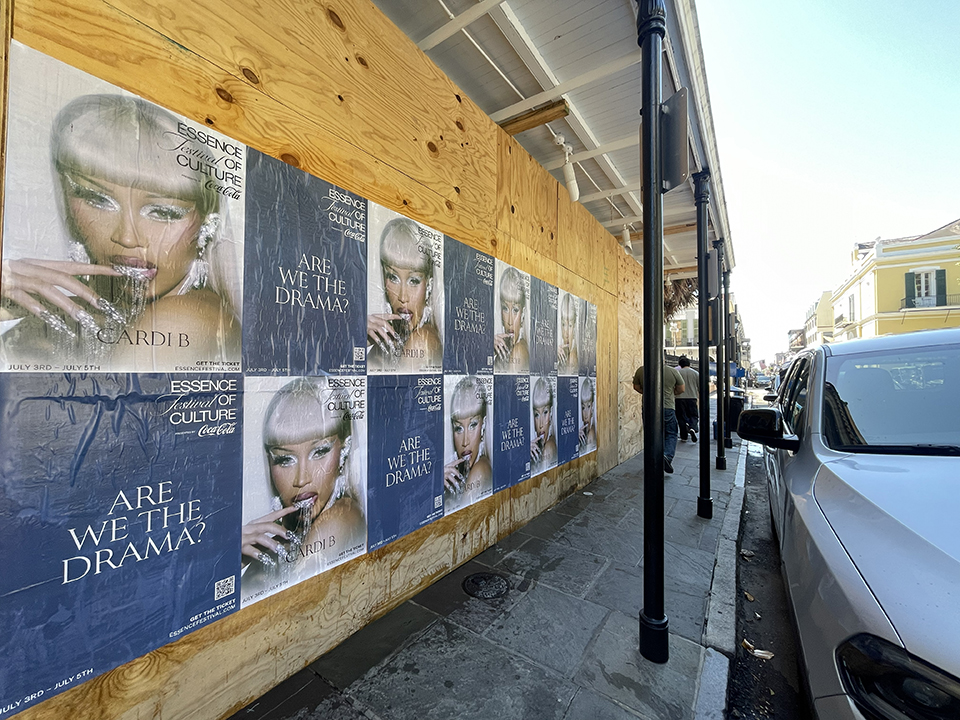
Wheatpasted large-format poster campaigns are the most reliable and most cost-efficient format in festival promotion for most festivals in most markets. A well-executed poster campaign in the right locations delivers cumulative awareness through repeated exposure over the campaign period, reaches the audience in their everyday environment without requiring them to be in any particular digital context, and builds the community visibility that makes a festival feel like a genuine cultural event rather than a private promotion.
The poster strategy for festival promotion is built on three decisions: creative quality, site selection, and distribution timing. Creative quality is non-negotiable: a weak or generic design will be invisible in the visual environment of most cities, where the standard of street-level advertising is high and the competition for attention is intense. Site selection determines whether the campaign reaches the right audience or just the largest available audience. Distribution timing determines whether the campaign lands in the audience’s decision window or burns awareness budget before the audience is ready to act.
For creative quality, festival promotion posters need to communicate the festival’s identity clearly and attractively at the size and distance where they will be seen. The essential information (festival name, dates, key talent or programming), a strong image or design concept, and a clear action path (web address, ticket purchase information) need to work together within a design that earns visual attention rather than blending into the background.
For site selection, we map the target audience’s demographic geography in each market and select sites that place the poster campaign where the highest concentration of potential attendees moves through daily. This is an audience-first selection process, not a general foot traffic process. A poster in a high-traffic location that reaches the wrong demographic produces no festival promotion value. A poster in a moderate-traffic location where the festival’s specific audience clusters produces strong cumulative awareness among the right people.
Ambassador Programs and Community Promotion
Brand ambassador and street team programs are the highest-engagement element of most festival promotion campaigns. Ambassadors create the human moments that static advertising cannot: personal recommendations, conversations about the festival’s content, sampling and giveaway interactions that leave a tangible reminder of the campaign, and community seeding that extends the campaign’s reach through social networks that advertising cannot access directly.
Festival promotion ambassador programs are most effective when they operate in the community spaces specific to the festival’s audience rather than generic high-traffic positions. A food festival ambassador program at a specialty food market reaches the exact target audience in a context where they are already thinking about food experiences. A music festival ambassador program at record stores and music venues reaches music-engaged people in environments where they are already in the mindset the campaign needs to tap into. A general street team position at a busy transit intersection reaches a broad undifferentiated audience that includes only a small percentage of the festival’s target demographic.
For community seeding, we recruit ambassadors who are genuine members of the festival’s target community and have existing relationships and credibility within it. These ambassadors seed the community conversation about the festival in the weeks before the campaign’s main push, creating organic awareness and word-of-mouth that amplifies the impact of the advertising campaign when it lands.
LED Trucks and High-Impact Outdoor Promotion
LED billboard truck programs add dynamic, high-visibility presence to festival promotion campaigns that static formats cannot provide. For festival promotion, the highest-value LED truck applications are: pre-festival routes through target demographic neighborhoods and entertainment districts, venue-approach routes in the days immediately before the festival, and transit corridor routes during peak commute periods when the target audience is concentrated in motion.
LED truck creative for festival promotion needs to work at the speed of a moving vehicle seen by a pedestrian or driver: large, bold, immediately readable, with a clear festival name, key dates, and a single action message. Dense layouts that require sustained reading time do not work in this format. The creative that succeeds on LED trucks is the creative that communicates the essential message in the first two seconds of the audience’s attention window.
For festivals with strong visual identity and compelling imagery, LED trucks are particularly effective because the display quality on modern LED vehicles is high enough to show event photography, artist imagery, or strong graphic design at a size and brightness that creates genuine visual impact in the street environment. A truck running through a neighborhood with compelling event photography gets remembered in a way that text-only messaging does not.
Festival Promotion by Budget Level
Budget Level
Recommended Program
Expected Coverage
Starting Investment
Entry-level
Targeted poster campaign (100 posters, 24×36) in highest-priority neighborhood
Single neighborhood saturation, 2-3 week presence
From $4,500
Mid-range
Poster campaign (200 posters) + ambassador program (2-3 days)
Multi-neighborhood coverage + community engagement
From $8,000-$15,000
Full campaign
Poster campaign + LED truck routes + ambassador program over 3-4 weeks
City-wide awareness, multi-format coverage
From $20,000-$40,000
Multi-city
Full campaign replicated across 2-4 markets with local execution teams
Regional or national coverage
Custom scope from $40,000+
Sidewalk and Ground-Level Promotion
Sidewalk stencil programs add a ground-level presence to festival promotion that operates in the visual field below eye level and often catches attention precisely because of its unexpectedness. For festival promotion, sidewalk stencils work best in high-pedestrian-traffic areas near the festival venue and in the target demographic’s daily movement corridors in the two weeks immediately before the event.
The combination of eye-level poster advertising, eye-level LED truck and ambassador programs, and ground-level sidewalk stenciling creates a surrounding environment of festival promotion presence that the target audience encounters from multiple directions and at multiple points in their daily movement. This multi-directional campaign presence builds the sense that the festival is a significant community event generating genuine excitement, which itself drives attendance through social proof.
Festival Promotion for Different Festival Types
The festival promotion strategy is not identical for every festival type. The specific audience, community, neighborhood geography, and promotional channels that work for a music festival are different from those that work for a food festival or an arts festival. Effective festival promotion requires understanding these differences and building campaigns that are calibrated to the specific audience rather than applying a generic template across all festival types.
Music festivals draw audiences defined by genre-specific community geography: the record stores, live music venues, music schools, and entertainment districts associated with the target genre in each city. Festival promotion for music events needs to saturate those genre-specific community spaces before expanding to broader entertainment and residential corridors.
Food festivals draw audiences defined by culinary interest across a demographic range that is typically broader than music or arts festival audiences. Festival promotion for food events works well in specialty food retail environments, restaurant neighborhoods, farmers markets, culinary school areas, and the food-media-engaged neighborhoods where culinary-interested audiences concentrate.
Arts festivals draw the culturally literate, arts-engaged audience that clusters in gallery districts, cultural institution neighborhoods, and the creative professional communities of each city. Festival promotion for arts events needs to meet the high creative standards of that audience in both the quality of the promotional materials and the appropriateness of the placement locations.
Documentation and Performance Tracking
Every festival promotion campaign we execute closes with comprehensive field documentation: timestamped photos from each poster installation location, LED truck route maps with coverage notes, crew deployment logs from each activation day, ambassador interaction counts and venue coverage summaries, and distribution totals for any physical materials distributed through the program.
For festivals with digital ticket sales, we can align our campaign activity timeline with the festival’s ticket sales data to show the relationship between field deployment waves and sales activity periods. This correlation data is valuable for optimizing future campaigns and for demonstrating the effectiveness of the street-level program to board members, investors, and sponsors.
We deliver all documentation within one week of the final deployment day. Clients receive everything they need to close their own records, complete sponsor reporting, and begin planning the next campaign cycle with a clear picture of what worked and where.
CTA
Promote Your Festival With Field Campaigns That Work
We build festival promotion programs for events of every type and scale. Tell us about your festival, your audience, and your timeline, and we will build the program that delivers.
Frequently Asked Questions About Festival Promotion
What is festival promotion?
Festival promotion is the marketing and outreach work that builds awareness and drives attendance for a festival event. It includes outdoor advertising, street-level ambassador programs, community partnerships, media outreach, and any tactic that puts the festival’s message in front of its target audience through the channels and physical locations where that audience can be reached.
What are the most effective festival promotion methods?
The most effective festival promotion methods include: large-format wheatpasted poster campaigns in target audience neighborhoods, brand ambassador programs at community gathering points, LED billboard truck routes through high-traffic corridors, product sampling and giveaway programs near the festival venue, and sidewalk stencil campaigns in high-pedestrian areas.
How do you promote a festival to reach new audiences?
Reaching new audiences requires placing the campaign in the specific neighborhoods, venues, and community spaces where the target audience already spends time but may not have encountered the festival before. This means going beyond the festival’s existing community to adjacent demographic and geographic zones where potential new attendees live, work, and gather.
How far in advance should festival promotion start?
Festival promotion should begin four to eight weeks before the event for most festivals. Smaller community festivals can work with a three-to-four-week runway. Major multi-day festivals benefit from an eight-to-ten-week campaign that builds in phases.
What neighborhoods should festival promotion target?
Festival promotion neighborhood targeting should start with the demographic profile of the target audience and identify which specific neighborhoods, commercial corridors, and community spaces in each market have the highest concentration of that audience.
Can AGM handle festival promotion for small community festivals?
Yes. American Guerrilla Marketing works with festivals at every scale. Smaller programs are scoped to deliver the best possible coverage within the available budget, focusing on the highest-priority locations and most efficient formats.
How does street-level festival promotion compare to digital advertising?
Street-level festival promotion and digital advertising serve complementary roles. Digital advertising builds awareness through screen-based channels and supports ticket conversion. Street-level promotion builds physical, community-rooted awareness that the audience cannot skip or block. The two approaches work best together.
What results can a festival expect from street-level promotion?
Festival organizers receive comprehensive field documentation of every deployment activity, including timestamped installation photos, route coverage maps, distribution totals, and ambassador engagement data. For festivals with digital ticket sales, aligning campaign deployment waves with sales data often reveals clear correlation between street-level activity and sales peaks.
Does AGM offer festival promotion in cities across the country?
Yes. American Guerrilla Marketing operates in all major festival markets including New York, Los Angeles, Chicago, Miami, Austin, Nashville, New Orleans, San Francisco, Seattle, Denver, and many other cities.
Festival Promotion Strategy: Turning Awareness Into Attendance
Festival promotion that drives attendance is built on a clear understanding of the specific steps between first awareness and ticket purchase. Most potential festival attendees do not move directly from never having heard of an event to buying a ticket. There are intermediate steps: learning the event exists, developing interest in the programming, discussing it with friends who might attend, making a plan, and finally purchasing. Festival promotion strategy needs to support all of these steps, not just the first awareness contact.
The implication for festival promotion planning is that campaigns need multiple touchpoints across the pre-festival period, each designed to serve the audience at the stage they are in. Early promotions build initial awareness and generate the first round of community conversation. Middle-period promotions provide the additional information and social proof that move interested people toward consideration. Late promotions create the urgency and call-to-action intensity that converts consideration into purchase.
Physical festival promotion through street-level campaigns is particularly valuable because it creates multiple touchpoints automatically through repeated exposure: the same audience member sees the poster campaign multiple times in the weeks before the event, encounters the ambassador team at a community event, and sees the LED truck on the way to another event in the same neighborhood. Each of these contacts is additive, building cumulative awareness and familiarity that no single high-impact media placement can match.
Festival Promotion and the Role of First-Mover Awareness
In crowded cultural markets where multiple festivals compete for the same audience’s attention and ticket budget, first-mover awareness gives festivals a competitive advantage that is difficult for later-launching campaigns to overcome. The festival that appears in the target audience’s visual environment first, through early poster deployments and community seeding programs, establishes itself in the audience’s consideration set before competing festivals enter the awareness window.
This first-mover advantage is one of the strongest arguments for starting festival promotion campaigns earlier than feels strictly necessary from a ticket-sales-only perspective. The four-to-six-week campaign window does not just give the audience more time to buy tickets; it establishes the festival’s presence in the cultural conversation before competing events have begun their own promotional activity.
For recurring festivals, the advantage of early promotion is compounded by existing community awareness from previous editions. The audience that already knows the festival and enjoyed previous editions is primed to engage with early promotion; they are simply waiting for the signal that the next edition is coming. Early promotions reach this warm audience at the moment of maximum readiness and convert them quickly, freeing the campaign’s later phases to focus on building new audience among people for whom the festival is still a first-time consideration.
Official Wheatpaste Pricing
24×36 wheatpaste campaign, 100 posters: $4,500
24×36 wheatpaste campaign, 200 posters: $5,500
48×72 wheatpaste campaign, 100 posters: $10,500
48×72 wheatpaste campaign, 200 posters: $13,500
Optional maintenance for the final two weeks of a monthly run: $3,500
Custom festival promotion programs are scoped from your specific market, format mix, and timeline. Contact us at [email protected] or call (646) 776-2770.
Festival Promotion: Aligning With the Cultural Moment
The most effective festival promotions operate at the intersection of the festival’s own programming identity and the current cultural moment in the target market. A food festival promotion that acknowledges the specific culinary trends the festival’s programming reflects, a music festival promotion that speaks to the cultural conversations the music represents, or an arts festival promotion that engages with the current critical discourse in the arts community all earn a relevance premium from the target audience that generic event promotion cannot achieve.
Aligning festival promotions with the cultural moment requires the promotion team to genuinely understand the cultural context of the festival’s programming rather than treating the event as a generic commercial product to be promoted through standard channels and standard messaging. This understanding is what the arts community, culinary community, and music community audiences look for when they evaluate a festival’s promotional presence: does this festival actually know and care about the culture it is presenting, or is it just another commercial event using cultural branding?
Festival Promotion Handoffs: From Marketing to On-Site Experience
The final function of festival promotion is the handoff from the pre-festival advertising campaign to the on-site event experience. The audience that has been reached by the poster campaign, the ambassador programs, and the LED truck routes arrives at the festival with expectations shaped by what they have seen and heard through the promotional campaign. When the on-site experience meets or exceeds those expectations, the festival promotion has done its full job. When the on-site experience falls short of the promotional promise, the promotion has created a disappointment that undermines the festival’s reputation with the very community it worked so hard to reach.
This handoff dynamic means that festival promotions should never overpromise what the event experience will deliver. Strong, honest promotional messaging that accurately represents the festival’s character and programming builds audiences whose expectations align with what the festival can actually provide, creating the satisfied, returning audiences that sustain festivals over multiple years. Promotional messaging that overpromises to drive first-time attendance creates disappointed audiences who do not return and who warn their communities against the festival, producing a negative brand effect that no subsequent promotional campaign can fully repair.
Working With AGM on Festival Promotion
Festival promotion program engagements at American Guerrilla Marketing start with a conversation about the festival’s audience, market geography, timeline, and budget. We build promotion proposals from the specific conditions of each festival engagement: the community context, the competitive environment, the timing constraints of the specific event date, and the most efficient format mix for the available budget. All festival promotion programs close with comprehensive field documentation within one week of the final campaign day: timestamped installation photos, route maps, deployment logs, and distribution totals. Contact us at [email protected] or call (646) 776-2770.