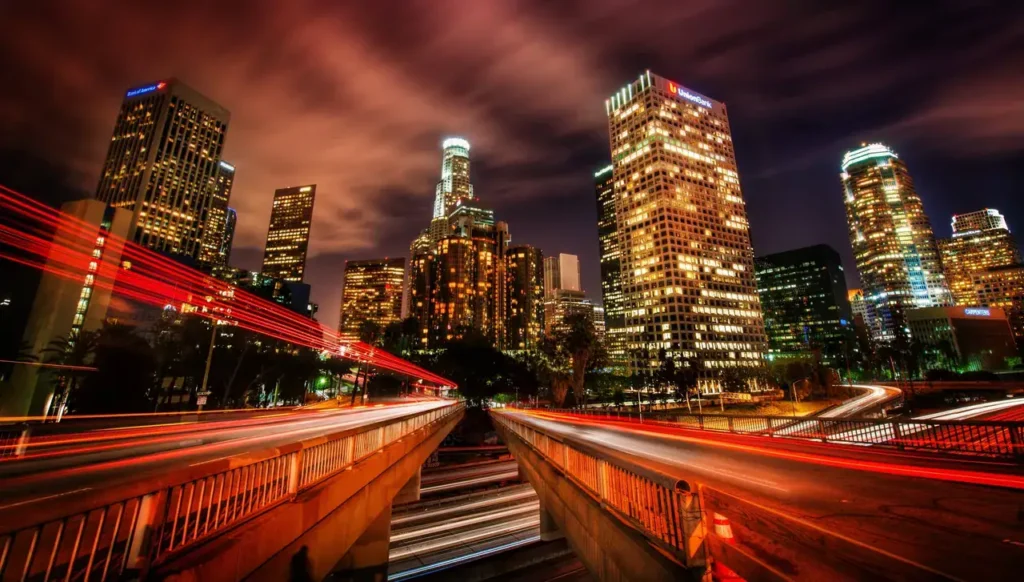
Los Angeles is the second largest consumer market in America, home to the world’s highest concentration of content creators, and one of the most challenging cities to execute experiential marketing in well.
Los Angeles is a market with no parallel in the United States for brand activation potential. The concentration of entertainment industry professionals, content creators, fashion leaders, and cultural tastemakers gives a well-executed LA activation an organic amplification opportunity that no other US city can match. At the same time, LA is a city that does not forgive generic execution. The consumer base here has seen more brand activations than almost anywhere else in the world. What impresses an audience in most US markets lands as ordinary in Los Angeles.
We are American Guerrilla Marketing. We operate in Los Angeles with a full production network: local vendor relationships, a trained ambassador staffing pool, and field management infrastructure. We have built activations from Malibu to Compton. This guide covers what an experiential marketing agency in Los Angeles needs to know and do to deliver results in this specific market.
The LA Consumer: What Makes Them Different
The Los Angeles consumer is experience-saturated in a way that consumers in most other cities are not. They have attended immersive pop-ups, walked through branded installations, been approached by street teams at every farmers market and festival. Their standard for what constitutes a genuinely interesting brand experience is calibrated by that saturation.
They are also deeply community-oriented within their specific neighborhoods. An Abbot Kinney regular does not think of themselves as an LA consumer. They think of themselves as a Venice person. A Silver Lake resident identifies with Silver Lake’s specific culture of music, independent retail, and creative professionals. Getting accepted into these communities requires activation design that feels genuine to the community’s values, not generic brand presence that could appear in any city.
The content creation context is also unique. A significant percentage of the LA consumers your activation will encounter are active content creators with real audiences. Some are micro-creators with 5,000 to 50,000 followers who create authentic category content. Some are major creators with millions of followers. Designing your activation with awareness that some attendees will document and share it changes the calculus on visual design, brand story, and the moments you build into the experience.
In Los Angeles, your activation has two audiences: the people physically present, and the followers of every content creator who shows up. Design for both. Make the live experience genuinely good, and make the visual story worth sharing.
LA Activation Formats: What Works
Destination Pop-Up Experiences
Pop-ups work in LA when they give people a reason to make the trip. The Arts District warehouse pop-up, the Abbot Kinney storefront takeover, the rooftop experience in West Hollywood — these work because the experience itself creates the draw. We have seen LA pop-ups generate lines around the block because the concept was genuinely compelling. We have also seen LA pop-ups that opened to empty rooms because the brand assumed consumers would show up without a real reason to. The content and word-of-mouth preview is what drives traffic in LA. Build the announcement strategy with the same care as the activation itself.
Farmers Market and Event Sampling
LA’s farmers market circuit is one of the best brand activation opportunities in the country for food, beverage, and wellness brands. The Brentwood Country Mart Saturday market, the Hollywood Farmers Market, the Larchmont Village market, and the Santa Monica Wednesday market all draw engaged, health-conscious, food-forward audiences who are actively looking for new products. These markets have their own application and vetting processes for brand participation, but brands that clear that bar reach the exact high-value consumer segment that most premium CPG brands are trying to reach.
Influencer and Creator Events
A well-curated creator event in LA — a product launch dinner, a behind-the-scenes workshop, an exclusive early access experience — can generate organic content with reach and authenticity that paid placements cannot replicate. We build creator event strategies into LA activations as a standard deliverable, not an add-on. This includes identifying the right creators to invite, developing the invitation approach, designing the event space with content creation in mind, and setting up the follow-up protocol after the event.
Mobile Activations
A branded mobile unit in LA can cover more consumer geography in a single day than a fixed location can cover in a week. We have run mobile programs that moved from a morning stop at a Venice Beach parking area to a midday stop at a Culver City production campus to an afternoon position near the Beverly Center shopping district. Each stop reaches a distinct audience segment in a way that a single fixed activation cannot accomplish.
LA Neighborhoods: How We Choose Activation Locations
Location decisions in LA are driven by three variables: where your target consumer already gathers, what cultural context the neighborhood provides, and what operational logistics the location makes possible or difficult.
Venice and Abbot Kinney
The most walked blocks in LA outside of the Third Street Promenade. Abbot Kinney Boulevard draws a consistent flow of fashion-forward, health-conscious, affluent young consumers throughout the day, with peak traffic on weekend afternoons. Pop-up spaces on Abbot Kinney are available for short-term licensing and command premium rates. Worth it for the right brand at the right moment.
West Hollywood and Melrose Avenue
The intersection of fashion, beauty, and entertainment industry culture. Melrose Avenue between La Brea and Fairfax has a concentration of streetwear, vintage, and independent retail that draws a fashion-forward, media-connected audience. The Pacific Design Center and surrounding West Hollywood commercial district support more premium brand activations. Both subdistricts are strong for beauty, fashion, entertainment, and lifestyle brands.
The Arts District
DTLA’s Arts District along Mateo Street and the surrounding blocks has become a genuine creative industry hub with galleries, restaurants, and working creative businesses. Activation formats here need to feel consistent with the neighborhood’s creative identity. Warehouse-scale venue options are strong for brands that need space for large-format builds.
Santa Monica and Venice Beach
The Third Street Promenade in Santa Monica is one of the only truly pedestrian-scale retail corridors in LA. Weekend foot traffic here rivals Manhattan commercial blocks. The Venice Beach Boardwalk draws a large and diverse crowd, particularly during summer months. These locations support both sampling programs and more substantial experiential installations.
Measuring LA Activation Results
Every activation we produce in Los Angeles has a measurement framework built in before the first setup day. The metrics we track are determined by the campaign objective established at the start of the planning process.
For sampling and trial programs: samples distributed, trial-to-inquiry conversion rates, and retail velocity data in LA market during and after the campaign period.
For awareness and content programs: organic social content volume, aggregate reach of content generated at the activation, earned media coverage from press and creator posts, and pre/post brand recognition surveys in LA market.
For creator and influencer events: attendance of target creators, organic posts generated, aggregate reach, and UGC quality assessment. We do not measure creator event success by follower count alone. We measure by content quality and authentic brand integration in the organic posts that result.
We deliver photo documentation, route maps, and summary reports from every LA activation within 48 hours of the close date. That deliverable is part of every program we run in this market.
LA Activation Timing: When to Run and When to Stay Home
LA’s activation calendar has specific windows that significantly outperform others. Understanding the timing is not just about weather. It is about when your specific consumer is in LA, in which neighborhoods, in what mental state.
Coachella weekend (usually the second and third weekends of April) pulls enormous energy, creator attention, and media presence out of LA toward the Coachella Valley. If your activation is designed for creators or media, the week before Coachella — when that entire community is in LA preparing to depart — and the week after, when they return energized and content-hungry, are both stronger activation windows than Coachella weekend itself.
The summer months are more complex. June through August brings the strongest beach and outdoor foot traffic to Venice and Santa Monica, but midday temperatures in DTLA and the Valley make outdoor sampling programs difficult for both staff and consumers. Morning activations before 11 AM and evening activations after 6 PM work well in summer. Midday activations in shaded or indoor environments are feasible. Extended outdoor activations in direct sun from noon to 4 PM are not recommended in July and August without significant climate infrastructure.
Award season from January through March concentrates entertainment industry attention in a way that creates specific opportunities. The Sundance Film Festival in late January (held in Park City, Utah) draws LA-based industry figures away briefly, but the Golden Globes, SAG Awards, and Oscars create three distinct media moments in January, February, and March respectively that concentrate media, talent, and industry attention in the West Hollywood-Beverly Hills corridor. Brands with entertainment industry positioning can use these moments effectively.
Fall (September through November) is the strongest overall activation window for most LA brand categories. Back-to-school has passed, the summer heat has broken, residents are back from travel, and the holiday shopping buildup from late October through November creates strong consumer activity in retail corridors. The period from late September through mid-November before Thanksgiving is the LA activation window we recommend most frequently to brands with flexible timing.
Working with Local Partners in LA
The relationship between an out-of-market agency and a local vendor community is what determines whether a program runs smoothly or discovers its infrastructure gaps on activation day. In LA, we have built vendor relationships specifically through programs we have actually executed here, not through general national vendor agreements.
Our LA fabrication partners have built brand environments for us in warehouse spaces in the Arts District, custom trailer builds for mobile programs, and outdoor shade and structure solutions for beach-adjacent activations. We know their quality standards, their lead time requirements, and what to do when an unexpected issue comes up. That knowledge is not available from a first-time vendor relationship.
Our LA staffing partners provide us with brand ambassador talent that is genuinely matched to the specific brand profile we are activating for. This is not a generic staffing pool — it is a community of people who are categorized by aesthetic, cultural connection, fitness and wellness alignment, fashion and beauty sensibility, and other specific attributes that determine brand-audience authenticity fit. The difference between an ambassador who genuinely embodies the brand they are representing and one who was available on the right day is immediately visible to the consumer they interact with.
Our LA venue and location contacts include retail space operators on Abbot Kinney and Melrose, event venue managers in the Arts District and West Hollywood, and market organizers at the major farmers markets in the Brentwood, Larchmont, and Hollywood areas. These relationships often allow us to place programs in locations that are not publicly listed as available for brand activations — creating competitive advantage for our clients in the most sought-after LA activation environments.
The Measurement Framework We Use for Every LA Program
Every LA program we run has a measurement framework defined before the first activation day. The specific metrics depend on the program’s primary objective, but the standard framework includes five measurement layers.
Layer one is direct consumer engagement counts: total interactions, samples or materials distributed, dwell time estimates from field observation, and lead captures through email or QR code mechanisms. These are the activation-day metrics that the field team captures in real time and reports within 48 hours.
Layer two is organic social content monitoring: branded hashtag volume, geo-tagged post count in the activation location, mentions and tags of the brand account, and reach of the organic content generated by activation participants. We monitor this in real time during the activation and for 48 hours after each activation day.
Layer three is creator content tracking: identification of specific creator content generated by LA-based creators who attended the activation, reach of that content by creator, and quality assessment of the brand integration in each piece of content. LA-specific because of the unusually high creator density.
Layer four is earned media tracking: press mentions, blog posts, podcast references, and editorial placements generated by or referencing the activation. We monitor earned media for 30 days after the activation closes.
Layer five is downstream behavior correlation: for brands with retail presence in LA, we correlate retail velocity data in the LA market before and after the activation period. For brands with digital conversion goals, we correlate website traffic, app downloads, or conversion rate data in the LA geo-segment before and after the activation period.
The post-campaign report synthesizes all five layers into an honest assessment of what the activation produced, what it cost to produce it, and what the next LA program should do differently or more of based on what this one taught us.
The Destination Activation Framework: How to Succeed in LA’s Car Culture
The fundamental strategic shift required to execute effectively in Los Angeles is moving from a pedestrian-interception model to a destination-activation model. In most US cities, you can place an activation on a busy block and intercept the consumer traffic that flows past. In LA, the consumer arrives at destinations by car. The activation has to be at a destination the consumer has already chosen to visit.
The destination activation framework starts with a question: where does my specific target consumer already choose to go in Los Angeles? For a premium food brand targeting educated, health-conscious consumers aged 30-45: the Brentwood Country Mart Saturday market, the Whole Foods on Gayley Avenue in Westwood, the Erewhon Market on Beverly Boulevard. These are destinations your consumer already visits. Your activation intercepts them there with the product they did not know they needed.
For a fitness brand targeting active LA consumers aged 25-40: the Equinox on Robertson Boulevard during morning class change, the Barry’s Bootcamp on La Cienega during peak hours, the Santa Monica beach access parking area on Sunday mornings when the running community congregates. These are places your consumer is already going. Your activation meets them in the context that is most relevant to what your brand offers.
For a streetwear brand targeting LA’s creative community: the parking lot adjacent to the Supreme drop location on Fairfax during a drop weekend, the area around the KITH store in the West Hollywood Design District, the off-the-wall events at the Stussy flagship on Melrose. Your consumer is already congregating at these locations around cultural events. Your activation needs to fit naturally in that context.
The destination activation model requires more location intelligence than generic street-level sampling, but it consistently produces higher consumer contact quality because the consumer at the right destination is in the right context for the brand interaction. A consumer at the farmers market on a Saturday morning who encounters a premium food brand is in discovery mode, in a food context, in a positive weekend state. That context produces better first-trial conversion than any amount of foot traffic at a location the consumer is just passing through.
LA Activation Pitfalls: What Brands Without Local Knowledge Get Wrong
Brands and agencies that come to Los Angeles without genuine local market knowledge make predictable mistakes. Understanding these mistakes helps you ask the right questions when evaluating agency partners for LA programs.
Treating LA like New York. New York’s pedestrian interception model — set up on a busy block and catch consumers as they flow past — does not work in LA. The car-based consumer geography of LA means there are no pedestrian flows outside of specific destination locations. An agency that designs your LA activation like a New York program will position you in locations where nobody walks. This is the most common and most costly LA activation mistake.
Ignoring the creator dynamic. LA has the highest concentration of content creators in the world. An agency that does not account for the creator population in their LA activation design is leaving the market’s most distinctive asset unused. The organic content amplification opportunity in LA is available to every brand that designs for it. Agencies that do not know how to design for it or engage with it are costing their clients significant earned media value.
Selecting neighborhoods based on name recognition rather than consumer fit. Beverly Hills is famous. Abbot Kinney is trendy. The Arts District is photographed. But none of those neighborhoods is automatically the right place for your specific brand. The right neighborhood is determined by where your specific target consumer spends time in LA, which requires actual market knowledge about the specific demographic and lifestyle profiles of each neighborhood’s visitor population.
Not accounting for LA’s logistics constraints. Production vehicles, load-in windows, parking, and permit requirements all work differently in LA than in other markets. Agencies that underestimate these constraints produce activation days where production arrives late, the setup is rushed, and the brand experience suffers as a result. We plan LA productions with LA’s specific logistics reality built in from the start.
The brands that succeed in Los Angeles experiential marketing are the ones that understand LA on its own terms: a destination city, a content creation city, a city of distinct neighborhoods with distinct consumer cultures. That understanding has to be built from genuine market experience, not from general marketing principles applied to a new geography. We have that experience from programs we have actually run here, in neighborhoods we actually know, with vendors and staff we have actually worked with. That is what we bring to every Los Angeles program we design and execute.
Los Angeles deserves an experiential marketing agency that genuinely understands its destination-based geography, its creator economy amplification opportunity, and its distinct neighborhood cultural identities. We have built that understanding from running actual programs in this specific market. We bring it to every Los Angeles program we design and execute for our clients. Call us when you are ready to build your Los Angeles presence with an agency that actually knows the city.
Frequently Asked Questions
What should I look for in a Los Angeles experiential marketing agency?
Real LA market knowledge (not just general marketing expertise), a local vendor and staffing network, experience with LA’s destination-based consumer geography, and a track record of activations in specific LA neighborhoods with measurable results.
How do LA experiential marketing activations differ from New York?
LA requires destination thinking instead of pedestrian interception. Activations must be placed at locations where your target audience has a reason to be. The content creation potential is higher in LA due to the concentration of creators, but the street-level reach is lower than in dense pedestrian markets.
What types of experiential programs work best in Los Angeles?
Destination pop-ups, farmers market sampling programs, influencer and creator-focused events, mobile activations across neighborhoods, and immersive installations that justify the trip. Festival activations at Coachella, LAFC games, and cultural events in Exposition Park also work well.
How early should I start planning an LA experiential campaign?
For more on this, explore our wheatpasting los angeles.
For more on this, explore our billboard advertising los angeles.
6 to 8 weeks for a focused sampling or street team program. 10 to 14 weeks for custom fabrication or pop-up experiences in competitive LA venues. For Coachella-adjacent activations, plan 4 to 6 months in advance.