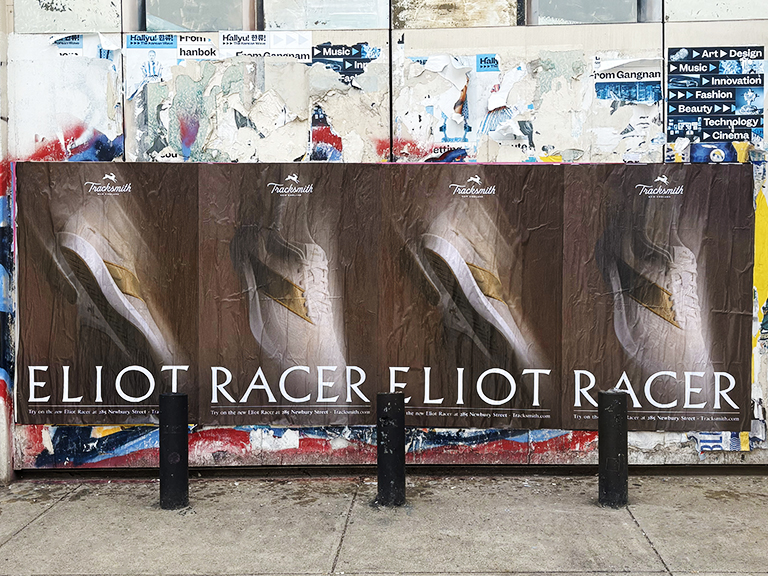
Experiential Agencies in Los Angeles: What Brands Need From LA Street Marketing
Experiential marketing in Los Angeles requires more than a well-produced activation. It requires street-level presence in the right neighborhoods before the event begins. AGM builds that foundation.
Experiential marketing in Los Angeles has a distinct character shaped by the city’s entertainment industry, its outdoor culture, and its geography. LA brands and national brands targeting LA audiences have access to a city where people are accustomed to encounters with the extraordinary — film shoots on their streets, celebrity sightings at their coffee shops, product activations at the events they attend. For experiential marketing to work in this context, it has to clear a higher bar than average.
AGM approaches experiential and guerrilla marketing in Los Angeles from a street-level physical advertising perspective. We are the agency that places the brand on the wall in Silver Lake, on the boards in the Arts District, on the street in Fairfax. We create the physical brand presence that makes experiential marketing credible and visible in a city that has seen every promotional trick in the book.
This article covers what experiential marketing in Los Angeles actually looks like when it works — which neighborhoods, which formats, and which campaign approaches generate the kind of genuine audience response that brands come to LA to achieve.
Experiential marketing is a term that covers a wide range of brand activities: pop-up events, brand activations, immersive brand experiences, product sampling campaigns, and street-level installations that create direct consumer encounters. In Los Angeles, the definition is particularly broad because the city’s entertainment industry has created an audience accustomed to immersive experiences as a baseline cultural norm.
For AGM, experiential marketing in LA starts with the physical presence. Before any brand activation or experience event, the brand needs to be visible in the city — on the walls of the neighborhood where the activation will take place, on the boards along the pedestrian routes the audience will walk, on the surfaces that the activation’s target audience passes daily. The physical campaign creates the context. The experiential activation is the payoff.
Brands that run experiential activations in LA without a prior physical presence ask their audience to discover and engage with something entirely unfamiliar. Brands that run experiential activations in LA backed by a week or two of poster and street-level presence are activating an audience that has already been introduced to the brand. The difference in activation performance between these two approaches is significant and consistent.
Los Angeles Experiential Marketing Neighborhoods
Silver Lake and Echo Park
Silver Lake and Echo Park are the experiential marketing sweet spot for brands targeting LA’s creative and cultural community. The neighborhoods’ walkable commercial corridors, their dense concentration of creative professionals, and their active social media culture create an environment where experiential activations are genuinely discovered, shared, and talked about. A pop-up brand experience in Silver Lake reaches the city’s most influential creative audience in their natural environment.
Fairfax District
The Fairfax District is the center of LA’s streetwear and sneaker culture. The concentration of boutiques, galleries, and the LACMA and The Grove adjacency creates a specific audience environment that brands in fashion, music, and youth culture should understand. Experiential activations in Fairfax — whether a brand pop-up, a limited product release, or a branded street installation — reach an audience that is highly attentive to brand activity in the physical environment.
Arts District
The Arts District is LA’s most fertile ground for experiential marketing that aspires to cultural relevance. The neighborhood’s gallery culture, its creative business community, and its strong social media documentation mean that well-executed activations here earn coverage and sharing far beyond their immediate audience. Brands that invest in genuinely creative experiential work in the Arts District are rewarded with the kind of organic amplification that no paid media budget can manufacture.
Venice and Abbot Kinney
Venice’s beach culture and Abbot Kinney’s luxury retail corridor create two adjacent experiential marketing environments with distinct audience profiles. The beach itself draws a broad, energetic, outdoor-active audience that is receptive to brand activations and sampling events. Abbot Kinney’s more curated retail environment suits premium brand experiences that fit the neighborhood’s luxury lifestyle positioning.
The experiential marketing campaigns that generate the most press coverage and organic sharing in Los Angeles are the ones that feel like they belong in the neighborhood — not like they were deployed from a campaign kit. LA’s creative community has a finely tuned sense for authenticity. Work that earns respect here has done its cultural homework.
AGM’s Experiential Marketing Approach in Los Angeles
Physical Foundation First
Every AGM-supported experiential campaign in LA begins with a physical outdoor foundation. Poster campaigns and wheat paste installations in the target neighborhood run for one to two weeks before any activation or experience event. This foundation establishes brand presence, builds familiarity with the audience, and creates the visual context that makes the experiential element feel like a logical next step rather than an intrusion.
Activation Design for the Specific Location
Experiential activations in LA are designed for the specific neighborhood and the specific audience that neighborhood contains. An activation designed for Fairfax is not the same as an activation designed for Silver Lake. The aesthetics, the format, the messaging, and the experience itself are all calibrated for the specific cultural context of the target location.
Documentation and Amplification
Every AGM campaign concludes with complete photo documentation. For experiential campaigns, this documentation covers both the outdoor placements and the activation itself — capturing the brand in the environment, the audience interaction, and the overall execution. This documentation becomes the content for post-campaign social media, press outreach, and internal reporting.
Format
Best LA Neighborhoods
Target Audience
Social Media Potential
Pop-up brand experience
Silver Lake, Fairfax, Arts District
Creative professionals, early adopters
Very high
Street-level product sampling
Venice, Abbot Kinney, WeHo
Lifestyle consumers, outdoor-active
High
Outdoor brand installation
Arts District, Fairfax, Silver Lake
Arts community, streetwear culture
Very high
Poster campaign (pre-activation)
Target neighborhood for activation
Neighborhood residents and visitors
Moderate (supports activation amplification)
How to Select an Experiential Marketing Agency in Los Angeles
The market for experiential marketing agencies in Los Angeles is broad. Large event production companies, boutique brand activation studios, and full-service marketing agencies all claim experiential marketing expertise. The distinction that matters for brands is between agencies that produce polished events and agencies that understand street-level culture in the specific LA neighborhoods where the campaign needs to land.
An agency that produces high-quality experiential events but does not understand Silver Lake’s cultural context will produce something beautiful that the neighborhood ignores. An agency that understands the neighborhoods, the audiences, and the physical advertising environment will produce something that the neighborhood adopts.
AGM’s expertise is in the physical and street-level layer of experiential marketing. We do not produce large-scale event productions. We build the outdoor presence that makes experiential marketing credible, we execute the street-level placements that create the physical foundation, and we provide the documentation that captures the full campaign for reporting and social media purposes.
Working with AGM on LA Experiential Marketing
Contact AGM with your Los Angeles experiential marketing goals, your target neighborhood, and your timeline. We will build the physical campaign that gives your experiential activation the street-level presence it needs to perform in the most visually sophisticated city in the United States.
What to Look For in a Los Angeles Experiential Agency
The market for experiential marketing services in Los Angeles is large and varied. Agencies range from large event production companies with national footprints to boutique creative studios that specialize in specific formats or neighborhoods. Selecting the right agency for a Los Angeles experiential campaign requires understanding what each type of agency does well and where its limitations are.
Large Event Production Companies
Large event production companies in Los Angeles have the infrastructure and staffing to produce high-scale activations: multi-day brand experiences, festival-footprint events, branded installations that require significant production resources. Their strength is in managing complex logistics at scale. Their limitation is often in the depth of neighborhood-level cultural knowledge required to make a street-level campaign genuinely fit the community it is running in.
For brand activations that require production scale — a multi-venue tour, a large outdoor installation, a branded event with catering and entertainment production — large event companies are the right choice. For campaigns that require authentic neighborhood presence and creative work that fits the specific cultural context of Silver Lake or the Arts District, smaller and more specialized agencies typically deliver better results.
Boutique Guerrilla and Street Marketing Agencies
Boutique street marketing agencies in Los Angeles — like AGM — specialize in the physical outdoor layer of experiential marketing. Their strength is in the specific neighborhoods, surfaces, and execution logistics that make street-level campaigns work. They know which walls are available in Fairfax and which property owners are receptive in the Arts District. They have crews that understand the specific installation requirements of each neighborhood. They have relationships with the local media and social media community that can amplify campaign work.
Their limitation is typically in production scale for large events. A boutique street marketing agency that also claims to be a full-service event production company is usually stretching its expertise in one direction or the other. The best approach is to use specialized agencies for what they specialize in and coordinate between them where the campaign requires multiple types of expertise.
Evaluating Agency Experience in Los Angeles
When evaluating experiential agencies for a Los Angeles campaign, ask for specific neighborhood references. Which neighborhoods has the agency run campaigns in? Which specific walls and surfaces has it used? Which property owners does it have relationships with? Can it name the specific streets in Silver Lake or the specific blocks in Fairfax where it has executed campaigns?
Vague answers to these questions suggest that the agency does not have the specific Los Angeles neighborhood knowledge that effective street-level work requires. Specific, detailed answers — naming blocks, describing relationships, referencing specific campaigns — suggest an agency that actually knows the market from the inside.
The Future of Experiential Marketing in Los Angeles
Los Angeles’s experiential marketing environment continues to evolve. The growth of the Arts District, the development of new walkable neighborhoods in areas like El Segundo, Culver City, and Inglewood, and the expansion of the Metro rail system are all creating new pedestrian corridors and new audience concentrations that support street-level experiential work.
The brands that are planning today for the Los Angeles experiential marketing environment of the next five years are building presence in neighborhoods that are not yet as competitive as Silver Lake or the Arts District. Brands that established themselves in Pilsen before it became as popular as Wicker Park, or in the Arts District before DTLA fully matured, benefited from being early. The same opportunity exists today in several Los Angeles neighborhoods that are currently in the early stages of the development trajectory that produces strong experiential marketing markets.
AGM monitors Los Angeles’s neighborhood development actively and advises clients on where emerging neighborhoods are creating new experiential marketing opportunities. Brands that want to build a Los Angeles market position ahead of the competition should be thinking about where the city is heading, not just where it is today.
Campaign Execution: What Actually Happens on the Ground
The gap between a campaign plan and a delivered campaign is where most outdoor advertising problems occur. Understanding what professional execution looks like — and what warning signs indicate a vendor is cutting corners — helps brands make better decisions when selecting partners for outdoor advertising campaigns.
Pre-Campaign Site Survey
Every properly executed outdoor advertising campaign begins with a site survey. Before any location is confirmed on a media plan, it should be visited, assessed for surface condition, photographed, and evaluated for audience access and visibility. A location that looks strong on a map or on an aerial view may have a surface that is degraded, a sightline that is blocked by vegetation or construction, or an access issue that complicates installation.
Site surveys are not optional. They are the difference between a campaign that delivers what was planned and a campaign that has to scramble to find replacement locations at the last minute because the original list had surface problems that were only discovered at installation time. AGM conducts site surveys for every campaign, in every market, before confirming any location.
Property Authorization
Every outdoor advertising surface that is not part of a licensed commercial board network requires documented property owner authorization before installation. This authorization protects the brand, it protects the installation crew, and it protects the campaign from removal by the property owner after installation.
Brands that work with vendors who install on unauthorized surfaces are accepting risks that include campaign removal, lost investment, and inability to document the campaign for any professional or legal purpose. AGM requires property owner authorization for every private-surface placement. This is not a best practice — it is a baseline requirement.
Material Selection and Print Quality
Outdoor advertising materials need to be specified for the specific environmental conditions of the campaign location. A campaign running in Chicago in October needs materials that can withstand cold, wind, and potential precipitation. A campaign running in Los Angeles in summer needs materials that can withstand UV exposure and heat. A campaign running in Seattle needs materials that can withstand persistent moisture.
Print quality for outdoor advertising requires higher resolution and more careful color management than digital creative. An image that looks sharp on screen may appear pixelated at outdoor scale. Colors that look accurate on a monitor may appear washed out or shifted under outdoor lighting conditions. AGM’s production specifications account for these differences and require print review before any material ships to the installation team.
Installation Logistics
Professional installation logistics in dense urban markets require route planning, timing coordination, and contingency planning for unexpected access issues. In New York, Chicago, and Los Angeles, parking and access restrictions affect installation routes in ways that inexperienced vendors underestimate. An installation that should take six hours can take twelve if the route is not planned and the access issues are not anticipated.
AGM’s installation crews in each market have direct experience with the specific logistical challenges of that market. They know which neighborhoods require early morning installations before business-hour traffic builds. They know which surfaces require specific installation methods. They know how to adapt when a location is unexpectedly unavailable on installation day — and they have pre-vetted backup locations ready to replace it.
Photo Documentation Protocol
Photo documentation is the evidentiary record of an outdoor advertising campaign. It should be captured at the time of installation, at each confirmed location, with consistent framing that shows the creative in context and confirms the location. Documentation photographs taken days after installation, in low light, or at angles that obscure the location context do not meet the standard of professional campaign documentation.
AGM’s documentation protocol requires a minimum of one confirmation photograph per location at the time of installation. For larger installations, multiple angles are captured. All photographs are tagged with the date and location. The complete documentation package is compiled and delivered to the client within five business days of the campaign concluding.
Working With Multiple Advertising Channels in Parallel
Most effective brand campaigns in major cities today do not rely on a single advertising channel. They coordinate physical outdoor advertising with digital advertising, public relations, social media, and sometimes direct event activations. Understanding how to coordinate these channels effectively — timing them to maximize overlap and reinforcement — is one of the more practical skills in modern brand marketing.
Sequencing Physical and Digital Campaigns
The standard recommendation for combining physical and digital advertising is to launch the physical campaign first. The outdoor campaign builds the initial awareness and recognition that makes subsequent digital touchpoints more effective. When the digital campaign activates — paid social, PPC, retargeting — it is reaching an audience that has already been exposed to the brand through physical channels. This prior exposure changes the quality of the digital interaction.
The ideal sequencing is: physical campaign launches two to three weeks before the digital campaign reaches full intensity. During the physical campaign’s first two weeks, the brand is building awareness among the target audience in the target geography. When the digital campaign activates, it is amplifying an existing physical presence, not introducing a completely unknown brand. The combination creates a multiplier effect that neither channel alone could produce.
Using Documentation Photography as Digital Creative
One of the most underutilized aspects of physical advertising campaigns is the documentation photography they generate. Professional installation photographs, taken in real city environments with the brand creative in context, are among the most effective digital advertising creative assets available. They are authentic. They signal real-world investment. They demonstrate genuine local presence in a way that no studio photograph can replicate.
Brands that use their outdoor campaign documentation photographs as paid social and display creative consistently report higher engagement rates and lower cost-per-click than brands using studio-produced creative. The reason is simple: the audience recognizes a real place when they see it, and recognition creates credibility. An ad that shows your brand on a real wall in a real Chicago neighborhood tells the audience something more convincing than any studio shot.
Event and PR Integration
Physical outdoor campaigns are natural vehicles for press coverage when the creative is distinctive enough to be worth covering. Local media in every major city regularly covers interesting brand campaigns that appear on the streets — not all campaigns, but the ones that do something genuinely creative or culturally relevant.
Brands that want to maximize the earned media potential of their outdoor campaigns should have a PR plan in place before the campaign installs. This means identifying the local media outlets that cover brand activations and design, preparing a press release or photo essay, and having someone available to answer media inquiries when coverage inquiries come in. The campaigns that earn press coverage are the ones that are ready for it.
Campaign Reporting and What It Should Include
Campaign reporting for outdoor advertising is less standardized than digital advertising reporting, but it should include a defined set of elements that confirm campaign delivery and provide meaningful performance data.
Report Element
What It Shows
Format
Installation photo set
Visual confirmation of each placement
One image per location, full-frame
Location map
Geographic distribution of placements
Annotated map with each confirmed location marked
Location list
Confirmed addresses or descriptions of each placement
Spreadsheet or list format
Campaign summary
Overview of what was planned vs. what was delivered
Written narrative
Dates of installation
Campaign timeline confirmation
Installation date per location or overall
Digital metrics — website traffic, branded search volume, social media engagement — should be tracked separately by the brand’s analytics team and correlated with the outdoor campaign dates to assess the campaign’s contribution to these signals. The outdoor vendor provides the physical delivery documentation. The brand’s analytics team provides the performance context.
Campaign Architect — American Guerrilla Marketing
Frequently Asked Questions
What experiential marketing services does AGM offer in Los Angeles?
AGM executes the physical outdoor layer of experiential marketing in Los Angeles — poster campaigns, wheat paste installations, guerrilla placements, and branded street-level installations that establish brand presence in target neighborhoods before and during experiential activations.
Which Los Angeles neighborhoods are best for experiential marketing?
Silver Lake, the Arts District, Fairfax, Venice, and West Hollywood are among the strongest experiential marketing neighborhoods in LA. The right neighborhood depends on the brand’s target audience and the nature of the experiential concept.
How does AGM support experiential marketing activations in Los Angeles?
AGM builds the physical outdoor foundation for LA experiential campaigns — the poster campaigns and street-level placements that establish brand presence in the target neighborhood before the activation. This foundation makes the activation more effective by pre-introducing the brand to the local audience.
What is the timeline for planning an experiential marketing campaign in Los Angeles?
Allow four to six weeks from initial contact to activation. The outdoor foundation campaign requires three to four weeks to plan and execute. The activation itself is timed to coincide with the peak of the outdoor campaign’s saturation period.
Does AGM produce experiential events in Los Angeles?
AGM focuses on the physical outdoor advertising layer of experiential campaigns. For full event production — venues, staffing, production design — we work with specialist partners. Our core strength is the street-level presence that makes those events visible and credible before people arrive.
What documentation does AGM provide for LA experiential marketing campaigns?
Every campaign concludes with photo documentation covering all outdoor placements and activation elements, a campaign location map, and a summary report. This documentation supports social media content, press materials, and internal reporting.