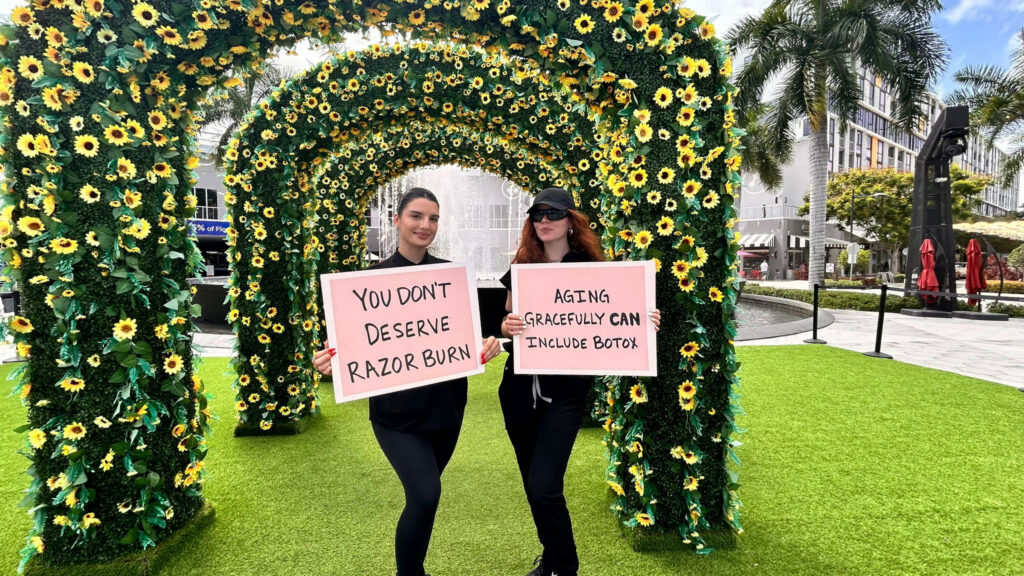
Most exhibitors think about booth promotion in terms of what happens inside the booth: the display, the demo, the giveaway, the staff presentation. These inside-the-booth elements matter. But the decision about whether to visit your booth at all is made outside the booth, in the first hour of the day, in the hotel corridor, at the shuttle stop, on the pedestrian approach to the venue entrance.
The Booth Visit Decision Window
Understanding when the booth visit decision happens is the key to effective exhibitor promotion. Most exhibitors assume this decision happens on the floor, when an attendee sees the booth and chooses to stop. For some attendees, that is accurate. They arrive without a specific plan and browse until something catches their eye.
But for the majority of professional convention attendees, especially at larger shows, the floor is a place to execute a plan, not to form one. Their plan forms before they arrive: over breakfast, in the lobby while waiting for colleagues, on the walk from the hotel to the entrance. This is the window when they decide which booths are worth their limited floor time.
Exhibitor promotion that operates in this window, in the hotel lobby, at the shuttle stop, on the sidewalk outside the entrance, intercepts the decision at the moment it is being made and inserts your booth into the plan. This is fundamentally different from trying to catch an attendee on the floor after their plan is already formed. By the time they reach your aisle, they have already decided which booths deserve their time and which ones they will walk past.
Our field crews deploy specifically in this pre-floor decision window. We coordinate ambassador timing to the morning departure flow from conference hotels, route LED trucks through the hotel corridor during peak arrival, and install stencils and posters the evening before opening day so the entire outdoor campaign is running from the first moment attendees step into the convention neighborhood.
Building an Outside-the-Hall Exhibitor Promotion Campaign
An outside-the-hall exhibitor promotion campaign operates in the public zones surrounding the convention venue: the hotel district, the pedestrian approach corridors, the transit and rideshare pickup zones, and the coffee and food areas along the route to the entrance. The tactical toolkit for this zone includes five core formats that we deploy in combination based on the venue geography, the show duration, and the campaign budget.
Brand Ambassador Teams at Hotel Zones and Entrance Routes
Brand ambassador teams positioned at conference hotel lobbies and convention entrance areas during morning arrival windows deliver direct booth invitations with a specific reason to visit and a take-away with the booth location printed clearly. Each ambassador is briefed on the conference audience profile, the client’s product and the qualifying criteria that identify a high-value first contact.
Our ambassador teams carry structured lead logs. At the end of each shift, we compile a report of total contacts, qualifying notes for warm leads, and any specific follow-up commitments made in the field. This documentation travels directly into the client’s lead capture process, so the outside-the-hall campaign generates both immediate booth traffic and documented warm leads for post-show follow-up.
LED Billboard Trucks During Arrival Windows
LED billboard trucks running circuits around the venue during arrival and departure windows deliver full-color, high-visibility displays that reach every pedestrian in the approach zone with your brand name and booth number. The truck route is planned around the conference hotel cluster and the primary pedestrian corridors, maximizing time in the highest-foot-traffic positions during the morning arrival rush.
LED truck deployments are documented with timestamped, geo-tagged photos from each position in the route. Post-campaign, clients receive a deployment report confirming where the truck ran and when, giving them verifiable proof of performance for every deployment day.
Product Sampling at High-Foot-Traffic Locations
For brands with physical products, putting the product in attendee hands before the hall opens is one of the strongest possible pre-floor exhibitor promotion moves. Sampling at coffee queues, breakfast zones, and high-foot-traffic locations on the primary pedestrian routes creates a direct product experience that bypasses the need for a booth visit to create a first impression.
A prospect who has already experienced your product before reaching the show floor arrives at your booth in a fundamentally different state than a cold walk-by. They have a reference point for the product, a question or reaction to the experience, and a reason for the conversation that makes the booth interaction more productive than a first encounter from scratch.
Wheatpasted Directional Posters
Wheatpasted directional posters on approved surfaces in the pedestrian corridor between hotels and the venue create persistent visual presence for the full show duration. A poster installed on the evening before opening day reinforces your booth name and location every time attendees walk the same route across all show days. We document every placement with pre- and post-installation photos and provide a placement report confirming locations and installation quality.
Sidewalk Stencils on Primary Approach Routes
Sidewalk stencils on primary approach routes pointing toward your booth are ground-level attention that is unavoidable on foot. Applied with water-soluble compounds at key pedestrian decision points, stencils create a directional trail from the hotel zone to your booth number. They are also frequently photographed by attendees and shared on social media, extending campaign reach beyond the direct foot traffic audience.
What Exhibitor Promotion Creative Should Communicate
The message carried by all exhibitor promotion materials needs to do one thing: give the attendee a specific reason to visit your booth that they cannot get anywhere else at the show, paired with a clear booth number so they can act on that reason when they get on the floor.
The specific reason is critical. “Visit us at booth 614” is not a reason to visit. “See the only live demo of [Product] at the show, booth 614” is a reason. “We are giving away [Specific Gift] to the first hundred visitors, booth 614” is a reason. Specificity creates intent. Generality creates forgettability.
All exhibitor promotion materials carry your brand name prominently, your booth number in large type, and the one compelling reason to visit. Information density reduces recall in the convention environment, where attendees are processing hundreds of brand messages per day. The message discipline that produces results is one specific claim, stated boldly, repeated consistently across all formats.
Inside-the-Booth Experience That Delivers on the Street Campaign Promise
The outside-the-hall campaign creates intent. The inside-the-booth experience has to deliver on that intent. If the street campaign promised an hourly demo, the demo runs every hour. If it promised a giveaway, the giveaway is available when the attendee arrives. If it set an expectation of energy and engagement, the booth staff reflects that expectation from open to close.
This consistency between the street promise and the booth experience is what turns exhibitor promotion into exhibitor results. Attendees who arrive with expectations and find them met become qualified leads with a strong positive first impression. Attendees who arrive with expectations and find them unmet leave disappointed and share that disappointment with colleagues.
We coordinate the outside-the-hall message with the booth experience plan during the campaign briefing process so that both are aligned before either launches. The street campaign brief and the booth team brief reference the same promise, the same offer, and the same reason-to-visit so that every attendee who enters the booth as a result of the outdoor campaign has the same experience we promised them.
Evening Exhibitor Promotion at Networking Events
Exhibitor promotion does not end when the floor closes. Evening networking events, sponsored dinners, and hotel gathering areas give exhibitors a second window to extend their presence beyond official show hours. Brand ambassadors at evening events can distribute promotional materials, invite attendees to visit the booth the following day, and create social brand moments around the exhibitor’s presence at the show.
Evening exhibitor promotion requires a different approach than morning arrival activation. The social register is different, and heavy-handed promotional approaches at evening events create the wrong impression. Our evening teams are trained for a light-touch presence: genuine conversation, a relevant leave-behind, and a specific invitation for the next morning rather than a hard pitch in a social setting.
Tracking the Impact of Exhibitor Promotion
We build measurement tools into every exhibitor promotion campaign. QR codes on street team handouts track scans and link to a unique landing page or booth-visit scheduler. Ambassadors log direct interactions by shift and zone. LED trucks carry a unique URL or QR code that tracks digital engagement generated by the outdoor campaign. Booth teams track badge scans by day and note when a visitor mentions the street campaign as a touchpoint.
Post-show, we provide a full campaign recap with field photos, interaction logs, estimated exposures by format, and any available conversion data from the client’s booth team. This recap is the starting point for the next show’s campaign planning and the basis for measuring ROI across the conference investment.
For clients with multi-show schedules, we maintain a campaign performance record across shows, building institutional knowledge about what works at each specific convention, venue, and audience type. Each show’s campaign is better than the last because it is built on documented performance data rather than assumptions.
Exhibitor Promotion for First-Time Convention Exhibitors
First-time exhibitors face a particular challenge: no brand recognition in the convention audience to build on. When existing exhibitors appear on the floor, some portion of the audience already knows them from previous shows and from their market presence. First-time exhibitors start from zero name recognition in that room.
Outside-the-hall exhibitor promotion is proportionally more valuable for first-time exhibitors than for established show regulars because it builds the name recognition that normally comes from years of exhibition in the span of a few show days. An attendee who has seen an exhibitor’s brand on three outdoor formats before reaching the floor treats that exhibitor as a known entity rather than an unknown one, regardless of how many previous shows the brand has attended.
For first-time exhibitors, we typically recommend a combination of pre-show meeting outreach and a single high-impact outdoor format rather than trying to execute the full suite of outside-the-hall tactics on a first-time budget. Pre-booked meetings guarantee qualified floor conversations. One high-impact outdoor tactic, typically an LED truck or hotel zone ambassador program, creates ambient brand recognition with the broader attendee population. Together, these two elements give a first-time exhibitor a stronger show than most veterans.
What is exhibitor promotion?
Exhibitor promotion covers all the tactics an exhibitor uses to attract attendees to their booth during a trade show. It includes both in-show experience design and outside-the-hall promotional activities that create awareness and intent before the floor opens.
What are the most effective exhibitor promotion tactics for driving booth traffic?
Outside the hall: brand ambassador teams at hotel zones, LED billboard trucks during arrival windows, product sampling, sidewalk stencils, and wheatpasted directional posters. Inside the hall: compelling booth design, live demos, targeted giveaways, and promotions that create urgency to visit.
How early do you need to start exhibitor promotion activities?
Pre-show promotion ideally starts six to eight weeks before the show. Outside-the-hall during-show activation planning should begin four to six weeks prior to allow time for site-approval planning, staffing, and creative production. Rush campaigns can be executed in as little as two weeks for simpler deployments.
Does exhibitor promotion work differently for small booths?
Street-level exhibitor promotion is proportionally more valuable for smaller booths. A small booth in a mid-floor position relies more heavily on pre-loaded attendee intent to drive traffic. Outside-the-hall promotion creates that intent regardless of booth size or position on the floor.
What makes exhibitor promotion fail?
Generic messaging, poor handoff materials, unbriefed street teams, and a disconnect between the promotion promise and the actual booth experience are the most common failure modes. The promise made outside the hall must match what the attendee finds when they arrive inside it.
Should exhibitor promotion focus on brand awareness or direct response?
For exhibitors, direct response is the goal: a specific booth visit with a specific action in mind. Outside-the-hall promotion should carry a direct response message with booth number, reason to visit, and a call to action. Brand awareness is a secondary benefit of the campaign, not its primary purpose.
Can AGM support exhibitor promotion at shows we exhibit at regularly?
Yes. Many of our clients are repeat exhibitors at specific annual shows and we build institutional knowledge about each venue and audience over time. Our campaigns improve each year as we learn the specific dynamics of each event and build on what the performance data from previous shows shows us.
Campaign Architect – American Guerrilla Marketing
Frequently Asked Questions
What is exhibitor promotion?
Exhibitor promotion covers all the tactics an exhibitor uses to attract attendees to their booth during a trade show. It includes both in-show experience design and outside-the-hall promotional activities that create awareness and intent before the floor opens.
What are the most effective exhibitor promotion tactics for driving booth traffic?
Outside the hall: brand ambassador teams at hotel zones, LED billboard trucks during arrival windows, product sampling, sidewalk stencils, and wheatpasted directional posters. Inside the hall: compelling booth design, live demos, targeted giveaways, and promotions that create urgency to visit.
How early do you need to start exhibitor promotion activities?
Pre-show promotion ideally starts six to eight weeks before the show. Outside-the-hall during-show activation planning should begin four to six weeks prior to allow time for site-approval planning, staffing, and creative production. Rush campaigns can be executed in as little as two weeks for simpler deployments.
Does exhibitor promotion work differently for small booths?
Street-level exhibitor promotion is proportionally more valuable for smaller booths. A small booth in a mid-floor position relies more heavily on pre-loaded attendee intent to drive traffic. Outside-the-hall promotion creates that intent regardless of booth size or position on the floor.
What makes exhibitor promotion fail?
Generic messaging, poor handoff materials, unbriefed street teams, and a disconnect between the promotion promise and the actual booth experience are the most common failure modes. The promise made outside the hall must match what the attendee finds when they arrive inside it.
Should exhibitor promotion focus on brand awareness or direct response?
For exhibitors, direct response is the goal: a specific booth visit with a specific action in mind. Outside-the-hall promotion should carry a direct response message with booth number, reason to visit, and a call to action. Brand awareness is a secondary benefit of the campaign, not its primary purpose.
Can AGM support exhibitor promotion at shows we exhibit at regularly?
Yes. Many of our clients are repeat exhibitors at specific annual shows and we build institutional knowledge about each venue and audience over time. Our campaigns improve each year as we learn the specific dynamics of each event and build on what the performance data from previous shows shows us.
How early should a brand start planning?
For most campaigns, the smart move is to start planning at least two to four weeks before the launch window so production, routing, staffing, and reporting are all lined up.
What makes one market perform better than another?
Market fit depends on audience density, neighborhood behavior, route efficiency, and whether the creative belongs in that setting. The busiest city is not always the best city.
Can AGM bundle this with other services?
Yes. AGM often combines this work with supporting formats so the campaign has stronger repetition and cleaner reporting across the whole run.
How does AGM quote pages like this?
We quote from official rate cards where they apply, then scope the remaining production, staffing, and routing details to the actual job.