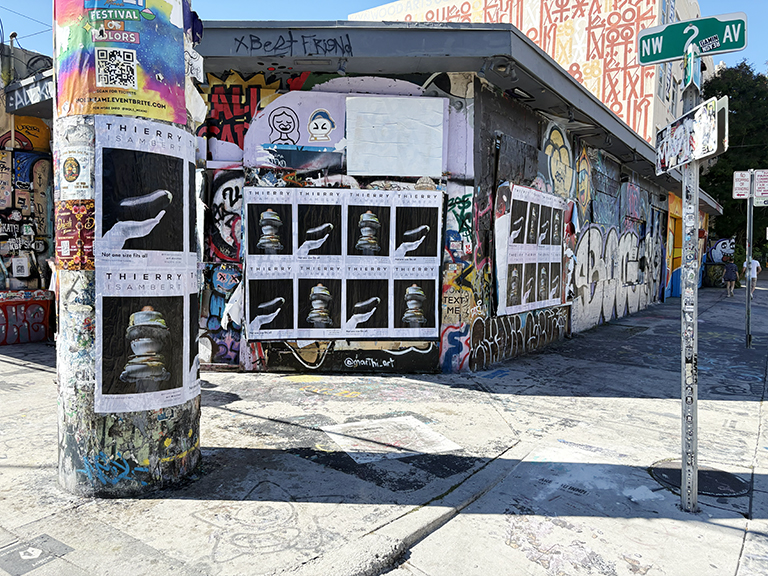
The street is one answer. AGM runs guerrilla marketing campaigns for DTC brands across consumer categories: food and beverage, personal care, fitness, apparel, and home goods. The strategy is the same regardless of category: put the brand in front of the target customer in their physical world at a frequency and scale that builds real recall.
Why DTC Brands Use Street Marketing
Physical advertising breaks through the digital fatigue that’s killing DTC ad performance. A person who has tuned out the 80th ad in their Instagram feed will stop and read a well-executed 24×36 poster on the wall of a coffee shop they walk past every morning. The medium is the message in this case: the fact that it’s physical, that it’s in their neighborhood, that it takes real investment to place it there, all of that communicates brand seriousness.
Street marketing also generates earned media. Fans and followers photograph well-placed campaigns and share them. That organic social amplification is real and measurable. We’ve had clients tell us a single Instagram story of one of their posters in Williamsburg generated more organic reach than a $5,000 boosted post.
DTC Brand Campaign Formats
Neighborhood saturation for DTC brands means picking the 2 to 3 neighborhoods where your target customer is most densely concentrated and owning those walls for 3 weeks. 150 to 300 posters per neighborhood. You want your brand on the route between their apartment and their coffee shop, their gym, and their weekend farmers market.
Product launch street runs pair an LED truck on launch day with a poster campaign that goes up 2 weeks before. The truck hits the neighborhoods on the day the product goes live. Fans who see it on the street feel the brand’s investment in the launch.
Pop-up and sampling street teams activate around your target neighborhood with product samples, QR codes, and brand representatives. For consumable DTC brands in particular, trial is the most efficient path to a first purchase.
Food and beverage, apparel, fitness, and personal care all have strong track records on the street. The format works best when the product is visually interesting enough to make a compelling poster. If your creative is compelling, the format amplifies it.
How DTC Street Campaigns Work
The process starts with customer location mapping. Where does your target consumer live, work, and go out? For most DTC brands, the answer is a specific set of urban neighborhoods rather than a broad metro area. A premium skincare brand targeting women 28 to 42 in New York does not need Times Square. It needs the Williamsburg streets between the L train and the coffee shops the target consumer walks past every morning. That precision is the campaign strategy.
Creative review follows. The DTC brand’s visual identity needs to translate to street scale. A sophisticated digital identity that looks great at 1200×628 pixels sometimes needs adjustment to work at 24×36 inches on a wall. We catch that before it goes to print so nothing is wasted in production.
Installation overnight. GPS-tagged photos document every placement. Full report within 24 hours. For DTC brands running their first street campaign, the placement report is often the most interesting marketing data they have collected in months: here is exactly where your brand appeared, at exactly these intersections, for exactly 18 days.
DTC Brands That Use Street Campaigns
Personal care and skincare brands have used street campaigns to build neighborhood-level awareness in the specific markets where they are building retail and e-commerce customer bases. a premium beauty brand ran campaigns in New York and Los Angeles to establish physical brand presence in the markets where their core e-commerce customer is concentrated. The street campaign creates awareness at the neighborhood level that supports the digital acquisition campaigns running simultaneously.
Food and beverage DTC brands use street posters to drive trial in the neighborhoods where the target consumer shops. A premium food brand launching in New York runs a poster campaign in the Brooklyn neighborhoods where the target consumer shops at Whole Foods and the specialty food stores. The poster campaign creates familiarity before the consumer encounters the product in retail and triggers the recognition that converts browsing into purchase.
Fitness and wellness brands use street campaigns to drive location awareness for new gyms, studios, or fitness retail locations. a fitness brand has used LED truck activations and poster campaigns to build awareness in target neighborhoods before and after location openings. The street campaign creates the neighborhood presence that social media advertising alone cannot create.
Apparel and footwear DTC brands use street posters to build the brand credibility that converts social media followers into buyers. The street presence in the right neighborhoods communicates that the brand is real, invested, and present in the consumer’s actual world. That signal cannot be replicated at the same cost through any digital advertising format.
Subscription and app-based DTC brands use street campaigns around product launches and subscriber drives.
DTC Campaigns in NYC, LA, and Chicago
Los Angeles campaigns for DTC brands concentrate on Silver Lake, the Fairfax corridor, and the Westside. Silver Lake’s Sunset Blvd corridor reaches the creative class consumer who sets trends and drives word-of-mouth for DTC brands. The Fairfax area reaches the fashion and lifestyle consumer who shops brand-forward and influences the broader LA market. The Westside adds the affluent wellness and premium consumer demographic.
Chicago DTC campaigns anchor on Wicker Park and Logan Square for the 25-38 creative professional demographic. These neighborhoods carry the highest DTC purchase intent in the Chicago market: residents here are early adopters, brand-aware online shoppers who will search for a brand they see on the street and convert through e-commerce within days of initial exposure.
Ready to Run Your Campaign?
Call us or email us. We’ll tell you exactly what we can do in your market and what it costs.
Frequently Asked Questions
How does street marketing complement our existing digital campaigns?
It builds the brand awareness layer that makes digital retargeting more efficient. When someone sees your brand on a wall on Monday and then gets retargeted on Instagram Thursday, the Thursday conversion rate is higher. The street impression primes the digital performance.
Can street marketing drive direct e-commerce traffic?
Yes, with QR codes on the creative. We’ve run campaigns with QR-integrated posters that drove direct page visits. The conversion rate from street QR scans is lower than from intent-based digital, but the awareness and brand credibility value is additive.
How does a DTC brand measure street campaign results?
Track brand search lift in campaign markets during the campaign window. Track e-commerce conversion changes in ZIP codes where campaigns ran. Track social media organic mentions referencing the poster campaign. Track direct traffic spikes from mobile devices in campaign neighborhoods. Together these signals build a clear picture of street campaign impact without last-click attribution.
What poster creative works best for DTC brands?
Simple, visually arresting creative. One strong image, one clear brand mark, and one short message or product name. Street posters get 1 to 3 seconds of attention from a moving pedestrian. The creative has to communicate in that window. Busy DTC creative that works on a landing page often fails on a street poster at the scale and viewing distance of the street.
How does street marketing complement digital advertising?
Street marketing creates the brand impression in the physical world that digital advertising assumes already exists. A consumer who has seen your poster three times on their daily walk to work is more likely to click your Instagram ad and convert than a cold prospect seeing the ad for the first time. The street campaign raises the floor of the entire digital funnel.
Can small DTC brands afford street campaigns?
Yes. A 150-poster campaign in 2 neighborhoods starts at $1,800. That creates a real presence in the exact neighborhoods where your target consumer lives. For DTC brands with tight marketing budgets, the neighborhood saturation approach often delivers better qualified impressions per dollar than broad digital advertising at current CPM rates.
How often should DTC brands refresh their street campaigns?
Most placements hold for 2 to 3 weeks. For brands running sustained neighborhood presence programs, refreshing the campaign every 3 to 4 weeks maintains the frequency that drives recall. Some DTC brands run rolling monthly poster campaigns in their core neighborhoods as a permanent street presence strategy.