
July 23, 2026
Convention Marketing Agency: What Happens Outside the Convention Center Walls
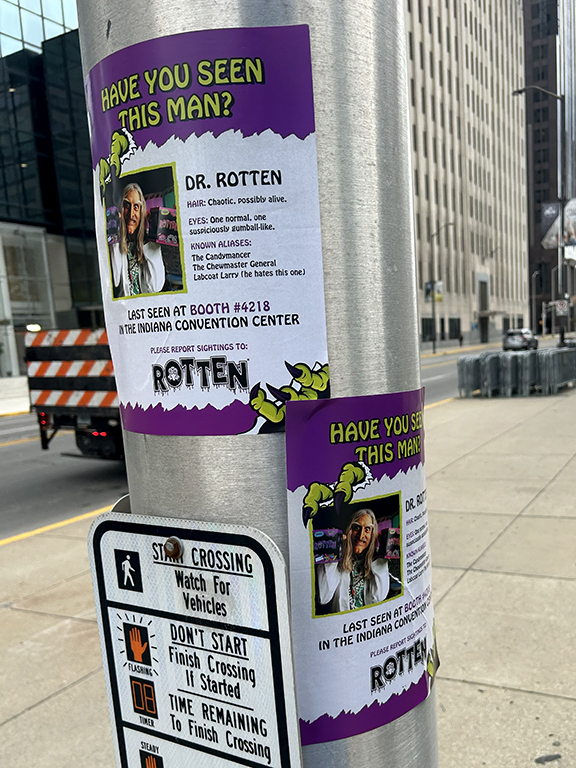
There is a version of convention marketing that most agencies sell, and then there is what actually moves the needle in the field. The version most agencies sell involves booth design, pre-show email campaigns, and badge scanning technology. Those are legitimate tools. But they all operate on the assumption that your brand campaign begins and ends inside the convention hall, that the only relevant marketing surface is the square footage you paid the venue for.
That assumption is wrong, and it costs exhibitors significant opportunity at every show they attend.
The reality is that the most valuable marketing real estate at any convention is not on the show floor. It is in the hotel corridors where attendees grab coffee at 7 a.m. It is at the shuttle stop where they wait in a small group with nothing to do for eight minutes. It is on the sidewalk between the Marriott and the convention center entrance, where every single attendee walks past your brand’s territory twice a day if you have claimed it. It is at the restaurant strip two blocks from the venue where the real relationship-building happens over dinner after the floor closes.
At American Guerrilla Marketing, we are the convention marketing agency that activates that territory. This piece is a detailed look at what convention marketing outside the hall actually looks like, the tactics, the locations, and the specific geography of the four major US convention markets where we do most of our field work.
The Anatomy of a Convention Attendee’s Day
To understand where convention marketing outside the hall creates value, you have to understand how a convention attendee actually moves through the day. We have been in these environments enough to map it with some confidence.
The day starts in a hotel room, typically in a property within two miles of the convention center. The attendee gets ready, grabs breakfast, either in the hotel restaurant, a lobby coffee setup, or a quick stop at a grab-and-go on the way, and makes their way to the convention center. That morning transit moment is the first high-value marketing window: a person who is mentally preparing for a day of industry interaction, already in a professional mindset, physically moving through a defined geography.
They arrive at the convention center, badge in, and spend the morning on the floor. Mid-morning there is often a break, attendees stream out of sessions, head to the main lobby area, stop at coffee stations. That is another window. Lunch is typically a movement event, attendees leave the hall for restaurants, food courts, or hotel dining, often in groups of two or three. That transit and dining window is extended and relatively relaxed.
The afternoon mirrors the morning with a second floor session. Late afternoon and evening are the highest-value social window of the convention day: cocktail hours, brand-sponsored events, networking dinners, after-parties. Attendees migrate from the convention hall through hotel lobbies, along restaurant corridors, and into event spaces. The evening movement patterns are less rushed and more social, the audience is more receptive than at any other point in the convention day.
Convention marketing outside the hall is about owning each of these movement windows with presence, materials, and conversations that the show floor environment cannot provide.
Field note: The most receptive moment of the convention day is the 15-minute window right after attendees exit the hall in the evening. They have had all the stimulation of the floor, they are headed somewhere more relaxed, and they are mentally processing what they saw and heard. A brand ambassador or a mobile billboard in their path at that moment lands with unusual clarity.
Convention Marketing Outside the Hall: The Core Tactics
Convention Street Teams
A convention street team is a coordinated group of brand ambassadors deployed at specific points outside the convention center with clear objectives and briefed messaging. Street teams at conventions differ from general event street teams in one important way: the audience is known, professional, and purpose-driven. These are not general consumers stumbling past a brand table. These are industry professionals attending a specific event for specific reasons. That means the engagement approach has to match, knowledgeable, confident, and relevant to the show context.
We brief every convention street team on the show they are working. What industry is it? What is the primary audience, buyers, executives, technical staff, media? What problem does the client’s brand solve for that audience? What is the single most important thing we want attendees to know or do? A well-briefed street team operating from that foundation can have genuine conversations that drive booth traffic and create real recall. A generic hand-off of materials without context just adds to the badge bag junk pile.
Convention Sampling
Product sampling outside a convention center is one of the highest-performing tactics in our convention marketing toolkit, particularly for consumer packaged goods, food and beverage brands, and tech accessories. Convention attendees are physically tired from standing and walking all day. A relevant sample, a functional beverage at the end of the afternoon, a snack at the midday break, a useful branded item at the shuttle stop, creates a tangible, positive brand association that flyer distribution alone cannot achieve.
The placement matters enormously. Sampling at the exact moment when the product is most relevant, an energy drink at the morning entry push, a packaged snack at the post-lunch energy dip, a recovery supplement at the end of a long day, aligns the product with a real felt need. Convention attendees are in a heightened state of physical and cognitive engagement that makes those product moments resonate more than they would in a normal retail sampling context.
Convention Mobile Billboard Advertising
Mobile billboard trucks, both static large-format boards and LED screen vehicles, are one of the most flexible tools in the convention marketing arsenal because they go where attendees are, rather than waiting for attendees to come to them. A static billboard on a highway or a hotel property faces whatever traffic happens past it. A mobile billboard is a directed asset that we route through the convention district based on our knowledge of where the audience is moving and when.
For conventions, we build mobile billboard routes around the specific geography of each venue and hotel cluster. Morning routes cover the hotel approach corridors. Midday routes loop through the lunch zones. Evening routes cover the cocktail hour and dinner movement patterns. The result is a brand presence that appears to attendees multiple times per day across different physical contexts, a frequency effect that conventional static placements cannot build in a two-to-four-day show window.
Convention Wayfinding and Lead Generation
In dense convention environments, directional marketing serves a dual purpose. A brand ambassador pointing attendees toward a specific hall entrance, or a branded sign near a transit hub directing people toward a brand event, performs both a service function (genuine help to someone navigating a large campus) and a brand function (your name associated with that helpful guidance). We use this approach to drive specific traffic, to a booth-adjacent event, a sponsored session, a product demonstration, at the moments when attendees are navigating the convention geography.
Convention Marketing in Las Vegas: The LVCC Neighborhood
The Las Vegas Convention Center campus spans the Paradise Road and Convention Center Drive corridor with roughly 4.6 million square feet of total space. The surrounding hotel geography is compact and dense: the Westgate Las Vegas Resort sits directly across Convention Center Drive, the Renaissance and Marriott are within a short walk on Convention Center Drive, and the Hilton Grand Vacations Club is across Paradise Road.
For Strip-based shows like CES, where attendees are distributed across The Venetian, Wynn, Encore, Caesars, and the MGM Grand, the convention marketing geography expands to cover the full Strip corridor. Las Vegas Boulevard between Tropicana and Sahara, the core convention hotel strip, is where convention marketing presence multiplies the most during major shows. Every major hotel lobby on the Strip becomes a deployment point. The rideshare pickup and drop-off zones at these properties, typically concentrated on side streets one block off Las Vegas Boulevard, are high-density five-to-ten-minute wait environments.
The Venetian/Palazzo Convention Approach
The Venetian Expo, part of The Venetian Resort complex on Las Vegas Boulevard South, handles its own convention events and also shares significant attendee overlap with LVCC shows. The internal corridors running from the main casino floor through the Expo halls are some of the most traveled convention corridors in the world during shows like InfoComm, Money20/20, and Global Gaming Expo. Brand ambassador placements at the Sands Avenue entry point and along the casino-to-convention transition corridors reach a highly concentrated professional audience.
Shuttle Stop Marketing Along Convention Center Drive
The hotel shuttle network serving the LVCC runs primarily along Convention Center Drive. Shuttle stops at the Westgate, the Marriott, and the Hilton are consistent morning and evening concentration points, three to eight minutes of standing, waiting, with minimal distraction. Brand ambassadors at these stops, timed to the pre-show window (7:00 to 9:00 a.m.) and the post-show return window (5:00 to 7:30 p.m.), reach the highest density of qualified convention attendees at their most idle and receptive moments.
Convention Marketing in New York: The Javits District
The Jacob K. Javits Convention Center occupies a ten-block stretch along the Hudson River from 34th to 40th Streets on the far west side of Midtown Manhattan. The convention district here has a specific character that shapes every marketing decision we make: it is geographically isolated from the main hotel cluster, connected primarily by subway and rideshare, and surrounded by neighborhoods that are rapidly developing but not yet the dense commercial corridor that the convention’s foot traffic deserves.
The 34th Street Approach: Penn Station to 11th Avenue
The primary pedestrian approach from Midtown hotels and Penn Station follows West 34th Street westward. This 12-to-15-minute walk from 7th or 8th Avenue to the Javits entrance on 11th Avenue passes through the Garment District and along a transitional residential-commercial stretch. Brand ambassadors at the 9th and 10th Avenue intersections intercept the full pedestrian convention flow at mid-route, a point where the walk is familiar and attention is available. This is one of the most predictable and reliable convention approach corridors in any US market.
The Hudson Yards Hotel Circuit
The Marriott at Hudson Yards (on West 33rd Street), The Pendry Manhattan West (on Ninth Avenue), and the newer properties along the Hudson Yards development corridor are the primary convention hotels for Javits-adjacent shows. Morning lobby deployments at these properties reach the full convention-going audience before the floor opens. The Hotel Pennsylvania on 7th Avenue, though across town, remains a major Javits convention hotel due to its size and proximity to Penn Station transit connections, another high-value lobby deployment point.
Post-Show Zones: 9th and 10th Avenue Restaurant Strips
The restaurant concentration along 9th and 10th Avenues in the West 30s and 40s. Estiatorio Milos on 55th, the dense block of accessible dining options on 9th Avenue from 33rd to 42nd Streets, is where Javits convention attendees migrate in the evening. Evening mobile billboard routes through these corridors, timed to the 5:30 to 8:00 p.m. dinner movement window, reach the full convention audience in its most social and receptive daily moment.
Convention Marketing in Chicago: The McCormick Place Approach
McCormick Place sits at 2301 South Martin Luther King Drive on Chicago‘s lakefront, connected to the downtown Loop hotel district by a three-mile cab, rideshare, or CTA ride. That geographic gap shapes convention marketing strategy in Chicago more than any other factor: the convention geography here is split between the convention campus itself and the Loop hotel base, with the transit and rideshare corridor connecting them.
The CTA Green Line Corridor
The Cermak-McCormick Place Green Line station is the primary transit connection for convention attendees not using a rideshare or hotel shuttle. The approach walk from the station to the main convention center entrance, roughly five to eight minutes along the campus approach path, passes through a defined pedestrian corridor that is otherwise sparse of commercial activity. Brand ambassador teams at this corridor have unusually little competition for attention: the walk is purposeful, the audience is focused, and there is nothing else competing for their attention on that approach.
Connected Convention Hotels: Hyatt Regency and Marriott Marquis
The Hyatt Regency McCormick Place is the only hotel physically connected to the convention center by an enclosed sky bridge. The Marriott Marquis Chicago sits directly adjacent at 2121 South Prairie Avenue. These two properties are the highest-value convention hotel lobby deployment points in the Chicago market, every attendee staying there walks through the lobby multiple times per day, and the lobby spaces are large, open, and naturally suited to brand ambassador positioning.
The Loop Hotel District
Attendees staying in the Loop cluster. Marriott on Michigan Avenue, Sheraton Grand Chicago, Intercontinental Chicago on North Michigan Avenue, the Hyatt Regency Chicago on East Wacker, arrive at McCormick by taxi, rideshare, or the MCCC shuttle. Morning rideshare pickup zones at these Loop properties are consistent deployment points for convention materials distribution. A brand ambassador at the taxi/rideshare staging area of a major Loop hotel during the 7:30 to 9:00 a.m. convention morning window reaches a highly concentrated, highly qualified audience.
Convention Marketing in Orlando: The I-Drive Corridor
The Orange County Convention Center is one of the three largest convention venues in the country. Its twin-campus structure on International Drive in Orlando’s tourist-and-convention corridor means the convention marketing geography is both predictable (everything is on or near I-Drive) and sprawling (I-Drive runs for miles and the hotels are distributed along its length).
The Core Convention Hotel Strip: Sand Lake to Universal
The highest concentration of convention-adjacent hotels sits on International Drive between Sand Lake Road (SR 482) and the Universal Boulevard intersection. The Rosen Centre at 9840 International Drive, the Hyatt Regency Orlando at 9801 International Drive, the Hilton Orlando at 6001 Destination Parkway, and the Wyndham Grand Orlando at 8001 International Drive are all within this corridor. Brand ambassador deployments along the I-Drive sidewalk between these properties and the OCCC entrance reach the highest-density section of the convention hotel population.
OCCC Entrance Plaza Activations
The Orange County Convention Center’s West Building entry plaza on Destination Parkway and the North/South Building entries on International Drive are large outdoor spaces that handle enormous pedestrian flow during major shows like the International Builders Show, HIMSS, and Orange County’s rotating roster of major conventions. Entrance plaza brand ambassador deployments, with product samples, branded materials, and directed engagement, intercept the entire attendee population at the natural chokepoint of the venue.
The I-Drive Tourist Zone: Evening Convention Marketing
International Drive’s restaurant and entertainment district, from the ICON Park complex at 8375 International Drive to the restaurant cluster around the Pointe Orlando retail center at 9101 International Drive, is where Orlando convention attendees go after hours. The relatively pedestrian-friendly stretch of I-Drive along this zone, including the outdoor seating areas and plaza approaches to the main dining and entertainment venues, is a natural evening deployment zone for brand ambassadors and mobile billboard routes targeting the convention dinner-and-drinks crowd.
How We Build a Convention Marketing Campaign
Every convention marketing campaign we build starts with a geography mapping exercise. We identify the convention center, the primary attendee hotels, the transit and rideshare connections between them, the lunch zones, and the evening entertainment and dining destinations. From that map, we identify the highest-value deployment points for each tactic and build a day-by-day activation calendar around the show schedule.
The key variables we are solving for in this planning process:
- Audience concentration, where are the most attendees, per square block, at each hour of the day?
- Audience receptivity, when are attendees most open to brand engagement? (Morning transit is high; overstimulated floor hours are lower; evening social hours are highest)
- Competition for attention, how much other brand activity is in the geography? (Most convention districts are surprisingly sparse outside the hall)
- Access and logistics, what deployment is actually feasible at each location, and how do we coordinate the team across multiple points simultaneously?
The result is a deployment plan that treats the convention district as a map of opportunity rather than a blank space outside the hall. That shift in framing is what separates a convention marketing agency from a booth design vendor.
What Convention Marketing Generates: Lead Generation and Brand Recall
Convention marketing outside the hall does two things that the booth alone cannot do. First, it generates direct lead-generation touchpoints, conversations initiated by brand ambassadors at hotel lobbies and transit points that identify interested buyers and direct them to the booth. Second, it builds brand recall through frequency, the attendee who sees your brand at the shuttle stop, at the hotel lobby, on a mobile billboard at the lunch hour, and at the convention entrance has been exposed four times before they ever reach your booth. That frequency creates a recognition advantage that translates into warmer booth conversations and higher conversion rates.
The combination of these two effects, direct lead generation plus brand recall from frequency, is what makes convention street marketing one of the highest-ROI additions to a trade show budget. The booth space and travel costs are already sunk. The incremental investment in outside-the-hall activation multiplies the return on that base investment by reaching the same audience in more contexts, more times, and more receptively than the booth floor alone allows.
Field note: In our experience, brands that run consistent convention district activations across multiple shows in the same market build a cumulative recognition effect. By the third or fourth convention where our team is in the same geography, attendees recognize the brand presence as part of the convention experience itself. That earned familiarity is worth more than any individual campaign impression.
Convention Marketing Services from AGM
Our convention marketing services span the full range of outside-the-hall tactics:
- Convention brand ambassadors, trained teams deployed at hotel lobbies, shuttle stops, transit hubs, and convention entrance points
- Convention street teams, high-energy field teams for material distribution, event promotion, and directed attendee engagement
- Convention sampling, product sampling activations at approach points and high-traffic outdoor areas near the venue
- Convention mobile billboard advertising. LED and static trucks routed through the convention district on a schedule aligned with attendee movement
- Convention wayfinding, branded directional elements that guide attendees toward your booth, event, or demonstration while carrying your brand message
- Convention lead generation, coordinated field programs designed to identify, engage, and direct qualified attendees to your booth
Frequently Asked Questions
What does a convention marketing agency do outside the convention center?
Outside the convention center, a convention marketing agency like AGM deploys brand ambassadors at hotel lobbies, shuttle stops, and transit hubs; runs mobile billboard routes through the convention district; manages product sampling at high-traffic approach points; and places poster campaigns throughout the convention neighborhood. The goal is to reach attendees in every environment they move through, not just on the show floor.
How is convention marketing different from regular event marketing?
Convention marketing targets a professional audience that is concentrated in a defined geography for a specific purpose, industry business. The engagement approach, material quality, and briefing depth required for convention work is higher than for general consumer events. Convention attendees are sophisticated buyers and executives who respond to relevant, knowledgeable brand interactions, not generic promotions.
Which convention cities do you have the most field experience in?
Las Vegas (LVCC and The Venetian Expo), New York City (Javits Center), Chicago (McCormick Place), and Orlando (Orange County Convention Center) are our four primary convention markets. We have run activations in all four across multiple show cycles and have detailed on-the-ground knowledge of each convention district’s geography and attendee movement patterns.
How do you handle hotel lobby brand ambassador deployments?
We identify the primary attendee hotels for each show, then coordinate with those properties on appropriate positioning for our ambassador team. Ambassadors are deployed during the highest-traffic windows, morning pre-show and evening post-show, in lobby zones that are accessible to guests and appropriate for brand engagement. We handle all coordination; the client provides the brand briefing and materials.
Can convention street marketing actually drive measurable booth traffic?
Yes. Brand ambassadors outside the convention hall who engage attendees, hand materials with clear booth location information, and create relevant, memorable brand interactions drive direct booth traffic. We coordinate with clients’ booth teams to track referred traffic and assess conversion from street-to-floor engagements. The combination of increased brand recall and direct direction to the booth generates both warm walk-in traffic and more conversational booth visits.
How far in advance do you need to know about our convention schedule?
Four to six weeks is the ideal lead time for most convention campaigns. This allows for show research, deployment planning, team staffing, and material logistics coordination. For major shows in primary markets where we have existing operational relationships, we can sometimes work with shorter timelines, contact us early and we will tell you what is achievable.
Do you work with companies that are not exhibiting at the show?
Yes. Convention marketing outside the hall does not require an exhibitor badge or show floor presence. Brands that want to reach a convention audience without the cost of a booth can deploy street teams, sampling, and mobile billboard campaigns in the convention district to intercept and engage attendees before and after show hours. This is an increasingly common approach for brands that want convention audience access without exhibitor investment.
What materials work best for convention brand ambassador distribution?
High-quality, compact materials with a clear call-to-action perform best. A well-designed single-page piece with booth location, a key message, and QR code link to more information is the workhorse format. Branded items with genuine utility, a portable charger, a quality pen, a travel-sized useful product, are kept and create repeated brand exposure. We advise on materials during the briefing process based on show context, audience profile, and campaign objectives.
Can you handle product sampling for food and beverage brands at conventions?
Yes. We manage the full logistics of convention sampling programs including product transport, cold storage if needed, team deployment, branded packaging, and placement at high-traffic approach points outside the convention center. Convention sampling for food and beverage brands is a strong tactic, particularly at shows where a well-timed sample, an energy drink in the morning, a snack at the afternoon break, aligns with a genuine felt need in the attendee population.

Ready to Run Your Campaign?
Call us or email us. We’ll tell you exactly what we can do in your market and what it costs.
Related Services
Explore similar advertising solutions offered by American Guerrilla Marketing.
American Guerrilla Marketing — Los Angeles
Street-level campaigns in Los Angeles and nationwide. Wheatpasting, LED trucks, street teams, and more.
(646) 776-2770
Related Articles
-
Street Poster Advertising Ottawa: A Complete Campaign Guide
September 17, 2026
-
Activation Marketing: How Brands Win at Street Level
September 13, 2026
-
Experiential Marketing Firms Chicago | American Guerrilla Marketing
September 12, 2026
-
Pop Up Experiential
September 12, 2026
-
Mobile Pop Up
September 12, 2026