Running a college student marketing campaign in Virginia Brand Reach means working through Northern Virginia, Richmond, and Virginia Beach, each with its own audience, traffic patterns, and local rules. American Guerrilla Marketing has executed campaigns across the state, and we know which markets are worth the activation spend and which ones require a different approach. We don’t guess. We’ve been on the ground.
Virginia Brand Reach is a diverse market ranging from dense DC suburbs to military communities on the coast. For college student marketing, that means campaigns need to be customized to the specific city or region you’re targeting, not applied uniformly across the state. Whether you’re launching in a major metro or testing a mid-sized market, the strategy changes. We can help you decide where your budget goes furthest.
AGM has run college student marketing activations in multiple markets across Virginia Brand Reach. We handle everything from permit research and location scouting to execution and post-campaign reporting. If you’re looking to establish a real street presence in Virginia Brand Reach, reach out. We’ll tell you exactly what’s possible and what’s worth doing.
College Marketing strategies
When brands set their sights on the hub of activity that surrounds major Virginia universities, they’re tapping into a dynamic audience where influence and concentration align in ways rarely found elsewhere. Student Marketing at hotspots like these means standing at the crossroads of youthful energy, emerging trends, and purchasing power that genuinely sways wider markets. It’s not just an opportunity; it’s an edge.
The beauty of college marketing often lies outside the university gates, beyond the need for labyrinthine approval processes or rigid campus protocols. Guerrilla-style activations, whether up-tempo product drops or striking visuals, can occupy public sidewalks, neighboring entertainment zones, or the open spaces where students flow in and out daily. These tactics sidestep university red tape but land right in the buzz of student life.
Why does this work so well? Students are primed to notice what’s fresh, bold, and omnipresent. They’re open to what disrupts the ordinary path between class and coffee, library and nightlife. Well-executed campaigns here are nimble, cost-efficient, and orchestrated at the very pulse of young adult culture.
Few markets allow for this blend of creative freedom and close proximity to such a tight-knit, trendsetting crowd. No wonder brand affinity built on the edge of campus often travels well beyond it.
Student Advertising campaigns
There is more science to student advertising campaigns than meets the eye. Success comes from understanding student rhythms, the physical geography of their daily routines, and how to intersect those in a way that feels native, never forced. Here’s a breakdown of the foundational techniques that amplify success:
Wheat pasting
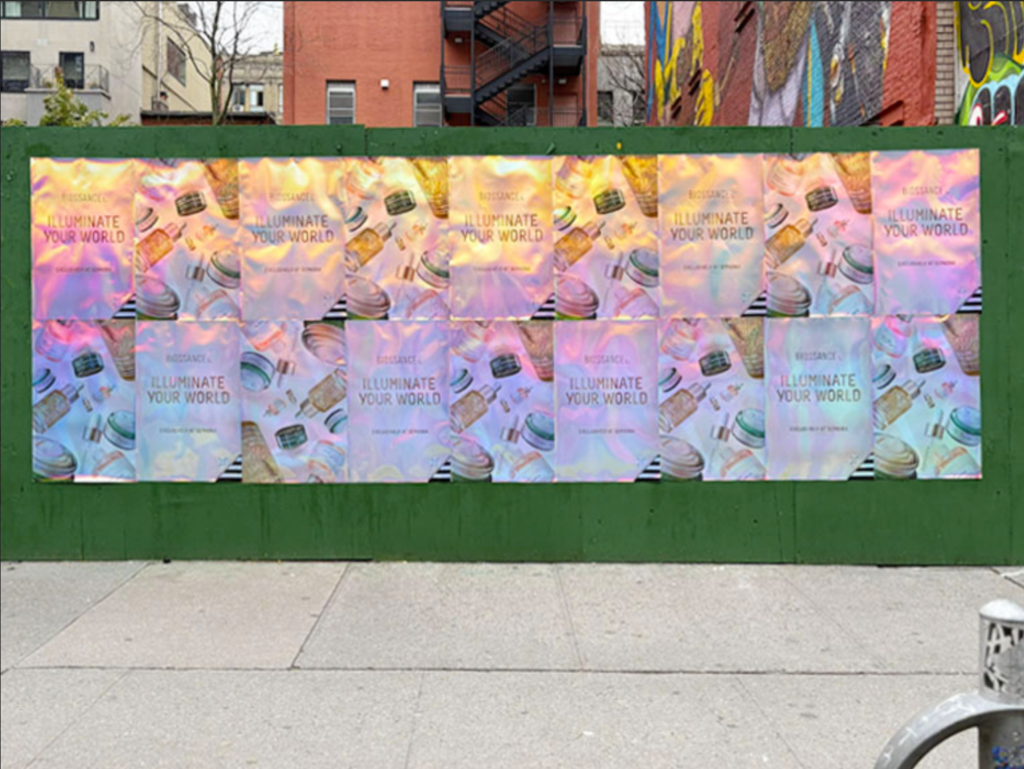
Think of posters placed not merely as advertisements, but as cultural markers. When clustered along nightlife arteries, apartment corridors, and transit stop shelters, wheat pastings create an urban tapestry seen day and night. Whether announcing an event, launching a brand, or simply staying top-of-mind, these visuals work best where students pause, even if only for a few seconds.
Projections
Few things command attention like the illuminated visuals that flicker on building façades after dark. Projecting dynamic graphics or short interactive messages onto nearby gyms, music venues, or exterior apartment walls means occupying space students can’t miss on their evening walks. Projection activations thrive during homecoming week, finals season, or any window when students are out in force.
Sidewalk Stencils
Catch their eyes as they look down, phone in hand. Colorful, weather-proof stencils positioned near crosswalks, café lines, or where bike commuters slow their pedal, become part of the path itself. QR codes can direct students to discounts, contests, or signup funnels. Stencils work as both utility and curiosity.
Billboards: Digital vs. Static
What’s the tradeoff? Digital billboards offer the flexibility to push multiple event promos or time-limited offers in one location across any given week. They’re compelling for countdowns, product launches, or rotating visuals that play into student FOMO. Static billboards build familiarity. Long-term campaigns positioned near highways or arterial roads leading to campus reinforce a brand consistently, acting as visual anchors for months.
Sampling
Allowing students to try before they buy, or better yet, try while they’re on the move, builds goodwill and encourages immediate action. Distribute snack samples, tech gadgets, or branded gear just outside apartment complexes or at the edges of campus where major foot traffic converges. Make it a moment, not just a transaction.
Housing Infiltration
Here’s where creativity can genuinely shine. Discreet but high-impact tactics like branded pizza box toppers, clever door hangers, or “all-nighter” study kits (think energy drinks, snacks, notepads) distributed in dorm-adjacent residential areas drive home the point that a brand understands student needs. These touches linger, forging personal connections.
Digital Marketing Layers
Physical activations are powerful, but digital amplification turns fleeting interactions into lasting engagement. Run TikTok, Instagram, or Snapchat ads hyper-targeted via geofencing to zip codes or walking zones around campus. Retarget students who’ve engaged with your on-the-ground efforts by inviting them to open up exclusive content or deals online.
Table: Ground Techniques Comparison
College Advertising for student engagement
Virginia’s largest campuses see tens of thousands of students flow through public areas every day. Each university has its quirks, hotspots, and rhythms. Successful college advertising for student engagement gets specific: knowing not just where students are, but why they’re there and how best to connect. Here’s how brands can fashion campaigns customized to Virginia’s flagship campuses, each wired with its unique pulse.
University of Virginia (Charlottesville)
High-traffic spots: The iconic Corner shopping district, Wertland Street housing corridors, and the public sidewalks leading north toward Rugby Road.
Virginia Tech (Blacksburg)
Key routes and gathering places: Downtown Main Street, the cluster of eateries off Turner Street, and the transit loops around Prices Fork Road.
Virginia Commonwealth University (Richmond)
Fast-moving, urban, and arts-driven, VCU’s student body weaves through Broad Street, Grace Street, and the BRT transit corridor all hours.
George Mason University (Fairfax)
A commuter-heavy but active campus with strong student housing clusters, much of the daily flow radiates out from University Drive.
Old Dominion University (Norfolk)
The edge of campus meets lively neighborhoods and the waterside Ghent district. Constant motion, both day and night.
With each of these campuses, the goal remains the same: make the interaction personal, generate buzz, and use every outstretched hand or curious glance to collect touchpoints, whether it’s app downloads, hashtag usage, or event registrations.
Making campaigns specific to actual student geography and rhythm means what you show and where you show it always feels like it belongs, making your message harder to ignore and easier to make part of campus culture.
One of the quiet powers of Student Marketing at major Virginia universities is this ability to create campaigns that both blend into the student routine and shine as something new, a way to stitch your message into the everyday fabric while still commanding attention. When those on-the-ground moments synchronize with digital retargeting and social media immersion, brands manage to build a bond that keeps students coming back for more. Every campaign, crafted by location, message, and activation type, should echo the voice and needs of each campus, building loyalty that endures beyond graduation day.
Key Takeaways
Understanding College Student Marketing in Virginia: Brand Reach is essential for any modern marketing professional. By applying the strategies and techniques outlined in this guide, you can significantly enhance your marketing efforts and achieve better results for your brand or clients.
Implementation Best Practices
When implementing the strategies discussed in this article, it’s important to approach execution with both creativity and discipline. Here are some best practices that have proven effective for brands of all sizes:
Start with a Clear Objective: Before launching any marketing initiative, define what success looks like. Whether your goal is brand awareness, lead generation, or direct sales, having a clear objective will guide every decision you make throughout the campaign.
Know Your Budget and Timeline: Effective marketing requires resources, both financial and human. Establish a realistic budget and timeline before you begin, and build in contingencies for unexpected challenges or opportunities that may arise.
Test and Iterate: The best marketers treat every campaign as a learning opportunity. Start with smaller tests to validate your approach before scaling up. Use the data you collect to refine your strategy and improve your results over time.
Build Cross-Channel Consistency: In today’s multi-channel world, consumers interact with brands across many touchpoints. Ensure your messaging and visual identity remain consistent whether customers encounter you online, in print, or in person.
Use Community: Some of the most powerful marketing happens organically through community building. Invest in creating spaces where your customers can connect with each other and with your brand, and you’ll build loyalty that no ad budget can buy.
Frequently Asked Questions
How much does a guerrilla marketing campaign cost?
Campaigns start from $3,500 depending on service, market, and scale. Contact us for an exact quote.
Does AGM operate nationwide?
Yes. AGM executes campaigns in all 50 U.S. states with dedicated crews in NYC, LA, Miami, Chicago, Las Vegas, Orlando, and Nashville.
What documentation does AGM provide?
Every campaign includes GPS-tagged photo documentation, timestamped placement records, and a full report delivered within 24 hours.
What makes guerrilla marketing different from traditional advertising?
Guerrilla marketing relies on unconventional, creative tactics that generate buzz and word-of-mouth rather than paid media placements. It typically requires less budget but more creativity and strategic thinking, making it particularly effective for brands looking to make a big impact with limited resources.
How do I measure the success of my marketing campaigns?
Success metrics vary depending on your objectives. Common KPIs include reach and impressions, engagement rates, website traffic, lead generation numbers, conversion rates, and ultimately, return on investment (ROI). Set your metrics before you launch so you can accurately evaluate your results.
How long does it take to see results from marketing campaigns?
Results vary significantly based on the type of campaign, your industry, and your objectives. Some tactics like paid advertising can generate immediate results, while others like content marketing and SEO may take months to show significant impact. Generally, it’s best to evaluate campaigns over a 3-6 month period to account for seasonal variations and learning curves.
What role does creativity play in modern marketing?
Creativity is more important than ever in today’s saturated media space. With consumers exposed to thousands of marketing messages daily, only the most creative and relevant content breaks through. Investing in creative talent and processes is one of the highest-use things a brand can do.
How can small businesses compete with larger companies in marketing?
Small businesses have natural advantages in marketing: agility, authenticity, and deep community connections. Focus on your unique story, build genuine relationships with customers, and use guerrilla tactics that let you punch above your weight. A creative campaign executed well can outperform a big-budget effort that lacks soul.
Conclusion
The strategies and insights covered in this article represent proven approaches that have helped brands across industries achieve their marketing goals. Whether you’re just starting out or looking to take your marketing to the next level, the key is to stay committed to learning, testing, and refining your approach.
At American Guerrilla Marketing, we specialize in helping brands cut through the noise with creative, impactful campaigns that deliver real results. From street-level activations to digital campaigns, our team brings the expertise and creativity needed to make your brand unforgettable.
Ready to take your marketing to the next level? Contact our team today to learn how we can help you create campaigns that truly stand out in any market.