Miami’s outdoor advertising market is unlike any other in the United States. It is simultaneously a major domestic market (the Miami DMA contains 6+ million people), the primary international advertising gateway for Latin American brands and audiences, a luxury consumer environment of global significance, and a cultural tastemaker market where trends in art, fashion, nightlife, and lifestyle routinely originate before spreading nationally. Miami billboards carry complexity that other markets do not: the language question (English, Spanish, or both), the international tourist audience overlay, the seasonal demand inversion relative to most U.S. markets, and the neighborhood-level cultural specificity that determines whether a placement reaches Cuban-American, Venezuelan, Brazilian, or Haitian communities — all of which are substantial Miami audiences with distinct advertising contexts.
American Guerrilla Marketing executes campaigns across Miami and South Florida — from street-level guerrilla marketing in Wynwood and the Design District to media buying on I-95 and Biscayne Boulevard. We operate out of Industry City, Brooklyn, NY with execution capacity in Miami and throughout South Florida. This guide covers the real Miami billboard cost landscape, the key corridors and neighborhoods, the seasonal dynamics that flip Miami’s buying calendar relative to most U.S. markets, and how to integrate OOH with the exceptional street-level marketing opportunities that Miami’s culture uniquely offers.
Miami’s Outdoor Advertising Market Structure
Miami’s OOH market is served by Lamar Advertising, Clear Channel Outdoor, and Outfront Media on the primary highway corridors, with a significant number of independent and specialty operators managing urban street-level inventory in Miami Beach, Brickell, Wynwood, and the Design District. The Miami Beach outdoor advertising environment is particularly regulated — height restrictions and historic preservation considerations limit large-format billboard installation on much of the island, making existing premium Miami Beach inventory more constrained and more valuable than comparable markets with less restrictive OOH regulation.
The Miami DMA
The Miami DMA encompasses Miami-Dade, Broward (Fort Lauderdale), and Palm Beach Counties — a combined market of 6+ million people in one of the country’s densest and most economically diverse metropolitan concentrations. Miami-Dade is the geographic and cultural center; Broward and Palm Beach are massive suburban and resort-oriented markets in their own right. For OOH campaigns, this means the “Miami market” includes meaningful inventory and audience reach opportunities along the I-95 and US-1 corridor from the Broward County line through downtown Miami and into the Florida Keys approach.
Miami Billboard Costs by Corridor
I-95: Miami’s Primary Highway Artery
I-95 through Miami — from the Broward County line through the Overtown and downtown Miami segments and south to Coconut Grove — is South Florida’s highest-traffic highway corridor and the primary reach mechanism for metro-wide OOH campaigns. Premium bulletin positions on I-95 through downtown Miami and the I-195 interchange carry daily traffic counts of 200,000-300,000+ vehicles. Static bulletin placements on I-95 through this prime segment run $9,000-$20,000 per four-week period. Digital board share slots average $4,000-$12,000 per period. Secondary I-95 positions in the North Miami and South Miami segments run $3,000-$8,000 per period.
I-195 MacArthur Causeway: The South Beach Gateway
The MacArthur Causeway (I-195) connecting downtown Miami to Miami Beach is the primary vehicular access route for the millions of visitors, residents, and workers who traverse between mainland Miami and South Beach daily. Billboard positions on the MacArthur Causeway command premium rates reflecting this captive audience — the causeway has no exits until Miami Beach, creating an unavoidable audience for positioned boards. Bulletin placements on the MacArthur Causeway run $10,000-$22,000 per four-week period. The combination of high daily traffic counts and the demographically premium profile of Miami Beach-bound audiences (tourists, residents, entertainment industry, international visitors) justifies the premium for brands targeting this specific audience.
Biscayne Boulevard: The Cultural Corridor
Biscayne Boulevard running north-south through Edgewater, Midtown Miami, the Design District, and into the upper Biscayne corridor is Miami’s most diverse urban OOH corridor — serving the creative, luxury, and residential audiences concentrated in these neighborhoods. Bulletin positions on Biscayne Boulevard through the Design District and Midtown Miami run $6,000-$15,000 per period for primary urban-facing positions. The Design District segment specifically — adjacent to the concentration of luxury retail brands — commands premium rates for the high-income, internationally-oriented audience it reaches.
Miami Beach: Collins Avenue and Lincoln Road
Miami Beach’s most premium OOH positions — on Collins Avenue through the hotel corridor and adjacent to Lincoln Road pedestrian mall — are the most expensive per-unit outdoor advertising in South Florida and among the most expensive in the country on a CPM-adjusted basis. These positions reach an internationally diverse, affluent tourist and resident audience that the rest of the Miami market cannot replicate. Collins Avenue billboard positions in the mid-Beach hotel corridor run $12,000-$25,000+ per four-week period. Lincoln Road area placements, which reach the pedestrian retail and dining audience directly, run $8,000-$18,000 per period for street-level urban positions.
Miami’s Inverted Seasonal Calendar
Miami is one of the few major U.S. markets where the OOH seasonal demand curve runs opposite to the national pattern. In most U.S. markets, Q4 is peak demand and Q1 is the softest period. In Miami, Q1 (January-March) and December are the peak demand periods — driven by the winter season influx of affluent Northern visitors, Art Basel Miami Beach in December, and the concentration of major events (South Beach Wine and Food Festival, Miami Open tennis) in the winter window. The summer months (June-September) are the softest demand period in Miami, representing the best value window for advertisers willing to be in market during the local resident-dominant season.
Art Basel and Winter Events Premium
Art Basel Miami Beach (December) and the surrounding Design District and Wynwood art event week create the highest single-week demand spike in Miami’s OOH calendar. International galleries, luxury brands, and art-adjacent consumer brands compete for limited premium inventory during Art Basel week, driving rates on Collins Avenue, the Design District, and Wynwood corridor positions significantly above standard monthly rates. Brands with Art Basel-aligned campaign objectives should book relevant inventory 3-6 months in advance for the December window.
Wynwood: America’s Most Receptive Guerrilla Marketing Neighborhood
Wynwood has become arguably the most important street-level marketing environment in the United States for brands targeting creative, culturally aware, and internationally oriented audiences. What began as a warehouse district transformed by the Wynwood Walls mural project has evolved into the country’s most destination-oriented street art neighborhood — drawing hundreds of thousands of visitors per month to experience the outdoor murals, galleries, restaurants, and nightlife that have concentrated in this formerly industrial area.
Why Wynwood Is Different
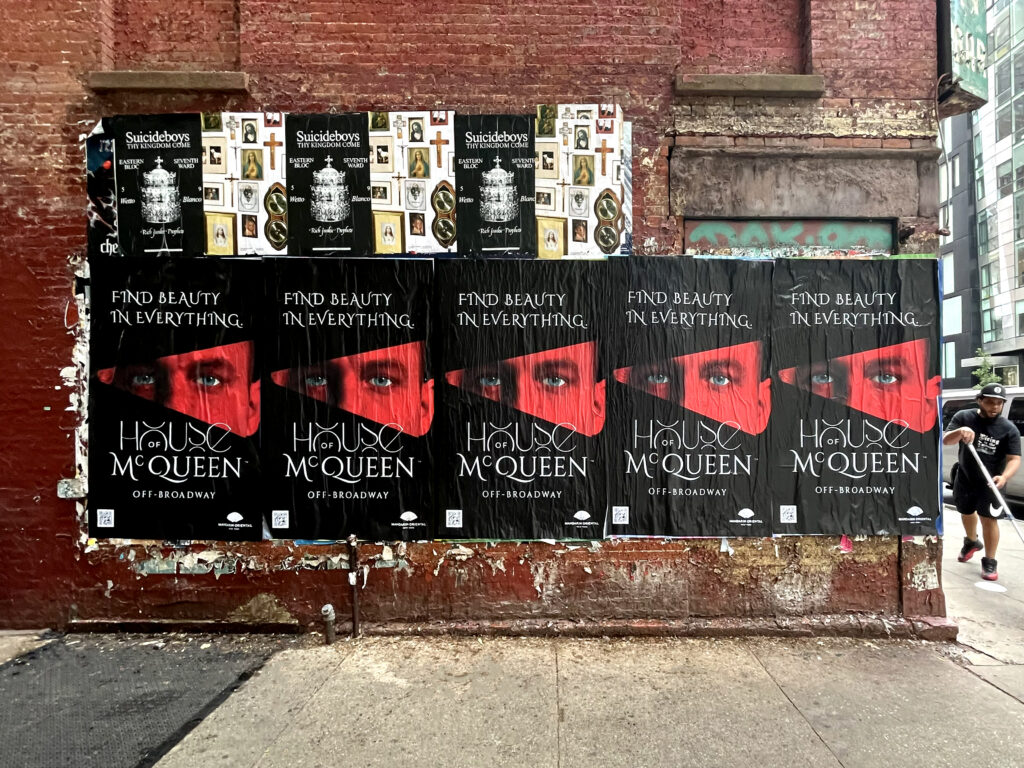
Wynwood’s outdoor advertising context is unique because the neighborhood’s own identity is built on high-quality visual expression in the public realm. The Wynwood Walls have created community and visitor expectation for outdoor art and visual spectacle that makes brand-quality creative in the outdoor environment feel native rather than intrusive. A well-executed flyposting campaign or street-level installation in Wynwood reaches an audience that is actively looking at and photographing outdoor visual content — creating organic social media amplification that extends well beyond the physical audience of the installation itself.
Wynwood Street-Level Campaign Strategy
For campaigns targeting Miami’s creative and culturally influential audiences, Wynwood street-level activations deliver brand presence in one of the country’s most photographed and socially shared urban environments. Our experiential marketing activations in Wynwood have generated significant social media reach through the organic photography and sharing behavior of the neighborhood’s visitor base. When planning Wynwood activations, the creative quality bar is genuinely high — the neighborhood’s visual culture creates sophisticated audience expectations that generic or low-quality creative cannot meet.
Little Havana and the Latin Market
Miami’s majority-Hispanic population — with large Cuban-American, Venezuelan, Colombian, Argentine, Brazilian, and Haitian communities — creates the country’s most important bilingual and Spanish-dominant advertising market. Little Havana along Calle Ocho (SW 8th Street), Hialeah’s 49th Street commercial corridor, and the various Latin community concentration zones throughout Miami-Dade require specific linguistic and cultural creative strategies that generic Miami market plans do not address.
Spanish-Language OOH
Spanish-language outdoor advertising in Miami’s Latin community corridors consistently outperforms English-only creative for brand categories with strong Latin consumer relevance — food and beverage, automotive, insurance, financial services, telecommunications, and healthcare. The cultural framing appropriate for a Cuban-American audience may differ from that appropriate for a Venezuelan or Colombian audience — Miami’s Latin market is not monolithic, and effective campaigns consider the community composition of specific corridors.
Brickell: Miami’s Financial District Luxury Audience
Brickell Avenue through Miami’s Financial District has evolved into the most concentrated luxury residential and professional environment in South Florida, housing the offices of major international banks, law firms, and financial services companies alongside the high-rise residential towers that have defined the Brickell skyline. Billboard and street-level positions on Brickell Avenue and in the adjacent Mary Brickell Village, Brickell City Centre, and Brickell Key reach Miami’s highest-income resident and professional audience. Our brand ambassador programs in Brickell’s retail and dining environments reach this high-value audience at direct interaction scale.
Frequently Asked Questions: Miami Billboard Advertising
How much does billboard advertising cost in Miami?
Miami billboard costs range from $2,500 to $25,000+ per four-week period. Premium I-95 through Downtown Miami and Brickell runs $8,000-$20,000. Miami Beach Collins Avenue and MacArthur Causeway positions run $10,000-$25,000+. Biscayne Boulevard through Wynwood and the Design District runs $5,000-$15,000. Secondary Miami-Dade suburban corridors run $2,500-$7,000 per period.
What are the best billboard locations in Miami?
I-95 through downtown Miami, I-195 MacArthur Causeway to South Beach, Biscayne Boulevard through the Design District, Collins Avenue on Miami Beach, and Brickell Avenue through the Financial District. For luxury brand targeting, the Design District and Brickell Avenue deliver the market’s highest-income audience. For cultural and creative targeting, Wynwood and the Midtown Miami corridor are the strongest positions.
When is the best time to advertise on billboards in Miami?
Unlike most U.S. markets, Miami’s peak OOH demand is Q1 (January-March) and December due to winter season tourist influx and Art Basel. The best value windows are Q2 (April-June) and Q3 (July-September) when demand softens and rates improve. Summer placements targeting Miami’s permanent resident base offer the most cost-efficient Miami OOH conditions of the year.
Does Miami have good guerrilla marketing opportunities?
Exceptional ones. Wynwood is arguably America’s most receptive neighborhood for street-level visual marketing. The Design District, Brickell, Little Havana, and South Beach all create distinct guerrilla marketing environments. Miami’s culturally aware, socially active audience base creates strong social sharing amplification for quality street-level campaigns — Wynwood activations in particular generate organic photography and sharing that extends campaign reach well beyond the physical activation audience.
How does Miami billboard advertising reach the Latin market?
Spanish-language creative on corridors serving Little Havana, Hialeah, and the broader Latin community zones significantly outperforms English-only creative for brands with Latin market objectives. Miami’s majority-Hispanic population is the most important bilingual advertising market in the country — corridor selection and language strategy should be informed by the specific national-origin community composition of target neighborhoods rather than treating “Hispanic Miami” as a monolithic market.
What is Miami’s most important billboard corridor for luxury brands?
The Design District on Biscayne Boulevard and Brickell Avenue through the Financial District are the two primary luxury audience corridors. The Design District concentrates Louis Vuitton, Dior, Cartier, and comparable luxury brands in a walkable zone that attracts Miami’s highest-income consumers and a significant international luxury tourism audience. MacArthur Causeway positions reaching the South Beach-bound audience are also strong for luxury brands with tourism audience relevance.
Frequently Asked Questions
What is billboards in miami the ultimate guide for advertisers?
American Guerrilla Marketing provides billboards in miami the ultimate guide for advertisers services across 50+ U.S. markets. Every campaign is planned, scouted, executed, and GPS-documented by our field teams. We work with regional brands and Fortune 500 companies on campaigns that require real street-level execution and documented proof of performance.
How does AGM approach for advertisers?
Our process starts with a market consultation to understand your goals, target audience, and budget. We then scout locations, handle any required permissions or permits, coordinate production and installation with our local crews, and provide a full GPS-tagged photo report after the campaign runs.
What markets does American Guerrilla Marketing cover for for advertisers?
We operate in 50+ U.S. markets including New York, Los Angeles, Chicago, Miami, Houston, Atlanta, Seattle, Denver, Boston, and dozens of secondary markets. Contact us to confirm availability and pricing for your specific market.
How much does a for advertisers campaign cost?
Campaign pricing depends on market, format, quantity, and duration. We work with budgets ranging from targeted single-market runs to national rollouts across multiple cities. Use our RFP Builder or contact us directly for a custom quote based on your specific campaign requirements.
How do I get started with for advertisers through AGM?
The fastest way to get started is to submit your campaign details through our RFP Builder at americanguerrillamarketing.com, or contact us directly at [email protected] or (646) 776-2770. Our team typically responds within one business day with availability and initial pricing.