
November 25, 2026
Mobile Billboard Advertising Explained for Brand Marketers
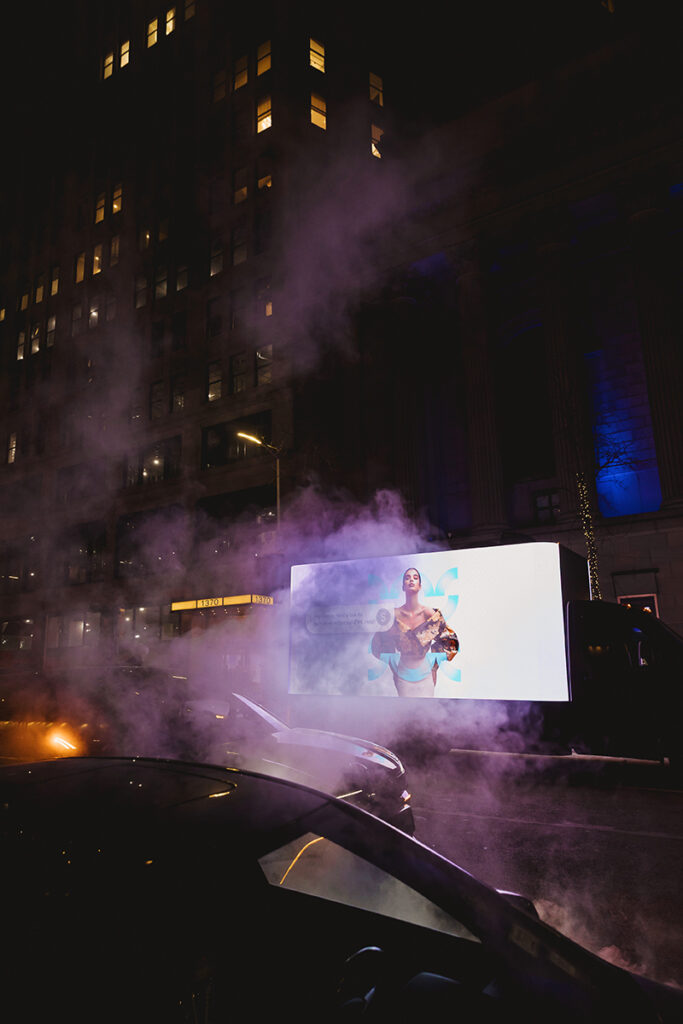
Brand marketers come to Mobile Billboards from the media plan side. They have a flight, a target, a market list and a measurement framework, and they want to know how a truck slots into that.
It slots in badly if you treat it like a static OOH buy, and very well if you treat it as a targeting instrument.
I run these campaigns on the ground. This page is written for the person building the plan, not the person driving the vehicle. What the format is actually good at, what it is bad at, how it compares to the other street level options, how to brief it, and how to judge whether it worked.
There are no figures on this page. What determines the size of a truck campaign is production type, run days, hours per day, route complexity, market and crew. I will walk through each of those as a planning variable rather than a line item.
The goal is that you can specify this format precisely enough to get a straight answer from any operator you approach.
What the format is genuinely good at
A mobile billboard does four things that other out of home formats cannot.
It goes exactly where you choose. Not where inventory happens to exist. If the audience you need is outside one venue, one campus gate, one office district or one retail corridor, the truck goes there. Static inventory is a map of what somebody built years ago. A truck is a map you draw.
It goes exactly when you choose. You can concentrate the entire campaign into the hours your audience is physically present, which is often a narrow band. Static inventory bills you for the overnight hours when nobody is looking.
It can change. On an LED unit the creative is a file. You can run different messages by daypart, swap a creative mid campaign, or respond to something that happened that morning. No other street format moves that fast.
It is verifiable. GPS logs and timestamped photography mean you can see exactly where your media was. That is a cleaner audit trail than most of the OOH category offers.
Those four properties are the whole case for the format. If your plan does not actually need any of them, you probably want something else, and I will say so.
What it is bad at
The honest counterweight.
It does not build ambient density. A truck is one object moving through space. It cannot make a neighbourhood feel saturated with your brand the way a cluster of pasted panels does. Buyers who want the feeling that a brand has taken over an area are describing poster work, not a truck.
It does not deliver guaranteed frequency against a defined person. You can raise the odds by repeating corridors at consistent hours across consecutive days. You cannot promise that the same individual saw it four times.
It does not carry complex messaging. Exposure is seconds, often at an angle, often partly blocked by other vehicles. If your message needs a paragraph, this is the wrong canvas.
It does not work well spread thin. One day in each of five cities produces five disconnected days of exposure that nobody sees twice.
It does not escape the physical city. Traffic, construction, event closures and parking reality all constrain what a route can actually achieve, regardless of what was planned.
And it does not produce the precise impression counts some operators will quote you. More on that later, because it matters for how you set expectations internally.
The planning variables that actually set scope
Here is what moves the size of a truck campaign, from the planning side.
Production type. Static printed vinyl or LED screen. Static requires print and a vinyl application session before launch and is fixed for the run. LED requires file preparation and screen testing and stays changeable. This choice affects lead time more than anything else on the list.
Run days. Consecutive days in one market build frequency. Scattered days do not.
Hours per day. This is the variable marketers undervalue most. The same vehicle on a nine hour day and a nine hour day positioned differently produce very different results. Buy the hours your audience exists.
Route complexity. A tight route in one district is efficient. A route that crosses a metro is mostly transit time you are paying for.
Dwell requirements. Stationary positioning near a venue, on private ground with owner permission, involves arrangements that a purely moving route does not.
Market. City characteristics change everything, including traffic patterns, how dense the useful corridors are, parking reality, local ordinance character and seasonal weather.
Number of vehicles. Two trucks working the same city at different corridors is a genuinely different campaign from one truck, and sometimes the right answer for a launch day.
Crew beyond the driver. Screen operation, Street Teams, sampling alongside the vehicle.
Reporting depth. Basic photo proof is standard. Detailed daily route analysis and creative level reporting is more work.
Repositioning between markets. Moving a vehicle between cities consumes days that are not run days.
Washing and maintenance in winter markets. Road salt makes a truck filthy within days in a northern January. Keeping the media legible is a scheduled activity.
How it compares to the other street formats
Marketers usually evaluate this against the rest of the guerrilla and out of home menu, so here is the comparison I give on calls.
Against Wheatpasting and Poster Campaigns. Posters win on density, cultural texture and persistence. A corridor with twenty pasted panels keeps working for weeks at no incremental labour. Trucks win on scheduling, weather resilience, daylight certainty and precise placement. Posters are a grey area with real permission and removal obligations. Trucks have their own grey area around ordinance and stopping. Posters are weather dependent at install and will not go up in freezing conditions. Trucks run in winter.
Against Sidewalk Decals and Stencils. Decals catch people looking down at a specific doorway or crossing. They are intimate and extremely local. They need dry application conditions and they touch public right of way questions. A truck has far broader reach and far less intimacy.
Against Projection Advertising. Projection buys spectacle and photography on a specific night. It needs genuine darkness, a suitable surface and a cooperative property position. It is a content generation play more than a reach play. A truck is reach and schedule.
Against Street Teams and Experiential. People convert. A truck does not have conversations. If the objective requires sampling, sign ups or demonstration, staff are not optional, and the truck becomes the backdrop rather than the medium.
Against fixed outdoor inventory. Static sites give you a known location and long dwell for passing audiences. You cannot choose where they are and you buy the hours when nobody is there. A truck inverts both of those.
The combination I recommend most often to brand marketers with a hard launch date is a truck working the corridor by day paired with a poster run holding the same neighbourhood overnight. The truck brings the schedule and the certainty, the posters bring the density and persistence, and the same people encounter both in the same geography. That is the closest thing to real frequency this category offers.
Briefing a truck campaign properly
If you give an operator these seven things, you will get a real proposal in one pass.
The market, and ideally the districts within it. Not "Los Angeles" but "the Westside, around these corridors".
The dates, and whether they are fixed or flexible.
The audience, described by where and when they are physically present. "Office workers in the core, weekday lunch" is a usable brief. "Adults 25 to 44" is not, because a truck cannot target a demographic, only a place and a time.
Whether the creative is fixed or will change during the flight. This single answer usually decides static versus LED.
Whether the truck needs to be stationary anywhere, and near what.
Whether anything is happening on the ground alongside the vehicle.
What reporting you need internally, and who will read it.
What I do not need in the first brief is a budget framing dressed up as a scope. "We want a truck for a week" tells me nothing about hours or corridors, which is where the entire value sits.
Creative direction that survives a moving vehicle
I review a lot of artwork that was designed for a screen and will die on a truck.
The rules I apply.
One dominant image. The eye has about two seconds.
Three to five words of copy. Not a sentence. Not two sentences.
High contrast. Thin type and subtle tonal work vanish in daylight and at distance.
A single destination. One short URL or one handle. If you give people three ways to respond, they take none.
Full bleed artwork to the panel edges. Dead margin is paid media doing nothing.
Design for both sides and consider the rear. Most of your audience sees one side only, so each side needs to stand alone.
On QR codes, I am a sceptic for moving routes and a supporter for dwell. Nobody scans a vehicle that is about to pull away. A truck parked outside a venue for ninety minutes before doors is a different matter and a code earns its place there.
For LED specifically, test the file on the actual screen at its real pixel pitch before launch. Content that reads perfectly on a monitor can be unreadable on a coarse screen viewed from across a street.
Permission and ordinance, framed honestly
Mobile billboard regulation is a grey area. It varies by municipality, enforcement is inconsistent, and the position depends on local ordinance, parking rules, vehicle classification and in particular where and for how long the vehicle stops.
Some cities take a notably restrictive view of vehicles whose only purpose is carrying advertising. Others treat them as ordinary commercial vehicles. A few have district specific rules. I will not tell you a given market is legal or illegal for this format. That is not a statement I can make responsibly, and we are not lawyers.
What a competent operator does about it.
Checks the market character before committing a route, and tells the client when a city looks difficult.
Favours lawful movement and flow over sustained stationary display in public right of way.
Uses private property with owner permission for dwell time, which is the clean version of parking a truck near a venue.
Keeps GPS logs, timestamps and photographs throughout, so there is a record.
Supports the driver's judgement to move on if conditions on the day make a planned position a bad idea.
Ask any operator you are evaluating how they handle dwell positioning. If the answer involves no mention of property permission at all, you have learned something.
Measurement, and what to tell your stakeholders
This is where brand marketers get into trouble internally, so be careful what you promise upward.
What you can report with confidence. Days and hours run. The actual route travelled, from GPS. Dwell locations and durations. Timestamped photography. Which creative ran and when, for LED. Any deviation and why.
What you can report with context. Corridor character, pedestrian and vehicle density patterns, event adjacency. These are descriptive, not counted.
What you should not report as fact. Precise impression figures. Anyone who hands you a confident, unqualified impression count for a moving vehicle is giving you a model, not a measurement. Models are legitimate planning tools if they are labelled as models. They become a problem when they get pasted into a results deck as though someone counted.
For response measurement, use a dedicated short URL or landing path, a unique code if you have an offer, and lift measurement in the specific geography against a comparable one if your business has the data to do it. Geographic lift is the most honest read available for this format, because the exposure is geographically contained by definition.
Set expectations with your stakeholders before the campaign runs, not when the report lands.
What I talk brand marketers out of
I argue against these regularly.
Multi market tours. Four cities, two days each, is the plan I kill most often. One market, eight consecutive days, right corridors, right hours, will outperform it against any sane objective.
Full day routes with no hour discipline. Buy the windows where your audience is physically present. The rest is the vehicle being seen by people who are not your audience.
LED booked for daylight only. If you are paying for a screen, use the hours where a screen beats print. Otherwise static was the right call.
Coverage language in the brief. "Cover the whole city" is the enemy of effect. Saturate one corridor.
Overloaded creative. Legal copy, three logos, a tagline and a QR code on a moving panel means nobody reads any of it.
Launching against an artwork deadline that has not been agreed internally. Late files are the most common reason a launch date slips, and no operator can compress a print and vinyl application window to nothing.
Treating the truck as the whole campaign. It is a component. Alone across a large metro it is thin. Paired with neighbourhood level poster work it becomes a real presence.
Asking for an impression guarantee. If you need guaranteed delivery numbers for internal sign off, this format will create a reporting problem for you later, and it is better to know that at the planning stage.
Where the format fits in a flight
Timing within a campaign flight changes what a truck is worth.
In a launch window, it is at its strongest. You have a fixed date, you need visible presence on that date, and you cannot afford a format that might not install because of weather. The truck shows up.
In a sustain phase, it is weaker on its own. Persistent presence is what poster work does cheaply, and a vehicle cannot be everywhere for weeks. If the plan calls for continuous neighbourhood visibility over a month, the truck should be the periodic spike inside a poster campaign rather than the whole spend.
Around an event, it is extremely strong, provided the positioning is sorted in advance. The hours before doors and immediately after a venue empties concentrate your exact audience into a small area on foot. That is the best use of this format I know.
For a retail or location opening, pair the truck with street teams at the door. The vehicle pulls attention from the corridor, people on the ground convert it.
In a competitive moment, the ability to be somewhere specific on a specific morning is the whole point, and it is the one thing no fixed inventory can offer at short notice.
Think of it as the schedulable, precise component of a street level plan rather than a standalone buy.
What goes wrong on live campaigns
Traffic and construction rewrite routes. Good operators rebuild mid campaign and tell you.
Events close streets with short notice. Alternates should exist before day one.
Weather kills photography. A grey wet afternoon produces proof images that disappoint everyone. LED handles overcast far better than printed vinyl.
LED hardware fails. Controllers, modules, power. Ask about spares and swap capability before you book.
Vinyl lifts at an edge if application was rushed or done in cold. This is why the application session has a real timeline.
Winter grime makes media unreadable within days in salted markets. Schedule washes.
Artwork arrives late. Most common failure of all, and almost always upstream of the operator.
The brief changes after production. On static, that means a reprint and a new application. On LED, a file swap. This is the single clearest argument for LED when a client's creative process is unsettled.
Frequently asked questions
How does a mobile billboard compare to fixed outdoor inventory?
Fixed sites give you a known location with long dwell, but you can only buy where inventory already exists and you pay for hours when nobody is present. A truck lets you choose the exact corridor and the exact hours. It gives up persistence and ambient density in return. The two solve different problems and are not substitutes.
Static vinyl or LED screen for a brand campaign?
If creative will change during the flight, or the campaign leans evening and night, choose LED. If the creative is locked and the hours are mostly daylight, static is simpler and mechanically more reliable. LED also allows dayparted messaging, which matters when you are speaking to a commuting audience in the morning and a social audience at night.
How many markets should a campaign cover?
Usually one at a time, unless you have a structural reason otherwise. Consecutive days in a single market working consistent corridors at consistent hours is the only way this format approaches real frequency. Splitting the same resource across four markets produces scattered single exposures and a report that will not impress anyone internally.
Are mobile billboards permitted everywhere?
It is a grey area. Rules vary by municipality, enforcement is inconsistent, and the position depends on local ordinance, parking rules and where the vehicle stops and for how long. We are not lawyers and give no legal advice. Practically, we check market character before routing, favour private property with owner permission for dwell, and document everything with GPS and photos.
What reporting should I expect?
GPS logs of the actual route for every run day, timestamped photographs from corridors and dwell points, hours run, confirmation of which creative played and when for LED, and written notes on any deviation with the reason. Insist on this. It is the clearest audit trail in street level media and it protects you internally.
Can you guarantee impression numbers?
No. Anyone who gives you an unqualified impression count for a moving vehicle is handing you a model. Models are fine for planning when labelled as such and dangerous in a results deck. Measure instead with a dedicated URL or code, and with geographic lift against a comparable market if your business has that data available.
Ready to plan it
Give me the market and districts, the dates, the hours your audience is actually present, and whether the creative is locked. That is enough to tell you whether this format serves your objective or whether poster work, street teams or something else does it better.
If it is the wrong tool for your plan, I will tell you on the first call.
Request a campaign quote and bring the brief, not just the format.

Ready to Run Your Campaign?
Call us or email us. We’ll tell you exactly what we can do in your market and what it costs.
Related Services
Explore similar advertising solutions offered by American Guerrilla Marketing.
American Guerrilla Marketing — Los Angeles
Street-level campaigns in Los Angeles and nationwide. Wheatpasting, LED trucks, street teams, and more.
(646) 776-2770
Related Articles
-
LED Trucks & Mobile Billboards in Los Angeles
November 25, 2026
-
Planning LED Trucks & Mobile Billboards in Lexington
November 24, 2026
-
LED Trucks & Mobile Billboards in Scottsdale, Arizona
November 24, 2026
-
Planning LED Trucks & Mobile Billboards in Santa Monica
November 24, 2026
-
LED Trucks & Mobile Billboards in Cleveland, Ohio
November 24, 2026