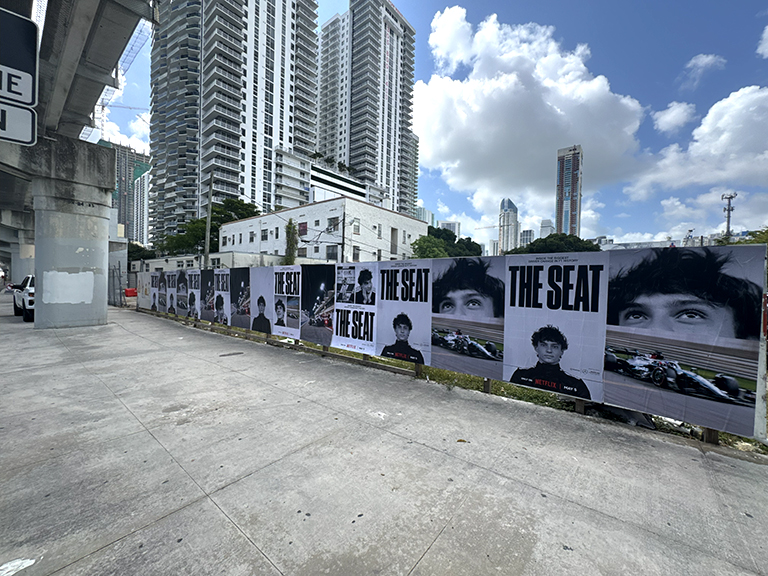
Not all cities are equal for street-level campaigns. Surface quality, foot traffic density, neighborhood concentration, pedestrian culture, and the visual receptiveness of the environment all determine whether a guerrilla marketing campaign earns its impressions or burns its budget. Choosing the right city, and the right neighborhoods within that city, is one of the most consequential strategic decisions in campaign planning.
This guide breaks down the best U.S. cities for guerrilla marketing based on what actually matters operationally: where campaigns perform, which audiences each market concentrates, what formats work best in each geography, and what makes some cities consistently outperform others for street-level investment.
Our team at American Guerrilla Marketing has run campaigns in 50+ U.S. markets. This assessment reflects what we’ve observed across thousands of campaign installations, not theoretical market ranking.
What Makes a City Good for Guerrilla Marketing
Five variables determine whether a city performs for street-level campaigns or not. Brands that evaluate markets on all five consistently make better campaign investment decisions than those that select cities based on market size alone.
Foot Traffic Density and Pattern
High foot traffic is necessary but not sufficient. The pattern matters as much as the volume. A city with 2 million residents spread across a car-dependent suburban geography delivers fewer meaningful street impressions than a city with 800,000 residents concentrated in walkable urban neighborhoods. Repeated exposure to a poster on a route someone walks daily builds brand memory more effectively than a single high-volume pass-through on a transit corridor.
Surface Availability and Visual Culture
Cities with established outdoor art and posting cultures have existing surface infrastructure that professional campaigns can activate. Wall murals, designated posting surfaces, and property owners with existing relationships with campaign operators all reduce the friction of executing a campaign. Cities that actively discourage outdoor advertising or lack the physical building stock for wall-based formats require different tactical approaches.
Neighborhood Concentration of Target Demographics
The best guerrilla marketing cities have neighborhoods that concentrate specific demographic segments at high density. This is what makes NYC’s Williamsburg or LA’s Silver Lake so productive for campaigns targeting young creative professionals: you don’t need to reach the entire city because your audience is physically concentrated in identifiable corridors.
Organic Social Amplification Rates
Some markets generate significantly more organic social documentation from street-level campaigns than others. NYC, Los Angeles, and Miami consistently produce organic social content from pedestrians who photograph and share compelling installations. This amplification extends total campaign reach well beyond the direct impression footprint and increases the ROI of physical placements.
Tier One Markets: Where Campaigns Perform at the Highest Level
New York City
NYC is the most productive guerrilla marketing market in the United States by every measurable dimension: foot traffic volume, surface availability, demographic concentration, organic social amplification, and the breadth of audience segments accessible within a single market. Williamsburg, SoHo, and the Lower East Side anchor wheat paste campaign execution for creative and youth brands. The Meatpacking District, Flatiron, and the East Village serve premium consumer and nightlife-adjacent brands. The Bronx, Queens, and Staten Island allow campaigns to extend reach to broader community demographics.
NYC also has the highest concentration of media professionals, influencers, and cultural tastemakers who encounter and share street-level campaigns. A compelling installation in SoHo or Williamsburg reaches a publication editor, a podcast host, and three hundred thousand Instagram followers before the paste dries. No other U.S. market delivers this amplification factor at scale.
Los Angeles
LA is the most complex guerrilla marketing market in the country because it is actually dozens of distinct markets spread across a massive geographic footprint. Campaign success in LA depends almost entirely on neighborhood selection. Silver Lake, Echo Park, Fairfax District, Melrose Avenue, and Venice Beach each concentrate specific demographic segments at high density and deliver strong wheat paste surface inventory. The key challenge is that LA is car-dependent, which means walkable zones require precision targeting to avoid spending budget on surfaces that commuters drive past rather than pedestrians encounter.
For entertainment, music, and youth-oriented brands, LA is a required market. The entertainment industry infrastructure means that campaigns placed in Silver Lake or the Fairfax District reach industry gatekeepers alongside consumers. LED billboard trucks routed through key LA corridors and event approaches solve the walkability problem for brands that need broader market coverage beyond the walkable districts.
Chicago
Chicago delivers strong surface inventory across a diverse set of neighborhoods with excellent transit-driven foot traffic. Wicker Park and Bucktown are the primary wheat paste zones for creative and youth brands. Logan Square has developed strong posting culture as the neighborhood’s creative scene has matured. Pilsen and Bridgeport provide access to Chicago’s Latino and working-class communities. The Loop and River North deliver professional and tourist foot traffic but with more regulated surface access.
Chicago’s transit system, with the L running through multiple city neighborhoods rather than just downtown, creates linear foot traffic corridors that wheat paste campaigns can target along specific demographic corridors. This is a structural advantage over cities with hub-and-spoke transit systems where all traffic flows through a single central zone.
Tier Two Markets: Strong Performance with Audience Specificity
Miami
Wynwood, Little Havana, and Allapattah make Miami one of the most productive wheat paste markets in the Southeast. The international character of Miami’s population, the Art Basel effect on campaign demand and organic social amplification, and the year-round warm climate that extends poster longevity all contribute to Miami’s strong performance. For brands targeting Latino consumers, fashion and lifestyle audiences, or international visitors, Miami is a required market. Read our full flyposting Miami guide for neighborhood-level detail.
Austin
Austin has become one of the most productive music, tech, and youth-oriented campaign markets in the country since the mid-2010s. The South Congress and East Austin corridors concentrate creative and tech industry demographics at high density. South by Southwest (SXSW) creates a peak campaign window in March that draws tens of thousands of music and tech industry participants from across the country. Campaign surfaces in Austin are increasingly competitive as the market has grown, but the audience quality remains exceptional for brands targeting creative professional, tech-adjacent, and music community demographics.
Nashville
Nashville’s explosive growth since 2015 has created a guerrilla marketing market that rivals cities twice its traditional size. Lower Broadway and the Gulch are the highest-foot-traffic zones for tourist and nightlife audiences. East Nashville and Germantown concentrate the creative and food industry professional community. For brands targeting Millennial consumers, country music fans, or the fast-growing Nashville professional class, a street-level campaign here delivers against demographics that are difficult to reach efficiently through digital channels alone.
Portland
Portland is one of the most visually receptive cities in the United States for street-level creative. The Alberta Arts District, Mississippi Avenue, and the Pearl District all have established wheat paste and mural cultures. Portland’s population is highly design-literate and engages positively with bold outdoor creative. The size of Portland means that campaign saturation is achievable at lower absolute spend than in NYC or LA, making it an efficient market for brands with moderate budgets that need genuine neighborhood presence.
Tier Three Markets: Growing Performance with Specific Targeting Value
Denver
RiNo (River North Arts District) and Capitol Hill are Denver’s primary creative-adjacent campaign zones. The city’s rapid growth has created strong demand for street-level presence and an increasingly sophisticated posting culture. Denver’s outdoor recreation-oriented consumer base is attractive for fitness, outdoor, and lifestyle brands. Convention center proximity in the downtown core creates additional event-adjacent campaign opportunities.
Seattle
Capitol Hill and Fremont are Seattle’s most productive wheat paste neighborhoods. The tech industry concentration in the broader market creates strong demand for campaigns targeting tech-adjacent professional consumers. Seattle’s active street art culture in Capitol Hill mirrors Portland’s receptiveness to bold outdoor creative. The city’s challenging weather from October through April requires attention to print substrate and paste formulation for campaigns running in the wet season.
Atlanta
Ponce City Market, Old Fourth Ward, and the BeltLine corridor are Atlanta’s strongest guerrilla marketing zones. The BeltLine in particular creates a linear trail-based foot traffic corridor that runs through multiple adjacent neighborhoods and delivers extended campaign exposure to an active, design-aware pedestrian audience. Atlanta’s entertainment industry concentration in OFW and the Midtown area creates strong organic social amplification for entertainment and lifestyle brands.
Dallas
Deep Ellum and Uptown are Dallas’s primary creative campaign zones. The Deep Ellum corridor delivers the city’s most authentic street-level creative audience, while Uptown provides access to a younger professional demographic with high disposable income. Dallas is primarily car-dependent, which means LED billboard trucks and mobile media formats often supplement wheat paste for broader market reach beyond the walkable neighborhoods.
Format Optimization by Market Type
Market type should drive format selection as much as audience demographics. Dense, walkable markets like NYC and Chicago reward wheat paste, sidewalk stencils, and street team programs because sustained pedestrian exposure multiplies impression value. Car-dependent markets like LA, Dallas, and Phoenix require formats that travel: LED trucks, mobile billboards, and conquest advertising around specific venue and retail concentrations.
Wheat Paste Markets
NYC, Chicago, Miami (Wynwood), Austin, Portland, Seattle Capitol Hill, and Atlanta BeltLine are the most productive wheat paste markets. These areas deliver walkable foot traffic with the repeated exposure pattern that makes poster campaigns build over time rather than delivering a single pass-through impression.
LED Truck Markets
Our LED billboard truck fleet performs best in event-adjacent deployments in any city, and as primary format vehicles in car-dependent markets like Phoenix, Las Vegas, Houston, and Dallas where walkable zones are limited. Routing LED trucks through specific neighborhood corridors in car-dependent cities achieves market coverage that wheat paste cannot.
Brand Ambassador Markets
Our brand ambassador programs perform in any market where there is concentrated foot traffic at specific times and locations. Transit hubs, university campuses, farmers markets, and event venues in any city can be activated with brand ambassador teams as long as the target demographic is present and the campaign is designed around genuine engagement rather than passive distribution.
Frequently Asked Questions
What makes a city good for guerrilla marketing?
The best guerrilla marketing cities combine high foot traffic density, a receptive visual culture, strong surface availability, accessible creative neighborhoods, and a pedestrian movement pattern that creates repeated exposure rather than single-pass impressions. Markets with active street art cultures, dense transit systems, and walkable neighborhood concentrations consistently outperform car-dependent markets for street-level campaigns.
What is the best city in the US for guerrilla marketing?
New York City is consistently the top U.S. market for guerrilla marketing based on foot traffic volume, surface availability, neighborhood cultural density, and organic social amplification rates. Los Angeles, Chicago, Miami, and Austin round out the top tier for different demographic targeting profiles. The right city depends on who you are trying to reach and what format best fits that audience.
Is guerrilla marketing effective outside major cities?
Yes, with the right format and campaign architecture. Secondary markets like Nashville, Denver, Portland, and Austin have developed strong street-level campaign receptiveness. University towns, festival markets, and rapidly growing metros often deliver better return per dollar on guerrilla campaigns than larger cities due to lower competition and higher cultural engagement with street-level creative.
Which cities have the best surfaces for wheat paste campaigns?
NYC, Los Angeles, Chicago, Portland, Austin, and Miami consistently deliver the strongest wheat paste surface inventory. Each has established posting cultures and identifiable neighborhoods where creative brands are expected to be present. Nashville and Denver are growing markets with increasingly strong surface availability as those cities develop creative districts alongside their rapid population growth.
Does American Guerrilla Marketing operate in all these cities?
Yes. American Guerrilla Marketing executes campaigns in 50+ U.S. markets, including all major cities discussed in this guide. We maintain in-market crew relationships, established surface networks, and local operational knowledge across all our active markets. Call (646) 776-2770 to discuss your specific city targets.
How do I choose which city to run a guerrilla marketing campaign in?
Start with where your target audience is most densely concentrated. Then evaluate which format best reaches them in that geography. For multi-city campaigns, prioritize markets with the highest audience concentration first, then scale to secondary markets once the campaign architecture is tested and performing. Our team provides market-level recommendations based on your specific audience profile at no obligation.
What guerrilla marketing formats work best in car-dependent cities?
LED billboard trucks, mobile billboard advertising, and conquest advertising around specific venues and corridors work best in car-dependent markets like Phoenix, Dallas, Houston, and Las Vegas where walkable foot traffic is concentrated in specific districts rather than spread across neighborhoods. Wheat paste campaigns still work in these markets but should be focused tightly on the walkable zones that do exist within each city.