Seattle’s advertising agency market is shaped by the city’s tech industry, its strong creative community, and a consumer base that sets a higher bar for what genuine brand communication looks like.
Seattle’s advertising and marketing agency market reflects the city’s unique character: a tech-industry-heavy economy, a strong independent creative community, and a consumer base that is more digitally sophisticated and more advertising-skeptical than most major US markets. The agencies that perform best in Seattle understand these dynamics and design their services accordingly.
We are American Guerrilla Marketing. We work in the Seattle market and understand how advertising agencies in this city serve their clients differently than agencies in other major markets. This guide provides a framework for evaluating Seattle advertising agencies and understanding where different types of firms deliver the most value for different types of marketing needs.
The Seattle Marketing Agency environment
Seattle’s advertising agency market is smaller than Chicago or New York but is differentiated by its unique economic context. The city’s concentration of technology industry professionals has created strong demand for digital marketing, technology marketing, and B2B marketing services that Seattle agencies have developed depth in over the past two decades. Amazon, Microsoft, Boeing, and the broader tech network have trained large numbers of sophisticated marketing professionals who have staffed and founded Seattle’s most effective agencies.
Outside the technology category, Seattle agencies serve the city’s food and beverage industry, outdoor and recreational brands, healthcare organizations, retail, and professional services firms. The city’s strong independent food and beverage culture, including specialty coffee, craft beer, and the farm-to-table restaurant scene, has created specific demand for food and beverage marketing expertise that Seattle boutiques serve particularly well.
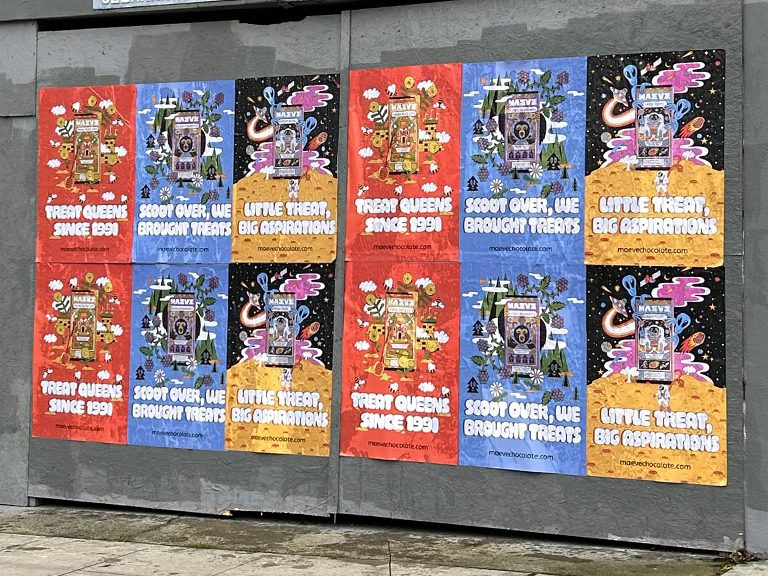
The Seattle agency market is less mature in the area of guerrilla and street-level marketing than New York or Los Angeles, because street-level advertising culture has historically been less developed in Seattle than in East Coast and California markets. This creates a specific opportunity for brands that want to use guerrilla advertising in Seattle: the lower saturation means that strong executions stand out more clearly than they would in more crowded markets, and the audience’s lower familiarity with the format means genuine surprise is more achievable.
Types of Agencies in the Seattle Advertising Market
Digital and Technology Marketing Agencies
Digital agencies are the dominant category in Seattle’s advertising market. The city’s tech-industry orientation has created strong demand for performance marketing, digital analytics, technology product marketing, and B2B content marketing. Seattle digital agencies range from large multi-channel performance firms serving Amazon marketplace sellers to boutique content marketing shops serving early-stage SaaS companies.
For brands entering the Seattle market primarily through digital channels, the depth of Seattle’s digital agency network is an advantage. There are genuinely excellent performance marketers, SEO specialists, and digital analytics practitioners in Seattle at rates that are below San Francisco equivalents but at comparable quality levels. The city’s tech talent pipeline through the University of Washington and the tech company alumni community produces strong digital marketing practitioners.
Full-Service Agencies in Seattle
Seattle has a smaller full-service agency community than Chicago or New York but has produced several strong independent full-service firms that serve regional and national brands from a Seattle base. These firms tend to have particular strength in outdoor recreation, technology, food and beverage, and Pacific Northwest regional brands. Full-service Seattle agencies with specific category depth in these areas can deliver work that national agencies serving the Seattle market from New York offices cannot match in terms of genuine market knowledge.
Creative Boutiques and Independent Studios
Seattle’s design and creative community has produced a number of boutique creative studios that offer brand strategy, design, and advertising creative at below-full-service-agency rates. These studios often work with brands that have their own media relationships and need creative development rather than full campaign management. Seattle’s strong design culture, driven by the presence of major design programs at the University of Washington and the general creative community the city attracts, means boutique creative quality can be very high.
Experiential and Street-Level Specialists
Seattle’s street-level advertising market is served by a combination of local guerrilla marketing firms and national firms like AGM that bring street-level execution capabilities to the Pacific Northwest market. Brands that need guerrilla or experiential components in Seattle campaigns benefit from choosing firms with direct Seattle crew infrastructure and specific neighborhood knowledge rather than national firms that subcontract Seattle execution to local vendors they have not vetted.
AGM Field Note: Seattle’s advertising agencies that excel at reaching the city’s tech-concentrated consumer base are not necessarily the ones with the most technology credentials. They are the ones that understand the difference between the Amazon employee in South Lake Union, the independent creative in Capitol Hill, and the established professional in Ballard, and can design communication that resonates specifically with each rather than treating Seattle as a single monolithic audience.
What Makes a Seattle Ad Agency Right for Your Brand
Selecting a marketing or advertising agency in Seattle requires matching the agency’s specific strengths to the brand’s specific needs in this specific market. Several questions help narrow the field quickly.
Does the agency have direct experience in Seattle’s key neighborhoods for your target audience? A digital agency with no physical advertising practice cannot advise on which Seattle neighborhoods will work for a street-level campaign. A guerrilla firm that has only worked in Capitol Hill may not understand the South Lake Union tech audience or the Ballard professional demographic. Neighborhood-specific knowledge is a genuine differentiator in this geographically complex market.
Does the agency understand Seattle’s tech-adjacent consumer and their advertising skepticism? The marketing approach that works with the general US consumer often does not work with the Seattle consumer because the skepticism threshold is higher and the ad-blocking behavior is more prevalent. Agencies that have worked extensively in the Seattle market have adjusted their approaches accordingly; agencies that have not may be applying national templates that underperform in this specific environment.
Does the agency have relationships with Seattle’s local press and content community? The Stranger, Seattle Met, Capitol Hill Seattle, Eater Seattle, and the neighborhood-specific social accounts that document brand activity in each district are the earned media vehicles that amplify guerrilla and experiential campaigns in Seattle. Agencies with established relationships in Seattle’s media community can generate earned media from campaigns that external agencies without those relationships cannot.
How to Evaluate Any Advertising Agency Before Committing
The evaluation framework that consistently produces good agency decisions involves fewer criteria than most clients apply and deeper investigation on each criterion than most clients conduct. Here is the framework that works.
First: portfolio specificity. Ask to see work from brands in your specific category or in closely adjacent categories. Agency portfolio work from unrelated categories does not predict performance in your category because the strategic thinking, the creative conventions, and the audience dynamics differ enormously across categories. A healthcare advertising specialist may produce work you find visually impressive, but their thinking about how to reach your streetwear audience will be fundamentally different from an agency that lives in that world daily.
Second: reference quality. Ask for three references from clients with similar budgets and similar campaign types, and call all three. The questions that matter are: did the agency deliver what they promised in the pitch? How did they handle problems and complications? Would you hire them again? Positive answers to all three from multiple references is the strongest indicator of consistent quality. One glowing reference and two who do not return your call is a warning sign.
Third: execution infrastructure. For agencies doing physical-world work, including out-of-home advertising, guerrilla campaigns, events, and activations, ask specifically about their execution infrastructure. Do they have their own crews or subcontractors? What is their quality control process in the field? What does a typical documentation package look like? Agencies with strong execution infrastructure will answer these questions with specificity. Agencies without it will be vague.
Fourth: the day-to-day relationship. Ask specifically who will be managing your account and how senior that person is. Many agencies pitch with senior leadership and service with junior staff. Knowing who you will actually work with before you sign avoids the disappointment of discovering afterward that the director who led your pitch is a figurehead for your account while an entry-level account coordinator manages the actual relationship.
Fifth: contract terms. Read the contract carefully, particularly the termination provisions and the production markup structure. Standard agency contracts include 30 to 90-day notice provisions for retainer relationships and clearly defined production markup percentages. Contracts with long lock-in periods, punitive termination fees, or unclear production billing structures should be negotiated before signing or used as a reason to select a different agency.
AGM in the Seattle Market
American Guerrilla Marketing has run campaigns in Seattle across Capitol Hill, Fremont, Ballard, South Lake Union, Pioneer Square, and the University District. We understand the specific requirements of each neighborhood’s audience and the specific environmental and material requirements of Seattle’s outdoor campaign environment. Our Seattle documentation photography captures the city’s distinctive visual character in a way that generates social sharing from the city’s highly active content creator community.
For brands that need guerrilla and street-level execution in Seattle as part of a broader advertising program, AGM provides the specialist capability that full-service Seattle agencies typically lack, in coordination with whatever broader agency relationships the brand maintains. This allows brands to access specialist guerrilla quality while maintaining the integrated campaign management that a broader agency relationship provides.
How to Evaluate an Advertising Agency Before Signing
The evaluation process that consistently produces good agency decisions involves fewer criteria than most brands apply but deeper investigation on each one. Here is a proven framework.
Start with portfolio specificity. Ask to see work from clients in your specific category, not from the agency’s most impressive or most varied portfolio. An agency that has done excellent work in consumer packaged goods may have significantly less relevant experience in technology or entertainment. The strategic thinking, the creative conventions, and the audience dynamics differ enough across categories that category-specific experience genuinely predicts performance in ways that general excellence does not.
Then conduct real reference checks. Ask for three references from clients with similar budgets and similar campaign types to yours. Call all three, not just the one the agency volunteers. Ask specifically: did the agency deliver what they promised in the pitch? How did they handle complications in the field or in the creative process? Would you hire them again without hesitation? A strong, consistent set of positive answers to these questions is the most reliable predictor of a good agency relationship.
Examine execution infrastructure for any agency doing physical-world work. Ask specifically who will be on the ground managing installations, whether they use their own crews or subcontractors, how they handle field complications, and what their quality control process looks like. Agencies with genuine operational infrastructure answer these questions with specificity and confidence. Agencies that subcontract loosely will be vague or will redirect to capabilities they are more confident discussing.
Clarify the account management structure before signing. Ask to meet the person who will be managing your account day to day, not just the senior leadership who presented in the pitch. Many agencies pitch with their most impressive and senior people and service with junior account coordinators. Knowing who you will actually work with, and having the opportunity to assess that person before you sign, protects you from one of the most common sources of agency relationship disappointment.
Read the contract carefully, particularly the termination provisions and the production markup structure. Reputable agencies have straightforward termination clauses, typically 30 to 90-day notice periods, and transparent production billing. Agencies with complex lock-in provisions, punitive termination fees, or unclear production markup practices are telling you something about how they expect the relationship to function when it is not going well.
What Guerrilla Marketing Brings That Other Channels Do Not
Guerrilla marketing occupies a specific role in the advertising channel mix that no other format replicates. Understanding that role is essential for deciding whether to include it in a campaign and for evaluating which agencies are genuinely equipped to deliver it.
The unique value of guerrilla marketing is its ability to create genuine physical brand encounters in the environments where consumers live, rather than reaching consumers in the media environments they consume. When someone encounters a well-executed brand installation in their neighborhood, the experience is categorically different from seeing a digital ad: it is unexpected, it is in a context the consumer already trusts and values, and it generates a level of attention and memory encoding that passive media cannot replicate.
The social media amplification of physical brand moments has added a second layer of value to guerrilla marketing that did not exist in the format’s early years. A brand installation in Wicker Park or Silver Lake or Williamsburg that is genuinely interesting will be photographed and shared by the neighborhood’s active content creator community, reaching audiences in other cities and demographics that are not physically present at the execution. This amplification makes the effective reach of a well-executed guerrilla campaign far larger than the physical foot traffic at the installation location would suggest.
Earned media is the third layer of guerrilla marketing value. Campaigns with genuine news value, whether because the creative is exceptionally strong, the location is culturally significant, the timing aligns with a relevant moment, or the execution breaks new creative ground, generate press coverage that extends the campaign’s reach to readers who never encountered the physical execution. This earned media is free in the sense that it requires no additional media spend, but it requires the initial investment in quality creative and professional documentation to produce the press-worthy visual evidence that editors require.
For agencies that claim guerrilla capabilities, the relevant question is whether their guerrilla practice is genuinely built to deliver all three layers of value, physical presence, social amplification, and earned media, or whether they are delivering only the first layer, physical placement, without the documentation and press strategy infrastructure that makes the broader value accessible. Many agencies that offer guerrilla as a service deliver physical placements but leave the amplification and earned media value on the table because they have not built the practice around those outcomes.
Seattle’s Outdoor Recreation Market and Agency Specialization
One of Seattle’s most distinctive market characteristics is its concentration of outdoor recreation brands and the consumers who are passionate about them. REI is headquartered in Seattle. Multiple outdoor apparel, footwear, and equipment brands have significant Seattle operations. The city’s proximity to world-class hiking, skiing, climbing, and kayaking creates a consumer base that genuinely lives an outdoor lifestyle rather than aspiring to one, and that consumer authenticity applies a very high standard to advertising that claims outdoor relevance.
Seattle agencies that serve outdoor recreation brands have developed specific expertise in reaching the authentic outdoor consumer: understanding the difference between the weekend warrior who aspires to outdoor credibility and the genuine mountaineer or backcountry skier, understanding which media channels reach each segment, and understanding what brand communication resonates versus what triggers skepticism from consumers who know enough about the outdoor world to identify inauthentic brand positioning immediately.
For brands in the outdoor category specifically, Seattle is one of the most valuable markets in the United States because the concentration of authentic outdoor consumers and the density of outdoor recreation media and community create amplification opportunities that are not available in other major markets. A campaign that resonates with the outdoor community in Seattle reaches people who talk about gear, brands, and experiences with others in the community constantly. The organic word-of-mouth from genuine outdoor community engagement in Seattle reaches a national outdoor consumer audience efficiently.
Seattle agencies with genuine outdoor recreation expertise are distinct from agencies that serve outdoor brands without this background. The former understand the products, the culture, and the communication conventions of the outdoor world from direct experience. The latter adapt their general advertising practice to the outdoor category, which often produces work that feels technically competent but culturally off to the consumers who know the category best. For outdoor brands evaluating Seattle agencies, asking to see work that has been validated by genuine outdoor community audiences, rather than just work that won advertising awards, is the most useful test of category depth.
Measurement and Accountability in Advertising Agency Relationships
One of the most important conversations to have with any advertising agency before signing is the measurement conversation. How will the campaign’s success be measured? What are the specific metrics that will be reported, at what frequency, and in what format? What happens when the campaign underperforms against those metrics? What level of creative and strategic iteration is included in the scope and what triggers additional fees?
Clear, upfront agreement on measurement and accountability protects both parties in an agency relationship. The client gets explicit commitments about what will be measured and what the agency’s response will be to performance data. The agency gets protection against being evaluated on metrics that were not part of the original scope or that are outside the agency’s ability to control. Brands and agencies that fail to have this conversation upfront consistently find themselves in conflict about performance when the campaign is already running, which is the worst time to establish expectations.
For guerrilla campaigns specifically, the measurement conversation is particularly important because the format does not produce the kind of attributable digital performance data that paid search or paid social does. The relevant metrics for guerrilla campaigns are photo documentation of coverage, earned media placements generated by the campaign, social sharing and organic documentation by consumers in the field, and brand search lift during and after the campaign period. Brands that agree on these metrics upfront will evaluate the campaign fairly. Brands that agree on guerrilla as a format and then try to evaluate it against digital performance metrics will be disappointed, not because the campaign failed, but because they are applying the wrong measurement framework.
Long-Term Agency Relationships vs Project-Based Engagements
Brands choose between retainer-based agency relationships and project-based engagements for different reasons, and both models have genuine advantages depending on the brand’s situation. Understanding the dynamics of each model helps brands choose the right structure for their specific circumstances.
Retainer relationships provide consistency, deeper brand knowledge, and priority access to the agency’s resources. An agency that works with a brand for two or three years on retainer develops understanding of the brand’s audience, its competitive position, its creative preferences, and its operational requirements that a project-based agency cannot develop in the context of a single campaign. This accumulated knowledge makes each campaign in a long-term relationship more effective than the first, because the agency is not rebuilding understanding from scratch each time.
Project-based engagements provide flexibility and the ability to select the best agency for each specific campaign type. A brand that runs both brand awareness campaigns and performance marketing campaigns may benefit from using a creative boutique for the awareness work and a digital performance agency for the conversion work, engaging each on a project basis rather than asking a single agency to do both well. Project-based engagements also allow brands to test agency relationships before committing to a retainer, which protects against the cost of discovering that an agency’s execution does not match its pitch after a long-term relationship has been established.
For guerrilla marketing specifically, project-based engagements are the most common model because brands often want guerrilla for specific campaign moments, launches, seasonal activations, or event-timed campaigns, rather than as an ongoing monthly service. Guerrilla specialists like AGM work on project bases as well as retainer relationships, and the project model allows brands to access specialist guerrilla capability without the overhead of an ongoing retainer when guerrilla is not a continuous need.
The Value of Documentation and Accountability in Outdoor Campaigns
Every outdoor and street-level advertising campaign needs a documentation and accountability framework that is agreed on before the campaign runs, not retrofitted afterward. Documentation, in the form of photo evidence of every placement, route mapping of geographic coverage, and written summaries of what was installed where and when, is the basic deliverable that every professional campaign should produce automatically. Campaigns that do not include documentation commitments in their scope of work leave the client with no evidence that the work was executed as promised and no basis for evaluating performance.
Beyond basic documentation, accountability for campaign quality requires that the documentation be provided in a format that allows the client to verify that the work was executed to the specified quality standard. Photographs should be time-stamped and geotagged so that the client can confirm that the documented locations match the agreed campaign geography. The volume of documentation should be sufficient to verify that every location received the agreed-upon installation, not just a sample of locations. The quality of the documentation photography should be sufficient to assess the actual installation quality, not just to prove that something was placed somewhere.
Brands that have been burned by poor-quality campaign execution often trace the problem to inadequate documentation requirements in the original campaign scope. When documentation requirements are explicit and detailed, campaign quality tends to be higher because the agency knows the documentation will reveal any quality lapses. When documentation requirements are vague or absent, the discipline around installation quality is correspondingly lower. Explicit documentation requirements are not just about accountability after the fact; they are a quality control mechanism during execution.
Earned media tracking is a second accountability dimension that is often underspecified in guerrilla campaign scopes. When the campaign generates press coverage or social sharing, the agency should be actively tracking and reporting those outcomes. Brands that do not require earned media tracking from their guerrilla campaigns lose visibility into one of the most valuable outcomes the format can produce, which makes it impossible to accurately evaluate the campaign’s return on investment and to plan future campaigns with realistic expectations.
Frequently Asked Questions
What types of ad agencies are best for advertising in Seattle?
Digital and performance agencies are the dominant category given Seattle’s tech-heavy consumer base. For street-level and experiential campaigns, specialist guerrilla firms with direct Seattle crew infrastructure outperform generalists. Full-service agencies with specific Pacific Northwest or outdoor/tech category depth serve brands needing integrated campaign management.
How does Seattle’s tech consumer affect marketing agency selection?
Seattle’s tech-oriented consumer is more ad-skeptical and more digitally sophisticated than the national average. Agencies that understand this consumer and have adjusted their approaches accordingly, with more sophisticated targeting, native formats, and genuinely interesting creative, produce better results than agencies applying national templates.
Does AGM run guerrilla campaigns in Seattle?
Yes. AGM has run campaigns in Seattle across Capitol Hill, Fremont, Ballard, South Lake Union, and other neighborhoods. We manage location scouting, installation, documentation, and reporting for Seattle campaigns.
How do I evaluate a Seattle marketing agency’s capabilities?
For more on this, explore our wheatpasting poster campaigns.
For more on this, explore our street teams activations.
For more on this, explore our flyer distribution.
Ask for neighborhood-specific portfolio work in Seattle, references from comparable campaigns, and specific information about their execution infrastructure for whatever format you need. Evaluate whether their understanding of the Seattle consumer goes beyond surface-level demographics to genuine knowledge of the city’s neighborhood cultures and media behaviors.