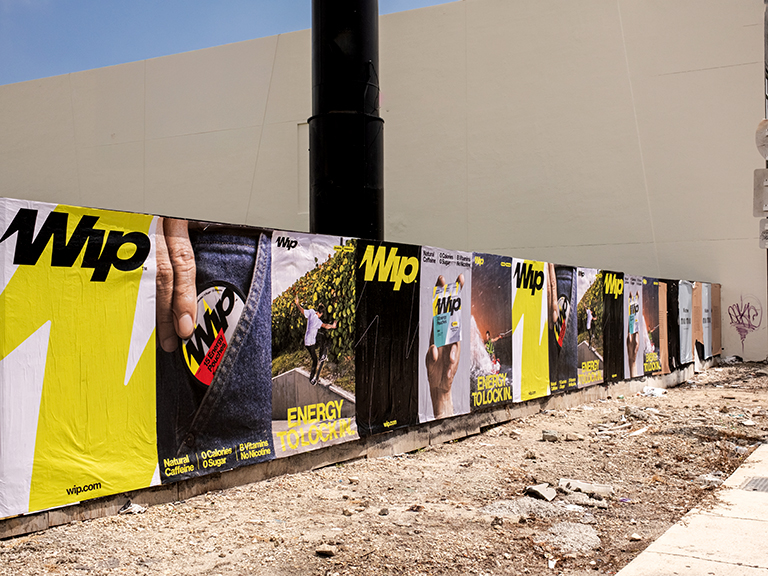
Chicago has one of the deepest advertising agency markets in the United States. Finding the best agency for your brand means knowing what you need and how to evaluate what each type of firm actually delivers.
Every brand that advertises in Chicago eventually asks a version of the same question: which ad agency in this market is right for us? The answer is not simple, because Chicago’s advertising agency market spans global holding company offices, strong independent full-service firms, digital specialists, creative boutiques, and guerrilla marketing firms with radically different capabilities, cost structures, and areas of genuine strength.
We are American Guerrilla Marketing. We operate in Chicago and we know the market from the inside. This guide does not rank the city’s ad agencies in any particular order, because agency rankings without reference to specific client needs are essentially meaningless. Instead, it offers a framework for understanding the Chicago ad agency environment and for identifying which type of firm is right for the specific kind of advertising you need to do in this market.
The Chicago Ad Agency environment in 2026
Chicago has been an advertising city since the 1880s, when Lord and Thomas, one of the earliest major American ad agencies, operated from the city. The tradition runs deep, and the modern Chicago agency market reflects that history with a level of professionalism and strategic sophistication that rivals any market outside New York. Chicago agencies have historically specialized in the categories that drive the city’s economy: packaged goods, healthcare, financial services, food and beverage, and retail. In these categories, Chicago agencies compete with New York and global firms on equal footing in terms of strategic depth and creative quality.
The modern Chicago agency market has diversified significantly beyond these heritage categories. The city’s growing technology sector has produced demand for technology marketing expertise that Chicago agencies are developing. The city’s strong venture capital network has created early-stage startup advertising needs that boutique Chicago firms serve increasingly well. And the city’s broad consumer market across socioeconomic segments creates demand for advertising that reaches audiences from the Loop to the South Side, which agencies with genuine Chicago market knowledge serve better than national firms working from out of market.
Categories of Chicago Ad Agencies
Full-Service Chicago Ad Agencies
Chicago’s full-service ad agency community includes offices of global holding companies, including Leo Burnett (now Leo), DDB, FCB, Publicis, and their network of affiliated agencies, alongside strong independent full-service firms that have built substantial Chicago practices. Full-service agencies are appropriate for brands running coordinated campaigns across multiple channels and who benefit from having a single firm orchestrating strategy, creative, media, and production.
The advantages of full-service agencies in Chicago are their integration capabilities and their category depth in the areas where Chicago agencies have historically excelled. The limitations are cost, the institutional overhead of large organizations translates to higher retainer requirements, and creative conservatism, large agencies tend toward work that satisfies internal approval processes and risk aversion rather than work that takes genuine creative risks in the market.
Chicago Digital Agencies
Digital-focused agencies in Chicago have grown significantly over the past decade and now represent a substantial portion of the city’s marketing services network. The strongest Chicago digital agencies focus on specific channels or categories where they have genuine depth: performance marketing, SEO, email marketing, social media management, or paid media across specific platforms. Generalist digital agencies that claim to do everything equally well are rarely as strong across the board as specialists in one or two channels.
Chicago Creative Boutiques
Chicago’s creative community has produced a number of boutique creative shops that offer high-quality brand strategy and creative development at below-holding-company prices. These boutiques typically employ senior creative talent that has left larger agencies to pursue more autonomous and focused work. For brands that have their own media buying relationships and primarily need strong creative strategy and execution, Chicago boutiques offer excellent value.
Guerrilla and Experiential Specialists
Chicago’s walkable neighborhoods and growing creative class have produced a specialized community of guerrilla and experiential marketing firms that understand the specific dynamics of street-level advertising in this market. These specialists have the crew relationships, location knowledge, and seasonal materials expertise that is built over years of Chicago field experience and that full-service agencies cannot replicate by adding guerrilla as a secondary service.
AGM Field Note: The Chicago ad agencies that consistently produce the best results for their clients are not necessarily the largest or the most award-winning. They are the ones with genuine depth in the specific category and channel the client needs, with operational infrastructure that matches their service claims, and with senior talent actively engaged on client work rather than pitching and then delegating to junior teams.
What Makes a Chicago Ad Agency Genuinely Good
Agency quality in Chicago, as in any market, is determined by a combination of strategic thinking, creative execution, operational infrastructure, and client relationship management. All four dimensions need to be strong for an agency to consistently deliver above expectations. Agencies that excel in two or three dimensions but are weak in the fourth consistently disappoint clients even when their pitch is excellent.
Strategic thinking is the agency’s ability to understand the brand’s competitive situation, identify the right consumer insight, and translate that insight into a campaign approach that actually works in the market. Chicago agencies with depth in specific categories tend to have stronger strategic thinking in those categories because they have encountered and solved similar strategic problems before. An agency with 20 years of packaged goods advertising experience has strategic pattern recognition in that category that a generalist agency cannot match.
Creative execution is the ability to translate strategic insight into advertising that genuinely reaches and moves the target consumer. Chicago’s creative talent is strong across all major advertising formats. The city’s design schools, advertising programs, and the creative talent that gravitates toward Chicago’s quality of life and cost of living have built a creative community that produces work at a very high level. The question is whether the agency you are evaluating consistently accesses the best of that talent for client work or concentrates it on pitch work and new business development.
Operational infrastructure, the systems, processes, crew relationships, and vendor networks that allow the agency to execute campaigns reliably and at quality, is the dimension that is hardest to evaluate from the outside and most important for the day-to-day experience of being a client. Agencies with strong operational infrastructure deliver campaigns that match their proposals and their presentations. Agencies with weak operational infrastructure produce pleasant presentations and disappointing executions.
How to Evaluate Any Advertising Agency Before Committing
The evaluation framework that consistently produces good agency decisions involves fewer criteria than most clients apply and deeper investigation on each criterion than most clients conduct. Here is the framework that works.
First: portfolio specificity. Ask to see work from brands in your specific category or in closely adjacent categories. Agency portfolio work from unrelated categories does not predict performance in your category because the strategic thinking, the creative conventions, and the audience dynamics differ enormously across categories. A healthcare advertising specialist may produce work you find visually impressive, but their thinking about how to reach your streetwear audience will be fundamentally different from an agency that lives in that world daily.
Second: reference quality. Ask for three references from clients with similar budgets and similar campaign types, and call all three. The questions that matter are: did the agency deliver what they promised in the pitch? How did they handle problems and complications? Would you hire them again? Positive answers to all three from multiple references is the strongest indicator of consistent quality. One glowing reference and two who do not return your call is a warning sign.
Third: execution infrastructure. For agencies doing physical-world work, including out-of-home advertising, guerrilla campaigns, events, and activations, ask specifically about their execution infrastructure. Do they have their own crews or subcontractors? What is their quality control process in the field? What does a typical documentation package look like? Agencies with strong execution infrastructure will answer these questions with specificity. Agencies without it will be vague.
Fourth: the day-to-day relationship. Ask specifically who will be managing your account and how senior that person is. Many agencies pitch with senior leadership and service with junior staff. Knowing who you will actually work with before you sign avoids the disappointment of discovering afterward that the director who led your pitch is a figurehead for your account while an entry-level account coordinator manages the actual relationship.
Fifth: contract terms. Read the contract carefully, particularly the termination provisions and the production markup structure. Standard agency contracts include 30 to 90-day notice provisions for retainer relationships and clearly defined production markup percentages. Contracts with long lock-in periods, punitive termination fees, or unclear production billing structures should be negotiated before signing or used as a reason to select a different agency.
Guerrilla Advertising in the Chicago Ad Agency Mix
Guerrilla advertising in Chicago works best when it is executed by specialists rather than handled as a secondary service by a full-service agency. The reason is simple: the operational knowledge required for quality guerrilla execution in Chicago, location-specific posting knowledge, seasonal materials specifications, crew quality control, and documentation standards, is built through focused field experience in this market rather than through general advertising practice.
Brands working with a Chicago full-service agency that has added guerrilla to its service list should ask specifically: do you have your own crews, or do you use subcontractors for installation? What quality control do you have over subcontracted installation work? Can you show me documentation photography from Chicago guerrilla campaigns you have managed in the past 12 months? Strong, specific answers indicate genuine capability. Vague or general answers indicate a service that is offered but not genuinely built.
For brands that want the best guerrilla execution in Chicago alongside their full-service agency relationship, engaging a specialist guerrilla firm directly and coordinating with the full-service agency on creative alignment and timing is often the most effective approach. The coordination overhead is minimal. The quality improvement over having the full-service agency manage guerrilla through untested subcontractors is significant.
How to Evaluate an Advertising Agency Before Signing
The evaluation process that consistently produces good agency decisions involves fewer criteria than most brands apply but deeper investigation on each one. Here is a proven framework.
Start with portfolio specificity. Ask to see work from clients in your specific category, not from the agency’s most impressive or most varied portfolio. An agency that has done excellent work in consumer packaged goods may have significantly less relevant experience in technology or entertainment. The strategic thinking, the creative conventions, and the audience dynamics differ enough across categories that category-specific experience genuinely predicts performance in ways that general excellence does not.
Then conduct real reference checks. Ask for three references from clients with similar budgets and similar campaign types to yours. Call all three, not just the one the agency volunteers. Ask specifically: did the agency deliver what they promised in the pitch? How did they handle complications in the field or in the creative process? Would you hire them again without hesitation? A strong, consistent set of positive answers to these questions is the most reliable predictor of a good agency relationship.
Examine execution infrastructure for any agency doing physical-world work. Ask specifically who will be on the ground managing installations, whether they use their own crews or subcontractors, how they handle field complications, and what their quality control process looks like. Agencies with genuine operational infrastructure answer these questions with specificity and confidence. Agencies that subcontract loosely will be vague or will redirect to capabilities they are more confident discussing.
Clarify the account management structure before signing. Ask to meet the person who will be managing your account day to day, not just the senior leadership who presented in the pitch. Many agencies pitch with their most impressive and senior people and service with junior account coordinators. Knowing who you will actually work with, and having the opportunity to assess that person before you sign, protects you from one of the most common sources of agency relationship disappointment.
Read the contract carefully, particularly the termination provisions and the production markup structure. Reputable agencies have straightforward termination clauses, typically 30 to 90-day notice periods, and transparent production billing. Agencies with complex lock-in provisions, punitive termination fees, or unclear production markup practices are telling you something about how they expect the relationship to function when it is not going well.
What Guerrilla Marketing Brings That Other Channels Do Not
Guerrilla marketing occupies a specific role in the advertising channel mix that no other format replicates. Understanding that role is essential for deciding whether to include it in a campaign and for evaluating which agencies are genuinely equipped to deliver it.
The unique value of guerrilla marketing is its ability to create genuine physical brand encounters in the environments where consumers live, rather than reaching consumers in the media environments they consume. When someone encounters a well-executed brand installation in their neighborhood, the experience is categorically different from seeing a digital ad: it is unexpected, it is in a context the consumer already trusts and values, and it generates a level of attention and memory encoding that passive media cannot replicate.
The social media amplification of physical brand moments has added a second layer of value to guerrilla marketing that did not exist in the format’s early years. A brand installation in Wicker Park or Silver Lake or Williamsburg that is genuinely interesting will be photographed and shared by the neighborhood’s active content creator community, reaching audiences in other cities and demographics that are not physically present at the execution. This amplification makes the effective reach of a well-executed guerrilla campaign far larger than the physical foot traffic at the installation location would suggest.
Earned media is the third layer of guerrilla marketing value. Campaigns with genuine news value, whether because the creative is exceptionally strong, the location is culturally significant, the timing aligns with a relevant moment, or the execution breaks new creative ground, generate press coverage that extends the campaign’s reach to readers who never encountered the physical execution. This earned media is free in the sense that it requires no additional media spend, but it requires the initial investment in quality creative and professional documentation to produce the press-worthy visual evidence that editors require.
For agencies that claim guerrilla capabilities, the relevant question is whether their guerrilla practice is genuinely built to deliver all three layers of value, physical presence, social amplification, and earned media, or whether they are delivering only the first layer, physical placement, without the documentation and press strategy infrastructure that makes the broader value accessible. Many agencies that offer guerrilla as a service deliver physical placements but leave the amplification and earned media value on the table because they have not built the practice around those outcomes.
The Intersection of Traditional and Street-Level Advertising in Chicago
Chicago’s advertising market is one of the most mature in the United States, which means the integration of traditional and street-level advertising approaches is more developed here than in most comparable markets. Brands that have been running integrated Chicago campaigns for several years have figured out how to combine transit advertising, digital targeting, PR, and guerrilla street work in ways that multiply each channel’s effectiveness.
The typical integration pattern in Chicago puts digital advertising as the foundational layer: targeted digital campaigns in specific neighborhoods build frequency and awareness with the right audience. Transit advertising on the L Train lines serving the target neighborhoods adds unavoidable physical frequency in the commute environment. Guerrilla street campaigns in specific neighborhood corridors create the cultural engagement and social documentation that transit and digital cannot generate. And earned media outreach to local press amplifies the street campaign to a broader audience than those who physically encounter it.
Ad agencies in Chicago that understand this integration pattern and can execute each component at a high level are genuinely valuable. They require that the agency has multiple specialized capabilities working in coordination rather than each channel being siloed in a separate department or subcontracted to separate vendors without coordination. Brands evaluating Chicago ad agencies should ask how the agency coordinates its digital, out-of-home, guerrilla, and earned media capabilities for integrated campaigns, and what the integration looks like in practice versus in theory.
The most successful Chicago advertising agencies have learned that the city’s distinct neighborhood cultures require distinct creative approaches within a unified campaign strategy. A campaign running in Wicker Park, Pilsen, and Hyde Park simultaneously needs to feel native to each neighborhood while maintaining brand consistency. The agencies that have developed the market knowledge to achieve this, to create work that feels specific to each neighborhood without losing brand coherence, consistently outperform agencies that apply a single creative approach uniformly across the entire Chicago geography.
Measurement and Accountability in Advertising Agency Relationships
One of the most important conversations to have with any advertising agency before signing is the measurement conversation. How will the campaign’s success be measured? What are the specific metrics that will be reported, at what frequency, and in what format? What happens when the campaign underperforms against those metrics? What level of creative and strategic iteration is included in the scope and what triggers additional fees?
Clear, upfront agreement on measurement and accountability protects both parties in an agency relationship. The client gets explicit commitments about what will be measured and what the agency’s response will be to performance data. The agency gets protection against being evaluated on metrics that were not part of the original scope or that are outside the agency’s ability to control. Brands and agencies that fail to have this conversation upfront consistently find themselves in conflict about performance when the campaign is already running, which is the worst time to establish expectations.
For guerrilla campaigns specifically, the measurement conversation is particularly important because the format does not produce the kind of attributable digital performance data that paid search or paid social does. The relevant metrics for guerrilla campaigns are photo documentation of coverage, earned media placements generated by the campaign, social sharing and organic documentation by consumers in the field, and brand search lift during and after the campaign period. Brands that agree on these metrics upfront will evaluate the campaign fairly. Brands that agree on guerrilla as a format and then try to evaluate it against digital performance metrics will be disappointed, not because the campaign failed, but because they are applying the wrong measurement framework.
Long-Term Agency Relationships vs Project-Based Engagements
Brands choose between retainer-based agency relationships and project-based engagements for different reasons, and both models have genuine advantages depending on the brand’s situation. Understanding the dynamics of each model helps brands choose the right structure for their specific circumstances.
Retainer relationships provide consistency, deeper brand knowledge, and priority access to the agency’s resources. An agency that works with a brand for two or three years on retainer develops understanding of the brand’s audience, its competitive position, its creative preferences, and its operational requirements that a project-based agency cannot develop in the context of a single campaign. This accumulated knowledge makes each campaign in a long-term relationship more effective than the first, because the agency is not rebuilding understanding from scratch each time.
Project-based engagements provide flexibility and the ability to select the best agency for each specific campaign type. A brand that runs both brand awareness campaigns and performance marketing campaigns may benefit from using a creative boutique for the awareness work and a digital performance agency for the conversion work, engaging each on a project basis rather than asking a single agency to do both well. Project-based engagements also allow brands to test agency relationships before committing to a retainer, which protects against the cost of discovering that an agency’s execution does not match its pitch after a long-term relationship has been established.
For guerrilla marketing specifically, project-based engagements are the most common model because brands often want guerrilla for specific campaign moments, launches, seasonal activations, or event-timed campaigns, rather than as an ongoing monthly service. Guerrilla specialists like AGM work on project bases as well as retainer relationships, and the project model allows brands to access specialist guerrilla capability without the overhead of an ongoing retainer when guerrilla is not a continuous need.
Frequently Asked Questions
What types of ad agencies operate in Chicago?
Chicago has holding company network offices, independent full-service agencies, digital specialists, creative boutiques, PR firms, media buying shops, and specialized guerrilla and experiential marketing firms. The city’s advertising heritage has produced one of the deepest and most diverse agency markets in the country, with genuine strength across most marketing disciplines.
How do I find the right ad agency in Chicago for my brand?
Define your specific marketing objective, target audience, and budget before evaluating agencies. Ask for portfolio work in your category, references from comparable clients, and specific answers about execution infrastructure and day-to-day account management. These criteria consistently outperform selecting by agency size, reputation, or award history.
Does AGM work with Chicago brands?
Yes. AGM works directly with Chicago brands on guerrilla and street-level campaigns, and in partnership with Chicago ad agencies that need guerrilla execution capabilities for their clients. We have direct crew relationships and location knowledge across all major Chicago neighborhoods.
How do Chicago agency costs compare to national averages?
Chicago agencies typically price below New York and Los Angeles equivalents at comparable capability levels. The city’s lower operational costs are reflected in agency pricing, making Chicago a market where brands often find excellent value relative to what they would pay for equivalent quality in coastal markets.
What is the best way to evaluate a Chicago guerrilla marketing agency?
For more on this, explore our wheatpasting poster campaigns.
For more on this, explore our street teams activations.
Ask for documentation photography from Chicago campaigns they have run in the past 12 months. Ask whether they use their own crews or subcontractors. Ask for references from comparable clients. These three questions will quickly distinguish between genuine specialists and firms that offer guerrilla as a secondary, lightly built capability.