B2B marketing gets complicated fast. You’re not trying to reach consumers browsing Instagram during lunch. You’re trying to reach purchasing managers, operations directors, CFOs, and procurement committees. These are busy people with high skepticism and long decision cycles. Traditional advertising rarely breaks through. But a well-executed event does.
A B2B event marketing agency creates situations where your brand and your potential buyers are in the same room, at the same conference, or in the same city block with a reason to talk. These aren’t just parties with business cards. They’re carefully structured environments designed to accelerate relationships, demonstrate product value, and create the kind of trust that eventually closes a contract.
At American Guerrilla Marketing, we work on the event and activation side of B2B marketing. We run conference activations, trade show campaigns, corporate outdoor programs, and street-level brand presence that support the account-based goals of B2B companies trying to reach decision-makers in the real world. This guide covers what B2B event marketing actually looks like in practice and what to demand from the agency you hire to run it.
B2B buyers don’t make decisions the way consumer buyers do. The purchase cycle is longer. More people are involved. The stakes are higher. And the primary currency of B2B sales is trust, which takes time to build and is almost impossible to manufacture through digital advertising alone.
Events accelerate trust. Face-to-face interaction compresses months of email follow-up into a single conversation. A B2B buyer who meets your team at a conference, sees your product demonstrated, and has a real conversation about their specific problem is many times more likely to move forward than one who has only consumed your content marketing and seen your LinkedIn ads.
Gartner research consistently shows that in-person interaction with a vendor remains one of the most influential factors in B2B purchase decisions. This doesn’t mean every deal closes at a conference. But it does mean that companies that invest in physical presence in the spaces where their buyers gather have a measurable advantage over those that don’t.
Events also create content. A well-produced conference activation generates photos, videos, testimonials, case study conversations, and social media content that extends the campaign’s reach far beyond the attendees in the room. The investment pays forward.
Types of B2B Event Marketing
B2B event marketing covers a wide range of formats. Here’s how we categorize the major types.
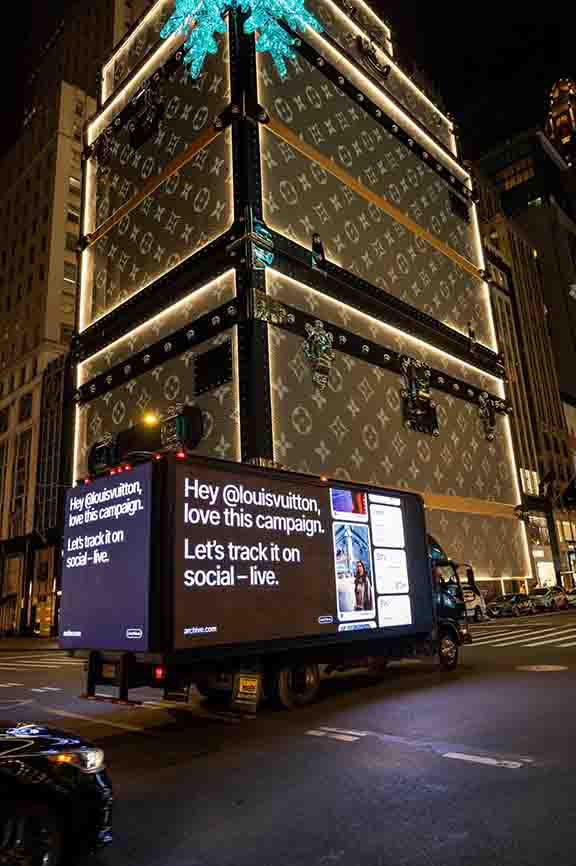
The last format on that list is one we specialize in specifically. When a major industry conference comes to a city, the area around the convention center becomes a temporary B2B marketing zone. The attendees are all in town, concentrated in a few hotels and conference venues, walking specific streets between sessions. That’s an extraordinary opportunity for smart outdoor marketing in a context where your competitors are all fighting for the same attention inside the convention hall.
The Outdoor Advantage in B2B Event Campaigns
Every major B2B conference creates a geographic concentration of decision-makers. They land at the same airport, stay in the same hotel cluster, walk the same two or three blocks between the venue and their dinner reservations. That concentration is a street marketing opportunity that most B2B companies ignore entirely.
Think about what Salesforce World Tour does to the areas around Madison Square Garden or Javits Center in New York. Or what CES does to the Las Vegas Strip. Or what South by Southwest does to downtown Austin. The most relevant buyers in your industry are all physically present in a small area for three to five days. A well-placed outdoor campaign in that zone reaches them in a context where they’re already thinking about the industry.
We’ve run outdoor campaigns for B2B companies timed to major conferences in New York, Las Vegas, Chicago, and Austin. We place brand presence in the corridors between the convention venue and the conference hotels. We put street teams in the lobbies and surrounding streets during high-traffic hours. We create outdoor visuals that reinforce the conference sponsorship the brand is running inside the venue. The result is a surround-sound effect that makes the brand feel significantly larger than the budget actually requires.
Most B2B companies fight for attention inside the convention hall. The smart ones own the block outside it. Conference attendees walk those streets. Meet them there.
What to Look for in a B2B Event Marketing Agency
B2B event marketing requires different skills than consumer event marketing. The audience is smaller, the stakes are higher, and the follow-through process is more complex. Here’s what to evaluate when you’re choosing an agency partner.
Experience with B2B audiences
An agency that has only run consumer brand activations may not understand the dynamics of B2B buyer psychology. Look for an agency that can discuss how business buyers make decisions, how event experiences connect to pipeline, and how to measure results in terms that matter to a B2B marketing team.
Conference and trade show expertise
Major conferences have strict rules about what you can and can’t do in the venue and around it. An experienced agency knows these constraints and builds campaigns within them. They also know the geography of major conference cities and how to place outdoor presence effectively in the zones where conference attendees concentrate.
Data and reporting discipline
B2B marketing teams measure everything. Events are no different. Your agency should be able to tell you how many qualified conversations happened, what follow-up actions were initiated, and how the event contributed to pipeline. If an agency’s reporting amounts to attendance counts and a highlight reel, they’re not equipped for B2B.
Integrated campaign thinking
The best B2B event campaigns don’t exist in isolation. They connect to pre-event outreach, in-event activation, and post-event follow-up. The physical event is the centerpiece, but the campaign extends before and after. An agency that only thinks about the day-of execution is missing most of the value.
Executive-level account management
B2B clients expect a different level of communication than consumer brands. Your agency should have senior-level account managers who understand your business, speak the language of your industry, and represent the partnership at the level your internal decision-makers expect. Junior account management on a strategic B2B program is a recipe for misalignment.
Building a B2B Event Marketing Strategy
A B2B event strategy starts with the calendar. Map every major conference and trade show that attracts your ideal buyers. These are your anchors. Then layer in the owned and hosted events that you control: executive dinners, customer summits, product launch events, and regional roadshows. Finally, identify the outdoor and street marketing opportunities that appear around the major conferences and events in your calendar.
Against that calendar, map your sales cycle. When are purchase decisions typically made in your category? Work backward from those decision points to identify the events where your presence would have the most impact. A conference that happens six weeks before your biggest contract renewal window is worth more than one that happens right after it.
Then allocate budget across the year with the understanding that some events deserve significant investment and others deserve presence-level investment. Not every conference is a Dreamforce. Some deserve a sponsored session and dinner with ten prospects. Some deserve a full booth, a major outdoor presence, and a hosted evening experience. Know which is which before you commit budget.
The worst B2B event strategy is showing up everywhere with mediocre presence. The best strategy is showing up at the right events with enough investment to be memorable.
Measuring B2B Event Marketing ROI
B2B event marketing ROI is measurable, but it requires the right framework and the discipline to actually collect and track the data. Here’s how we think about measurement.
Conversion from event attendance to sales opportunity
Calendar tracking, sales team reports
Opportunity creation
New deals opened in CRM within 30 days of event
CRM with event source tagging
Pipeline influenced
Total deal value where event touched the buying process
Opportunity source and activity tracking in CRM
Brand recall lift
Change in unaided brand awareness among event attendees
Pre- and post-event surveys
Cost per qualified conversation
Efficiency of event investment vs. other channels
Total event spend divided by qualified conversation count
The most important thing about B2B event measurement is establishing the framework before the event happens. If you don’t define what a qualified conversation is, how it gets recorded, and who’s responsible for entering it into the CRM, you’ll walk away from the event with a lot of business cards and no data.
B2B Event Marketing Mistakes That Cost Companies Real Money
After running campaigns alongside B2B event programs for years, we’ve seen the same mistakes made by companies of all sizes. Understanding these pitfalls saves you budget and frustration.
Showing up without a meeting strategy. The biggest waste in trade show marketing is paying for a booth and then waiting for people to walk by. The companies that generate the most pipeline from conferences are the ones that scheduled meetings weeks before the show opened. Book your meetings before you land. The floor is for confirming and deepening relationships you’ve already started.
Underinvesting in booth staff quality. Your booth staff are your front line. If they don’t know the product deeply, can’t qualify a conversation, and aren’t prepared to handle objections, the booth investment produces nothing. Invest in staff training at least two weeks before any major conference. Role-play the conversations they’ll actually have. Prepare them for the top five questions your buyers ask.
Neglecting the city outside the venue. Conference attendees spend most of their time outside the convention hall. They eat breakfast at hotels two blocks away. They take evening walks around the venue. They grab coffee at the same three spots near their hotel. If your brand only exists inside the convention center, you’re missing the majority of the time your buyers are actually in the city.
Failing to follow up within 48 hours. B2B conference leads decay fast. The buyer you had a great conversation with on Tuesday has met fifty other vendors by Thursday. If your follow-up email lands on Monday of the following week, you’ve lost most of the advantage that in-person interaction created. Follow up within 48 hours. Personalize the message to the specific conversation you had.
Measuring outputs instead of outcomes. Badge scans are an output. Meetings booked are an outcome. Pipeline created is an outcome. Revenue influenced is an outcome. Far too many B2B event programs report badge counts and call it success. The only metrics that matter are the ones that connect event activity to business results.
Running the same event presence year after year. Buyers notice when a company’s conference presence never changes. The same booth design, the same giveaways, the same panel session, the same dinner venue year after year signals a company that isn’t growing. Refresh your event presence regularly. Update the creative. Change the format. Give people a reason to engage with you again even if they’ve seen you at this conference before.
The American Guerrilla Marketing Approach to B2B Events
We come at B2B event marketing from the street side. We specialize in the physical presence components: outdoor campaigns, street team deployments, and conference-adjacent activations that build brand visibility in the zones where B2B buyers actually are during a conference week.
We’ve run outdoor programs around major conferences in New York, Las Vegas, Chicago, and Austin. We know which streets the attendees walk between the venue and their hotels. We know which coffee shops and restaurants fill up with conference goers during the day. We know how to build outdoor presence that makes a brand feel significant before the buyer walks into the convention hall.
We also integrate this street-level work with the inside-the-conference strategy your team is running. A company that has a booth inside the conference and outdoor presence on the surrounding streets creates a surround-sound brand experience that companies relying only on the booth simply can’t replicate.
If you’re heading to a major conference and you want to own the city block outside the venue as well as your space inside it, that’s exactly the conversation we want to have.
Frequently Asked Questions
What does a B2B event marketing agency do?
A B2B event marketing agency plans, produces, and executes marketing events designed to reach business buyers. Services typically include trade show strategy and booth production, hosted executive dinners, conference sponsorship activations, roadshow management, and outdoor campaigns around conference venues. The goal is creating direct access to decision-makers in environments where relationship-
How is B2B event marketing different from consumer event marketing?
B2B audiences are smaller, more specialized, and have higher expectations for relevance and quality. B2B events must connect clearly to business value and sales outcomes. Measurement focuses on pipeline impact rather than exposures or reach. The decision timeline is longer and the purchase stakes are higher, which means the event must support a relationship over time rather than just creating a mo
What types of events work best for B2B companies?
Trade shows work best for companies in verticals with running industry conferences. Executive dinners work well for enterprise sales with high average contract values. Roadshows work well for companies expanding into new geographic markets. Conference sponsorships work for companies that want thought leadership positioning. Outdoor campaigns around conferences work for companies that want maximum
How should we measure B2B event marketing ROI?
Start with pipeline impact. Track qualified conversations, meeting bookings, and opportunities created within 30 days of each event. Tag CRM opportunities with the event that influenced them. Calculate cost per qualified conversation and compare it to your other lead generation channels. Track opportunities through close to determine influenced revenue. Pre-and post-event brand recall surveys add
How much does B2B event marketing cost?
Costs vary widely by format. A standard trade show booth presence at a mid-size industry conference might cost $15,000 to $100,000 including space, design, and staffing. An executive dinner for 20 prospects in a major city might cost $5,000 to $20,000. An outdoor campaign around a conference venue might run $3,000 to $15,000 depending on format and duration. Full conference activation packages inc
How far in advance should B2B companies plan event marketing?
Major trade shows require six to twelve months of advance planning for prime booth placement and sponsorship selection. Executive dinners and hosted events need four to eight weeks. Outdoor campaigns around conference venues need four to six weeks for production and placement. The more complex the event, the earlier you need to start planning. Last-minute event marketing is expensive and usually u
What’s the best way to generate leads at a trade show?
The best lead generation happens before, during, and after the show. Pre-show outreach to booked attendees to schedule meetings in advance dramatically improves results. During the show, focus on qualifying conversations rather than collecting as many badges as possible. Post-show follow-up within 24 to 48 hours while the interaction is fresh is critical. Outdoor presence in the conference city pr