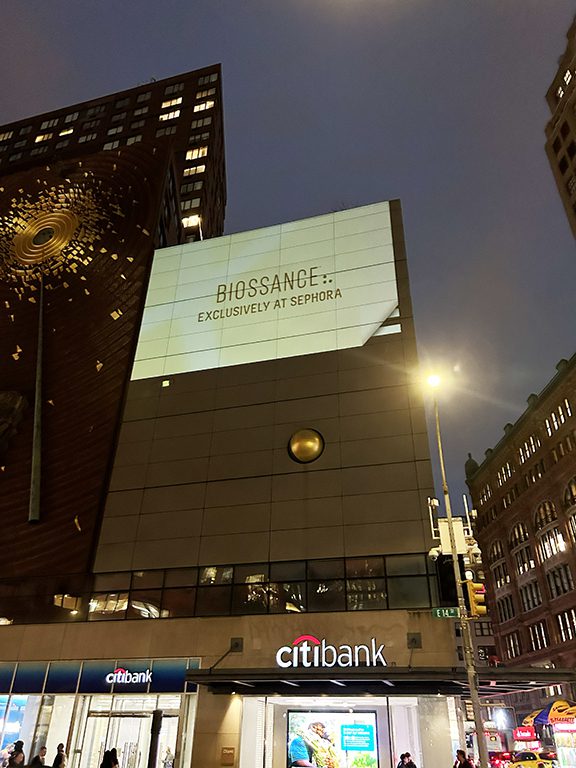
Agency activation is the part of marketing that moves off the screen and into the real world. It’s how brands stop being an ad someone skips and start being something someone actually experiences. A well-executed activation puts your brand in the hands, in the eyes, and in the conversation of the audience you need to reach. It doesn’t just tell people about a product. It gives people a reason to talk about it.
At American Guerrilla Marketing, activation is what we do. We run brand activations across New York, Los Angeles, Chicago, Miami, Austin, and markets across the country. We work with consumer brands, entertainment companies, CPG startups, and legacy brands that need to rediscover street-level relevance. If you’re looking for an agency activation partner that knows how to build real moments in real places, this is for you.
This guide covers what agency activation means in practice, the formats that work best, the markets where we operate, and what you should demand from any activation partner you hire.
The word activation gets used loosely. In marketing, it can mean anything from a digital retargeting campaign to a pop-up store to a sponsored concert. For our purposes, activation means physical, human-scale brand presence in a space where your target audience already is.
Activation is the opposite of passive advertising. A billboard waits for someone to look at it. An activation goes to where the audience is and creates a moment. It might be a street team sampling product outside a subway exit. It might be a branded pop-up in a park during a weekend festival. It might be an immersive experience installed in a retail space that draws a line around the block. Whatever the format, the defining characteristic is that real people physically engage with your brand rather than scrolling past it.
The term agency activation specifically refers to activations designed, produced, and executed by a specialized marketing agency rather than an in-house team. Brands hire activation agencies because building and operating field campaigns at scale requires expertise, infrastructure, and relationships that most internal marketing teams don’t have. You need to know how to find and train the right people, how to manage logistics across multiple cities, how to document results, and how to adapt in real time when something doesn’t go as planned.
The Core Formats of Brand Activation
Activation takes many forms. The right format depends on your brand, your audience, your goals, and your budget. Here’s how we think about the major activation categories.
High-impact visual campaigns in specific neighborhoods
Days to weeks
Retail Activation
In-store events, demo days, product launches
Single day to recurring
We’ve executed all of these formats across hundreds of campaigns. Each has its own operational demands and its own best-use case. The most effective campaigns often combine two or three formats: a street team that drives awareness, a pop-up that creates an experience, and outdoor visuals that reinforce the message in the surrounding neighborhood.
What Makes an Activation Work
The difference between a memorable activation and a forgettable one comes down to a few fundamentals. We’ve built enough campaigns to know which decisions matter most.
Location intelligence
Activation is about meeting your audience where they are. That requires knowing where they are. We don’t pick locations based on gut instinct. We research pedestrian traffic patterns, demographic clustering, competitive activity, and neighborhood culture before we place a single team member. In New York, that might mean choosing Bedford Avenue in Williamsburg over a location in Midtown because the Bedford Avenue audience matches a brand’s consumer profile more precisely. In Chicago, it might mean Wicker Park over the Mag Mile for the same reason.
Staff quality
Your activation is only as good as the people running it. Brand ambassadors who are enthusiastic, knowledgeable, and personable create moments that stick. Ambassadors who are distracted, scripted, or disengaged create the opposite. We invest in finding and training the right people because a five-person team of excellent ambassadors outperforms a twenty-person team of mediocre ones every single time.
Creative that works in the real world
Activation creative has to work at eye level, in motion, in all weather, with no controlled viewing environment. A piece of creative that looks extraordinary in a presentation deck may fall flat on a sidewalk on a gray Tuesday. We build creative that works in the actual context of deployment, more than in the pitch.
Documentation and measurement
Every activation we run generates data. Samples distributed. Conversations initiated. Photos submitted. Foot traffic counted. Engagements tracked. We provide detailed reporting for every campaign because brands deserve to know what they got for their investment, more than a feel-good summary.
The best activations create a moment the audience didn’t expect in a place they were already going. Surprise and relevance together are more powerful than either one alone.
Agency Activation in New York City
New York is the highest-density activation market in the country. The city puts your brand in front of more people per square foot than anywhere else. It also demands the most precise execution because the audience is sophisticated, distracted, and has seen everything.
We run New York activations across the five boroughs with a focus on the neighborhoods where consumer culture is most concentrated. In Manhattan, that means SoHo’s Spring Street and Prince Street corridors, the Meatpacking District, the Lower East Side around Orchard Street and Delancey, and Midtown pedestrian zones near transit hubs like Grand Central and Penn Station. In Brooklyn, it means Williamsburg’s Bedford Avenue and North 7th Street, DUMBO, Park Slope’s 5th Avenue, and Bushwick’s Wyckoff Avenue. In Queens, it means the Astoria commercial strip on Steinway Street and the Jackson Heights retail zone on 74th Street.
New York activations require permits for some formats and careful location scouting for others. Our team knows the city’s geography, its foot traffic patterns by neighborhood and time of day, and the operational details that make campaigns run cleanly in the most logistically complex market in the world.
Agency Activation in Los Angeles
Los Angeles activations operate on a different logic than New York. The city is spread across 503 square miles with no single dense corridor. Effective LA activation requires choosing neighborhoods strategically and often running simultaneous deployments across multiple zones to build meaningful coverage.
We run campaigns on Fairfax Avenue and Melrose for streetwear and music brands, on Abbot Kinney in Venice for lifestyle and wellness brands, in the Arts District on Traction Avenue for creative and design-adjacent audiences, and in Silver Lake along Sunset Boulevard for music, food, and lifestyle brands. Each neighborhood has a distinct culture and a distinct audience. We build activation strategies that match format and location to audience, not the other way around.
Agency Activation in Chicago
Chicago’s activation geography follows its commercial corridors. Milwaukee Avenue through Wicker Park and Bucktown is the city’s most concentrated zone of independent retail, music venues, restaurants, and creative businesses. Division Street through Ukrainian Village extends that reach. Andersonville’s Clark Street and Pilsen’s 18th Street add distinct community audiences. The Loop and River North give access to corporate and tourist traffic that matters for certain brand profiles.
We know Chicago from the street. We’ve run campaigns in the city’s most productive neighborhoods and we understand which audiences live where, how they move, and what kind of activation cuts through in each zone.
What to Ask Before You Hire an Activation Agency
Not all activation agencies are the same. Some specialize in large-scale corporate events. Some focus exclusively on music festivals. Some are strong in digital but thin on the physical side. Before you hire anyone to run your activation, get honest answers to these questions.
Have you run activations in my target market? Experience in the specific city and neighborhood where your campaign will run matters more than general activation experience. Street-level knowledge is earned, not assumed.
Who manages the team in the field? An activation is only as good as its field management. Ask who runs the team on the day of execution, how they handle problems, and how they report back to you in real time.
What does your documentation look like? Ask to see a sample report from a previous campaign. If the agency can’t show you photos, data, and structured reporting from past work, you’re flying blind.
How do you handle weather, no-shows, or location issues? Real campaigns encounter real problems. How an agency responds to adversity tells you more about their operational quality than anything in their proposal.
What do you measure? Define success metrics before the campaign launches, not after. If the agency doesn’t have a clear measurement framework for the format they’re proposing, that’s a red flag.
Activation done right puts your brand into a real moment with a real person. No algorithm, no bid strategy, no retargeting pixel creates the kind of memory that a great live experience does.
How to Budget for an Activation Campaign
Activation budgets vary enormously depending on format, scale, and market. Here’s a practical framework for how to think about costs.
Campaign Component
Typical Cost Range
Street team deployment (per day, per city)
$800 to $4,000
Pop-up experience build and setup
$5,000 to $75,000+
Mobile branded vehicle (per day)
$1,500 to $6,000
Outdoor campaign production and placement
$2,000 to $25,000
Creative development and production
$3,000 to $30,000
Campaign management and reporting
15% to 25% of total budget
The most common budget mistake is underinvesting in execution quality while over-investing in physical production. A beautiful branded structure staffed by underprepared brand ambassadors wastes more money than a simpler setup staffed by excellent people. Invest in your people first.
Why Physical Activation Still Outperforms Digital-Only Campaigns
Digital advertising has efficiency advantages that physical campaigns can’t match: precise targeting, instant measurement, rapid iteration. We use digital as part of an integrated strategy. But digital alone has a fundamental limitation: it interrupts people who are trying to do something else.
Physical activation meets people where they want to be. When someone is walking down Bedford Avenue in Williamsburg on a Saturday afternoon, they’re in a discovery mindset. They’re looking for things. They’re open to something new. A brand activation in that moment doesn’t feel like an interruption. It feels like part of the neighborhood experience. That’s a completely different emotional state than encountering an ad while you’re trying to watch a YouTube video.
Physical activation also creates shareable moments. When people photograph, film, and post about a brand experience, the reach extends well beyond the people physically present. A single well-executed activation can generate earned media that reaches audiences in cities where the brand has no physical presence at all. That multiplier effect is unique to physical activation and impossible to replicate with paid digital alone.
The American Guerrilla Marketing Approach
We’ve been running street-level brand activations since before the term experiential marketing was common. We know what works because we’ve built it, run it, measured it, and refined it across hundreds of campaigns in the most competitive urban markets in the country.
We don’t sell packages. We build campaigns. Every activation we run starts with a conversation about your brand, your audience, and your goals. We bring market-specific knowledge, creative that works in real environments, and operational discipline that keeps campaigns on track even when things don’t go as planned.
We also tell you the truth. If a format isn’t right for your objective, we’ll say so. If a market isn’t ready for your product, we’ll tell you. Our job is to make your campaign succeed, and that sometimes means pushing back on assumptions rather than just delivering what was asked for.
Activation Timing: When to Run and When to Wait
Timing is a decision that most brands underweight in activation planning. The right activation in the wrong week is wasted spend. Match your activation window to when your target audience is most concentrated and most receptive.
Seasonal patterns matter. Food and beverage brands get more out of summer street activations than winter ones in most markets. Back-to-school season is prime time for education and tech brands targeting the 18-to-24 demographic. Holiday shopping windows create concentrated retail foot traffic that amplifies sampling and in-store activations significantly.
Event calendars are just as important. A brand targeting sports fans schedules around game days. A brand targeting the music community schedules around major concert weeks and festivals. A brand targeting urban creatives times activations to major gallery openings or design events. Knowing your audience’s calendar is inseparable from knowing how to reach them.
We build timing recommendations into every activation brief. The when is as important as the where and the what.
Frequently Asked Questions
What is agency activation?
Agency activation refers to brand experiences and campaigns designed and executed by a specialized marketing agency. It typically involves physical, real-world presence: street teams, pop-ups, mobile tours, event integrations, and outdoor campaigns. The goal is creating direct contact between a brand and its target audience rather than relying solely on media advertising.
How is activation different from traditional advertising?
Traditional advertising interrupts an audience that’s trying to do something else. Activation creates an experience the audience can choose to engage with. Activation is participatory where advertising is passive. The emotional impact of a real experience is typically much stronger than exposure to an ad, which is why activated campaigns often outperform pure media campaigns in brand recall and pu
What types of brands benefit most from activation?
Consumer goods brands, food and beverage companies, fashion and apparel brands, entertainment properties, and technology products with a consumer audience all perform well in activation. The format works best for brands that benefit from trial, demonstration, or community-based discovery. Brands that need to reach a specific geographic audience also benefit strongly from physical activation.
How much does a brand activation cost?
Basic street team activations can run $800 to $4,000 per day per market. Pop-up experiences range from $5,000 to well over $75,000 depending on the complexity of the build and the length of the program. Multi-city mobile tours scale accordingly. We work across a range of budgets and always start with what you need to accomplish before recommending a format and a budget.
How do activation agencies measure success?
Measurement depends on the campaign format and goals. Common metrics include samples distributed, engagements initiated, foot traffic generated, social media posts created, photos submitted by field staff, and follow-up conversion rates. For campaigns connected to retail, we can sometimes track lift in store sales during and after the activation period. Good agencies build measurement frameworks b
How far in advance should I book an activation agency?
Four to eight weeks is a reasonable lead time for most street team and outdoor activations. Complex pop-up builds or multi-city tours require three to six months of planning. The sooner you start, the better. Last-minute campaigns are expensive and rarely as effective as properly planned ones.
What cities does American Guerrilla Marketing run activations in?
We run activations in New York City, Los Angeles, Chicago, Miami, Austin, San Francisco, Washington DC, Philadelphia, Boston, and other major markets. We can also extend into secondary markets for multi-city campaigns. Contact us with your target geography and we’ll confirm our capabilities in those markets.