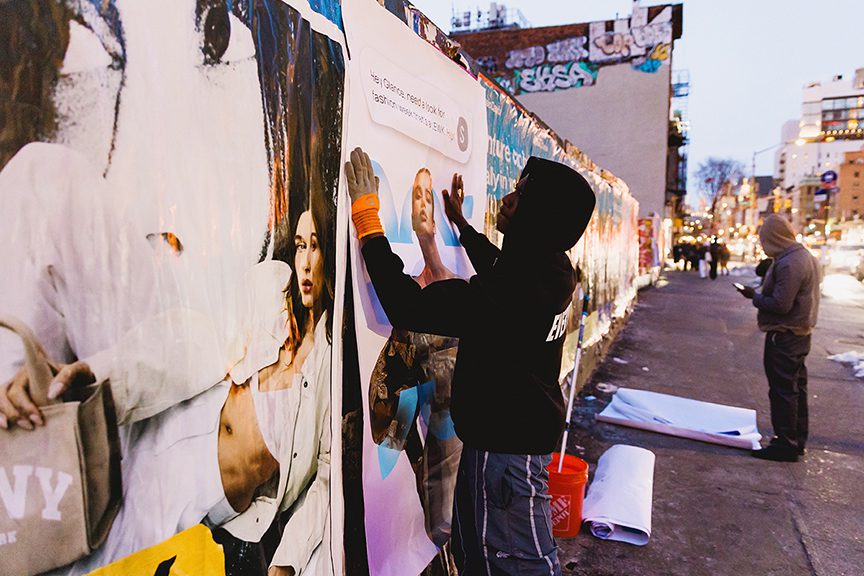
When brands talk about reaching people “where they are,” most of the time they mean digital platforms. But people are also in the world. They walk through neighborhoods, they wait for trains, they go to parks on weekends, they shop at farmers markets, they attend music festivals, they run errands on familiar streets. An activations company puts your brand in those real-world moments rather than interrupting the digital ones.
At American Guerrilla Marketing, we are an activations company. We design and execute brand activations that put products in people’s hands, brands in people’s conversations, and marketing campaigns in the physical spaces where real life happens. We work in New York, Los Angeles, Chicago, Miami, Austin, and markets across the country. This guide explains what a professional activations company does, the formats that work, and what to look for when you’re choosing one.
An activations company bridges the gap between what a brand wants to say and what a consumer actually experiences. The company takes a brand’s marketing goals and translates them into physical moments: street team deployments, pop-up experiences, product sampling programs, event integrations, mobile tours, and outdoor campaigns that create real contact between the brand and its target audience.
The work spans two distinct disciplines. Creative development means designing activation concepts that are genuinely interesting to the target consumer: experiences worth stopping for, sampling opportunities worth accepting, events worth attending. Operational execution means managing the logistics, staffing, and real-time field management that makes those concepts actually happen in the real world at the quality the brand needs.
Most brands find that they’re capable of one or the other but not both at the same time. A strong internal creative team can develop compelling activation concepts but may not have the operational infrastructure to execute them across multiple markets. An operations-focused internal team can manage logistics but may not have the creative expertise to design experiences that genuinely engage the target consumer. A professional activations company brings both dimensions to every engagement.
Immersive brand engagement, press and social content generation
Weekend to multi-week
Mobile branded tour
Multi-city reach, community presence, product demonstration
Multi-week to multi-month
Event sponsorship activation
Audience-aligned brand presence at high-attendance events
Event duration
Retail activation
In-store brand presence, demo events, product launch support
Single day to recurring program
Outdoor brand installation
Visual impact, brand awareness, PR catalyst
Days to weeks
Brand Activations in New York City
New York City is the most concentrated activation market in the country. The density of people per square foot, the clustering of media and press, the concentration of cultural influencers, and the speed at which word spreads through the city’s social networks make New York an extraordinarily high-use market for brand activations.
We run New York activations across all five boroughs with specific expertise in the neighborhoods where consumer culture is most concentrated. In Manhattan, that means the SoHo corridor along Spring Street and Prince Street, the Flatiron District around Fifth Avenue and 23rd Street, the Meatpacking District along Gansevoort and West 14th, and the transit hubs at Penn Station, Grand Central, and Union Square where daily foot traffic reaches into the hundreds of thousands. In Brooklyn, it means Bedford Avenue in Williamsburg, Fifth Avenue in Park Slope, Fulton Street in Downtown Brooklyn, and the Flatbush Avenue corridor in Crown Heights and Flatbush. In Queens, it means Steinway Street in Astoria, 74th Street in Jackson Heights, and Jamaica Avenue in Jamaica.
Each of these locations has a distinct consumer profile and requires activation design that fits the specific neighborhood context. We don’t run generic activations. We design for the specific place, the specific audience, and the specific time of day that makes the most sense for the brand’s goals.
Brand Activations in Los Angeles
Los Angeles activations require a different strategic approach than New York because the city’s geography distributes population across vast distances rather than concentrating it in dense corridors. Foot traffic, where it exists, is concentrated in specific neighborhoods and commercial destinations rather than flowing through a transit network.
We execute LA activations on Melrose Avenue between Fairfax and La Brea for streetwear and youth culture brands, on Abbot Kinney Boulevard in Venice for lifestyle and wellness brands, in the Arts District along Traction Avenue for design and creative brands, and on Sunset Boulevard in Silver Lake for music, food, and independent culture brands. We also run activations at Venice Beach, at Santa Monica’s Third Street Promenade, and at the Farmers Market at Third and Fairfax for brands with wider demographic targets.
The influencer concentration in Los Angeles is unlike any other market in the country. An activation that reaches the right group of content creators in the right neighborhood can generate social media reach that multiplies the physical footprint of the activation many times over. We factor that dynamic into our LA activation strategy in ways that aren’t as relevant in other markets.
Brand Activations in Chicago
Chicago’s activation geography is defined by its neighborhood structure. Each of the city’s major neighborhoods has its own commercial corridor and its own consumer profile. Wicker Park’s Milwaukee Avenue between North and Damen is the city’s most creative and brand-aware commercial street. The West Loop’s Randolph Street and Fulton Market area has the restaurant and creative industry density that attracts affluent young professionals. Andersonville’s Clark Street delivers access to the city’s LGBTQ+ community and adjacent arts community. Pilsen’s 18th Street corridor reaches the city’s Latino community in a neighborhood with vibrant street art and community commercial life.
Summer in Chicago creates activation opportunities through the city’s extraordinary festival culture. We build activation strategies around Chicago’s summer festival calendar because the concentration of people, the festive mindset, and the social sharing behavior during festival season amplify the impact of every activation we run.
The best activations company knows that a campaign running in three different cities is actually three different campaigns. The audience, the location, and the cultural context differ enough that a single approach deployed uniformly across markets will underperform in each one. We build activation strategies that respect local context.
Staffing: The Human Element That Makes Activations Work
Every brand activation depends fundamentally on the people executing it. A brand ambassador who is genuinely enthusiastic, well-informed, and comfortable engaging strangers in public creates brand moments that are worth far more than the hourly rate. An ambassador who is disengaged, poorly briefed, and uncomfortable with public interaction creates the opposite kind of brand moment.
We invest in the staffing process more heavily than most activations companies because we know from experience that staffing quality is the most important variable in activation performance after location selection. Our staffing process includes thorough candidate screening focused on interpersonal quality and genuine enthusiasm rather than just availability, product and brand training before every deployment, detailed briefing on the specific location and the specific activation format, and field management supervision during the deployment to maintain quality throughout the day.
We also match ambassador profiles to activation contexts. A wellness brand needs ambassadors who genuinely care about wellness and can speak authentically about the product category. A streetwear brand needs ambassadors who are credible within streetwear culture and can engage that community’s skepticism toward outsider brands. A children’s food brand needs ambassadors who are comfortable and natural with families and children. Generic staffing misses these nuances. We don’t use generic staffing.
Measurement and Reporting for Activations
Activations are measurable when measurement is built into the campaign from the beginning. We track and report on every activation we run: samples distributed, conversations initiated, social posts generated, foot traffic counts, product sold (where applicable), and any measurable retail lift in the surrounding area during and after the activation period.
We use standardized field reporting tools that allow real-time visibility into activation performance across markets. During a multi-city deployment, you can see how each market is performing before the day is over and make adjustments to subsequent markets based on what’s working. That real-time operational intelligence is one of the advantages of working with an activations company that has built its own field management infrastructure rather than outsourcing it to staffing agencies.
Post-campaign reporting includes all documented metrics, photos from the field, and our assessment of what drove performance and what we’d approach differently in a subsequent campaign. We use the reporting from each campaign to inform the next one. The brands that work with us over time get campaigns that improve because we’re applying accumulated learnings to every new brief.
Activations are not one-size-fits-all. The format, the location, the staffing approach, and the measurement framework all need to be built around the specific goals of the specific brand in the specific market. We build every activation from those specifics, not from a standard template.
Integrating Activations With Digital Campaigns
Physical activations and digital campaigns work better together than either works alone. The brands that extract the most value from activation investment are the ones that use digital to build anticipation before the activation, amplify the activation’s content during its run, and sustain awareness after it ends.
Digital advertising targeting the neighborhoods and zip codes around an activation location creates awareness among nearby consumers before they encounter the activation in person. Someone who has seen a brand’s ad targeting their neighborhood is more likely to stop when a brand ambassador approaches them on the street and more likely to engage with a pop-up when they walk past it. That pre-priming effect increases engagement rates significantly.
During the activation, social media content from the brand’s channels creates a feedback loop. Posts showing the activation happening, tagging the location, and using relevant hashtags reach followers who aren’t physically present and can drive additional foot traffic to the activation. Real-time content from the field also extends the activation’s reach to the brand’s national audience even when the activation is running in a single market.
After the activation, content from the event populates the brand’s channels for weeks. Photography, video, and customer testimonials collected during the activation become ongoing digital content assets. The brand ambassador conversations that happened on a Tuesday on Bedford Avenue in Williamsburg become the foundation for social copy and blog content that reaches a far larger audience than was physically present during the deployment.
Common Mistakes When Hiring an Activations Company
The most common mistake brands make when hiring an activations company is choosing based on price alone. Activation quality is almost entirely determined by execution quality, and execution quality is almost entirely determined by the people doing the work and the systems they operate within. A lower-cost activation with poor ambassadors, minimal field management, and no real-time reporting delivers worse results than a higher-cost activation done right. The difference in cost is small compared to the difference in impact.
The second most common mistake is underinvesting in the location selection and traffic generation phases of the campaign. A great activation in the wrong location or without a plan to drive traffic to it fails regardless of how well the production is executed. Location scouting and traffic generation planning should receive as much strategic attention as the creative concept and the physical build.
The third mistake is failing to define success metrics before the campaign launches. Without pre-defined goals, there is no way to evaluate whether the activation delivered value. We push clients to define specific, measurable goals before we build anything: how many samples, how many social posts, what sales lift target in the activation market. Campaigns with clear pre-defined metrics always generate better learning and more useful post-campaign intelligence than ones measured retrospectively.
Choosing the Right Activations Company for Your Brand
The criteria for choosing an activations company are specific. Generic marketing experience is not enough. You need a company that has operational experience in the specific markets and formats you need, that can demonstrate documented results from previous activations, and that brings both creative quality and operational rigor to every engagement.
Ask to see case studies from activations in your target markets. Ask about the company’s staffing process and what distinguishes their ambassador quality from the generic staffing agencies that many activation companies use. Ask to see sample reporting from previous campaigns. Ask about their real-time field management approach and how they handle situations that don’t go as planned.
A professional activations company will have specific, honest answers to all of these questions. One without deep operational experience will give you vague assurances rather than specific operational details. The specificity of the answers tells you a great deal about the depth of the company’s actual field experience.
Frequently Asked Questions
What is an activations company?
An activations company designs and executes real-world brand experiences that create direct contact between a brand and its target audience. This includes street team programs, product sampling, pop-up experiences, event integrations, mobile tours, and outdoor brand installations. The defining characteristic is physical presence in the spaces where the target consumer actually lives their life, as
What types of brands benefit most from working with an activations company?
Consumer goods brands, food and beverage companies, fashion and apparel brands, personal care and wellness brands, entertainment properties, and technology products with a consumer audience all benefit strongly from brand activations. The format works best for brands that benefit from trial, demonstration, or community-based discovery. Brands launching in new markets or launching new products are
How much does a brand activation campaign cost?
Street team activations can start at $800 to $3,000 per day per market for a basic deployment. Pop-up experiences start at $5,000 and scale to $150,000 or more depending on build complexity and duration. Mobile tours depend on the vehicle, the route, and the duration. We scope costs against goals and recommend the most efficient format for what you’re trying to accomplish.
How do activations companies differ from traditional advertising agencies?
Traditional advertising agencies primarily create and place media: television, digital, print, outdoor. An activations company designs and executes physical brand experiences. The skill sets overlap in creative direction and strategic planning, but diverge completely in execution: activations require field management, logistics, staffing, and real-time operational capability that traditional adver
How do you handle multi-city activation campaigns?
Multi-city campaigns require centralized creative direction and standards combined with decentralized operational execution in each market. We have field management infrastructure in our primary markets and running relationships with vetted partners in secondary markets. During multi-city deployments, we use standardized reporting tools to maintain real-time visibility into performance across all
What makes a brand activation generate organic social media content?
Activations generate organic social content when they create something genuinely surprising, visually distinctive, or experientially unusual in a setting where people have their phones out and are inclined to share. A well-designed photo moment, an unexpected brand presence in an unexpected location, a product experience that creates immediate delight: these are the ingredients of social-worthy ac
How far in advance should we book an activations company?
Three to four weeks is a minimum for basic street team activations. Six to eight weeks for pop-up experiences with significant production requirements. Three to six months for large-scale immersive experiences, mobile tours, or multi-city campaigns. The more complex the activation, the more lead time improves the final quality and reduces the risk of operational issues.