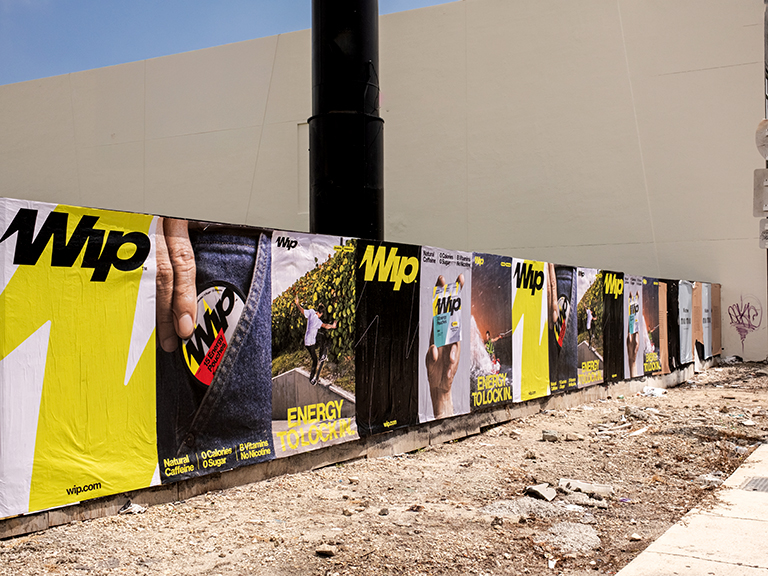
Brand activation is one of the most searched terms in marketing right now. Every agency seems to offer it. Every brand wants it. But what does it actually mean, and how do you find an activations agency that delivers real results rather than just a polished pitch?
We are American Guerrilla Marketing. We have been running brand activations since before the term became popular. Our work happens on streets, at events, in neighborhoods, and at the physical intersections where brands and real people actually meet. This guide breaks down what brand activation is, what the best activations agencies do differently, and how to evaluate your options.
Brand activation is any marketing initiative that directly engages consumers in an experience that brings the brand to life. The word “activation” implies movement, action, and a shift from passive awareness to active engagement.
A person seeing your logo on a billboard is brand exposure. A person sampling your product at a street activation, interacting with a brand ambassador, attending a pop-up experience, or participating in an event you organized, that is brand activation. The consumer is doing something, more than seeing something.
The distinction matters because activation creates a fundamentally different kind of brand memory. Exposure is forgettable. Experience is not. People remember what they do far more reliably than what they see. Brand activation uses that neurological reality to build stronger brand relationships than passive advertising can.
Types of Brand Activations
Brand activation is not one thing. It is a category that includes many different formats. Here is a breakdown of the most common types and how they work.
Activation Type
Description
Best For
Key Metric
Product Sampling
Direct product trial in a relevant context
CPG, food/beverage, personal care
Samples distributed, trial rate, conversion
Pop-Up Experience
Temporary brand environment in a high-traffic location
Brand awareness, launch campaigns
Foot traffic, dwell time, social content
Brand Ambassador Program
Trained people representing the brand in person
College markets, urban audiences, events
Conversations, referrals, content generated
Event Sponsorship Activation
Brand presence within or adjacent to a third-party event
Reaching a pre-assembled target audience
exposures, activations, leads captured
Mobile Tour
Brand activation unit that travels across multiple markets
National launches, multi-city campaigns
Markets reached, engagements per city
Guerrilla Installation
Unexpected brand presence in a public space
Urban brands, street culture, earned media
Organic social, earned media coverage
What the Best Activations Agencies Do Differently
A lot of agencies call themselves activations agencies. Not all of them are good at it. Here is what separates the ones that actually deliver results.
They Start with the Consumer Moment
Great activations agencies begin every brief by asking: where is this consumer, what are they doing, and what would genuinely matter to them in that moment? The concept grows from that understanding. Weak agencies start with a concept they already have and try to force it into a campaign brief.
They Think About Content from Day One
Every activation generates content opportunity. The best agencies design activations that are visually compelling, emotionally resonant, and shareable on social media. They think about camera angles, Instagram moments, and viral potential before the first spec is drawn. Content amplifies the physical reach of the activation many times over.
They Control Their Own Execution
Activations agencies that rely on third-party staffing, third-party production, and third-party logistics have limited control over quality. The best agencies manage these elements in-house or through deeply vetted partners they have worked with repeatedly. Quality control at every level of execution is what separates a great activation from a mediocre one.
They Measure What Matters
Strong activations agencies define success metrics before the campaign launches and track them rigorously throughout. They deliver clear post-campaign reports showing exactly what happened and what it achieved. Vague claims about “great energy” and “positive engagement” are not reporting. Numbers are reporting.
When vetting any activations agency, ask them to walk you through the last three campaigns they ran and give you actual outcome numbers. Not exposures estimates. Actual tracked results. The specificity of their answer will tell you everything you need to know about their measurement discipline.
How We Approach Activations at AGM
We have been running activations since before it was called that. Our work started on the streets of New York City and expanded from there. The core of what we do has never changed: put the brand in front of real people in a way that creates a genuine moment they remember.
Our process starts with a deep understanding of the target consumer. We want to know where they are, what they care about, and when they are most open to a brand experience. We do not start with a creative concept. We start with a person.
From there, we develop a concept that fits the person, the place, and the brand. We pressure-test it for logistical feasibility. We identify the right locations based on foot traffic data and market knowledge. We staff the activation with people who genuinely understand the brand. We measure everything and report on it honestly.
We do not believe in one-size-fits-all activations. Every brief is different. Every target audience is different. Every market is different. We build every campaign from scratch.
Choosing the Right Location for Your Activation
Location is the most important decision in any street-level activation. The wrong location wastes the entire investment. The right location multiplies it.
We do not pick locations from a map. We visit them. We go at the time of day we plan to activate. We count foot traffic. We observe crowd behavior. We understand the energy of the space. A location that looks perfect on paper can be dead in practice at the wrong time of day.
We have activated on the corner of Prince and Greene in SoHo, outside the Barclays Center in Brooklyn on game nights, on the stretch of Fairfax Avenue in Los Angeles that runs through the streetwear district, on South Congress in Austin during South by Southwest, and at dozens of other locations we have scouted and know intimately. Location knowledge is one of the most valuable things a strong activations agency brings to any campaign.
The worst activation mistake is an agency that selects locations from a spreadsheet without ever walking the block. Real foot traffic patterns are learned in person, not inferred from demographic data. Our location selections are based on direct observation in every market we activate in.
Measuring Activation Success: What We Track
Here is the full set of metrics we track across a typical brand activation campaign.
Foot traffic and exposures: How many people were in proximity to the activation? We count these manually and also use mobile data tools where available.
Active engagements: How many people stopped, interacted, or participated? This is a more meaningful metric than passive exposures.
Samples distributed: For sampling campaigns, exact counts are tracked throughout the activation.
Social content generated: How many posts, photos, and videos did people create organically? We monitor hashtags and location tags throughout the campaign.
Lead captures: When campaigns include a digital element, we track email captures, app downloads, or other digital conversions.
Earned media: Coverage in local news, trade press, blogs, and entertainment media is tracked and documented.
The research on this is consistent. People remember experiences more reliably and more positively than they remember ads. When a consumer physically interacts with a brand, they form a connection that passive exposure cannot create.
This happens for neurological reasons that are well-documented in consumer psychology research. Physical experience engages multiple senses at the same time. It creates episodic memory, the kind associated with specific events in your life. Episodic memory is far more durable than semantic memory, which is how we store facts and information we read or see in ads.
Brand activations create episodic memories. A person who attended your pop-up will remember it the way they remember a restaurant or a concert. A person who saw your display ad will not remember it at all. That is the fundamental case for activation as a marketing discipline.
Activation Metrics That Actually Matter to Brand Managers
Brand managers evaluating activation campaigns often face pressure to justify experiential spend against digital benchmarks. The comparison is imperfect but navigable if you track the right things.
Cost per engagement is the most useful cross-channel metric. Calculate it by dividing total campaign cost by the number of active engagements at the activation. A well-run street activation typically delivers cost per engagement comparable to or better than digital awareness campaigns, with a much higher quality of brand interaction.
Trial rate for sampling campaigns is another critical metric. This is the percentage of people who, when approached by a brand ambassador, accepted and tried the product. Strong trial rates indicate that the right people were reached in the right context. Weak trial rates indicate a location, timing, or targeting problem.
Net Promoter Score surveys in the immediate aftermath of an activation can measure brand sentiment change. We have run post-activation surveys that show 20 to 40 point NPS increases among people who participated versus control groups who saw the campaign’s paid media only. That sentiment gap is the value of activation versus advertising.
Industries We Activate For
We have run brand activations across virtually every consumer category. Our deepest experience includes food and beverage, consumer packaged goods, entertainment, fashion, technology, health and wellness, and sports. We also work with B2B brands that have a consumer-facing component, hospitality brands, and financial services companies targeting specific demographic segments.
Activation Formats That Drive Trial and Conversion
Not all activation goals are the same. Some brands want awareness. Others want trial. Others want direct conversion. The right format depends on which of these is the priority.
For trial-focused brands, product sampling is the most direct path. Getting the product into someone’s hands removes the mental friction of trying something new. A person who tries your product is orders of magnitude more likely to purchase it than someone who just saw an ad for it. We have run sampling programs that converted over 30% of sampled consumers into buyers within a week of the activation.
For awareness-focused brands, the pop-up and guerrilla installation formats work best. The goal here is maximum exposures and maximum organic sharing. The experience should be visually spectacular enough that people feel compelled to photograph it. The brand should be prominent enough that every photo is effectively a brand impression.
For conversion-focused campaigns where you want to capture leads or drive immediate action, activations with a digital integration component work best. A sampling activation that requires a scan or an app download to claim the sample drives a specific consumer action at the moment of highest brand engagement. That combination of physical and digital is one of the most effective conversion tools available.
The Relationship Between Brand Activation and Retail
For brands that sell through retail, activations and retail strategy are deeply interconnected. An activation near a retail location drives foot traffic into the store. An activation timed to a retail launch amplifies the in-store moment. An activation that includes a retail coupon or promotion creates a direct link between the street experience and the purchase decision.
We think about retail context in every activation we plan for a CPG or consumer product brand. Where are the stores relative to the activation location? What is the retail story at the time of the activation? What is the retail promotion and how does the activation reinforce it? Getting these elements to work together is how activations drive measurable retail lift, more than brand awareness.
How to Brief an Activations Agency
A clear brief leads to better proposals and better campaigns. Here is what a strong activation brief should include.
Goal: What do you specifically want to achieve? Brand awareness? Product trial? Leads? Retail traffic? Be specific.
Target audience: Who are you trying to reach? Demographic profile, geographic market, behavioral context. The more specific you are, the better the campaign concept will fit.
Budget range: Give the agency an honest budget range. Vague answers to this question lead to proposals that miss the mark completely.
Timeline: When do you need the activation to run? How long do you have to plan it?
Brand context: What is the brand story? What has worked before? What has not? What does success look like in the brand team’s eyes?
Red Flags to Watch for When Hiring an Activations Agency
The activations space has a lot of agencies that look credible in a pitch deck and fall apart in the field. Here are the signals to watch for before you sign anything.
They Subcontract Everything
Some agencies are brokers. They take your brief, add a margin, and hand it off to a staffing company, a production house, and a field management firm they’ve never worked with before. Each handoff is a quality control failure point. Ask directly: who owns the staffing? Who is the field supervisor? Who do you call at 6 AM on activation day if something goes wrong? If the answers are vague, that agency doesn’t control what matters.
They Can’t Show You Real Numbers from Past Campaigns
Agencies that are good at activations talk in specifics. They say numbers. They say dates. They name neighborhoods and venues. Agencies that are not good at activations talk in generalities. They say the campaign generated great energy and strong brand awareness. Ask specifically: how many people did your team engage directly in your last sampling program? What was the cost per engagement? What was the trial rate? If they can’t answer those questions, their measurement discipline is not there.
Their Creative Ignores the Environment
Activation concepts that work in a conference room often fail in the field because the agency designed for an idealized version of the location rather than the actual street environment. An activation designed for a clean, empty plaza looks very different when that plaza is crowded, windy, noisy, and competing for consumer attention at the same time. Good activations agencies stress-test their concepts against the real environmental conditions of the location before they present them as a viable plan.
They Don’t Ask About Your Retail Situation
For any brand that sells through retail, the activation’s relationship to the retail distribution plan matters enormously. Where can people buy what you’re sampling? Are the stores near the activation locations? Is there a retail promotion running at the same time? An agency that doesn’t ask these questions either doesn’t know what it’s doing or doesn’t care about driving actual business results for your brand. Either is a problem.
They Propose the Same Activation Concept to Every Client
Some agencies have one playbook and apply it regardless of the brief. The pop-up shop with an Instagram wall. The sampling table with a QR code sign-up. The street team handing out branded materials. These formats exist because they work, but they work for specific goals in specific contexts, not for every brand in every situation. An agency that presents you with a concept that could apply to any brand in any category without modification is not actually solving your problem.
Frequently Asked Questions
What is a brand activation agency?
A brand activation agency designs and executes marketing campaigns that directly engage consumers in experiences with the brand. This includes product sampling, pop-up events, brand ambassador programs, mobile tours, and other formats where consumers actively participate rather than passively observe.
The terms are largely interchangeable in practice. Brand activation typically emphasizes the goal of converting passive awareness into active engagement. Experiential marketing emphasizes the format, which is an experience rather than traditional advertising. Both describe campaigns that put brands in direct contact with consumers through physical, participatory moments.
How much does brand activation cost?
Costs vary based on the format, duration, number of markets, and level of custom fabrication. Simple single-day sampling programs start around $5,000 to $10,000. Pop-ups with custom build-out range from $20,000 to $75,000. Multi-city mobile tours can reach $100,000 to $500,000 or more depending on scope. We help clients find the right scope for their budget.
Can you run activations in multiple cities at the same time?
Yes. We have the infrastructure to manage simultaneous or rolling activations across multiple markets. This is particularly effective for national product launches where you want to create momentum across markets at the same time.
How do you measure the success of a brand activation?
We track foot traffic, active engagements, samples distributed, social content generated, earned media coverage, and any digital conversions tied to the campaign. We define success metrics before the campaign launches and deliver a complete report afterward.
What industries benefit most from brand activations?
CPG and food/beverage brands benefit enormously from product sampling activations. Entertainment, fashion, and lifestyle brands benefit from pop-ups and event presences. Technology and financial services brands use activations to explain complex products in a human context. Virtually any consumer-facing brand can benefit from well-executed activations.
How long does it take to plan a brand activation?
Simple activations can move in four to six weeks. Custom pop-ups with fabrication need eight to twelve weeks. Multi-city campaigns need three to six months of lead time. We can execute fast-turnaround campaigns when necessary, but compressed timelines limit creative and logistical options.