American Guerrilla Marketing
Nationwide Service
Media planning, media buying, billboard advertising, & guerrilla marketing
Guerrilla Projections in Toledo, OH

Former glass manufacturing capital of the world. Massive industrial-scale building infrastructure converting to arts and entertainment uses. Lower outdoor media competition, higher projection impact per dollar. AGM deploys 20,000-lumen building facade campaigns in Toledo’s most effective projection environments.
Toledo: The Underserved Outdoor Advertising Market That Projection Advertising Was Made For
The most common mistake brand advertisers make when evaluating guerrilla projection markets is filtering by city size. Larger market equals larger audience — that logic drives media planning in traditional outdoor formats, where reach is roughly proportional to population. But projection advertising doesn’t work that way. The variables that determine whether a projection campaign is effective are wall quality, pedestrian density in specific corridors, ambient light competition, and the willingness of the audience in a given environment to stop, notice, and engage with something unexpected and large-scale on a building face. Toledo scores exceptionally well on three of these four criteria, and in the fourth — pedestrian density — it concentrates its audience in specific event-driven windows that make up in intensity what they may lack in continuous volume.
Toledo was the glass manufacturing capital of the world through much of the 20th century. The industrial-scale buildings that housed that manufacturing, processing, and commercial infrastructure are still standing — former factories, freight warehouses, and commercial buildings with masonry exterior walls sized for industrial purposes. Those building faces are converting to arts, entertainment, and creative uses at an accelerating pace, but the walls remain what they were: wide, flat, light-colored masonry and plaster surfaces with minimal window interruption that perform as near-ideal projection infrastructure under a 20,000-lumen commercial projection system.
The other advantage Toledo provides is the one that gets overlooked in media planning conversations: clutter. Or rather, the absence of it. Toledo’s outdoor advertising environment is significantly less saturated than Cleveland, Columbus, or Cincinnati — fewer competing billboards, less ambient commercial light, less visual noise competing with a building projection campaign for the attention of whatever audience is on foot. In a cluttered outdoor media environment, any single element of that clutter is proportionally less visible. In Toledo’s more open advertising environment, a 20,000-lumen projection on a downtown building face commands viewer attention at a scale that would require a much larger format to achieve in a busier market. Every dollar of projection advertising budget in Toledo buys more attention per impression than the same dollar spent in a more saturated outdoor environment.
Toledo's Walls Are Waiting. Less Competition, More Impact.
Lower outdoor clutter. Industrial-scale building faces. A regional media market where projection advertising stands out. AGM's national scouting team is ready to identify your Toledo locations and build a campaign that punches above the market's size.
Browse Cities in Ohio
Select a city to explore Guerrilla Projections opportunities.
Toledo's Grocery, Drug Store, And Mass Retail Audience: The Cpg Projection Opportunity
Consumer packaged goods brands and beauty labels face a specific distribution challenge in markets like Toledo: reaching grocery, drug store, and mass retail consumers with brand media that operates independently of point-of-purchase placement. In-store media — endcap displays, shelf talkers, floor graphics — reaches consumers at the moment of purchase decision. But brand preference is built before consumers walk into the store. The question for CPG and beauty brands is how to create memorable brand exposure in the consumer’s daily environment, outside the retail context, in ways that influence which products they reach for when they’re inside it.
Guerrilla projection advertising addresses that challenge directly for Toledo’s retail market. A 20,000-lumen building projection in Toledo’s downtown entertainment corridor, or in the blocks adjacent to Fifth Third Field on a game night, reaches the same consumers who shop at Toledo’s grocery and drug store corridors — but it reaches them during off-hours, when they’re socially engaged, in a public environment where the scale and unexpectedness of a building facade campaign registers with genuine emotional impact. The brand impression created by a projection campaign in Toledo’s nighttime environment is qualitatively different from any retail media impression: it’s experiential rather than transactional, and experiential brand impressions build the preference that drives purchase decisions.
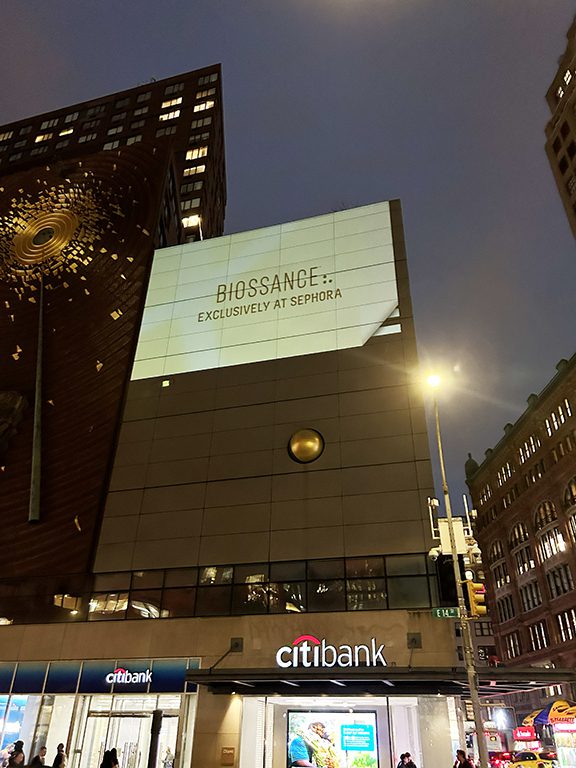
When Biossance deployed its Sephora-exclusive product launch campaign with AGM, the strategic logic was built around creating brand moments that reached consumers during the windows between purchase decisions — late evenings in active pedestrian environments, when the audience was receptive rather than purchase-focused. That same logic applies with particular force in Toledo’s grocery and drug store retail market, where consumer brands compete for shelf space in a physical retail environment that offers limited premium display opportunities. A guerrilla projection campaign in Toledo’s entertainment district reaches the retail consumer audience at a moment when no competing retail signage is fighting for the same attention — and at a scale that retail signage physically cannot match.
Toledo's Gateway Geography And Regional Campaign Potential
Toledo sits at the intersection of northwest Ohio’s regional consumer geography — within commercial driving distance of the Detroit metro, accessible from northwestern Ohio’s agricultural and light industrial communities, and positioned as the primary urban commercial hub for a region that extends north to Lake Erie and west toward the Indiana border. For brands deploying projection advertising in Toledo, the city isn’t just a local market: it’s a regional hub whose consumer population draws from surrounding communities that have their own commercial relationships with Toledo’s downtown entertainment and retail corridors.
Regional brand launches in northwest Ohio — product introductions targeting the Toledo Distribution Market Area, entertainment releases timed to Mud Hens season events, consumer brand activations seeking regional earned media coverage — all benefit from Toledo’s status as the regional media and commercial center. A projection campaign in Toledo’s downtown core generates local coverage, but the city’s regional centrality means that coverage reaches audiences in surrounding communities through Toledo’s regional media channels. The effective reach of a Toledo projection campaign extends meaningfully beyond the pedestrian audience present on deployment night.
Toledo’s Great Lakes gateway identity also creates specific entertainment and tourism audience windows that don’t exist in landlocked Midwest markets. Lake Erie waterfront events, regional sporting events at the Huntington Center, and Toledo’s cultural calendar all generate concentrations of visitors from surrounding northwest Ohio communities who come into the downtown core for entertainment and return to their home communities carrying impressions — and photographs — of what they encountered in Toledo’s streets. Those community returns extend the organic distribution of projection campaign documentation into the broader regional market.
Plan Your Guerrilla Projection Campaign in Toledo, OH
Tell us about your campaign goals, target audience, and preferred locations. Our team will help you plan a high-impact guerrilla projection campaign tailored to your needs.
Award Winning Personalized Service
You will get thoughtful, devoted, and individualized attention from our experienced, qualified, and professional personnel. Being one of the most illustrious agencies in Brooklyn, New York, American Guerrilla Marketing has been awarded the Best of Brooklyn title.
Nationwide
Industry City, Brooklyn, New York 11232
American Guerrilla Marketing
Hours
Mon - Fri: 9 AM - 5 PM
Sat & Sun: Closed
Automate your campaign with AGM’s Request for Proposal Builder.
Automate your campaign with AGM’s Request for Proposal Builder. Simply answer a few quick questions about your campaign goals, markets, and timeline, and the system will generate a tailored presentation with recommended strategies, quantities, and pricing. Click the RFP Builder to instantly receive your customized proposal.
Toledo's Best Projection Neighborhoods
Toledo’s projection surface inventory is concentrated in three distinct downtown environments, each with its own audience profile and building character. The downtown entertainment corridor near Fifth Third Field is the highest-density pedestrian environment — event nights concentrate audience volumes that deliver maximum single-session impression numbers. The Downtown Warehouse District offers the largest blank-wall surfaces in the Toledo market, ideal for scale-focused campaigns with lower ambient light and maximum image quality. The Scott High Area emerging arts zone provides a third option with a specifically creative-community audience profile and minimal outdoor media competition. AGM’s national scouting team surveys all three zones through digital analysis and on-the-ground physical survey before delivering Toledo campaign location packages.
Downtown Entertainment Corridor — Fifth Third Field Adjacent
Toledo’s downtown entertainment corridor is anchored by Fifth Third Field, home to the Toledo Mud Hens Triple-A baseball team and a consistent driver of evening pedestrian concentration across the adjacent downtown blocks. The dining and bar scene surrounding the stadium extends event-night foot traffic through the commercial streets flanking the ballpark, concentrating sports-engaged audiences in motion on foot through exactly the kinds of corridors where projection advertising reaches pedestrians most effectively. Commercial building faces on the surrounding blocks — brick and masonry commercial structures with flat faces on their primary street elevations — provide qualified projection surfaces within direct sightlines of the pedestrian flow from the stadium to the surrounding entertainment district. Game nights from April through September provide a sustained series of deployment windows across the baseball season, with playoff runs generating elevated audience density that compounds the campaign impact of any projection deployed during those windows.
Downtown Warehouse District — Former Industrial Building Stock
Toledo’s downtown warehouse district contains former industrial and freight warehouse buildings that provide the largest continuous exterior wall surfaces available in the Toledo projection market. These buildings — constructed for manufacturing, freight, and storage functions at industrial scale — have masonry exterior walls with minimal fenestration on major faces: wide, flat, light-colored surfaces that reflect 20,000-lumen projection output with high fidelity and low distortion. Ambient light competition in the warehouse district’s converting industrial zone stays low after dark, which means full projector output translates into maximum image visibility without the washout effect that heavier competing light sources create in entertainment-district environments. Vehicle access for equipment staging is generally straightforward in the warehouse district’s service corridors, and the large building faces allow projection positioning at a range of throw distances suited to different creative scale requirements. For campaigns where the primary objective is architectural-scale visual impact at maximum resolution, Toledo’s warehouse district walls provide the best projection canvas in the market.
Scott High Area Arts Zone — Emerging Creative Community on the Near West Side
The Scott High Area on Toledo’s near west side is emerging as the city’s primary arts community geography — transitional commercial-industrial buildings converting to studio, gallery, and maker-space uses in a neighborhood where a growing creative population is establishing the cultural infrastructure of an arts district. Blank exterior wall surfaces on the zone’s converting industrial and commercial buildings provide qualified projection surfaces in a neighborhood with extremely low ambient light competition and minimal outdoor advertising clutter — conditions that translate directly into maximum projection impact per lumen deployed. The Scott High Area audience profile skews toward Toledo’s creative community: artists, studio holders, design professionals, and the arts-engaged residents who are choosing the neighborhood specifically because of its creative trajectory. For brands targeting Toledo’s creative-class community, or for advocacy and cultural campaigns seeking to reach an artistically receptive audience in a community-embedded environment, the Scott High Area offers a distinct and specifically targeted audience profile that downtown event-adjacent locations don’t replicate.
What To Project In Toledo
Toledo’s projection advertising environment accommodates a wider range of creative formats than its market size might suggest, precisely because the campaign-impact leverage of projection advertising in an underserved media market is structurally higher. In a saturated outdoor advertising environment, a projection campaign competes with dozens of other visual media elements for the viewer’s attention. In Toledo’s relatively open outdoor media landscape, a building projection campaign has a substantially cleaner field of attention — the surrounding environment presents fewer competing visual stimuli, and the 20,000-lumen building facade projection stands out proportionally more against the ambient baseline than it would in a major-market environment.
Consumer packaged goods brands and beauty labels use Toledo projection campaigns to deliver brand exposure in the consumer’s social environment — outside the retail context, at a scale and unexpectedness that creates memorable brand impressions distinct from any point-of-purchase media placement. Entertainment releases use Toledo’s Mud Hens season event windows to reach a concentrated sports-audience demographic in a Great Lakes regional market that touring and release campaigns often underserve. Regional brand launches in northwest Ohio use Toledo as the anchor market for a hub-and-spoke distribution strategy, counting on Toledo’s regional media reach to carry projection campaign coverage into surrounding markets. Advocacy campaigns target Toledo’s politically engaged downtown audience in a media environment where visual campaigns face less competing noise per impression than in Ohio’s larger cities.
Toledo Projection Campaign Formats
CPG and Beauty Brand Campaigns
Consumer packaged goods and beauty brand projections reaching Toledo’s grocery and drug store retail audience in their social environment — off-hours, at scale, with no competing retail signage. The off-hours projection opportunity in Toledo is particularly strong for brands whose retail distribution runs through major grocery chains and drug stores in the northwest Ohio market.
Mud Hens Season Event Activations
Brand campaigns and entertainment activations timed to Toledo Mud Hens home games at Fifth Third Field, when the downtown entertainment corridor concentrates the city’s highest pedestrian density. The Mud Hens season runs from April through September, providing a sustained series of event-night deployment windows.
Regional Northwest Ohio Launches
Product introductions and brand activations using Toledo as a regional hub for northwest Ohio, with projection campaigns generating local and regional earned media coverage that distributes through Toledo’s regional media channels into surrounding communities and markets.
Warehouse District Scale Projections
Large-format campaigns on Toledo’s downtown warehouse building faces — the widest, tallest continuous exterior walls in the market, suited for creative that prioritizes architectural scale and maximum image resolution over event-adjacent pedestrian density.
Arts Community Campaigns
Targeted projections in Toledo’s Scott High Area reaching the city’s creative community in a low-clutter outdoor environment with maximum projection impact per lumen. Ideal for arts organizations, cultural campaigns, independent entertainment releases, and advocacy campaigns targeting Toledo’s emerging creative population.
Multi-Night Downtown Campaigns
Consecutive projection runs across Toledo’s downtown entertainment corridor and warehouse district building stock, building cumulative visual brand presence across a launch or release window. Multi-night Toledo campaigns compound documentation and regional media coverage across the full deployment period.
How Agm Scouts Toledo Locations
Location assessment in Toledo begins with AGM’s national scouting team conducting digital satellite analysis and mapping across the three primary projection neighborhoods — the Fifth Third Field entertainment corridor, the Downtown Warehouse District, and the Scott High Area near west side arts zone. Digital analysis identifies candidate buildings based on surface dimensions, visible window interruption patterns, building face orientation relative to primary pedestrian corridors, and satellite-estimated surface color and texture.
Physical on-the-ground survey in Toledo confirms what satellite analysis can only estimate: actual surface reflectivity under real-world conditions, exact geometry and planar flatness of candidate walls, equipment staging access from service alleys and adjacent streets, nighttime ambient light levels at each candidate location under typical evening conditions, and sight-line clearances between potential projector positions and the target surfaces. Physical survey is the non-negotiable step — it eliminates candidate surfaces that appear qualified on satellite imagery but fail on one or more critical physical variables.
Toledo location packages include GPS coordinates for each approved surface, reflectivity and geometry ratings from the physical survey, staging access approach routes, estimated pedestrian density by location and time window, and event calendar alignment recommendations for brands timing deployments around Mud Hens games, Huntington Center events, or regional programming.
Pricing for Toledo Projection Advertising
Building facade projection advertising in Toledo is priced at contact us for a quote. The rate includes the 20,000-lumen commercial projection system, generator and full power infrastructure, electronics bundle, mobility unit, AGM’s two-person direct technical crew — not subcontracted labor — and complete setup, operation, and breakdown for the deployment evening. Projection begins at dusk and runs four to six hours per night. Multi-night runs across Toledo’s downtown neighborhood clusters are available and common for brands running sustained launch windows or multi-game sports-season activation series.
Advance location scouting for the Toledo market runs approximately contact us for a quote. and delivers the full physical survey documentation package. Private-property and permitted building locations in Toledo add Contact us for a custom quote.. Toledo’s downtown commercial corridor and warehouse district have established precedent for promotional activations, and AGM’s operations team coordinates permitting and property authorization logistics for brands requiring fully secured locations.
Reach AGM for Toledo campaign planning through the Brooklyn headquarters: Industry City, Unit 28, Brooklyn, NY 11232, (646) 776-2770, or through the Orlando office at 20 North Orange Avenue, Orlando, FL 32801, (321) 261-0402.
Case Study: Biossance × Sephora — Building Projection And The Off-hours Retail Consumer Window
Biossance’s Sephora-exclusive launch campaign with AGM was designed around a fundamental insight about consumer brand exposure: the hours when retail audiences are most receptive to brand media are the hours they’re not inside a store. In-store promotion happens when the purchase decision is already in progress. Building facade projection happens in the social environment — bars, restaurants, nightlife corridors — where consumers are emotionally open, visually engaged, and not in purchase mode. Reaching consumers in that off-hours social context with brand imagery at architectural scale creates a qualitatively different brand impression than any point-of-purchase media placement can produce. The Union Square campaign ran on Manhattan building facades during late-evening hours specifically to reach that off-hours consumer window. For Toledo’s CPG and beauty market, where retail distribution runs through major grocery chains and drug stores serving a northwest Ohio regional consumer base, the same off-hours projection logic applies with particular force: there is no competing store signage in the evening entertainment environment, and the projection campaign reaches consumers with brand imagery at a scale and unexpectedness that their weekly grocery or pharmacy visit never creates.
Why AGM for Toledo Building Projection Campaigns
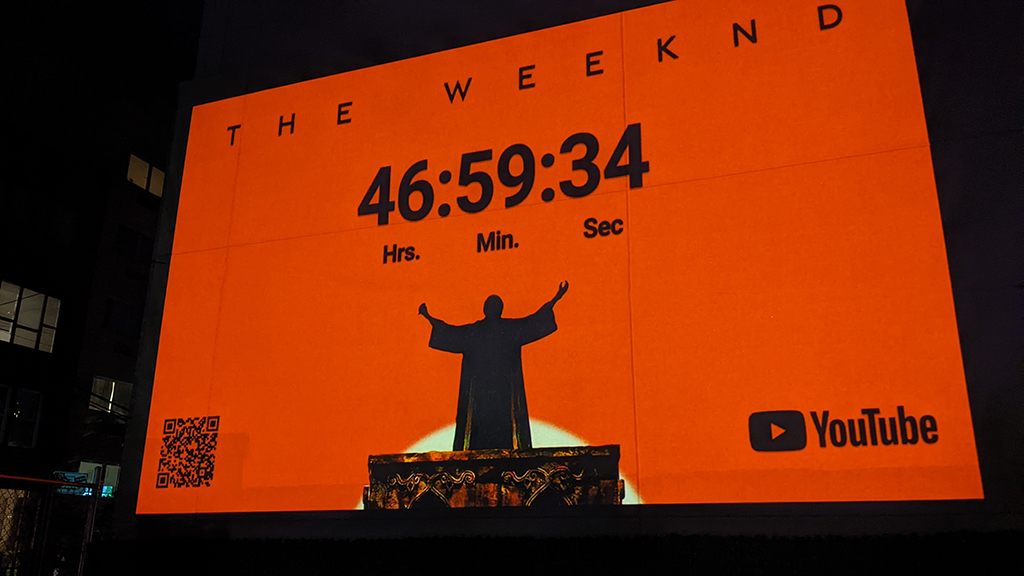
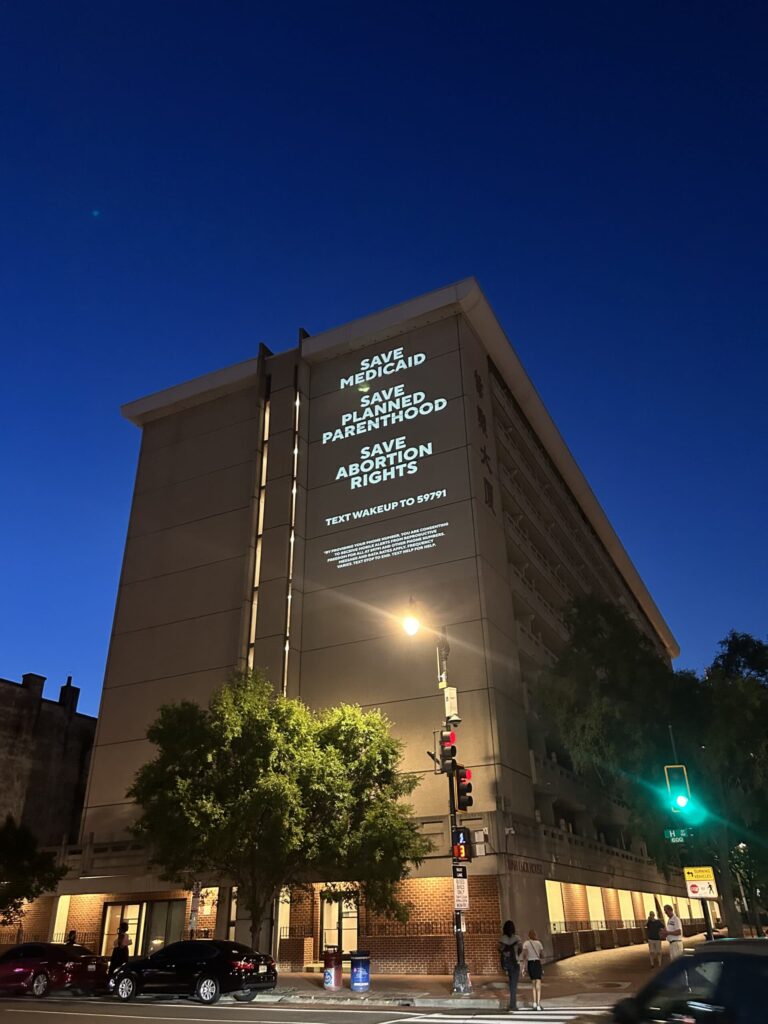
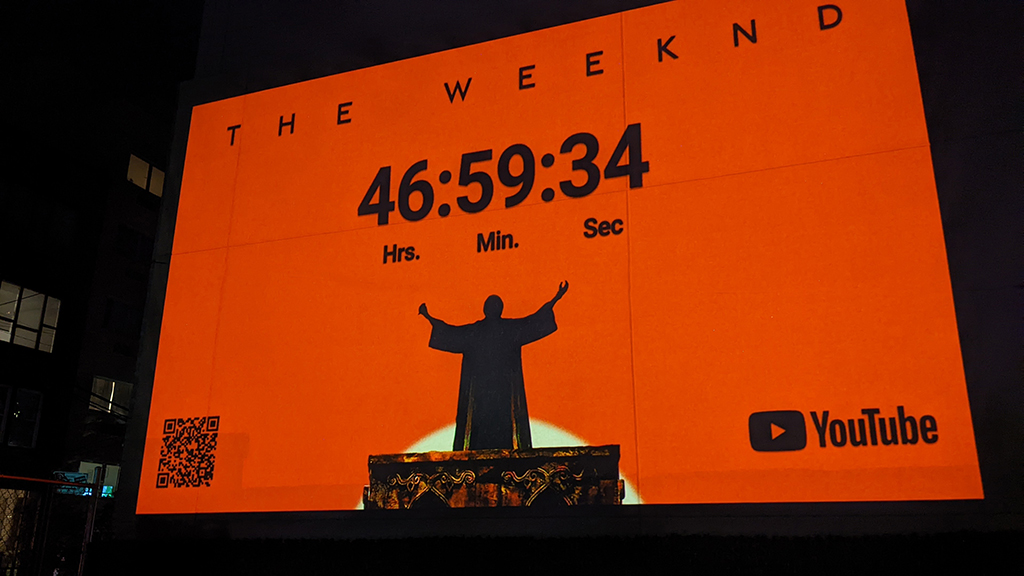
American Guerrilla Marketing is a Best of Brooklyn award-winning guerrilla projection agency whose client roster includes Biossance, The Weeknd, the US Marine Corps, Women’s March, YouTube, and Reproductive Freedom for All. Every Toledo campaign uses AGM’s direct technical crew — not subcontracted labor — operating 20,000-lumen commercial projection systems with generator power infrastructure and full mobility units. The national scouting team conducts physical on-the-ground surveys in Toledo before every campaign, and post-campaign GPS-documented location analysis and reporting are standard with every deployment.
AGM’s projection client roster includes Netflix, Disney, Coca-Cola, FanDuel, Live Nation, iHeartRadio, and the US Marine Corps. A confirmed case study: the US Marine Corps × CMA Fest Nashville — multi-night projections onto architectural surfaces throughout the festival footprint, reaching 80,000+ attendees across the campaign window. Projection advertising scales across every brand category; what our campaigns share is scale, precision, and a physical presence digital cannot replicate.
Coverage & Estimated Impressions
| Zone / Area | Peak Hours | Foot Traffic | Est. Nightly Impressions | Best For |
|---|---|---|---|---|
| Downtown Entertainment Corridor | 8PM–1AM | High | 8,000–35,000 | Product Launch |
| Downtown Warehouse District | 8PM–1AM | High | 8,000–35,000 | Event Promotion |
| Scott High Area Arts Zone | 8PM–1AM | High | 8,000–35,000 | Brand Awareness |
Frequently Asked Questions
Toledo Mud Hens home games at Fifth Third Field are among the strongest projection deployment windows available in the Toledo market. The downtown entertainment corridor adjacent to the stadium concentrates thousands of baseball fans on foot before games, during extended innings, and in the post-game bar and restaurant dispersal — an audience window that runs from late afternoon through late evening on game days. AGM’s location scouting for the Fifth Third Field area accounts for the specific pedestrian flow patterns between the stadium and surrounding entertainment blocks, positioning projection locations for maximum exposure to the game-night crowd. The Mud Hens season from April through September provides a sustained series of event-night windows across the full spring and summer projection calendar.
Toledo’s Downtown Warehouse District contains former industrial and freight warehouse buildings with exterior masonry walls that represent some of the largest continuous projection surfaces in the northwest Ohio market. These building faces were constructed for structural load at industrial scale — they’re wide, tall, flat, and minimally fenestrated, which translates directly into the projection surface geometry that 20,000-lumen campaigns require for maximum image quality. Light-colored masonry and painted plaster finishes on the warehouse district’s primary building faces maximize reflective output, and the zone’s low ambient light levels after dark ensure that full projector output converts into vivid, high-contrast imagery without competing illumination washing out the projected image.
Toledo’s traditional outdoor media market — billboards, transit placements, static OOH — runs at lower absolute costs than comparable placements in Columbus, Cleveland, or Cincinnati, reflecting the market’s smaller total audience. Building projection advertising in Toledo is priced at contact us for a quote. regardless of market size — the same rate as all outside-NYC AGM deployments — which means the cost-per-impression calculation in Toledo is directly favorable compared to larger Ohio markets where projection reaches proportionally similar audience volumes at the same operational price. What Toledo’s lower media market costs don’t provide is the kind of immersive, large-scale, event-creating brand exposure that projection advertising generates — making projection a structurally differentiated addition to a Toledo media mix rather than a direct substitute for lower-cost standard placements.
Building projection advertising in Toledo’s downtown entertainment environment reaches the same consumer population that shops at Toledo’s grocery and drug store corridors — but in their social, off-hours context rather than their purchase-mode retail context. The off-hours brand exposure that projection creates is qualitatively distinct from retail media: it reaches consumers when they’re emotionally open, not transactionally focused, and when no competing store signage is fighting for the same visual attention. For beauty and CPG brands whose retail distribution runs through Toledo-market grocery and drug store chains, a projection campaign in the downtown entertainment corridor builds brand familiarity in the consumer’s social environment in a way that directly influences which products they reach for during their next store visit.
Toledo’s downtown ambient light environment is significantly less dense than comparable zones in Cleveland or Columbus — fewer high-output commercial signs, less concentrated entertainment district lighting, lower baseline illumination along the primary commercial corridors after retail hours. For projection advertising, lower ambient competition translates directly into higher relative impact per lumen: a 20,000-lumen projection in Toledo’s downtown core achieves higher visibility, stronger color saturation, and sharper perceived contrast against the surrounding environment than the same projector would produce in a more illuminated major-market entertainment district. Toledo’s open ambient environment is one of the structural advantages that makes projection advertising perform above its market-size expectations in the city.
Yes. AGM’s national scouting team covers the Scott High Area as part of comprehensive Toledo location surveys, conducting physical on-the-ground assessment of the converting industrial and commercial building stock in the near west side arts zone. The Scott High Area’s low ambient light, minimal outdoor advertising competition, and clean building wall inventory make it a particularly high-impact projection environment for campaigns targeting Toledo’s creative community or requiring maximum image fidelity on large blank surfaces. The physical survey confirms which Scott High Area buildings qualify on reflectivity, surface geometry, and staging access before they’re included in campaign location packages.
Toledo functions as the regional media hub for northwest Ohio — the city’s media channels, regional press, and commercial influence extend into surrounding communities that have commercial and social relationships with Toledo’s downtown core. A building projection campaign in Toledo generates documentation and earned media coverage that distributes through Toledo’s regional media channels to audiences in the broader northwest Ohio market, including communities in Lucas, Wood, Fulton, and Henry counties that look to Toledo as their regional commercial center. For brands launching products regionally across northwest Ohio, Toledo projection campaigns produce local deployment impact plus regional media distribution — a reach multiplier that single-market outdoor placements in surrounding smaller communities can’t replicate.
Toledo’s industrial heritage produced building stock in which exterior walls were engineering solutions rather than decorative choices — wide, thick masonry walls designed for thermal stability, load-bearing capacity, and long-term structural performance. That engineering logic created surface geometry that projection advertising needs: flat planar faces without decorative articulation or window-heavy curtain wall systems, light-colored masonry or painted finishes that maximize lumen reflectivity, and building scales appropriate for large-format creative at the distances available in urban Toledo deployment environments. The practical result is that Toledo’s former industrial and manufacturing buildings function as near-ideal projection infrastructure without any surface preparation or modification.
Toledo’s location as the primary urban hub at the intersection of northwest Ohio, southeast Michigan, and the Lake Erie waterfront creates a visitor and event audience that draws from a geographic footprint substantially larger than the city’s local population. Lake Erie recreational traffic, University of Toledo event attendees, regional tourism associated with Toledo’s waterfront and cultural venues, and the commercial visitor flow from surrounding northwest Ohio communities all contribute to Toledo’s downtown entertainment audience on event nights. Projection campaigns in Toledo’s downtown core reach not just Toledo residents but this broader regional visitor population — audiences who carry Toledo campaign impressions, documentation, and brand exposure back to their home communities across the region.
Mud Hens playoff games generate elevated pedestrian density in the Fifth Third Field entertainment corridor beyond typical regular-season game nights, as regional sports fans who attend fewer regular-season games travel specifically for playoff events. Multi-night projection campaigns timed to a playoff run deploy across consecutive game nights, building cumulative brand presence in the downtown entertainment corridor as successive playoff crowds move through the same pedestrian geography. AGM coordinates multi-night Toledo logistics around the Mud Hens playoff schedule — crews, equipment positioning, and location staging are planned in advance to allow rapid consecutive deployment across back-to-back game nights without operational gaps.
Any brand for which visual attention share is a meaningful campaign metric benefits from Toledo’s lower outdoor clutter. In practice, this advantage is most significant for consumer brands launching products in the northwest Ohio market, entertainment labels releasing into a Great Lakes regional market where visual campaigns face less competing noise, advocacy organizations that need their campaigns to register clearly against the visual baseline of the surrounding environment, and regional businesses seeking to establish brand presence in Toledo’s downtown entertainment geography. The brands that benefit least are those whose specific campaign objectives require extremely high absolute audience volume — Toledo’s projection windows are strong for concentrated event-adjacent audiences, but if a campaign requires millions of weekly impressions, a major-market deployment adds those numbers regardless of ambient competition level.
Post-campaign GPS-documented location analysis and reporting are included with every AGM Toledo projection campaign. Documentation packages include active projection photography and video captured during the deployment, crowd and environmental context imagery from the deployment night, GPS coordinate records for all active projection locations, and structured reporting in formats suited to brand attribution workflows, agency presentation needs, and earned media pitching. For regional brands using Toledo projection campaigns as evidence for broader northwest Ohio media strategy, the documentation package provides the visual and geographic evidence that supports internal case-building and stakeholder presentations.
More AGM Outdoor Advertising Services
Led Billboard Trucks
Mobile LED displays that bring your brand to any location, any event.

Fly Posting
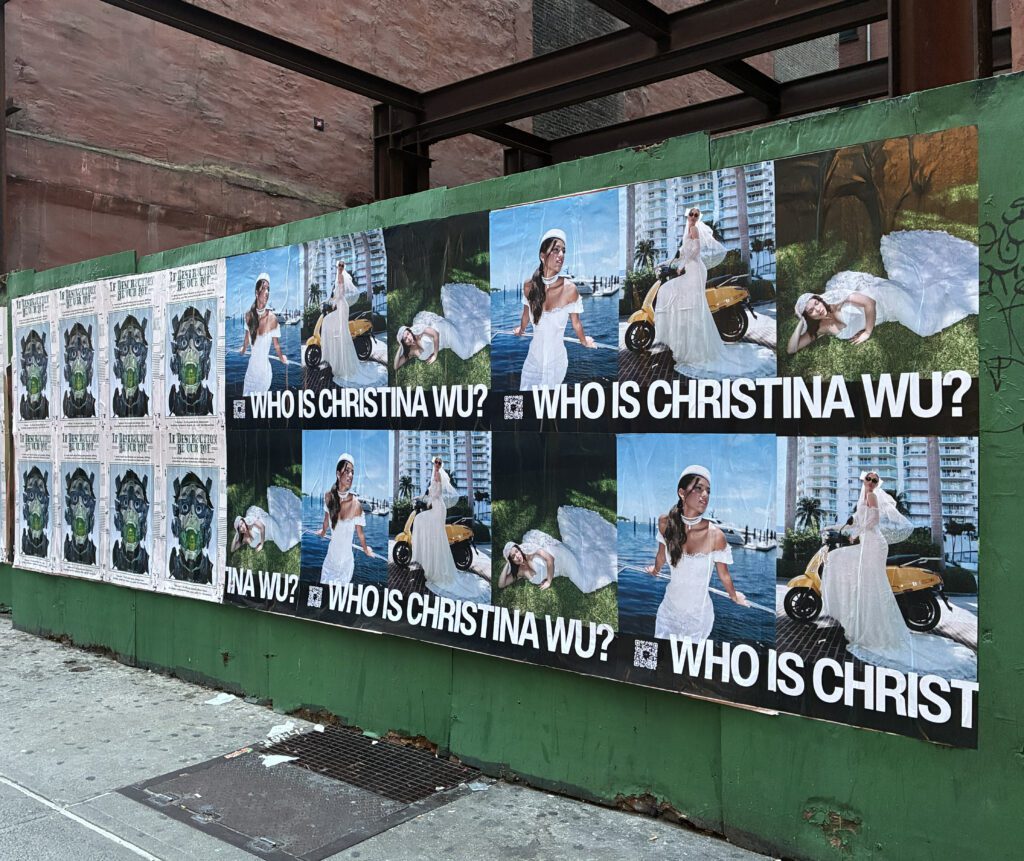
Street-level poster saturation across walls, construction sites, and corridors.

Sidewalk Decals
Ground-level branded decals at pedestrian hotspots and event entrances.

Sidewalk Stencils
Creative stencil campaigns that put your brand in the path of pedestrians.