
November 13, 2026
LED Trucks & Mobile Billboards in Richmond, Virginia
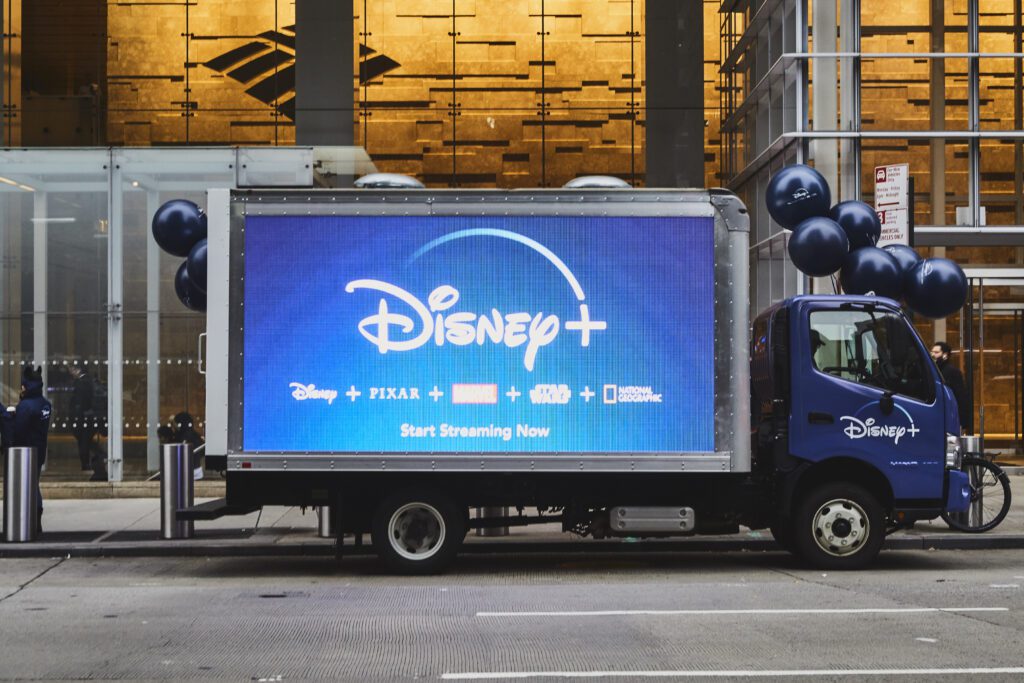
Richmond is a city of small walkable quarters that are not walkable to each other.
Every format we run here has to deal with that fact. For posters and decals it is an obstacle, because it means a crew spends half the night driving between districts instead of working. For a mobile screen it is the entire opportunity, because the drive between districts is the product.
That is the honest case for LED Trucks in this market. Richmond’s shape already forces movement, and a screen on a vehicle is the only format that earns something during the movement rather than losing time to it.
The second argument is seasonal, and it runs against the grain of everything else we do here. Richmond winters are hard on pasted work. Temperatures oscillate across freezing instead of locking solid, meltwater gets behind edges and lifts them, and road salt and grit do the rest. A screen does not care. Winter also brings early darkness, which is when an emissive screen is at its most effective. For several months of the year a truck is simply the stronger format in this city.
The third thing buyers need to hear early is the one that actually breaks Richmond LED campaigns: the city’s biggest pedestrian events are street closures, and a truck cannot drive into a street closure.
Here is how we plan around all of it.
The routes that actually carry a screen in Richmond
Route design in Richmond is road design, not neighbourhood selection. Clients send us a list of districts. We send back a list of roads, because a vehicle is only ever on a road.
Broad Street is the spine and the single best route segment in the city. It carries the Arts District, it hosts First Fridays every month, and it runs directly past the VCU campus. Gallery audience and student population on one road, which is an unusually efficient overlap. For a screen that matters even more than it does for static formats, because a truck cannot be in two districts at once and Broad gives you two audiences in one pass.
Cary Street through Carytown is the second. The retail stretch at the edge of the Museum District has independent shops, galleries and theatres, and the pedestrian pace there is the slowest in Richmond. People browsing shop windows are people who will actually look up at a passing screen rather than walking straight past it.
Scott’s Addition is the third, and it works differently from the other two. The former industrial district now operates as the brewery and distillery quarter, with a wider industrial street pattern and a crowd that stays out later than anywhere else in Richmond. The streets are easier to drive, there is more kerbside, and the audience is outdoors between venues in the evening rather than indoors. For an evening or late-evening run, this is the most productive district in the city.
The Fan is where I push back hardest. It is dense, historic and residential, and on-street parking there is genuinely difficult. Threading a large vehicle through that street pattern at night, past residents who notice activity, produces very little and irritates people. It is a connective district you pass through, not a route segment.
Shockoe Bottom and the Canal Walk are compact, tourist-facing and more supervised. They also sit on low riverside ground, which is a real routing consideration. The James widens into an estuary just downstream of Richmond, and although the city is far enough inland to avoid the worst of tropical systems, heavy rain can flood that low ground. We do not route a heavy vehicle onto low riverside streets during a flood watch.
Old Town Manchester across the river has a place in a wider route. Jackson Ward is historically significant and anything visible there deserves a careful, consultative approach rather than being treated as a lap of a loop.
The closed-street problem
This is the most important Richmond-specific planning fact for this format, and almost nobody arrives knowing it.
The Richmond Folk Festival is described as the largest folk festival in the country and draws over 200,000 people across three days of free programming in October. It lands in the calmest weather of the Richmond year. On paper it is the single best audience opportunity in the market.
In practice, street closures, crowd volume and parking saturation across the central districts make festival weekend the hardest possible conditions for a vehicle. You cannot drive a screen into the crowd, because the crowd is standing where the road was.
Broad Appetit has the same structure at smaller scale. It closes a four-block stretch of Broad Street right beside the VCU campus and brings upwards of eighty local restaurants serving small plates. Dense, walkable, concentrated, and entirely inaccessible to a truck.
The answer is not to skip these events. It is to work the perimeter and the flows.
People arrive at a closed-street event and they leave it, and both of those happen on open roads. Approach corridors, the streets feeding the closure, the parking areas people walk in from, and the routes they take afterwards toward bars and restaurants are all drivable and all carry the same audience in a more attentive state than they are in mid-event. A screen positioned on the arrival flow in the hour before, and on the departure flow after, reaches a large share of those 200,000 people without ever needing to get inside the footprint.
That requires knowing which blocks are actually closed and where the pedestrian flows run, which changes year to year. UNVERIFIED: this research did not confirm current closure maps or exact festival dates. We confirm closures and dates directly with the organisers and the city before committing a route.
First Fridays is the easier monthly version. A recurring evening art event in the Arts District on a known date gives a screen a dependable night audience on the city’s main corridor. We still check which blocks, if any, are restricted before building the route.
Beyond those, the recurring fixtures worth planning around include the Richmond Jazz Festival, Dominion Energy Riverrock on the river, and community festivals including the Indian Festival, the Church Hill Irish Festival and the Original Italian Street Festival. The RVA Street Art Festival remains part of the calendar.
VCU term dates move foot traffic on Broad substantially, and a campus-aimed route running through a break is spending its laps on an empty street. UNVERIFIED: current term dates were not confirmed in this research. Check the academic calendar before scheduling.
Daylight, darkness and Richmond weather on a screen
An LED screen competes with ambient light. That makes the Richmond calendar matter in a way that is different from every other format we run.
Summer gives you long daylight and late sunsets. A screen in bright afternoon sun in July is working at a serious disadvantage, and the genuinely effective window does not open until the evening is well along. If a summer campaign is built on daytime laps, the client is paying for movement rather than visibility, and I would rather say that before the route is signed off than after.
Richmond summers are also hot and humid, mid-80s with sticky air, and the rain arrives as short violent thunderstorms rather than steady drizzle. For a screen that is less destructive than it is for pasted work, which is a real advantage of the format here. There is no adhesion to fail. But heavy rain on and around a screen still scatters and reflects light, wet road surfaces throw glare, and a sudden storm clears the pavements of the pedestrians you were driving past. We watch radar in the hot months rather than the daily forecast, and we keep route flexibility for storm evenings.
The hot season is longer than the calendar implies here. The end of May can already be fiercely hot and the first half of September often still behaves like summer, so plan the summer regime from late May to mid-September.
Winter is the quiet strength of this format in Richmond. Darkness arrives early, which stretches the effective screen window across the whole evening while people are still out. Air is clearer. And the freeze-thaw cycling and road salt that make winter so hostile to poster and decal work have no bearing on a screen’s performance.
The vehicle itself does feel the winter. Salt and slush spray dirties the lower edge of a screen quickly, so winter runs need more frequent cleaning than clients expect, and a filthy screen undoes the advantage of the clearer air.
Autumn is the best overall season, as it is for most things here. It is the calmest stretch of the Richmond year, darkness is arriving earlier each week, and it carries the biggest event on the calendar.
Spring is the wetter and more unstable of the two shoulder seasons, and with days lengthening again the effective screen window starts shrinking.
Dwell versus loop, and where you can actually stop
Every LED truck campaign is a balance between driving a route and parking somewhere. Richmond shifts that balance in specific ways.
Looping suits Broad. It is the highest-traffic corridor in the city with the best audience overlap, and a screen passing repeatedly along it builds frequency against people who use that road regularly. A loop here is genuinely productive.
Dwell suits Scott’s Addition. The industrial street pattern has wider roads and more available kerbside than anywhere else in Richmond, the residential density is low, and the brewery and distillery crowd is outside and unhurried. A parked screen in the right position there is seen by people who are standing around rather than driving past at speed.
Carytown is the awkward one. The audience is ideal and the stopping is difficult. Cary Street parking is tight and the retail frontage is busy. Carytown generally works better as a slow pass than as a dwell position, unless you have arranged a private position behind the frontage.
Dwell is where the permission question becomes concrete. Parking a screen on a private lot or forecourt with the owner’s agreement is a very different proposition from stopping on a public street, and it is the arrangement we steer clients toward. A named owner, a written agreement and a defined window means nobody is asking the driver to move on halfway through the evening.
Richmond’s wider culture helps with those conversations. This is a market that launched both the Richmond Mural Project and the RVA Street Art Festival in 2012 and has accumulated well over a hundred murals since. Property owners here are used to being approached about commercial visibility on their property, and the ask is familiar rather than strange.
It also raises the creative bar, and I say this to clients honestly. Richmonders walk past large, well-executed painted work every day. A screen with weak creative does not read as novel here, it reads as the least interesting large image on the street.
Permission and the grey area for vehicle media
Mobile screen advertising sits in a grey area, and it is a different grey area from posting.
Posting questions turn on surface ownership. Vehicle media questions turn on the road, on where you stop, on how long you stop, on vehicle signage rules and on how a given area is being treated. Enforcement attention in Richmond is uneven and district-specific, and what passes without comment in an industrial quarter tells you nothing about how the same vehicle is treated beside the state government buildings or along the managed riverside tourist infrastructure.
I am not going to tell you this format is legal or illegal in Richmond. That is not advice I am qualified to give, it varies by municipality and by circumstance, and I will not cite an ordinance number I have not verified for your route and your date.
What we do instead is concrete and checkable. We confirm current City of Richmond requirements covering vehicle signage, parking, stopping and right-of-way directly with the municipality before a campaign commits. We confirm event closures and route restrictions with organisers rather than assuming last year’s map holds. We secure written permission for any private dwell position. And we keep the documentation, because the value of documentation is that it exists at the moment somebody asks.
The managed areas are easy to identify and we treat them as permission-first: the Canal Walk, the riverside tourist infrastructure and the ground around the state government buildings are maintained and monitored. Residential density is the other category we avoid, less for enforcement reasons than for the simple fact that a bright screen idling on a residential street at night generates complaints and complaints end campaigns early.
What we talk Richmond clients out of
Driving into the Folk Festival. Every year somebody wants the truck in the middle of 200,000 people. The streets those people are standing on are closed. We work the arrival and departure flows and the approach corridors instead, which reaches a large share of the same audience and is actually possible.
Routing by neighbourhood name. A list of districts is not a route. A vehicle is on roads, and in Richmond the roads that matter are Broad, Cary and the Scott’s Addition grid. We build from roads outward.
The Fan. Dense historic residential streets, difficult parking and residents who notice. It produces little and annoys people. We pass through, we do not work it.
Midday summer laps. Bright July afternoon sun competes with the screen and the result is movement without visibility. If the campaign has to run in summer, the value is in the evening, and we would rather concentrate the hours there than spread them across a day.
Dwelling on a busy public street in Carytown. Parking is tight, the frontage is busy and the position is fragile. Carytown is a pass. If you want a Carytown dwell, we go and arrange a private position first.
Low riverside routes in wet weather. Shockoe Bottom and the Canal Walk have tourist footfall and they also have flood exposure on low ground. A heavy vehicle on flooding streets is not a risk worth taking for a lap.
Weak creative on a big screen. In a city with this much public visual work, a screen is competing against murals people already like. Simple, bold, few words, high contrast. Anything that needs reading at length is wasted on a moving vehicle anywhere, and especially here.
The strongest pairing in this market is Street Teams & Experiential, and the closed-street problem is exactly why. A truck holds the perimeter and the arrival corridor of a Folk Festival or a Broad Appetit, and a team on foot goes where the vehicle physically cannot. The screen does reach and the team does conversion, in the same hours, on the same crowd. In Richmond that combination solves a logistical constraint rather than just adding a second line item, which is why it comes up on most serious event briefs we write here.
Frequently asked questions
Are LED trucks and mobile billboards allowed in Richmond?
It is a grey area and a different one from posting, turning on road use, stopping, vehicle signage rules and local ordinance, with uneven enforcement across districts. We do not give legal advice. We confirm current City of Richmond requirements directly with the municipality before each campaign, verify event closures with organisers, and secure written permission for any private dwell position.
Can a truck work the Richmond Folk Festival?
Not inside it. The festival brings over 200,000 people across three days and the central districts go to street closures, crowd saturation and parking shortage. What works is the perimeter: approach corridors, the streets feeding the closure, parking areas people walk in from, and the departure flows afterwards. That reaches much of the same audience on drivable roads.
Which Richmond routes do you recommend?
Broad Street first, because it carries the Arts District, First Fridays and the VCU campus on one road. Cary Street through Carytown second, for browsing-pace pedestrians who actually look up. Scott’s Addition third, for a later evening crowd on wider industrial streets with room to park. We avoid The Fan and low riverside streets.
Is winter a bad time for a Richmond campaign?
Not for this format. Richmond winters are hostile to pasted work because temperatures oscillate across freezing and salt and grit do the rest, but a screen is unaffected. Winter brings early darkness, which lengthens the effective screen window while people are still out. The one real requirement is more frequent cleaning, because slush spray dirties a screen fast.
Should we run during the day or at night?
Night, in almost every Richmond scenario. A screen competes with ambient light, so long summer daylight and late sunsets push the genuinely effective window into the evening. Autumn and winter darkness arrives early enough to cover the whole evening while people are still out, which is why those seasons get more useful hours from the same vehicle.
Can you pair a truck with people on the ground?
Yes, and in Richmond that pairing solves a specific problem. Because the city’s biggest crowds happen inside street closures, Street Teams & Experiential can work the footprint a vehicle cannot enter while the truck holds the perimeter and the arrival corridor. The screen builds reach, the team converts, both on the same crowd in the same hours.
Request a campaign quote
Tell us which Richmond roads your audience uses, which dates you are working to and whether you need reach across districts or presence at one event. We will build a route rather than a district list, check the closures before we commit to it, and tell you plainly if the hours you want are hours the screen will not be winning.
Request a campaign quote.

Ready to Run Your Campaign?
Call us or email us. We’ll tell you exactly what we can do in your market and what it costs.
Related Services
Explore similar advertising solutions offered by American Guerrilla Marketing.
American Guerrilla Marketing — Los Angeles
Street-level campaigns in Los Angeles and nationwide. Wheatpasting, LED trucks, street teams, and more.
(646) 776-2770
Related Articles
-
Outdoor digital billboard: How It Actually Works
November 13, 2026
-
LED Trucks & Mobile Billboards in San Jose, California
November 13, 2026
-
LED Advertising Truck Mistakes That Waste a Campaign, and
November 13, 2026
-
Mobile Billboard Truck for Sale: A Field Guide From the Crew
November 13, 2026
-
How Experiential Marketing Agency London Work Actually Gets
November 13, 2026