
November 12, 2026
Snipe Advertising for Richmond Brands
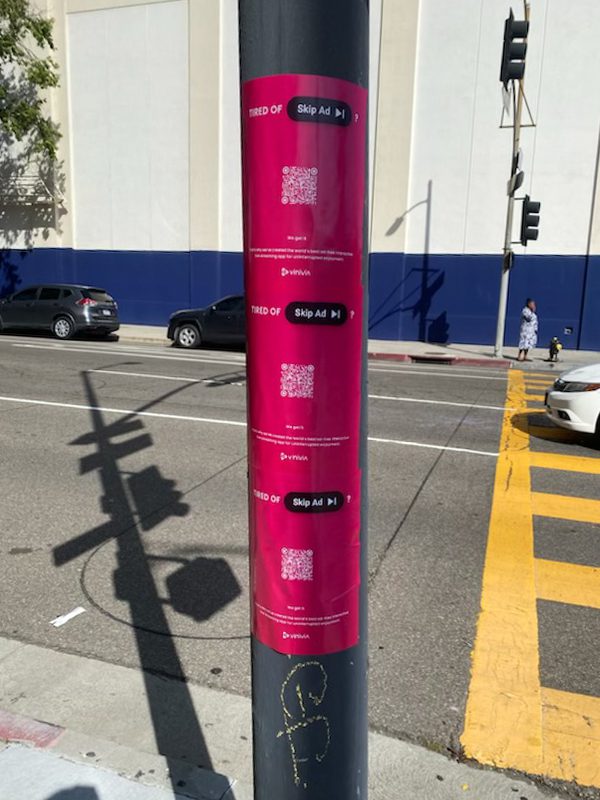
Here is the misconception I spend the most time correcting about snipe work in Richmond.
Buyers think of snipes as small posters. They are not. A poster campaign is about a handful of good walls that each carry the message on their own. A snipe campaign is about repetition: the same small panel appearing again and again along a route until someone walking it stops noticing individual placements and starts noticing the brand.
That difference matters enormously in Richmond, because this city does not hand you long continuous walking routes. It hands you four or five compact districts separated by drives. Repetition works inside a district. It does not carry between them.
So the first thing we do on a Richmond snipe brief is throw out any plan written as a citywide number. A thousand placements spread across Richmond is a thousand placements nobody sees twice. Four hundred placements concentrated along the Cary Street side streets and the Broad Street arts stretch is a campaign somebody actually experiences.
The second thing we do is sort the available surfaces into classes, because the risk, lifespan and control profile of a snipe depends almost entirely on what you stuck it to. That sorting exercise is most of the real work, and it is what the rest of this page is about.
The third thing is check the season, because a small panel with a short perimeter is far more vulnerable to a Richmond summer than a large pasted sheet is.
The surface classes you will meet in Richmond
Every snipe surface in this city falls into one of four categories, and I would rather a client understand the categories than memorise a list of streets.
Class one is private wall under identified ownership. Someone owns it, you can find them, and they can say yes in writing. In Richmond this class is unusually deep, because the city has spent more than a decade normalising the conversation about private walls. The Richmond Mural Project and the RVA Street Art Festival both began in 2012, and the mural project has put well over a hundred commissioned works onto buildings across the city. Owners in Scott’s Addition, along Broad Street and in the Carytown alleys have mostly been approached before. This is the class the campaign should rest on. Longest life, cleanest documentation, best surfaces.
Class two is temporary site infrastructure. Construction hoarding, scaffolding wrap, plywood over a vacant frontage. It belongs to a developer or general contractor rather than to the building behind it, and it covers the single most snipe-appropriate surface geometry there is: a long flat continuous run at eye level. More on this below, because in Richmond it is currently the most interesting class in the city.
Class three is managed public-facing environment. The Canal Walk, the riverside tourist infrastructure, the ground around state government buildings. Maintained, monitored and attended to on a schedule. We treat this class as permission-first and in practice we rarely end up street-facing in it at all. If a client needs presence down there, the honest answer is usually an interior placement arranged with a venue rather than anything outdoors.
Class four is the genuinely ambiguous. Utility poles, signal cabinets, public street furniture, the backs of signs. This is the class that most people picture when they hear the word snipe, and it is the class we are most careful about describing accurately. Ownership is not always obvious, municipal requirements apply and change, and enforcement attention is uneven and district-specific. Tolerance in one Richmond quarter predicts nothing about the next one over. We do not characterise this class in terms of what is or is not permitted. We describe it as a grey area, which is what it is, and we make sure the client understands the trade before any of it goes in the plan.
The practical upshot: we want the overwhelming weight of a Richmond campaign in classes one and two, with class three handled through venue conversations and class four discussed openly rather than quietly assumed.
Construction hoarding, and why Scott’s Addition keeps coming up
If you want to understand why we keep steering Richmond snipe campaigns toward Scott’s Addition, it is not only the breweries.
Scott’s Addition is a former industrial district in sustained conversion. That means two things happening at once. First, the existing building stock gives you long brick flanks with few windows, the kind of uninterrupted side elevation that holds a run of repeated panels without fighting architectural detail. Second, the conversion work itself produces hoarding and site fencing, and hoarding is the ideal snipe geometry: flat, continuous, at eye level, and installed specifically to be looked at rather than through.
The permission conversation on hoarding is different from a building conversation and people get it wrong constantly. The hoarding does not belong to the building behind it. It belongs to whoever holds the site, which means the developer or the general contractor. The site superintendent is the person who can actually say yes. That permission needs to be explicit and in writing, and it needs re-confirming when site control changes, because on an active conversion site it frequently does, sometimes mid-campaign.
We build that re-confirmation into the schedule rather than discovering the problem when a new contractor’s crew strips a run we installed three weeks earlier. A snipe run on hoarding is a relationship with a site, not a one-time placement.
The same logic applies in miniature elsewhere. Vacant frontages with plywood over the glass show up along stretches of Broad Street and in pockets of Old Town Manchester, and the owner of that plywood is reachable through the property manager. It is a smaller class than Scott’s Addition hoarding, but it is the same conversation.
What Scott’s Addition also gives you is the physical ease of working it. Wide industrial streets, available kerbside, low residential density. A crew can park a vehicle close to the work and move material without carrying it four blocks. Nowhere else in Richmond gives you that.
What a Richmond summer does to a small panel
Richmond is humid subtropical. Hot sticky summers, winters that drop into the thirties, and rain spread fairly evenly across the year. The rainfall total is not the thing that matters. The delivery pattern is.
Summer rain here arrives as thunderstorms. A large volume of water in a short, violent burst, often with wind driving it horizontally onto a vertical face. For snipe work specifically that is worse than it is for large-format paste, and the reason is geometry.
A small panel has a lot of perimeter relative to its area. Edges are where water gets in and where failure starts. Scale a sheet down and you have multiplied the proportion of the panel that is vulnerable. One driven storm can take out a run of small panels that a single large pasted sheet in the same spot would have survived.
So three things change in how we work summer snipes in this city.
We over-seal the edges, deliberately and visibly, accepting that the perimeter will look heavier than it would on a dry-market install. We check radar before a crew commits paste rather than reading the daily forecast, because a general outlook of scattered storms tells you nothing about whether a cell is forty minutes out from Carytown. And we write replacement passes into the schedule as an expectation rather than a contingency, because in July they will be needed.
Humidity is the slower problem. Soft wet air keeps paper pliable, slows curing and wicks at cut edges. A summer crew gets through fewer surfaces per night than an autumn crew because each one needs longer before it can be left. For any snipe run with a long intended dwell through the hot months we push toward vinyl and take the aesthetic difference.
The hot season runs longer than the calendar suggests here. Late May can already be fully hot and the first half of September often still is. We plan the warm-weather material regime from late May through mid-September.
Winter fails differently. Richmond does not lock into a sustained freeze. It oscillates around the freezing point, crossing it repeatedly, which is exactly the pattern that lifts edges. Meltwater penetrates behind a corner, refreezes overnight, expands, peels. Cold masonry will not take paste well to begin with. Small panels mounted low are also directly in the line of road salt and grit thrown off the street, which is a second reason winter snipe work wants to be mechanically fixed, mounted higher, or moved indoors.
Autumn is the answer. It is calmer and more settled than spring, which is the wetter and more erratic of the two shoulder seasons, and it is when the city’s pedestrian volume peaks.
One site-specific caution. The James River widens downstream of Richmond and heavy rain can flood low riverside ground. Shockoe Bottom and the Canal Walk are the exposure. We keep anything down there above plausible flood height and we do not commit to low riverside placements while a tropical system is moving up the coast.
Route design, crew nights and the drive-between problem
Richmond has several genuinely walkable districts that are not walkable to each other. For snipe work, which depends on repetition along a route, that is the defining operational fact.
We design Richmond snipe campaigns as a set of self-contained district routes rather than as a city map. Each route is a loop somebody could plausibly walk in one outing, and the repetition lives inside that loop.
The Carytown route is the cleanest. A linear retail stretch along Cary Street with side roads and alleys running behind it. The frontage is mostly unavailable, but the alleys hold reachable surfaces a few steps from real pedestrian flow, with working room and low observation. Park once, work the alleys on foot, build the repetition in the back-of-house geography rather than on the shopfronts.
The Broad Street route runs through the Arts District and past the VCU campus, which is the single highest-traffic pedestrian corridor in the city and the one place where student volume and arts audience overlap directly. It needs the tightest timing discipline of anything in the plan. We work it outside class-change periods and outside the evening crowd, and we do not install on Broad on a First Friday evening. We go the night before, so the First Friday audience walks into finished work.
The Scott’s Addition route is the most forgiving. The district’s evenings run latest in the city because of the breweries and distilleries, which means a crew handling material at eleven at night reads as ordinary activity rather than as something to look at. We often open a night here and move later to the quieter districts.
The Fan goes into the walking-route analysis and not into the placement plan. It is dense, historic and residential, the parking is genuinely difficult, and residents notice crews immediately. Old Town Manchester and Jackson Ward both carry real surfaces, with Jackson Ward deserving a more careful and consultative approach to anything visible given its historical weight.
Crew shape for snipe work is typically two people. One placing, one carrying, spotting and documenting. Snipe nights are longer than poster nights because the count is higher and the walking is constant. The sensible build is a late-evening Scott’s Addition pass while that district is still awake, then Carytown alleys and Broad Street in the quiet pre-dawn hours.
October’s Folk Festival weekend should be treated as access-restricted for routine installation. Street closures, crowd volume and parking saturation across the central districts make it a week to work around rather than through.
The Richmond calendar a snipe campaign should be built on
Snipes reward cadence more than any other format we run, and Richmond happens to have an unusually good cadence anchor.
First Fridays in the Broad Street Arts District runs every month and is one of the most popular recurring art events in the region. For a snipe campaign that is the heartbeat. A refresh pass the night before each First Friday gives you a monthly rhythm, a reason for the run to look new, and a predictable audience walking the exact corridor the panels are on.
October is the peak. The Richmond Folk Festival is described as the largest folk festival in the country and draws over two hundred thousand attendees across three days of free programming, in the calmest install weather of the year. Build the flagship pass in the quiet weeks before it. By the final week every good surface in the central districts is contested.
Summer gives you Broad Appetit, which closes a four-block stretch of Broad Street beside the campus for a dense single-corridor food event. For snipe work that is close to ideal: a confined linear audience on a corridor you were already working.
The rest of the year carries the Richmond Jazz Festival, the Riverrock outdoor sports and music festival on the river, the RVA Street Art Festival, and community events including the Indian Festival, the Church Hill Irish Festival and the Original Italian Street Festival.
VCU sits directly on Broad Street, so term dates change foot traffic on the city’s main cultural corridor more than any other single variable. UNVERIFIED: current VCU term dates and exact festival dates for the coming year were not confirmed here. Check both directly before locking a schedule.
Where we push back on Richmond snipe plans
We talk clients out of citywide placement counts, every time. A number spread across Richmond’s separated districts produces no repetition anywhere. We would rather deliver fewer panels concentrated into two district routes and have them actually register.
We talk clients out of leaning the plan on class four surfaces. Poles and cabinets are what people picture, they are the shortest-lived part of any run, they offer the least control, and the ambiguity around them is real. We will discuss them openly. We will not quietly build a campaign on them.
We talk clients out of a July launch with a long intended dwell on paper. The thunderstorm pattern punishes small panels specifically because of their edge-to-area ratio. Move it to autumn or move it to vinyl.
We talk clients out of treating Richmond’s mural culture as blanket permission. It means the conversation is easier, not that the answer is automatically yes. Owners here are receptive because they have been approached respectfully for over a decade, and that is worth protecting.
And we talk clients out of The Fan, which looks like the obvious target on a map and is the worst working environment in the city for this format.
Where a brand needs more than the district routes can deliver, snipes are not the tool to stretch. That is the point where we will suggest adding sidewalk decals and stencils to hold the ground plane inside the same walkable loops, which deepens the repetition without asking the format to do something it cannot.
Frequently asked questions
How many snipe placements does a Richmond campaign need?
Fewer than most briefs assume, concentrated more tightly than most briefs assume. Richmond’s walkable districts are separated by drives, so repetition only works inside a district. We would rather build a dense run along the Carytown alleys and the Broad Street arts stretch than spread the same count thinly across the whole city.
Is snipe advertising permitted in Richmond?
It is a grey area, as in most American cities. It depends on who owns the surface, current municipal sign and right-of-way requirements, and district-level enforcement, which is inconsistent. We put campaign weight on private surfaces and site hoarding with written permission, confirm current city requirements before each campaign, and document every placement.
Why does construction hoarding keep coming up for Richmond?
Because Scott’s Addition is in sustained conversion and hoarding is the right geometry for snipes: flat, continuous, eye level. The permission goes through the developer or general contractor holding the site rather than the building owner, it has to be written, and it needs re-confirming when site control changes, which happens often.
How long does a snipe panel last here?
Season decides it. Autumn installs on sound surfaces hold well. Summer thunderstorms can strip a run in one afternoon because small panels have a high edge-to-area ratio and edges are where failure starts. Winter freeze-thaw lifts corners repeatedly, and low-mounted panels also take road salt and grit off the street.
What time of night does your crew work in Richmond?
We usually open late evening in Scott’s Addition, where brewery and distillery activity runs latest and crew movement reads as normal, then shift to the Carytown alleys and Broad Street in the quiet pre-dawn hours. We avoid Broad during class changes and never install there on a First Friday evening.
Do you remove snipe work at the end of a run?
Yes. We take it down, clean the surface back and photograph it in returned condition. In a market where the same property owners and site superintendents get approached repeatedly, leaving a surface clean is the only thing that keeps the next conversation open. We treat removal as part of the job.
Request a campaign quote
The useful first conversation about Richmond snipe work is about which district routes matter to you and what cadence you need, not about a placement count. Tell us whether you are building toward the Folk Festival in October, running a monthly First Friday rhythm along Broad, or holding steady presence around Scott’s Addition and Carytown, and we will tell you what those routes can realistically carry.
If the honest answer is that your reach requirement is bigger than what snipe repetition can deliver inside Richmond’s walkable districts, we will say that too.
Request a campaign quote and tell us the corridor and the dates.

Ready to Run Your Campaign?
Call us or email us. We’ll tell you exactly what we can do in your market and what it costs.
Related Service
Explore similar advertising solutions offered by American Guerrilla Marketing.
American Guerrilla Marketing — Los Angeles
Street-level campaigns in Los Angeles and nationwide. Wheatpasting, LED trucks, street teams, and more.
(646) 776-2770
Related Articles
-
Snipe Advertising for Oklahoma City Brands
November 12, 2026
-
Snipe Advertising for Seattle Brands
November 11, 2026
-
Snipe Advertising for Virginia Beach Brands
November 11, 2026
-
Snipe Advertising for Albany Brands
November 10, 2026
-
Snipe Advertising for Milwaukee Brands
November 10, 2026