
November 4, 2026
LED Trucks & Mobile Billboards in Knoxville, TN
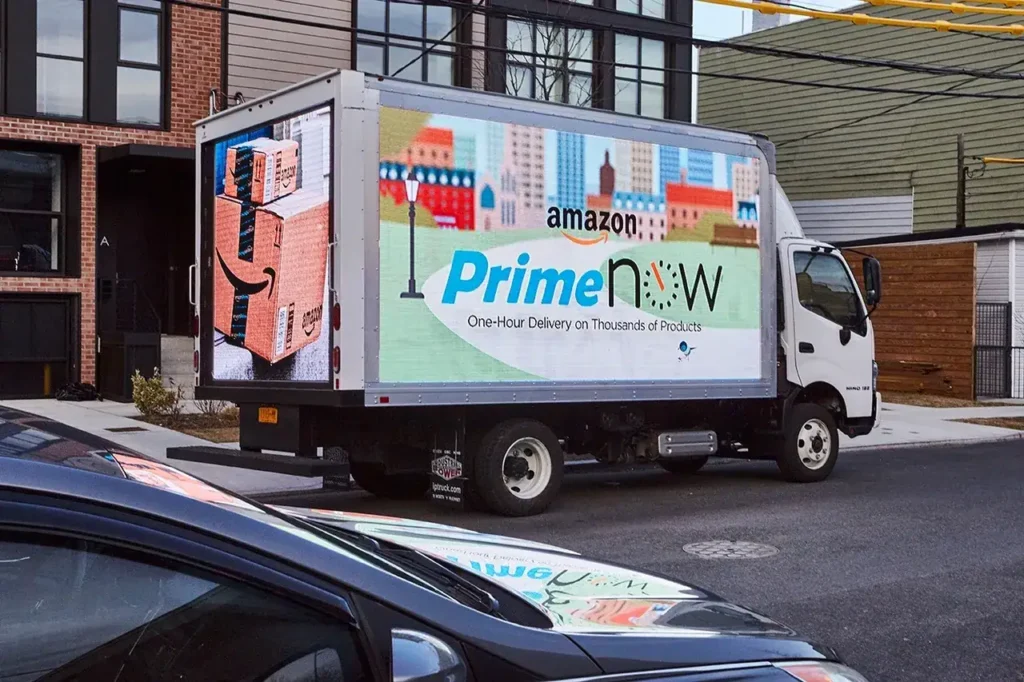
An LED truck is a route product. That is the whole thing. The screen is the easy part, and the vehicle is the easy part. What determines whether the campaign works is whether there is a road worth driving, carrying the right people, slowly enough to read a screen, at a time they are awake.
Knoxville tests that harder than most markets its size, because the places where the audience is densest are mostly places a truck either cannot go or should not go.
Downtown is compact and walkable. Gay Street, Market Square and the Old City sit within easy walking distance of one another, and Market Square is a pedestrian space. Cumberland Avenue, the student corridor known as The Strip, was deliberately rebuilt to favour people on foot over vehicles. Those are the two highest value audience concentrations in the city, and both of them are designed around walking.
Meanwhile the moments when Knoxville puts enormous numbers of people into vehicles are specific and predictable: Vols home football weekends and university move-in. Those are the windows where a mobile billboard does something no poster or decal can.
So a serious Knoxville truck plan is mostly about timing and approach roads, not about looping the pretty streets. This page covers how that works, what the rebuild on Cumberland Avenue changed, how the weather and darkness hours affect screen legibility, and where I tell clients a truck is the wrong tool.
A truck is a route product, and Knoxville’s best audiences are on foot
Start with an uncomfortable fact, because it saves people money and disappointment.
Mobile Billboards work by putting a large bright surface into someone’s field of view for long enough to be read, repeatedly. That needs vehicle traffic moving slowly, or stopped, with sightlines to the screen. Congestion is a feature, not a bug. A truck in free-flowing traffic at speed delivers a glance. A truck in stopped traffic delivers a genuine read.
Knoxville’s walkable core works against that. The downtown cluster is tight enough that a crew working posters can park once and cover Gay Street, Market Square and the Old City on foot. That compactness is exactly what makes the area poor truck territory. People there are already out of their cars. They are walking between a restaurant and a theatre, not sitting at a light.
Market Square makes it literal. It is a pedestrian heart with a farmers market, summer splash pads and the adjoining Krutch Park sculpture walk. A truck has no business there and cannot get there. The audience a client is picturing when they ask for a downtown truck run is standing in a place the vehicle cannot reach.
That does not make Knoxville a bad truck market. It makes it a market where the truck earns its keep on the approaches, the arterials and the event days rather than on the showpiece streets.
Clients ask for a downtown Knoxville loop because it sounds right. Gay Street runs roughly ten blocks through the central business district and carries the theatre and arts districts. It photographs well. It feels like the centre of things, because it is.
Here is what actually happens on that loop. The street carries pedestrians who are mostly looking at each other, at menus and at venue frontages. The vehicle traffic is local and light outside event nights, because downtown clears early most nights of the week. A truck doing laps past the same thinning crowd produces repetition without reach, and after the third pass it starts to read as a nuisance rather than a message.
There is a narrow version that does work. On event nights, when the Old City is running late and people are moving between venues, a truck on the surrounding grid catches genuine circulation. March during Big Ears is the clearest case, when downtown becomes a multi-venue music event drawing a national audience and the streets stay busy well into the night. On those nights the vehicle traffic around the core is real and the pedestrian density on the pavements gives the screen a second audience.
But I treat downtown as a supporting leg, not the spine of a Knoxville truck campaign. The spine belongs on the roads people actually drive, at the times they actually drive them, and I would rather tell a client that at the planning stage than collect a fee for laps.
Cumberland Avenue after the rebuild is a poor truck street
The Strip deserves direct treatment because it is the corridor clients request most for student campaigns, and the rebuild changed what it can carry.
The Cumberland Avenue Corridor Project narrowed the street from four lanes to three, widened the sidewalks, and added street trees, street furniture and new crosswalks. Large-scale student housing has been absorbed along it. The result is exactly what the city intended: a pedestrian-first corridor with shops, bars and restaurants in easy strolling distance, extremely walkable.
For a slow-moving advertising vehicle, every one of those improvements is an obstacle.
Three lanes means there is no spare lane in which to be slow. A truck travelling below the flow of traffic on a narrowed street becomes the thing holding everyone up, which is bad driving, bad manners and bad advertising. There is nowhere to tuck in.
Widened sidewalks and new crosswalks mean frequent pedestrian crossing movements, which is good for people and demanding for a large vehicle being driven carefully at low speed in the dark.
Street trees are the detail nobody mentions until the footage comes back. Trees planted along the kerb sit directly between a screen on the vehicle flank and the people on the sidewalk. A screen that is unobstructed in a parking lot photograph is intermittently hidden behind a canopy for most of a slow pass down a tree-lined corridor.
The honest conclusion is that Cumberland Avenue is a tremendous corridor for formats that live at the pedestrian’s own level and a mediocre one for a truck. If the brief is students and the format is a truck, the value is on the approach roads and around move-in, not on The Strip itself.
The two windows that matter: game weekends and August move-in
Vols home football dates dominate autumn weekends and drive very large visitor volumes into the campus and downtown area. For a mobile billboard, this is the headline opportunity in the Knoxville calendar, and it comes with a hard operational cost.
The opportunity is dwell time. Enormous numbers of vehicles converge, move slowly and stop frequently. That is the single best condition a mobile billboard can be given. People sitting in slow traffic with nothing to look at will read an entire screen rotation, multiple times.
The cost is access and mobility. Vehicle access near campus on those days is genuinely difficult, and a truck that cannot reach its position is a truck that delivered nothing. For anything requiring vehicle access close to campus, I avoid game days entirely with the other formats and treat them as a specialist operation for the truck.
The way it works is pre-positioning rather than roaming. Get the vehicle onto the approach routes early, well before the convergence builds, and accept that once traffic thickens the truck is going where traffic goes rather than following a planned loop. A route plan that assumes free movement on a game day is a fiction.
I also push clients to think about direction. Inbound traffic in the hours before a game is a different audience in a different mood from outbound traffic afterwards, and a screen that suits one often suits the other poorly. Choosing which half of the day to own produces a better campaign than trying to cover both and being badly positioned for each.
If I could pick one week in the Knoxville year for a truck campaign aimed at students, it would not be a football weekend. It would be move-in.
University of Tennessee terms govern the Cumberland Avenue corridor completely. August move-in through spring finals is the live period, and summer is materially quieter on The Strip. Move-in is the hinge, and it is unlike any other week because it is a vehicle event.
Students arrive in cars. Families arrive in cars, often two per student, often from out of state, often sitting in slow queues near housing. They are unfamiliar with the city, actively looking around, and in the middle of making a dense cluster of purchasing decisions about where to eat, bank, shop, store things and get a phone fixed. The large student housing developments along the corridor concentrate that arrival traffic.
That combination, stopped vehicles plus unfamiliar drivers plus immediate purchase intent, is close to the ideal brief for this format. The audience is literally captive in traffic and genuinely wants information.
Spring finals and the end of term carry a weaker version of the same pattern in reverse, with departure traffic and storage and travel decisions.
Clients who have only ever thought about football weekends usually have not considered move-in, and it is the recommendation I make most often on this format in this city.
Weather, darkness hours and screen legibility
An LED truck is the format in the AGM range that cares least about Knoxville weather, which is a real planning advantage in a city with this climate.
Knoxville is humid subtropical with long hot muggy summers and short cold wet winters, typical temperatures from the low thirties to the high eighties, and rain spread fairly evenly through the year rather than concentrated in one season. That even wetness is the operational fact that complicates every adhesive format here, because there is no reliably dry window to plan around.
Winter freeze-thaw cycling, which lifts pasted edges and breaks adhesive bonds on cold damp concrete, is simply not a factor for a screen on a vehicle. Neither is humidity slowing a cure. A January campaign that would be a gamble on a wall is a routine night for a truck. In a market with this much year-round rain, that reliability is worth more than it is in a dry city.
Rain still changes the audience rather than the equipment. Wet evenings thin the pedestrian numbers downtown and on The Strip, which pushes more of the audience into vehicles. For most formats that is a loss. For this one it is close to neutral and sometimes a gain.
Darkness hours matter for legibility and they swing hard here. Winter darkness arrives early, so an evening run gets full screen impact while the city is still active. Summer darkness arrives late, meaning much of an early evening run happens in daylight where a screen competes with the sun and loses contrast. Summer runs should be weighted later, and summer creative should assume high ambient light for part of the run, which means heavy contrast and large type rather than subtlety.
UV load here is moderate rather than extreme, so vehicle graphics and vinyl elements on a wrapped truck hold their colour through a normal campaign.
Permission, standing and parking as a grey area
Mobile advertising sits in a grey area and I am not going to pretend otherwise in either direction.
I will not tell you that running an LED truck in Knoxville is permitted, and I will not tell you it is prohibited. Treatment varies by municipality, enforcement is inconsistent, and the relevant questions depend on local ordinance, where the vehicle travels, whether it stops, how long it stands and whose ground it stands on. I will not quote a municipal rule or a permit requirement I cannot verify for the dates you are asking about.
What I will describe is the practice that keeps the work defensible.
Driving a route and standing in one place are different activities and should be treated as different decisions. A moving vehicle in traffic is one situation. A stationary vehicle displaying a screen for an extended period is another, and that is where questions about standing, parking and local requirements get sharper. We check current municipal requirements directly before a run rather than assuming what applied last year still applies.
Where a campaign wants a stationary position, we want it on private ground with a named owner or manager who has given dated written permission. A consented private lot with sightlines to a busy road is worth more than a contested kerbside position, because it runs the whole evening instead of running until someone asks the driver to move.
Downtown character is a factor too. Gay Street and Market Square are actively managed as a destination, with a resident business association, programmed events and a preservation-minded view of the area. A vehicle idling with a bright screen in the middle of that environment attracts attention quickly. Knoxville is a small enough operating community that a crew known for parking inconsiderately stops getting cooperation everywhere else.
Crew logistics: staging a vehicle in a garage city
Knoxville’s parking reality is built around structures, and that cuts differently for a truck than for a walking crew.
The city’s parking authority runs downtown garages and publishes guidance covering downtown street parking and the Cumberland District, and university garages such as the 11th Street Garage serve the campus side, with a pedestrian bridge crossing Cumberland Avenue. For a poster or decal crew, that is excellent. Park once in a structure, cover the whole downtown cluster on foot with a cart.
For an LED truck, structured parking is mostly unavailable. Height clearance in parking structures rules out a vehicle of this type, so the staging plan that works beautifully for every other format we run here does not transfer. Truck staging means surface ground, arranged in advance, usually private and usually outside the core.
That changes the shape of a shift. A walking crew stages inside the target area. A truck crew stages outside it and drives in, which means route planning includes the approach and the exit, and means the vehicle is committed once it enters congested conditions.
The two-zone geography matters here as well. Downtown and Cumberland Avenue sit roughly a mile apart with campus between them. For a walking crew those are two separate trips. For a truck they are two legs of a drive, and the connection between them is part of the route rather than wasted time, which is one of the few structural advantages this format has in Knoxville.
Crew is typically a driver plus one. The second person handles navigation, timing of the content rotation, documentation of the run and the judgement calls about when to hold a position and when to keep moving. A driver working alone in unfamiliar congested conditions is doing two jobs badly.
Night character is zone dependent. Downtown clears early outside event nights, so late downtown runs on an ordinary Tuesday are a poor use of the vehicle. The Old City runs later. The Strip runs late during term and goes quiet all summer.
What goes wrong, and what we talk Knoxville clients out of
The downtown loop is the first thing I argue against, for the reasons above. The core is too walkable and clears too early for lapping to deliver value outside event nights.
The second is the slow Cumberland Avenue pass. Three lanes, widened sidewalks, frequent crossings and kerbside street trees add up to a street that neither wants a slow truck nor gives it clean sightlines.
The third is the summer student campaign. Summer is materially quieter on The Strip, and a truck aimed at students in July is aimed at an audience that has gone home. Wait for move-in.
The fourth is the game-day roaming route. On those weekends the truck goes where the traffic allows. Pre-position early, pick inbound or outbound, and stop pretending a loop is achievable.
The fifth is subtle creative. A screen is read by people in motion, often in daylight during summer runs, often through gaps in street trees. Few words, high contrast, big type. Anything that needs eight seconds of attention will not get it.
The sixth is the extended stationary display taken casually. If a campaign wants the truck to stand somewhere, that position needs to be consented private ground arranged in advance, not an optimistic kerb.
The seventh is using a truck as a substitute for presence in the walkable core. It cannot do that job, and I would rather say so than deliver a campaign that misses the audience the client actually described.
That last point is where the pairing matters. A truck covers roads, approaches and event traffic. It cannot reach the person standing in Market Square on a farmers market Saturday or walking between venues in the Old City during Big Ears. For those moments the format that completes the plan is Street Teams & Experiential, putting people into the pedestrian spaces the vehicle cannot enter while the truck works the traffic around them. Used together they cover the whole of a Knoxville event weekend instead of half of it.
Frequently asked questions
Are LED trucks worth it in downtown Knoxville?
Only in a limited way. The downtown core is compact and walkable, and it clears early most nights, so lapping Gay Street produces repetition without reach. Event nights are different, particularly during Big Ears in March when circulation stays strong late. Otherwise a truck earns more on approach roads and arterials than downtown.
When is the best time to run a mobile billboard in Knoxville?
University move-in in August is the most undervalued window, because arriving students and families sit in slow traffic while making immediate purchase decisions. Vols home football weekends deliver enormous dwell time in congestion. Winter runs benefit from early darkness and are unaffected by the freeze-thaw conditions that complicate pasted and adhesive formats here.
Can an LED truck run on Cumberland Avenue?
It can drive it, but the corridor rebuild made it a weak truck street. Narrowing from four lanes to three leaves no room to travel slowly, widened sidewalks bring frequent crossings, and kerbside street trees intermittently block the screen from the pavement audience. Student campaigns usually perform better on approach roads and around move-in.
Is mobile billboard advertising allowed in Knoxville?
It is a grey area rather than a settled yes or no. Treatment varies by municipality, enforcement is inconsistent, and driving a route differs from standing in one place for an extended period. We check current municipal requirements before each run and arrange stationary positions on consented private ground with dated written permission.
How does Knoxville weather affect an LED truck campaign?
Less than any other format we run here. Rain is spread fairly evenly across the year and winter crosses the freezing line regularly, which complicates pasted and adhesive work but not a screen. Wet evenings move the audience from pavements into vehicles. Summer darkness arrives late, so daylight contrast drives the creative.
Where do you stage an LED truck in Knoxville?
On arranged surface ground, usually private and outside the core. Height clearance in parking structures rules out garages, so the staging plan that suits walking poster crews here does not transfer. Routes are planned to include the approach and exit, since the vehicle is committed once it enters congested conditions near campus or downtown.
Request a campaign quote
Give us the audience, the dates and what the screen needs to say, and we will tell you honestly whether a truck is the right format for that brief in this city. If the audience you described is standing in a pedestrian space the vehicle cannot enter, we will say so and propose what actually reaches them.
Request a campaign quote and we will come back with a route plan built around Knoxville’s real traffic moments, a staging arrangement that works for a vehicle this size, and a creative specification suited to the darkness hours in the month you want to run.

Ready to Run Your Campaign?
Call us or email us. We’ll tell you exactly what we can do in your market and what it costs.
Related Services
Explore similar advertising solutions offered by American Guerrilla Marketing.
American Guerrilla Marketing — Los Angeles
Street-level campaigns in Los Angeles and nationwide. Wheatpasting, LED trucks, street teams, and more.
(646) 776-2770
Related Articles
-
Trailer Billboard Advertising Formats: How Installs Work
November 4, 2026
-
Digital Billboard Truck: How It Actually Works
November 3, 2026
-
Mobile Billboard Campaign Minimums: An Honest Breakdown
November 3, 2026
-
Renting vs Buying an LED Truck: Where Each One Works
November 3, 2026
-
Box Truck Advertising: How It Actually Works
November 3, 2026