
November 24, 2026
LED Trucks & Mobile Billboards in Cleveland, Ohio
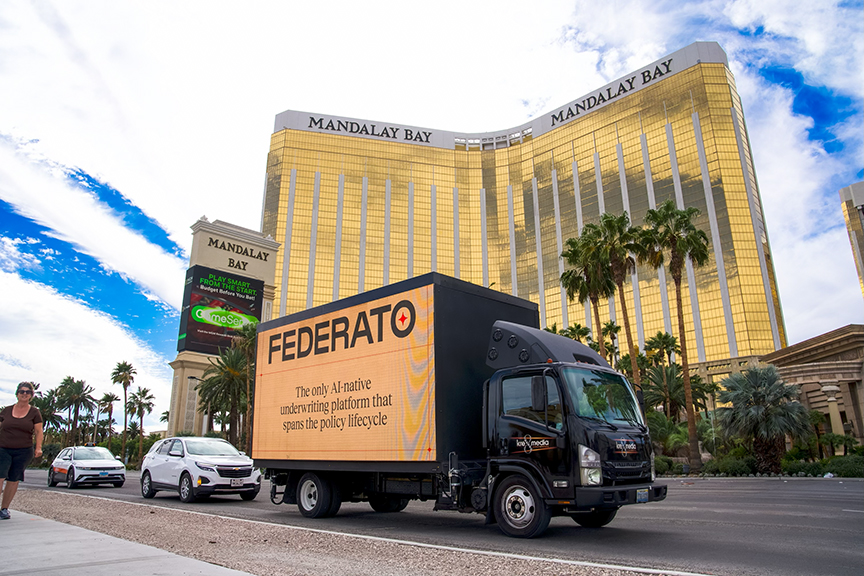
Most of what I write about Cleveland is a list of constraints. The lake, the salt, the plows, the separated districts, the closed public infrastructure. For poster, snipe, decal and projection work, Cleveland asks a lot.
This is the page where the city’s awkwardness turns into an advantage.
Cleveland is a set of distinct neighbourhood commercial strips rather than one continuous downtown, separated by a river and by real driving distance. For a walking crew that is a problem to be budgeted around. For a vehicle carrying its own screen, it is simply the route.
And Cleveland’s winter, which shuts down almost everything else we do, is the condition under which a mobile billboard has the city close to itself.
That does not make the format automatic here. There are streets a truck has no business being on, event days that will trap one, and a salt season that is harder on a vehicle than most clients expect. But if someone asks me which format fits Cleveland’s actual shape rather than fighting it, this is the answer.
Cleveland is the city this format was built for
The structural fact about Cleveland is separation. Ohio City and Tremont sit west across the Cuyahoga from downtown. Gordon Square is further west again along Detroit Avenue. University Circle is well to the east. Each one is individually walkable and none of them connects to the others on foot.
Every other format we run pays a tax for that. A posting crew walks a district and drives to the next one, and the drive is dead time. We budget a full night per two districts and clients routinely find that disappointing.
A mobile billboard inverts it. The drive between districts is not dead time, it is the delivery. The screen is working on the bridge, on the arterial and at every light in between. A route that costs a walking crew two nights costs a truck one, and the truck is advertising for the whole of it.
This matters more in Cleveland than in a dense single-core city, where a truck mostly circles ground that other formats already cover well. Here it reaches ground that nothing else reaches at all, which is the stretch between the districts where a lot of the city’s population actually drives.
The second structural fit is the weather, and it is worth its own section.
The winter argument
Cleveland’s working season for street-level work is roughly May through September. December through February we plan conservatively and with contingency, because lake-effect snow, extended sub-freezing stretches and salt make the city genuinely hostile to anything adhesive. The city logged an unusually long run of days without a thaw in February 2026, and through a stretch like that, paste does not cure and ground graphics do not survive the plow.
A screen on a truck does not care whether a wall is damp.
That is the entire argument and it is a strong one. From roughly December to March, a mobile billboard is often the only street-level format we will honestly recommend in this market. Not as a compromise, as the correct answer.
Two local conditions make it better than it would be elsewhere in winter.
Early darkness. Cleveland is dark early in December and January, which means an illuminated screen is at full effect from late afternoon rather than from mid-evening. The high-value hours and the dark hours overlap almost completely, so a winter route gets more lit running time in front of more people than a summer route does.
Cloud. Cloud is Cleveland’s baseline and January is typically the gloomiest month. Heavy overcast keeps ambient light low, which raises screen contrast at night. It also means a screen is rarely fighting direct sun during the day, which is the usual daytime weakness of this format in bright markets. Low UV load across the year is a quieter benefit on the vehicle wrap and hardware.
There is also one reliable winter audience. Cavaliers basketball through the winter is the one thing consistently pulling people downtown in January and February, and the Great Big Home and Garden Show in late January into early February is a rare midwinter convention-scale draw. In a season when the city otherwise empties, those are real concentrations of people, and a truck can reach them when a poster crew cannot work.
What salt and slush actually do
I would be overselling if I left winter there, because the format is weather-tolerant rather than weather-proof, and Cleveland’s winter has specific teeth.
Road salt is the main one. De-icing salt spray off the arterials coats everything low, and a truck spends its entire shift in that spray. It builds on the lower screen face, on the frame and on the vehicle, and a salted screen reads badly long before anything fails. A winter Cleveland route needs cleaning built into the shift rather than treated as end-of-run maintenance. Crews that do not plan for it end up running a dim, streaked panel for the back half of the night.
Slush and spray from traffic do the same thing faster on an arterial like Detroit Avenue, where traffic moves at speed through standing water and brine.
Lake-effect events can still close a night. Cold Canadian air picks up moisture crossing Lake Erie and dumps wet, heavy snow on the southern shore. Heavy falling snow cuts screen legibility at distance and makes the roads themselves the limiting factor. We build alternate dates into any December through March schedule and we treat the forecast as a hard gate, same as with any other format.
Snow banks remove standing positions. This is the underrated one. A route that includes dwell time at a kerb loses those positions when plowed snow occupies them. Winter routes should be planned as moving routes with private-lot dwell, not kerbside dwell.
Spring brings its own problem. Cleveland spring is genuinely unpredictable, swinging between mud-season rain and late snow, and it does not stabilise until the lake breeze settles things around May. Spring routes are more reliable than spring paste jobs, but a hard date in March still deserves an alternate.
Route by route: where a screen earns attention
Not all Cleveland driving is equal. A truck in moving traffic on an empty stretch is burning a shift. The route needs slow traffic, lights, and people outside the vehicle.
Detroit Avenue through Gordon Square. The best truck corridor in the city. Detroit-Shoreway runs between Lake Erie and I-90, roughly West 45th to West 85th, with Gordon Square as the retail hub and the Capitol Theatre and Near West Theatre anchoring it. Detroit Avenue is an arterial, which means it is built for a vehicle this size, it has kerb availability, and it carries both the through traffic and the district’s own foot traffic at the venue entries. Everything a truck wants.
West 25th Street, Ohio City. The densest bar, brewery and food concentration on the near west side, in the orbit of the West Side Market. Real width, real traffic, real pedestrian density in the evening. Strong corridor, with the caveat that the side streets off it are not truck territory.
Downtown, East 4th and the Warehouse District. The highest concentration of people on foot in the city, and the most constrained environment for a vehicle. East 4th is a pedestrianised block, so the truck works the surrounding streets and the crowd sees it on approach and departure rather than in the middle of the dining strip. The Warehouse District adds bar and shopping traffic. Downtown is predominantly paid lots and decks with some metered street parking, so dwell needs arranging rather than improvising.
The lakefront and stadium approaches. Huntington Bank Field and Progressive Field generate the largest concentrated crowds in the city, and the approach routes carry that crowd slowly in both directions. More on event days below.
University Circle. Museums, green space and Case Western Reserve University. Workable, with wider institutional streets than the near west side. Its foot traffic follows the academic year and collapses over summer, which catches clients out because it is the opposite rhythm to the rest of the city.
Edgewater. Lakeside, seasonal, recreational. Summer only and weak as a route, because the audience is there to look at the lake.
The route that uses the format properly strings several of these together, because that is the one thing a truck can do that nothing else in our range can.
Where a truck does not belong
Tremont. I turn down Tremont truck routes regularly. It is one of the oldest neighbourhoods in Ohio, tree-lined and Victorian, with a notable density of churches and a concentrated gallery and independent restaurant scene. The streets are narrow, residential in character, and carry heavy resident parking. There is no through traffic to speak of, which means a truck there is not reaching drivers, it is driving past houses with a lit screen. That is a complaint generator, not a campaign, and Cleveland’s enforcement culture is complaint-driven.
If a client wants Tremont, the right answer is permissioned work at the venue frontages, not a vehicle.
The residential streets off West 25th. Same logic. The corridor is good. The grid behind it is not.
Anywhere the audience is stationary and indoors. A screen needs people outside. A route planned around an office district on a weekday evening is a route past empty pavement, because downtown Cleveland empties quickly in the evening outside event nights.
Event days: gridlock is dwell time, if you can get out
On Browns, Guardians and Cavaliers days the downtown decks fill and the surrounding streets become unworkable for most of our formats. We schedule around the sports calendar for posting crews.
For a mobile billboard, that same congestion is the opportunity. Slow traffic is long exposure. A crowd walking to a stadium is a captive audience moving at the speed of the vehicle beside it. Event days are the highest-value routes in the Cleveland year for this format, and they are the days we specifically plan into a schedule rather than around.
Two cautions, both learned the hard way in cities like this one.
Egress. Getting into a stadium approach before the crowd is easy. Getting out afterwards, in a large vehicle, on streets designed for a smaller load, is the hard part. A route plan that does not include a worked-out exit will have the truck stationary in traffic for an hour after the audience has gone home, which is paid time delivering nothing.
Standing. The temptation on an event day is to stop and hold position in the best spot. That is exactly where restrictions and traffic management are tightest, and it is the behaviour most likely to attract attention. Dwell belongs on private ground with the owner’s permission, arranged ahead of the day.
The pattern that works: arrive early on the approach route, work the inbound crowd while it builds, dwell on arranged private ground through the event itself, and work the outbound flow from a position with a clean exit.
Permission, standing and the grey area
A truck is different from everything else we run, because nothing is being affixed to anything. That changes the character of the risk but it does not remove it.
I will not tell you what is legal or illegal in Cleveland. These rules are a grey area, they vary by municipality, enforcement is inconsistent, and the outcome depends on local ordinance, where the vehicle is and what it is doing. Ohio municipalities generally regulate signage through a zoning sign code and separately police material in the public right-of-way, and how a given city treats a vehicle carrying advertising is a question for that city rather than for a blog page. We do not cite a requirement or a statute we cannot verify.
What is operational rather than legal is the distinction between moving and standing, and it is the one that matters most in practice. A vehicle in traffic is a vehicle in traffic. A vehicle parked and holding position for hours in a prominent spot is a different proposition, and it is where attention concentrates.
So our risk reduction here is straightforward. Routes are built around moving, not parking. Dwell time happens on private ground with documented owner permission, which in Cleveland usually means a private surface lot near the near west side strips, a deck bay arranged with downtown management, or venue-controlled ground. We agree the route and the dwell positions in advance rather than improvising on the night.
Cleveland’s enforcement character is complaint-driven and neighbourhood-mediated rather than heavily patrolled. That is why the Tremont answer is no, and why a lit screen idling on a residential street is a worse idea here than the absence of patrols might suggest. The correction in this city comes from a resident, and it attaches to the brand on the screen.
What goes wrong, and what we talk Cleveland clients out of
Single-district routes. The most common brief and the biggest waste. If the plan is to circle downtown all night, the format’s main Cleveland advantage is being thrown away. The reason to use a truck here is that it crosses the river and reaches ground no walking campaign touches.
Overnight hours. Clients sometimes want late hours because that is how they think street-level work operates. A screen needs people awake and outside. East 4th, the Warehouse District and West 25th stay busy until bar close on weekends, and that is the latest useful window. Gordon Square and Tremont go quiet comparatively early, so a mid-evening pass reaches more people there than a 1am one.
Event-day plans with no exit. Covered above. We will not quote an event route without a worked egress.
Tremont and the residential grids. Declined, with the reason given.
University Circle in July. The district runs on Case Western Reserve’s academic terms and empties over the summer. If students are the audience, the route belongs in the term, not in the peak season for everything else.
Treating winter as a discount season. It is the opposite here. Winter is when this format has the least competition for attention in Cleveland and when the audience downtown is concentrated by weather into fewer places. It is also harder on the equipment and needs cleaning built into the shift. It deserves more planning attention, not less.
Assuming the screen replaces a physical presence. A truck is gone when the shift ends. In the districts where a brand wants to feel resident rather than visiting, it needs something that stays.
Timing against the Cleveland calendar
Guardians baseball at Progressive Field is the steadiest recurring downtown footfall generator of the warm months. For a mobile format, a rhythm of repeated home dates is more useful than a single large event, because it lets a route repeat and build frequency with the same crowd.
Browns home season at Huntington Bank Field runs from September into winter, concentrating large crowds downtown and on the lakefront. These are the biggest single-day audiences in the city and they continue into the months when nothing else we do is working well, which makes them particularly valuable for this format.
Huntington Bank Field stadium concerts in late spring and summer draw crowds comparable to game days, with the same approach-route logic.
Cavaliers basketball through the winter is the reliable January and February downtown draw. Paired with early darkness, those are among the strongest nights of the year for a screen.
The Cleveland International Film Festival in April brings filmmakers and audiences into the downtown core and marked its 50th year in 2026. Late summer brings the Cleveland National Air Show on the lakefront and the Great Lakes Burning River Fest. The Cleveland Thyagaraja Festival, an annual Indian classical music festival, runs in early April. The Great Big Home and Garden Show in late January into early February is a genuine midwinter audience that most formats cannot serve.
University Circle follows the academic year rather than the civic calendar, and should be routed accordingly.
Why a truck and a street team work together here
The honest weakness of a mobile billboard is that it passes. Someone sees it, and there is no object left behind and no way for them to act on it in the moment.
Street Teams & Experiential closes that gap, and in Cleveland the pairing solves a local problem specifically.
The city’s event crowds are large, concentrated and slow-moving, especially on the stadium approaches and around downtown on game nights. A truck working that approach reaches everyone in the flow. A team on foot at the dwell position converts a share of them into an actual interaction. The vehicle provides the visibility and the anchor point, the team provides the contact, and because the truck is already holding a permissioned private position, the team has somewhere legitimate to work from.
It also addresses the winter problem elegantly. In January, when paste will not cure and the ground is being plowed, a truck plus a team at a Cavaliers night or the Great Big Home and Garden Show is a complete street-level campaign using the only two formats the season allows.
For brands that also want to feel resident in Ohio City or Gordon Square rather than just visible, I would add a poster layer in the warm months. But if the question is what to run in a Cleveland winter, this is the pairing.
Frequently asked questions
Does an LED truck work in Cleveland winter?
Better than anything else we run. Paste will not cure through extended sub-freezing stretches and ground graphics get plowed, while a screen is indifferent to damp walls. Cleveland’s early winter darkness means full screen effect from late afternoon, and Cavaliers basketball reliably concentrates people downtown. Road salt spray needs cleaning built into the shift, and lake-effect events still close nights.
Which Cleveland routes work best for a mobile billboard?
Detroit Avenue through Gordon Square is the strongest, being an arterial with kerb availability and real district foot traffic. West 25th Street in Ohio City is the next. Downtown around East 4th and the Warehouse District carries the most people on foot but constrains the vehicle most. Stadium approach routes on event days deliver the largest concentrated audiences.
Can one truck cover multiple Cleveland neighbourhoods in a night?
Yes, and that is the main reason to use the format here. Ohio City, Tremont, Gordon Square, downtown and University Circle are separated by the Cuyahoga and by real driving distance, so a walking crew loses time travelling between them. For a truck the travel is the delivery, because the screen works on the bridges and arterials in between.
Are there places you will not route a truck in Cleveland?
Tremont and the residential grids off West 25th. Those streets are narrow, residential in character, heavy with resident parking and carry no meaningful through traffic, so a lit screen there reaches houses rather than drivers. Cleveland enforcement is complaint-driven and neighbourhood-mediated, so that kind of routing creates risk for the brand without delivering an audience.
What about parking and standing the truck?
We build routes around moving rather than parking, and we put dwell time on private ground with documented owner permission: private lots near the near west side strips, arranged deck bays downtown, or venue-controlled ground. Rules here are a grey area that varies by municipality, so positions get agreed in advance rather than improvised, especially on event days.
When should a Cleveland truck campaign be scheduled?
Event days first, because Browns, Guardians and Cavaliers dates deliver the largest slow-moving crowds. Winter deserves more consideration than clients give it, since the format faces little competition for attention then. Any December through March schedule needs alternate dates, and University Circle routes should follow the academic terms rather than the summer.
Request a campaign quote
Tell us which Cleveland audiences matter and when your dates fall, and we will build a route rather than a loop. That means which corridors carry your people, which event dates are worth chasing, where the dwell positions can legitimately sit, and how the truck gets out again afterwards.
We will also tell you when the screen is doing a job another format would do better, and when a winter booking is the smartest thing on your calendar.
Request a campaign quote and we will plan it around the way this city actually moves.
Livy Phillips American Guerrilla Marketing Nationwide poster, snipe, decal, projection and LED truck campaigns americanguerrillamarketing.com

Ready to Run Your Campaign?
Call us or email us. We’ll tell you exactly what we can do in your market and what it costs.
Related Services
Explore similar advertising solutions offered by American Guerrilla Marketing.
American Guerrilla Marketing — Los Angeles
Street-level campaigns in Los Angeles and nationwide. Wheatpasting, LED trucks, street teams, and more.
(646) 776-2770
Related Articles
-
Truck billboard advertising: How It Actually Works
November 24, 2026
-
Billboard companies near me: How It Actually Works
November 23, 2026
-
LED Trucks & Mobile Billboards in Boston, MA
November 23, 2026
-
Planning LED Trucks & Mobile Billboards in Savannah, Georgia
November 23, 2026
-
LED Trucks & Mobile Billboards in Madison, Wisconsin
November 23, 2026