
November 24, 2026
Snipe Advertising for Eugene Brands
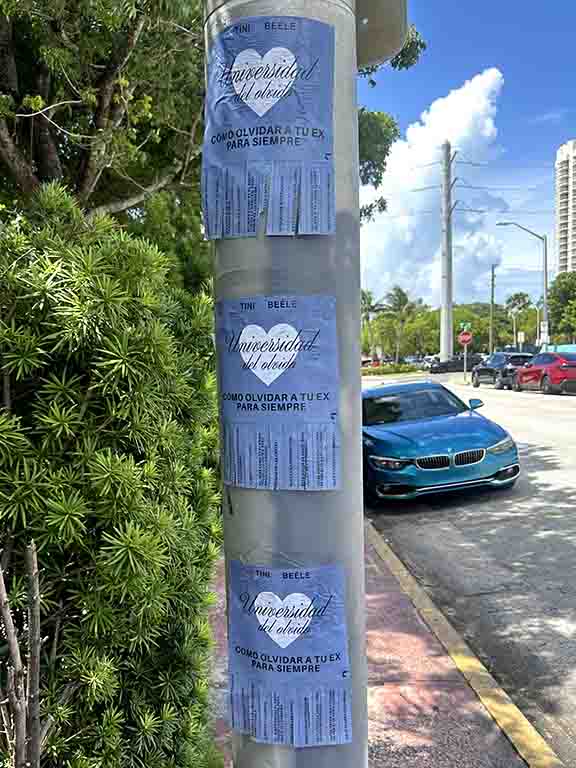
In most American cities, Snipe Advertising is a routing problem. You work out a walk, you work out a sequence, and the inventory is more or less wherever the walk takes you.
Eugene is not that. Eugene is an ownership problem, and it is one before you have chosen a single location.
The reason is that this city has published a position on the surfaces that snipe work traditionally uses. Eugene’s municipal code includes EC 4.050, covering affixing or displaying matter to streets, trees and similar fixtures. Its text states that no person shall affix or display, or cause to be affixed or displayed, a notice, placard, bill, handbill, card, advertisement or sign on a sidewalk, crosswalk, curb or curb-stone, or a portion of a public way or public place, or a public lamp post or electric light pole and similar public fixtures. The section title also signals that the city attaches responsibility for removal costs to whoever put the material up.
That is a grey area in the sense that every posting question is a grey area. Enforcement varies, practice varies, and I am not going to tell you what a city does versus what it has written down. But the writing itself is specific about poles, curbs and public ways, and it names removal cost responsibility in the heading. I do not treat that as ambiguous enough to build an inventory on.
So the entire shape of a Eugene snipe campaign gets decided by one question: which surfaces in this city are privately owned, and can I get the owner to say yes in writing?
The good news is that Eugene answers that question better than almost any market its size. This page is about how to work that map.
Snipe work here is a short-cycle, event-shaped, relationship-driven format. If you are coming in expecting volume across a pole network, you have the wrong city. If you are coming in with a date, a district and a willingness to have a conversation with a property owner, Eugene is one of the most workable places in the country.
What a snipe actually is, and why Eugene changes the answer
A snipe, in the way we use the word, is a single printed panel going onto a transitional or temporary surface. Construction hoarding. Scaffold fascia. A plywood barricade around a site. A blank boarded window on a building between tenants. It is a cousin of a poster campaign but it behaves differently, because the surface itself is temporary and because the unit is usually larger and fewer in number.
In a big market, snipe inventory and pole inventory blur together and operators treat them as one pool. Eugene splits them cleanly, because the published position on public fixtures pushes you entirely onto the private side. What is left is a smaller, better-quality, fully permissioned inventory.
I want to be direct about what that costs you and what it buys you.
What it costs you is reach. Eugene’s private transitional surface is finite. There is only so much hoarding standing at any given moment, and it moves as sites open and close. You cannot build a Eugene snipe campaign from a map six months in advance, because half of what you would map will be gone and half of what you will use is not up yet. Scouting has to be close to the install date.
What it buys you is durability of a different kind. A permissioned snipe on private hoarding is not coming down because somebody objected. It comes down when we take it down, on the schedule we committed to. In a city that attaches removal cost responsibility to the poster, that difference is the whole ballgame.
It also buys you placement quality. Hoarding is big, flat, eye-level and uninterrupted. A single panel on a good hoarding run in the Whiteaker does more work than a scatter of small sheets ever will.
The ownership map: who controls the surfaces worth having
Here is how I would actually audit Eugene before scoping a snipe run.
Construction and renovation hoarding. This is the primary inventory in this city and the first thing a crew should be driving for. It is privately controlled, usually by a developer or general contractor rather than the building owner, and the plywood is raw or lightly painted, which is exactly what you want. Hoarding appears and disappears, so this needs fresh scouting rather than a stored list.
Boarded or vacant frontage. Buildings between tenants, with the window line boarded, give you a flat panel at eye level. Ownership here is the building owner, and in Eugene that is often reachable.
Private side and rear walls facing a parking area. These are owned by the business and they face a genuine dwell point. People stand next to their cars. Less glamorous than street frontage, more permission-friendly, and in a city where parking is the normal way to arrive at a district, more useful than it looks on a map.
Scaffold fascia. Less common at Eugene’s scale than in a dense market, but when it exists it is excellent, and it is controlled by the contractor.
Private fencing around a lot. Chain link does not take a panel well, but solid fencing does, and lots sit behind solid fencing all over the edges of the Whiteaker and the downtown fringe.
What is not on the list: poles, curbs, crosswalks, street furniture, the public way, utility boxes. Not because I am being precious, but because EC 4.050 addresses those on its face and names removal cost responsibility, and there is no version of a campaign where that is worth it.
Eugene’s sign code also carries a defined exemptions section, EC 9.6610, enumerating signage categories outside the standard requirements, chiefly government, city and public-utility signage. I read that as a signal about how this city thinks: it regulates signage through a permissions-and-exemptions structure rather than pure discretion. That is a city where asking the right person and documenting the answer is a coherent strategy.
Enforcement culture in practice, how actively material is removed, whether response is complaint-driven, and how the University District compares with downtown: UNVERIFIED. I have not confirmed it and will not invent it.
Blair Boulevard and the economics of a district made of small owners
The Whiteaker is why Eugene snipe work is viable at all, and the reason is structural rather than aesthetic.
The neighbourhood sits immediately northwest of downtown. Its commercial life runs along Blair Boulevard and the streets around it, roughly between Third and Seventh Avenues, and it is built on small independent operators: tasting rooms, restaurants, food carts, galleries, markets. It has a long association with community and environmental activism and with artists who live there. Washington Jefferson Park sits on the neighbourhood’s edge.
Now think about what that means for a permission conversation.
In a large market, the owner of a blank wall is an asset management entity, and reaching a human who can authorise anything takes weeks and usually ends in no, because no is the safe answer for a person whose job is risk. In the Whiteaker, the owner of a wall is frequently the person pulling pints behind it, or the developer who lives twenty minutes away, or a gallery owner who finds the whole idea interesting.
Direct conversation works here. That is not a soft observation, it is the operational foundation of the format in this city. It means a Eugene snipe campaign can be fully permissioned and documented in a timeframe that would be impossible in a larger market, and it means the surfaces you get are often better than the ones a bigger operator would get in a bigger city through a formal process.
It also imposes an obligation. These are relationships, not transactions. We do not oversaturate the Whiteaker, we do not leave material up past the committed removal date, and we do not put a panel on a surface that we talked our way onto in a way the owner would regret. The tolerance for visual texture in this neighbourhood is real and it is also finite, and burning it would cost every future campaign in this city something.
Downtown runs on a different logic. The Park Blocks around Eighth and Oak, Broadway, Oak Street and Willamette between Seventh and Eighth are a more conventional commercial core, with more conventional landlords. Permission is slower and more formal there, and the audience is broader and less countercultural. I would use downtown for a snipe aimed at a general adult audience and the Whiteaker for anything with an edge to it.
The University District, along East 13th Avenue and Agate Street with the Franklin Boulevard strip alongside, is the third option. Much of the land near campus is institutional rather than small-private, which makes the permission map harder there than the Whiteaker. Hoarding around private student housing development is usually the realistic target.
Substrate behaviour in a valley that never dries out
Snipe panels in Eugene fail for different reasons than posters do, and it is worth separating them.
The governing climate fact is the same. Eugene takes something on the order of 46 inches of precipitation a year, with relative humidity sitting around 86 percent for most of the year and dropping to around 68 percent only in the dry summer months. That is a long wet season from roughly October through May and a genuinely dry stretch in summer.
For snipe work the critical difference is that your substrate is usually plywood rather than masonry, and plywood in a wet valley does something masonry does not. It moves. Raw construction ply swells across the grain when it takes water and shrinks back when it dries, and it does that cycle repeatedly through a Eugene winter. A panel bonded hard to a surface that is dimensionally changing underneath it will ripple, then crease, then split along the crease.
Three practical consequences.
Sealed or painted hoarding is better than raw ply in the wet months, because the coating slows moisture movement in the board. Ironically, raw ply is the easier bond in summer and the worse substrate in winter.
Panel size should come down in the wet season. A large single panel accumulates the stress of substrate movement across its whole area. Two smaller panels butted together absorb it far better, and the seam is less visible than the crease you would otherwise get.
Edge sealing matters more here than almost anywhere. Water gets in at an edge, wicks along the back, and lifts a panel from the perimeter inward. Every edge gets properly dressed on a Eugene wet-season install, and that adds crew time per panel that a client should know about up front.
Hoarding under an overhang behaves like a different climate. If a site has a covered walkway or a canopy line over the hoarding, that is the surface I want in January. In a city this wet, shelter is worth more than any adhesive decision.
UV is a minor factor here. The long overcast season means colour holds reasonably. Your panel will come apart from moisture at the edges long before the ink gives up.
Where the Eugene calendar rewards a snipe and where it punishes one
Snipe is a short-cycle format. It suits a date, a launch, a run of shows, an event. Eugene’s calendar gives you several good ones and one trap.
Spring track. Eugene brands itself TrackTown USA and means it. Hayward Field at the University of Oregon was rebuilt ahead of the 2020 United States track championships and carries months of high-level track each year. The Oregon Relays fall in early April. Track weekends concentrate more attention in this city than anything else on the calendar, and they sit in spring and early summer when the weather is turning workable.
The Eugene Marathon, late April, with an associated weekend including the TrackTown 5k and a kids’ Duck Dash on the Saturday morning. The race footprint pulls volume through the University District and downtown.
Saturday Market on the downtown Park Blocks through the warm season, roughly 10 a.m. to 4 p.m., with a Holiday Market in the winter period. This is recurring rather than a spike, which makes it the right anchor for a multi-week downtown snipe rather than a one-off.
Late September university arrival. The strongest single moment for reaching students before habits form. Term dates move year to year and need checking against the university calendar.
Now the trap. Clients want to install into the event. Do not. Track weekends and marathon morning bring road closures and congestion through the University District and downtown, and a crew trying to place large panels in that is going to do slow, compromised work in the wrong conditions. Panels go up the week before. The material should be settled and dry when the crowd arrives, not going up around them.
The second calendar fact worth internalising is that Eugene is an early city. Local guidance is clear that most establishments wrap up around 10 p.m. Your audience window is earlier in the evening than a buyer from a late market expects, and the quiet working window afterwards is longer. Both of those are advantages if you plan for them.
Two people, one vehicle, a four-hour window
Snipe panels are larger and heavier than poster sheets, which changes crew shape.
A Eugene snipe night is two people minimum, and two is genuinely enough for most runs here. Large panels are a two-person lift and alignment job regardless of city. What Eugene gives you that larger markets do not is that downtown and the Whiteaker sit adjacent, so a two-person crew working from one parked vehicle can service both districts in a single night without repositioning constantly. That is unusual and it is the single biggest efficiency in this market.
The working window I would use is roughly 10:30 p.m. to 2 a.m., driven directly by the 10 p.m. close. By half past ten the frontage is clear and a two-person crew with panels is unremarkable. There is no reason to push to 4 a.m. in this city.
Vehicle access is the real constraint rather than hours. Panels have to come off a vehicle close to the surface, which means you need to stop near the hoarding, not three blocks away. The Whiteaker grid is tight and low-rise, which helps. Downtown is compact. Two city garages sit near the Park Blocks, the Overpark at Oak and Broadway and the Parcade between Seventh and Eighth on Willamette, though garage clearance is a genuine issue for a loaded vehicle and I would check it rather than assume.
Parking specifics, loading-zone rules and overnight vehicle restrictions in downtown Eugene: UNVERIFIED. Confirm locally before routing a crew.
Wet-season installs run slower per panel. Edge dressing, surface drying and shelter-finding all add time, and a winter Eugene night will place meaningfully fewer panels than the same night in August. That should be scoped honestly rather than discovered on the night.
What we refuse to do in Eugene
Public infrastructure. Somebody asks about poles on nearly every Eugene call. Given what EC 4.050 says on its face about public lamp posts, curbs, sidewalks and the public way, and given that its heading names removal cost responsibility, we do not work that inventory here and I would look hard at anyone who offers to.
Speculative volume promises. I will not quote a panel count for Eugene before scouting, because hoarding inventory in a city this size genuinely changes month to month. An operator who gives you a confident number for Eugene without recent scouting is giving you a number they made up.
Mid-winter campaigns on exposed raw ply. If the brief says January and the only available surfaces are open-air raw plywood, I would say so rather than take the booking and watch it ripple.
Blanket coverage of the Whiteaker. The neighbourhood’s tolerance for visual texture is a real asset and it belongs to the people who live and work there, not to us. A tight, well-placed set of panels on surfaces whose owners said yes is worth more than saturation, and it protects the ability to come back.
Leaving material up past commitment. Removal is part of the job here, not an afterthought, and in a city that attaches removal cost responsibility to the poster it is also the thing that keeps property owners willing to say yes next time.
Where a client wants more than the private surface map can carry around a specific date, the honest answer in Eugene is usually to add people rather than panels. Street Teams & Experiential work well in this market precisely because the core is walkable and the key moments are concentrated: Saturday Market on the Park Blocks, a track weekend around Hayward Field, late September arrival in the University District. A team on foot reaches a crowd that a finite panel inventory cannot, and it does it without pushing against surfaces we should not be using.
Frequently asked questions
What surfaces does snipe advertising actually use in Eugene?
Private transitional surfaces: construction and renovation hoarding, boarded vacant frontage, scaffold fascia, solid private fencing, and private side walls facing parking areas. We stay off poles, curbs, sidewalks and street furniture because EC 4.050 addresses those on its face and names removal cost responsibility in its heading.
Can you tell me how many panels Eugene can hold before you scout?
No, and I would not trust a number from anyone who does. Hoarding inventory in a city this size turns over as sites open and close, so a map built six months out will be half wrong. We scout close to the install date and scope the run from what is actually standing and permissioned.
Is snipe advertising permitted in Eugene?
It is a grey area that depends on surface ownership and the specific location. Eugene has a published position on public ways and public fixtures under EC 4.050, and a signage exemptions framework under EC 9.6610. We work only on private surfaces with written owner permission, document consent and placement photographically, and commit to removal.
What does Eugene’s weather do to a snipe panel?
Plywood swells and shrinks through the wet season from roughly October through May, and a large panel bonded to moving substrate will ripple and then crease. We use smaller panels in winter, dress every edge properly, favour sealed over raw hoarding, and look hard for hoarding sitting under a canopy or overhang.
When should a Eugene campaign install relative to a track event?
The week before. Hayward Field weekends and the late-April Eugene Marathon bring road closures and congestion through the University District and downtown, which makes install night slow and placement compromised. Material that is up, dry and settled before the crowd arrives performs better than a crew working around a closed street.
Which district should a Eugene snipe campaign target?
The Whiteaker along Blair Boulevard, roughly between Third and Seventh Avenues, for anything with an edge, because surfaces there are often owned by small independent operators who can authorise directly. Downtown around the Park Blocks for a broader adult audience. The University District in term time, though institutional land ownership makes permission harder there.
Request a campaign quote
A useful Eugene snipe conversation starts with three things: the date you need to hit, the district that matches your audience, and how much lead time you can give us for scouting and permission.
From there we scope it properly. Panel count against what is actually standing, crew nights, the permission work, edge treatment appropriate to the season, and the removal commitment. If the date falls in the wet season we will tell you what that does to panel size and placement speed before you commit, not after.
We will also tell you when Eugene is the wrong shape for what you want. If the brief needs reach that the private surface map cannot carry, we would rather propose people on the Park Blocks than panels on surfaces we should not be touching.
Request a campaign quote and we will come back with a scouted, permissioned Eugene plan.

Ready to Run Your Campaign?
Call us or email us. We’ll tell you exactly what we can do in your market and what it costs.
Related Service
Explore similar advertising solutions offered by American Guerrilla Marketing.
American Guerrilla Marketing — Los Angeles
Street-level campaigns in Los Angeles and nationwide. Wheatpasting, LED trucks, street teams, and more.
(646) 776-2770
Related Articles
-
Snipe Advertising for Jacksonville Brands
November 23, 2026
-
Snipe Advertising for Pittsburgh Brands
November 23, 2026
-
Snipe Advertising for Cleveland Brands
November 20, 2026
-
How Snipes Are Mounted: Timelines and Permissions
November 20, 2026
-
Snipe Advertising for Tulsa Brands
November 20, 2026