
November 24, 2026
How Sidewalk Decals & Stencils Runs in Indianapolis
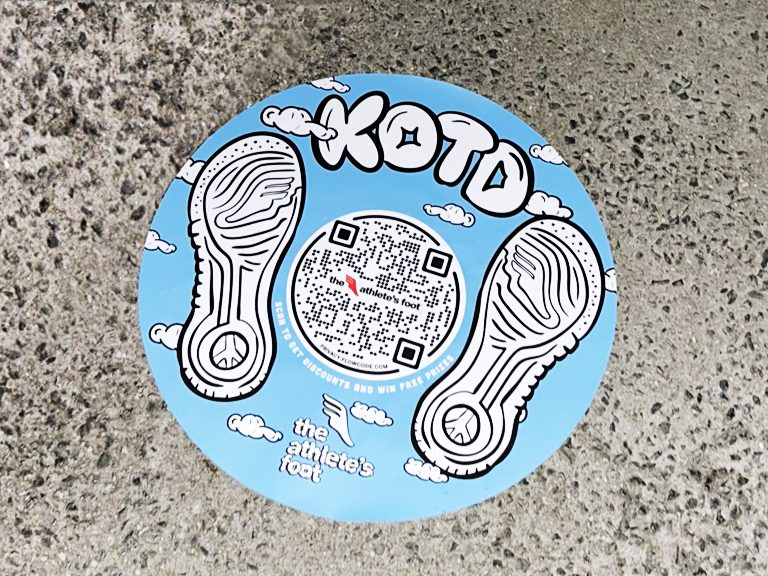
Ground-level advertising is the format most buyers misjudge, and Indianapolis is a market where misjudging it is expensive.
A sidewalk decal is a printed, textured-face film bonded to concrete. A stencil is a mark applied through a cut template, either in water-removable material or in something more durable depending on the surface and the permission behind it. Both formats share one dependency that nothing else in street advertising has: the ground they sit on has to be clean, sound and dry.
In Central Indiana, the ground is clean, sound and dry for roughly half the year.
That is the whole planning problem in one sentence, and it is why I spend more time on the calendar with Indianapolis decal clients than with clients anywhere else. Everything else about this city suits the format. The downtown core is walkable and genuinely crowded during event weeks. The cultural districts move at a pace where people look down. The convention economy puts thousands of non-local pedestrians onto the same few blocks at predictable times of year.
Then winter arrives and the sidewalks turn into salt, slush and spalling concrete for five months.
Here is how we actually run it.
Why Indianapolis concrete fights you
Indianapolis is reported to see over a hundred freeze-thaw cycles in a single winter. For walls that is a nuisance. For horizontal concrete it is the primary destructive force in the city.
The mechanism is simple and relentless. Water sits on or soaks into a slab, freezes, expands, and opens micro-cracks. It thaws, the crack stays, and more water gets in next time. Repeat that dozens upon dozens of times across one Indiana winter. The surface scales, pits and roughens. Edges crumble. Joints open.
A decal needs a smooth, closed, continuous surface to bond to. Scaled concrete offers none of that. The film bridges across pits instead of bonding into them, air stays trapped under the face, and the first heavy foot traffic or rain event starts peeling it from the voids outward.
Then there is the chemical side. Property managers across Indianapolis respond to ice with salts and de-icers on walks, steps and entrances, and road salt gets tracked off I-465 and I-70 into every corridor in the city. From roughly November through March there is a salt and grit film across the pedestrian surface, not just on poles and kerbs but on the walking plane itself.
Adhesive bonds to that film very happily. The film then releases from the concrete, and the decal lifts as a sheet with a layer of grey dust on its back. Crews who have not worked this market blame the product. It is not the product.
Summer brings the opposite trap. Central Indiana heat and humidity drive moisture up through slabs from below, and a sidewalk can read warm and look dry while vapour is still coming through it. Bond a film over that and you get edge lift within days. We test by touch and by observation, not by forecast, and on humid mornings we wait.
The practical read: late spring through early autumn is the real decal season in Indianapolis. Shoulder weeks either side are judgement calls made on the morning, on site. Deep winter decal work is something we will discuss honestly and usually advise against, which I will come back to.
The downtown walk that justifies the format
The strongest argument for ground-level advertising in Indianapolis is the convention and event core, because it produces something rare in a car-dependent city: large volumes of people walking slowly in a confined area with their attention unspoken for.
The Indiana Convention Center at 100 South Capitol Avenue and Lucas Oil Stadium anchor that economy. Gen Con fills the Convention Center in summer with a very large non-local audience that walks the surrounding blocks for days. Colts home games put eight regular-season crowd events into the autumn, each one pushing dense pedestrian flow along the approach routes into the stadium. The Month of May themes the entire downtown.
Non-local crowds are particularly good for ground formats. People who do not know a city look down more. They are watching their footing, checking which way they are going, and moving at the pace of whoever they are with.
The Wholesale District, between downtown and Mass Ave, carries that flow outward into restaurants and bars in converted warehouse stock. That corridor between the event anchors and the eating and drinking area is where feet actually move, and it is the part of downtown where a decal run has a reason to exist.
Outside the core, the picture changes. Massachusetts Avenue works because the diagonal gives long walking stretches and the arts and entertainment audience moves slowly between theatres, galleries and bars. Fountain Square works because it is compact and the evening crowd browses rather than commutes, with vintage retail and small music rooms that keep people on the pavement between stops. Broad Ripple works at night in a nightlife-loop pattern, though it is also where the surface condition varies most from block to block. The Midtown Arts District near Butler University has real foot traffic around its performance venues and public spaces, and it is institutional ground with its own approval route.
What does not work is most of the rest of the city. Indianapolis is car-dependent between districts. Outside those walkable pockets there is no sidewalk audience to speak of, and a decal in a place where people drive past is simply not seen.
Permission on the ground, and a grey area with an obvious shortcut
Ground advertising in Indianapolis sits in the same grey area as every other street format. It depends on surface ownership, it varies by municipality, and enforcement practice is inconsistent. I am not going to characterise what local rules allow, and I will not cite an ordinance or a penalty I cannot verify.
What I can tell you is that decals have an advantage over wall formats here, and it is worth understanding.
Pavement ownership is unusually mixed. A lot of the walking surface in the Wholesale District, around the event anchors and through the cultural corridors is not simple public sidewalk. It is building forecourt, plaza, private entry apron, venue frontage or managed outdoor seating area. Those surfaces have owners, and owners can give permission.
So the shortcut on this format is the same as on walls, just easier to execute: work the private ground.
Fountain Square and Mass Ave both have organised district identities and visible independent business communities. The frontage you want in those districts usually belongs to a named local person who is reachable and who cares about their stretch of pavement. Asking is normal. A decal run across the entry aprons of six cooperating businesses along a single Fountain Square block is a real campaign with a real permission trail behind it.
Public right-of-way sidewalk is a different matter and we treat anything placed there as removable at any time, by someone else, without notice.
The Indianapolis context sharpens this. The city dresses its own downtown streetscape, installing Indy 500 themed street signage through the core during the Month of May in collaboration with the Speedway. A city that runs a seasonal signage programme downtown is a city paying close attention to how the downtown ground plane looks, especially in event season. Unapproved marks in that environment do not last long, and the people who would remove them are on those blocks every day.
How AGM reduces exposure on decal work: permission from the surface owner in writing wherever possible, a strong preference for private and managed ground over public sidewalk, every placement photographed with location and date, a removal commitment made up front, and material selection matched to the removal promise rather than to the longest possible life.
That last point matters more on the ground than anywhere else. Choosing a film or a stencil medium that will be difficult to remove cleanly from a given concrete is how an operator damages someone's property and ends a relationship with a district.
Crew logistics and the pre-dawn dew problem
Decals and stencils are installed on empty pavement. That means early, and in Indianapolis it means thinking about moisture more than about people.
Our reliable window here is pre-dawn midweek. Downtown is genuinely quiet on an ordinary midweek night, quieter than most cities this size, which makes the core workable in a way it never is on an event night. Mass Ave and Broad Ripple run late at weekends, so a Friday or Saturday attempt means working around crowds. Fountain Square's rooms are smaller and it quietens earlier, which opens an earlier slot there.
The complication unique to ground work is dew. A pre-dawn slab in Central Indiana, especially in the humid months, is frequently wet with condensation even when it has not rained for days. You cannot bond a film to a dewed sidewalk. So a decal crew here often works a narrower window than a poster crew: late enough that foot traffic has cleared, early enough to finish before the morning commute, and dry enough in between. Some mornings we dry surfaces mechanically. Some mornings we accept a later start and work the quieter edges of the district instead of the busiest corner.
Access is the second factor. Indianapolis is car-dependent between districts and walkable within them. Downtown, the Wholesale District and Mass Ave form one connected walking zone, so a crew parks once and carts materials through all three. Fountain Square is a compact separate walk a short drive south-east. Broad Ripple and the Midtown Arts District are a longer drive north. A full-city decal campaign is three trips and three park-once walks, not one shift.
Parking is street and garage downtown, easier in Fountain Square and Broad Ripple, and effectively gone downtown on race days and game days. We do not schedule a downtown ground install on a Colts home date or during race week.
Crew size for ground work is typically two to three. One preparing and cleaning surface, one applying and setting, one documenting and watching the pavement for approaching pedestrians. Surface prep is the bulk of the time, not application. In the cold months it is almost all of the time.
Timing a run around the Indianapolis year
The Indianapolis calendar is unusually legible and it maps neatly onto the decal season, which is lucky because the season itself is short.
The Month of May and the Indy 500 dominate. The race has run for over a century and is described as the largest single-day sporting event in the world, with the whole month themed downtown. May falls inside the good surface window, which is genuinely useful. What it does not offer is install conditions. Congestion, gone parking, heightened attention on the downtown ground plane and the city's own signage programme all argue for installing before the month starts, then maintaining through it.
Gen Con at the Indiana Convention Center is the single best fit for ground advertising in the Indianapolis year. A very large non-local audience, concentrated downtown, on foot, for days, in summer when the concrete is dry and warm. If a client has one decal campaign to spend on in this city, I will usually point at that week and tell them to be installed well before it.
Colts home games give eight autumn crowd days at Lucas Oil Stadium. Autumn is still inside the workable window on the front half, and stadium approach routes concentrate foot traffic the way nothing else does outside convention season.
Pacers, Fever, Indians, Fuel, Eleven and Ignite keep the pro sports calendar close to continuous on top of a heavy amateur programme, so downtown Indianapolis rarely goes quiet for long.
Butler University term drives Midtown and Broad Ripple foot traffic. I do not have verified term dates and will not invent them, but anyone targeting that audience should confirm the term calendar before setting a schedule.
The honest summary: build the campaign between late spring and early autumn, aim it at a specific crowd event, and install ahead of that event rather than into it.
What goes wrong, and what we talk clients out of
Winter decal campaigns. This is the pushback I give most often in Indianapolis, and I give it firmly. A client wants ground presence in January or February. The concrete is salted, scaled from freeze-thaw, wet, and being treated with de-icer repeatedly. Prep cannot fully solve that, because you can clean a slab and have it salted again before the morning. Bond failure rates climb, the campaign looks shabby within days, and the brand gets associated with peeling litter. If winter ground presence is genuinely required, I would rather move the budget to a format that does not depend on the walking surface at all.
Decals in car-dependent parts of the city. Someone looks at a map, sees a busy corridor, and asks for ground work there. If the people in that corridor are inside vehicles, the format cannot reach them. Ground advertising in Indianapolis only makes sense inside the walkable pockets, which is a short list.
Placing in the busiest spot rather than the slowest spot. The densest crossing is not the best position. A decal needs a person whose feet are moving slowly and whose eyes have a moment. Entry aprons, queue areas, plaza edges and the approaches between venues outperform a thronged intersection where everyone is watching traffic.
Over-complicated artwork. A ground mark is read in a stride and a half, at an angle, by someone not looking for it. Big, simple, high contrast. Anything with body copy is wasted.
Choosing maximum durability without thinking about removal. On older, freeze-thaw-damaged Indianapolis concrete, an aggressive adhesive can take surface material with it on removal. We match the material to the slab and to the removal promise, and we will talk a client down from a longer-life product if the substrate cannot take it.
Relying on decals alone during an event week. Ground formats are strong at close range and weak at distance. For a downtown event crowd, pairing a decal run with Street Teams & Experiential works much better than either alone, because the ground marks hold the message in place and the team puts something in people's hands at the same points. In a compact core like downtown Indianapolis, the same person meets both in a single block.
Removal and leaving the pavement as you found it
Removal is where ground advertising earns or loses its welcome, and Indianapolis concrete makes the stakes clear.
Film lifted in warm, dry conditions from sound concrete comes up cleanly. Film left on scaled or spalling concrete through a freeze-thaw run can take surface material with it, and that is damage to someone's property. Water-removable stencil media are the gentler option on marginal substrate and we recommend them where the slab is questionable, even when the client wants longer life.
We document every placement at install with location and date, which makes the takedown list exact. We agree the removal date with the surface owner at the time we agree the placement. On private frontage in Fountain Square or along Mass Ave, that is the habit that keeps a cooperating business cooperating next time, and in districts that small, reputation travels fast.
Frequently asked questions
When is the best time of year for sidewalk decals in Indianapolis?
Late spring through early autumn. Over a hundred freeze-thaw cycles a winter leave Indianapolis concrete scaled and pitted, and salt and de-icer film sits on the walking surface from roughly November through March. Nothing bonds reliably through that. Summer works well, with the caveat that humidity drives moisture up through slabs, so surfaces get checked by hand before application.
Can you install during the Month of May or Gen Con?
We install before them, not during. Both bring the audience you want and the worst working conditions of the year, with congestion, parking gone and heightened attention on the downtown ground plane. The right plan is to be installed and settled ahead of the crowd, then run maintenance checks through the event rather than placing new work into it.
Is ground advertising permitted in Indianapolis?
It is a grey area that depends on surface ownership, local ordinance and permission, and enforcement is inconsistent. We do not advise on local rules. Our approach is permission from the surface owner, a preference for private forecourts, plazas and entry aprons over public sidewalk, photographic documentation of every placement, and a removal commitment agreed up front.
Which parts of the city actually suit this format?
The walkable pockets only. The downtown convention and stadium core, the Wholesale District, Massachusetts Avenue, Fountain Square, Broad Ripple at night, and the Midtown Arts District near Butler University. Indianapolis is car-dependent between districts, so ground work outside those areas reaches people who are driving, which means it reaches nobody.
Will removal damage the pavement?
Not if the material is matched to the substrate. Sound, dry concrete releases film cleanly in warm conditions. Older Indianapolis concrete that has been through repeated freeze-thaw can be fragile at the surface, so on questionable slabs we recommend gentler, water-removable media even when a client wants longer life. Protecting the owner’s property comes before campaign duration.
How many crew and how long for a typical install?
Usually two to three people working a park-once walk per district, pre-dawn midweek. Surface preparation takes most of the time, not application. Dew is the specific Indianapolis complication, because a pre-dawn slab is often damp with condensation even on a dry night, which narrows the usable window further.
Request a campaign quote
Tell us which crowd you are aiming at, whether it is a convention week, an autumn stadium run or an evening audience in the cultural corridors, and the window you have in mind. We will come back with the districts worth covering, a realistic read on surface condition for that time of year, crew and night counts, the permission route for the ground you want, and the removal plan.
If you are asking for a February install, we will tell you honestly what salt and scaled concrete will do to it, and what we would run instead.
Request a campaign quote and we will scope it properly.

Ready to Run Your Campaign?
Call us or email us. We’ll tell you exactly what we can do in your market and what it costs.
Related Services
Explore similar advertising solutions offered by American Guerrilla Marketing.
American Guerrilla Marketing — Los Angeles
Street-level campaigns in Los Angeles and nationwide. Wheatpasting, LED trucks, street teams, and more.
(646) 776-2770
Related Articles
-
How Sidewalk Decals & Stencils Runs in Santa Monica
November 24, 2026
-
How Sidewalk Decals & Stencils Runs in Cleveland
November 24, 2026
-
Sidewalk Decals & Stencils: South Nashville Metro
November 23, 2026
-
Sidewalk Decals & Stencils in Madison: How It Runs
November 23, 2026
-
Sidewalk Decals and Stencils in Scottsdale
November 23, 2026