
November 24, 2026
How Sidewalk Decals & Stencils Runs in Santa Monica
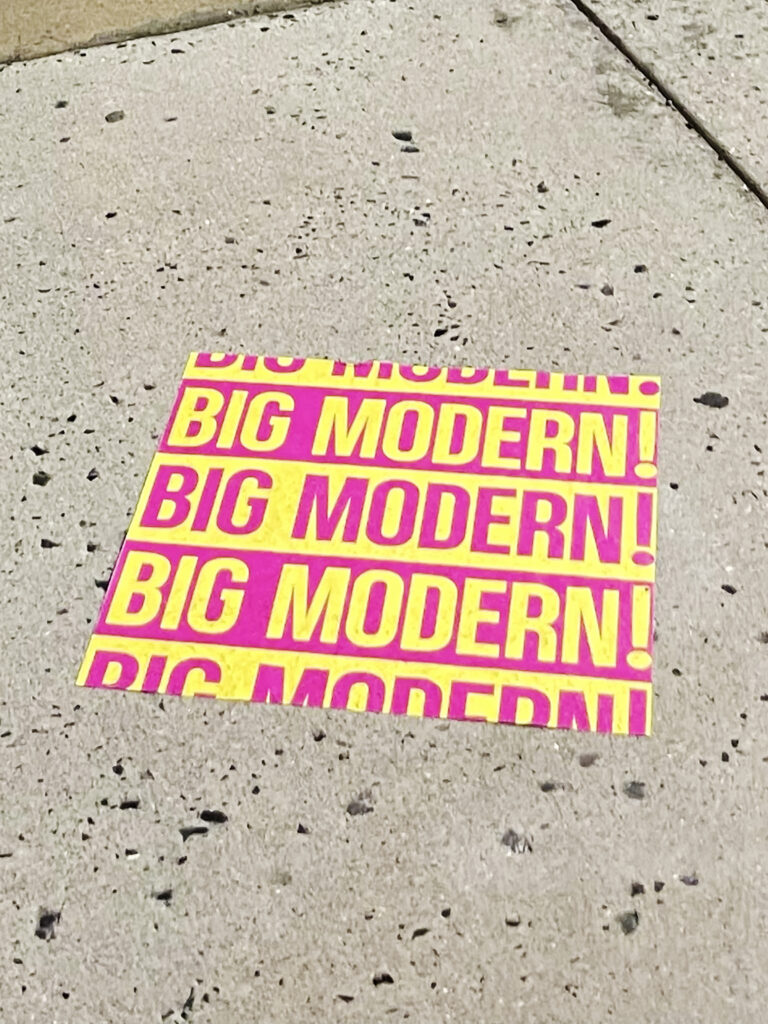
Ground media is the format clients most often assume is simple. It is flat, it is at the right height, nobody needs a ladder, and the surface is already there.
Then you try to stick something to a Santa Monica sidewalk at five in the morning in June and discover the pavement is wet. Not raining wet. Dew wet, from the inside out, with no cloud having produced a single drop.
That is the fact this whole page turns on, so I will put it near the top. Horizontal surfaces are the hardest adhesion job in a coastal city, and Santa Monica is a coastal city with a marine layer sitting on it for a large part of the year.
Low cloud and fog develop on an almost daily basis within a few miles of the Southern California coastline during overnight and morning hours, and they usually burn off around midday as temperatures rise and humidity drops. That pattern is most pronounced in late spring, which people here call May Gray and June Gloom, and its severity shifts year to year with sea surface temperature. Warmer El Niño years tend to produce fewer grey days in May and June, cooler La Niña years more.
A wall at least drains and catches some air movement. A sidewalk does not. It radiates heat overnight, drops below the dew point, and holds a film of moisture that you often cannot see until you kneel on it. Pressure-sensitive adhesive applied to that film does not bond. It sits there looking fine for two hours and then lifts at a corner, and once a corner lifts on a walked surface it is finished within a day.
So the honest version of ground media in Santa Monica is that the install window is the opposite of what people expect. In most of our work we want the quiet hours. Here, for decals specifically, we often want early afternoon.
This page covers how we actually run Sidewalk Decals & Stencils in this city: the surfaces, the weather, the cleaning regimes, the permission character, and the timing that makes the difference between a two-day install and a six-week one.
The install window problem, and why afternoon usually wins
Every other format we run in Santa Monica wants the small hours. Decals fight that.
The ideal conditions for a pressure-sensitive install are a dry surface, a surface temperature comfortably above cold, and some air movement. In Santa Monica those three things arrive together in the early afternoon, after the marine layer has cleared and the pavement has had a few hours of sun on it.
The problem is that early afternoon is also when the sidewalks are full of people, and you cannot install ground media under moving feet. A decal needs the surface clear while it is squeegeed down, and it needs a short protected period afterwards before it takes traffic.
That tension is the central scheduling problem of ground work here, and it has three practical answers.
Work the shoulder. Mid to late afternoon on a weekday on Main Street or Pico Boulevard is dry but not yet busy with evening traffic. That is often the best compromise in the city.
Work early and manage the surface. If a corridor genuinely requires a pre-dawn install, the crew carries drying equipment and budgets time to prepare each location rather than assuming it is ready. That is slower per unit and it is a real cost in crew hours, but on the Third Street Promenade it is sometimes the only option, because that environment does not get quiet in a useful way at a useful temperature.
Move the format. If the dates are locked in grey season and the corridor cannot give us a dry window, I will often recommend stencil work over vinyl, because a water-based stencil application is far less hostile to a slightly damp substrate than a pressure-sensitive film is.
Outside the May and June window this gets considerably easier. Autumn and winter here are dry, mild and bright, with no freeze risk at all, and winter mornings can be excellent for ground work. The seasonal shutdown that governs decal campaigns in northern cities simply does not exist in Santa Monica. There is no de-icing salt, no snow plant scraping the surface, no frozen substrate. That makes this a genuine year-round ground media market, which most are not.
The surfaces are not one surface
Santa Monica's walkable core covers several different ground materials within a short distance, and they behave differently enough that a single specification across a campaign will fail somewhere.
The Third Street Promenade. A pedestrian mall and esplanade in the downtown area, car-free, and regarded as a premier shopping and dining district on the Westside. It originally opened as the Santa Monica Mall in 1965 and was later converted to the pedestrian format.
Car-free changes everything for ground media. Pedestrian dwell time here is far longer than on a normal street, and people standing still look down. Queues, benches, performance crowds and shop windows all produce stationary feet, and stationary feet are the entire audience for a sidewalk decal. This is the strongest ground media environment in the city by a wide margin.
It is also a managed, programmed environment. The city runs a designated Entertainment Zone programme at the Promenade, which tells you the preferred model is sanctioned activity through a known channel.
Main Street. Walkable, locally oriented, and the home of the annual Summer Soulstice festival and the 4th of July Parade. Good ground surface, strong local audience, and far less visiting traffic than the beach.
Montana Avenue. The tree-lined upmarket shopping corridor, positioned locally as a laid-back alternative to Rodeo Drive. Boutiques, restaurants, a historic movie theatre, and an older, wealthier residential audience. Ground media works here only if it is restrained. Loud repeated decals read as clutter on Montana faster than anywhere else in the city.
Pico Boulevard. Santa Monica College sits at 1900 Pico Boulevard, which puts a student population on a corridor away from the tourist zone. Student audiences look at the ground more than most, and this is a reliable corridor for the format.
Santa Monica Place. The enclosed retail centre downtown. Private property with its own management approval process, and worth treating as a separate conversation rather than part of a street plan. Interior and controlled exterior surfaces are protected from the marine layer entirely, which makes them the most predictable ground surfaces in the city.
The Pier and Ocean Avenue. The Santa Monica Pier with Pacific Park is the tourist anchor. I am cautious about ground media here and the reasons are in the next section.
Abbot Kinney Boulevard. Just south in Venice, culturally distinct, rougher and more character-heavy, with old beach bars including Townhouse, Hinano and the Venice Whaler. Stencil work in particular suits the character of this street in a way it does not suit Montana.
Sand, salt and slip
Three coastal failure modes matter for ground media here, and the first one catches almost everybody.
Wind-blown sand is an abrasive. Within a few blocks of the beach, there is always fine sand moving across the pavement. On a vertical surface that is irrelevant. On a horizontal surface under foot traffic, it becomes grinding paste. Every footstep drives sand grains across the printed face of a decal. Near Ocean Avenue and the Pier, surface print wears visibly faster than it would on an inland sidewalk, and an unlaminated decal can lose legibility in a fraction of its expected life.
The answer is a heavy protective laminate as standard anywhere in the beach-adjacent blocks, and accepting that even then the life is shorter there. If a client wants a long run of ground media, I steer it inland a few blocks where the sand load drops off sharply.
Salt air attacks everything metallic and works into edges. Everything within a few blocks of the beach is effectively a marine installation. For ground media the practical consequence is edge failure. Salt-laden damp creeps under a lifted margin and the bond degrades from the perimeter inward. Sealed, well-rolled edges matter more here than inland, and so does choosing a surface that is genuinely clean before application. A sidewalk that looks clean in Santa Monica often carries a fine salt and sand film that has to be removed properly, not just swept.
Slip resistance is a real obligation, not a technicality. This city has damp mornings for much of the year and heavy pedestrian volume including a lot of visitors in beach footwear. A smooth film on a wet sidewalk is a hazard. We specify anti-slip rated laminate for all public-footfall ground media here, without exception and regardless of what a creative mock-up looked like. If a client pushes for a finish that cannot be supplied with an anti-slip rating, that is a conversation where the answer is no.
UV is the slower failure. Outside grey season the coastal sun is strong, and fade takes saturated colour and fine reversed type first. Ground media takes UV full-on because it faces straight up, so fade here is faster than on a wall in the same block.
Permission, cleaning regimes and a grey area
Permission for ground media varies by municipality, enforcement practice is inconsistent, and the answer depends on who owns or controls the surface and what the local ordinance says. I will not characterise any of it as permitted or prohibited. That is not a call I can make for you, and the honest answer is that it depends and it changes.
What I can tell you is the character of this market.
Santa Monica is small, affluent and heavily managed, with a strong tourism economy and an active downtown management organisation. Where a city's identity and revenue depend on how its pedestrian core looks, anything that appears on that core without a known origin gets noticed quickly. Ground media is especially exposed to this, because the sidewalk in a managed district is somebody's explicit responsibility to maintain.
That leads to the practical issue that catches more ground campaigns here than permission does.
Cleaning regimes will end your campaign before anything else. Managed pedestrian districts get washed. A commercial-grade pressure wash across a decal that was applied two weeks earlier will take the edges off it, and a second pass will take it off entirely. This is not hostility, it is maintenance on a schedule that has nothing to do with your flight dates.
So the first question we ask about any downtown ground placement is not whether we can place it. It is when that surface gets cleaned. If the answer is weekly, a six-week flight on that paver is not a six-week flight, and we will either reposition, change the expectation, or build replacement passes into the schedule.
How we reduce risk otherwise is consistent. Private and controlled surfaces first, with written permission from the owner or manager carried by the crew. Downtown Santa Monica as a managed district is the obvious first conversation for anything in the core, and going through that door is more productive than working around it. Photographs of every location before and after. Removal as a scheduled pass rather than an optional extra, using methods that lift cleanly and leave no adhesive ghost.
That last point is worth dwelling on in this city specifically. Adhesive residue on a decorative paver in a premier pedestrian district is the fastest way to lose access to a whole downtown. We select adhesive systems for clean removal here rather than for maximum grab, and that is a deliberate trade of campaign life against relationship. In a city this small and this well observed, that trade is correct every time.
Timing around markets, parades and the summer peak
Ground media rewards tight timing more than any other format, because its audience is people standing still in a particular place on a particular day.
Farmers markets are the standout opportunity here. They are a structural part of the weekly rhythm rather than an occasional event. The downtown market is a long-standing fixture, with Wednesday and Saturday sessions among the best known, and they reliably concentrate local, non-tourist foot traffic in the core on predictable days. Market crowds move slowly, stop constantly and queue. For a resident-facing campaign, market mornings are the most efficient recurring window in the city. Verify current market days and locations against the city's published schedule before planning around them, because those details move.
There is a catch worth knowing. Market setup and breakdown put stalls, trolleys and heavy foot traffic directly over the ground plane, and that is hard wear on a decal. Placement needs to sit near the crowd rather than under the infrastructure.
Main Street event days. Summer Soulstice and the 4th of July Parade both draw strong local audiences. Parade days in particular produce long periods of people standing in fixed positions on the sidewalk, which is close to ideal for ground media, though it also means the install has to be complete well before the crowd arrives.
Pier programming. The Santa Monica Pier runs recurring series including Wellness & Waves, with free beachside yoga on Saturday mornings running through to October, and Locals' Night in most months. Those bring concentrated, repeat, partly local audiences to a defined area.
Santa Monica Place runs its own seasonal programming, including themed events such as Western Wednesday in October.
Santa Monica College term dates govern the Pico Boulevard corridor. A student-facing ground campaign landing during a break is wasted. I will not guess at current dates, so check the college's published calendar.
The broader shape of the year: summer brings the heaviest visitor volume and the strongest UV, late spring brings the grey mornings that make installs difficult, and winter is quietest, most resident-heavy and often the best adhesion of the year.
Crew logistics on the ground plane
Santa Monica is the easy case for crew movement. The core is small enough to work on foot, the Promenade is pedestrian-only, and the corridors are short and linear. One crew can realistically cover downtown, Main Street and Montana in a planned day, with Abbot Kinney a short hop south.
Ground work changes the shape of the day even though the distances stay short. Each location takes longer than a wall placement, because the surface has to be cleaned properly, checked for moisture, applied, rolled and then protected briefly. Surface preparation is the majority of the time, and in this city it is the step crews from drier markets consistently underestimate.
Parking is the recognised friction. It is a persistent issue throughout the city and the main structures serve downtown and the beach. A loaded crew vehicle belongs in a structure, not hunting kerbside. Ocean Avenue and the Pier Bridge are congested enough that local guidance routes arrivals around them, with the beachside approach via Appian Way recommended to avoid that bottleneck.
Crowd awareness matters because ground work puts crew at floor level in busy pedestrian space. We cone and mark work areas, crews work in pairs minimum, and installs in heavy footfall need an extra person purely for pedestrian management. Tourist areas carry their own crowd considerations late at night, and visible street homelessness near commercial corridors is a reported feature of the environment.
What we talk Santa Monica clients out of
Pre-dawn vinyl installs in June. The most common and most expensive mistake. The surface will be damp, the bond will be poor, and the campaign will start failing in week one. We move the hours, the dates or the format.
Unlaminated decals near the Pier. Wind-blown sand will scour the print. It looks fine on day one and illegible far sooner than the client expects.
Beach-weighted ground buys for local action. Pier and Ocean Avenue volume is overwhelmingly visiting. For anything that needs a resident to act, Main Street, Pico and market mornings do more work.
Long flights on regularly washed downtown pavers. We would rather set the real expectation and schedule refresh passes than let a client believe a six-week placement survives a weekly wash.
Aggressive adhesive to extend life. In a city this protective of its streetscape, residue on a decorative surface costs more than the extra two weeks is worth.
Loud repeated ground media on Montana. Wrong audience, wrong streetscape.
Pairing ground media with projection
The natural companion format here is Projection Advertising, and the logic is specific to Santa Monica rather than general.
This is a city that cares a great deal about how its streets look, and that attitude shapes what gets approved and what gets quietly removed. Formats that leave nothing behind have an easier time of it. Sidewalk decals and stencils are removable by design. Projection leaves literally nothing at all.
Running the two together gives a brand daytime presence on the ground plane and night-time presence at scale, without committing anything permanent to a single surface in a city that is protective of both. For a brand that wants visible impact downtown but keeps running into surface sensitivity, that pairing is usually the way through.
There is a seasonal caveat that cuts both ways. The same marine layer that makes ground installs difficult in May and June also scatters a projected beam. The two formats share one weather dependency, so a grey-season campaign wants both planned with contingency rather than treated as a safe hedge against each other.
Frequently asked questions
Why do you install sidewalk decals in the afternoon in Santa Monica?
Because horizontal surfaces hold dew. The marine layer keeps pavement damp through the morning for much of the year, and pressure-sensitive adhesive will not bond properly to that film. By early afternoon the layer has usually burned off and the surface is genuinely dry, which gives a far better bond than a pre-dawn install.
How long do sidewalk decals last in Santa Monica?
It depends mostly on sand and cleaning rather than age. Within a few blocks of the beach, wind-blown sand grinds print under foot traffic and shortens life considerably, so we specify heavy laminate. Downtown, scheduled pressure washing of managed pavement is usually what ends a placement. We check cleaning schedules before confirming any flight length.
Are sidewalk decals permitted in Santa Monica?
It is a grey area depending on surface ownership, local ordinance and permission, and enforcement practice varies between municipalities. We make no claims either way. We work private and controlled surfaces with written permission carried by the crew, document before and after, and schedule clean removal. Confirm current city requirements directly before planning.
Do you use anti-slip laminate?
Always, for any public-footfall placement here. Santa Monica has damp mornings for much of the year and heavy pedestrian volume including visitors in beach footwear. A smooth film on wet pavement is a hazard. If a creative finish cannot be supplied with an anti-slip rating, we will not run it on a public sidewalk.
Where does ground media work best in this city?
The Third Street Promenade, because it is car-free and pedestrian dwell time is long, and people standing still look down. Main Street for local audiences and event days, Pico Boulevard near Santa Monica College for students, and downtown farmers market mornings for concentrated resident foot traffic on predictable days.
Can decals run year round in Santa Monica?
Yes, and that sets this market apart. There is no freeze risk, no de-icing salt and no snow clearing, so the winter shutdown that stops ground media in northern cities does not apply. Autumn and winter are dry, mild and often give the best adhesion of the year. Late spring is the hardest window.
Request a campaign quote
If you are planning Sidewalk Decals & Stencils in Santa Monica, tell me your dates, the corridors you care about, and how long you need each placement to stay readable. Those answers decide the substrate and laminate specification, the install hours, and whether vinyl or stencil work is the right call for your window.
We will come back with a location plan tied to where people actually stand still, a cleaning-schedule check on any managed downtown surface before we commit to a flight length, anti-slip specification as standard, permission sought from owners and the downtown district rather than around them, and clean removal written into the job.
If your dates fall in grey season or your surfaces will not hold the run you want, I will say so before you book.
Request a campaign quote and tell us what you are trying to do in this city.

Ready to Run Your Campaign?
Call us or email us. We’ll tell you exactly what we can do in your market and what it costs.
Related Services
Explore similar advertising solutions offered by American Guerrilla Marketing.
American Guerrilla Marketing — Los Angeles
Street-level campaigns in Los Angeles and nationwide. Wheatpasting, LED trucks, street teams, and more.
(646) 776-2770
Related Articles
-
How Sidewalk Decals & Stencils Runs in Cleveland
November 24, 2026
-
Sidewalk Decals & Stencils: South Nashville Metro
November 23, 2026
-
Sidewalk Decals & Stencils in Madison: How It Runs
November 23, 2026
-
Sidewalk Decals and Stencils in Scottsdale
November 23, 2026
-
Window Decal Advertising for Retail: Field Guide
November 22, 2026